Jehovah's Witnesses and not saluting the U.S. flag...
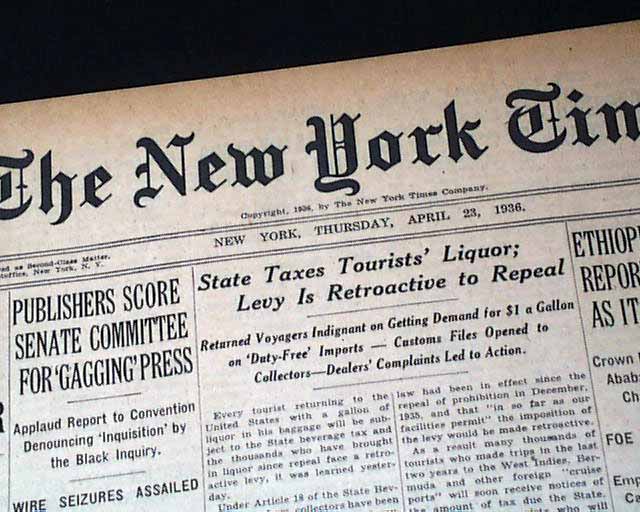
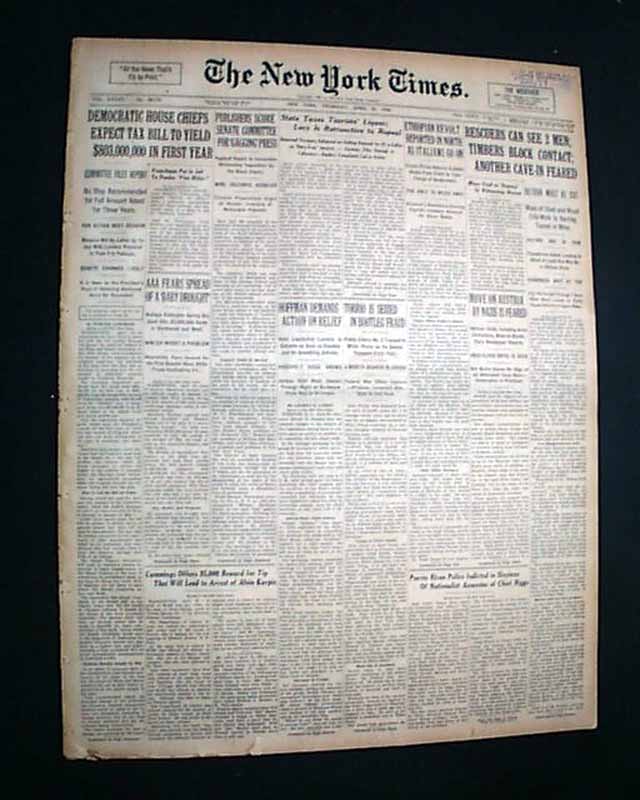
THE NEW YORK TIMES, April 23, 1936
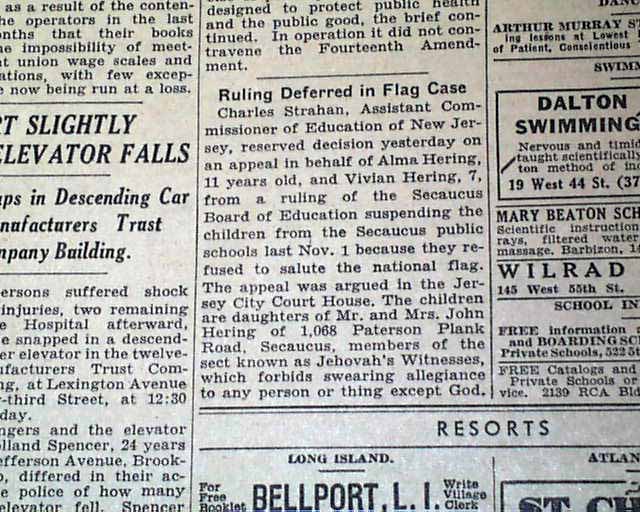
- Secaucus, New Jersey Jehovah's Witnesses
- Alma & Vivian Hering expulsion from school
- For refusing to salute the American flag in classroom
- Watch Tower Bible and Tract Society member
- Charles Taze Russell followers - Bible Students
The top of page 31 has a discrete report with a small one column heading: "Ruling Deferred in Flag Case" (see image)
I suspect this to be an extremely rare item because there was really no reason to save it at the time.
Complete with 48 pages, light toning and some wear at the margins, generally in good condition.
Background: The 1936 ruling by New Jersey Commissioner of Education Charles Strahan against the Hering sisters stands as a pivotal moment in the legal evolution of the First Amendment, marking a period where the "secular regulation rule" dominated American jurisprudence over individual religious conscience. By affirming the expulsion of Alma and Vivian Hering for their refusal to salute the American flag—a ritual their Jehovah’s Witness faith viewed as prohibited idolatry—Strahan categorized the pledge not as a religious imposition but as a mandatory "patriotic ceremony" essential for school discipline and national unity. This decision was historically significant because it codified the idea that public education was a privilege conditioned upon state-mandated expressions of loyalty, setting a rigid precedent that the New Jersey Supreme Court and later the U.S. Supreme Court (in Gobitis) would initially follow. However, the harshness of such rulings and the subsequent wave of persecution against religious minorities eventually triggered a judicial pivot, leading to the landmark 1943 Barnette decision which established that the state cannot compel citizens to voice beliefs that violate their conscience, thereby transforming the Hering sisters' local struggle into a foundation for modern civil liberties.
Other issues you may like
§ related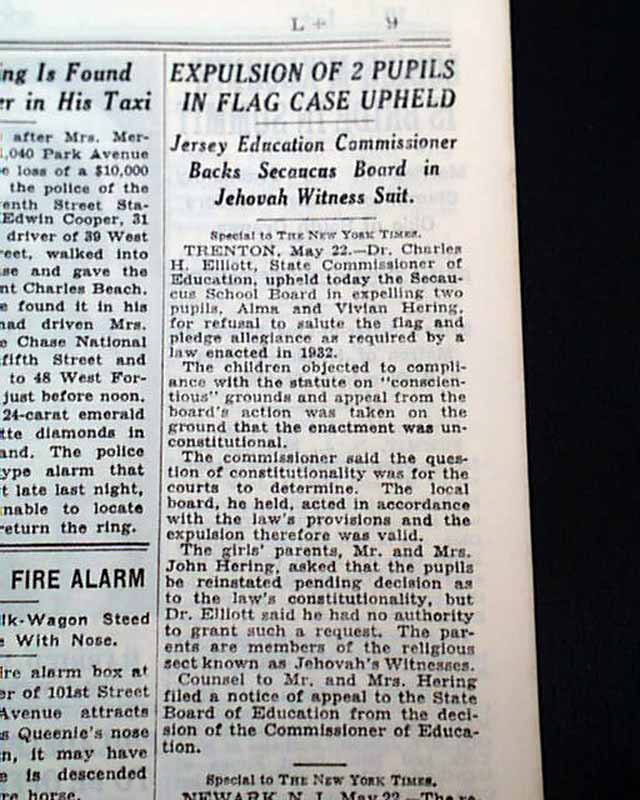
THE NEW YORK TIMES, May 23, 1936
- Secaucus, New Jersey Jehovah's Witnesses
- Alma & Vivian Hering expelled from school
- For refusing to salute the American flag
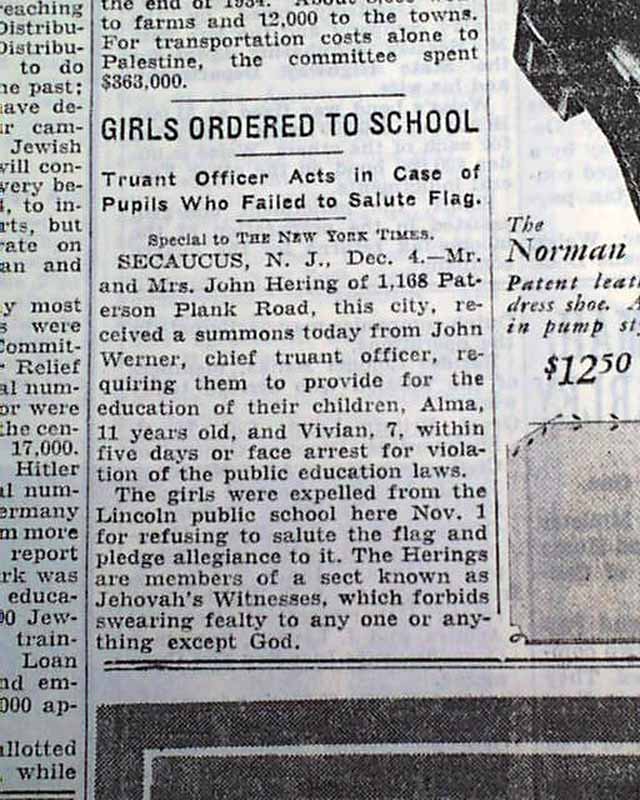
THE NEW YORK TIMES, Dec. 5, 1935
- Secaucus, New Jersey Jehovah's Witnesses
- 11 year old Alma Hering expelled from school
- For refusing to salute the American
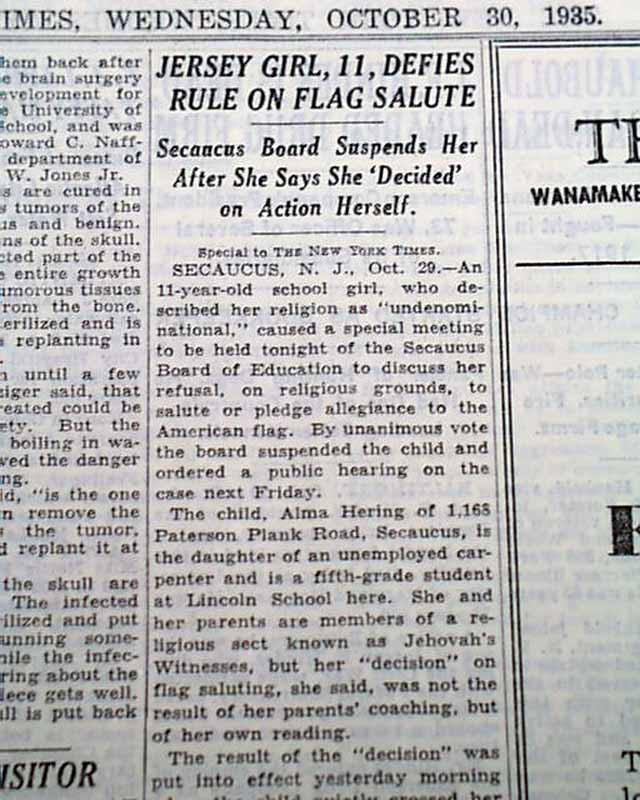
THE NEW YORK TIMES, Oct. 30, 1935
- Secaucus, New Jersey Jehovah's Witnesses
- 11 year old Alma Hering expelled from school
- For refusing to salute the American
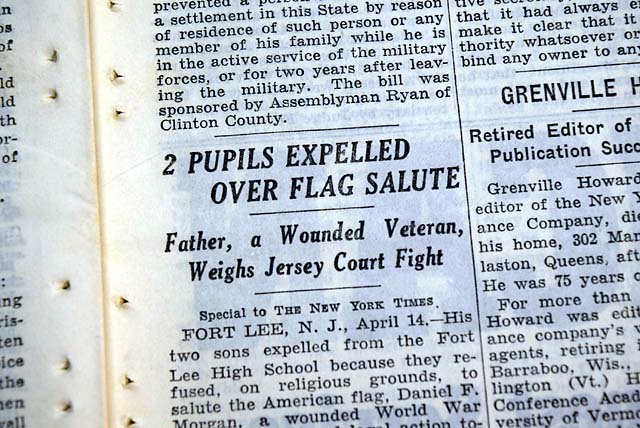
THE NEW YORK TIMES, April 15, 1939
- Daniel Morgan sons - Fort Lee High School NJ expulsions
- Refusing to salute the American flag in classroom
- Watch Tower Bible