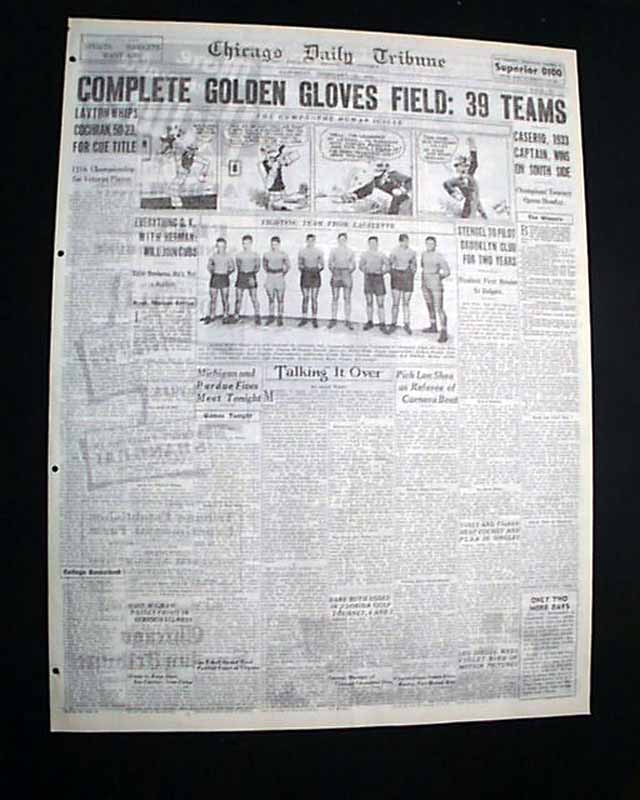
Casey Stengel becomes Dodgers manager...
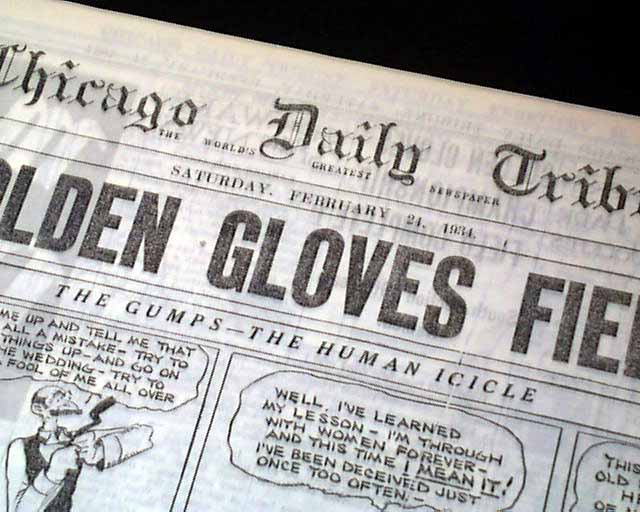
SECTION TWO (sports) only of the Chicago Daily Tribune, Feb. 24, 1934
- Casey Stengel heads the Brooklyn Dodgers
- MLB Baseball - pre-New York Yankees dynasty
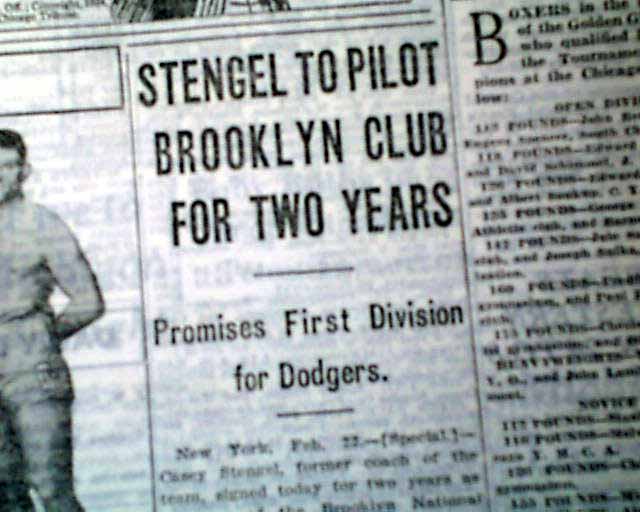
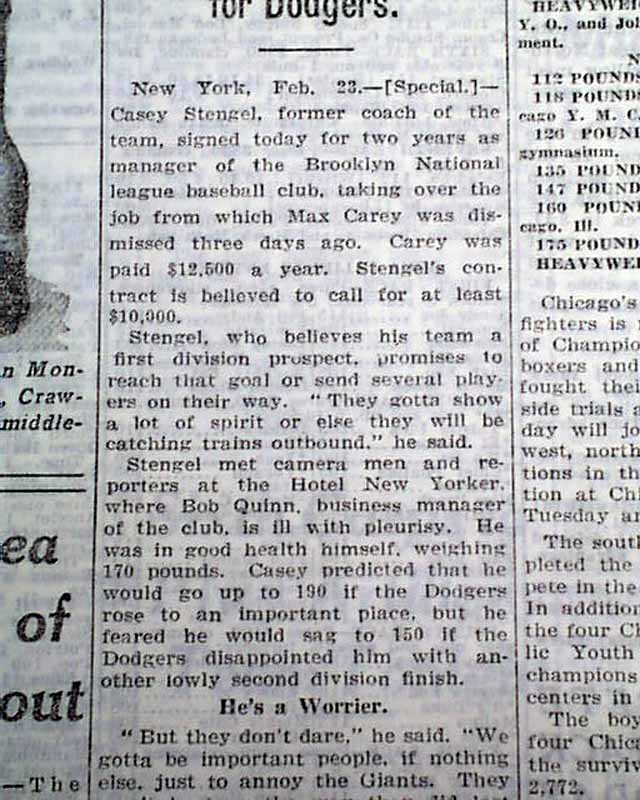
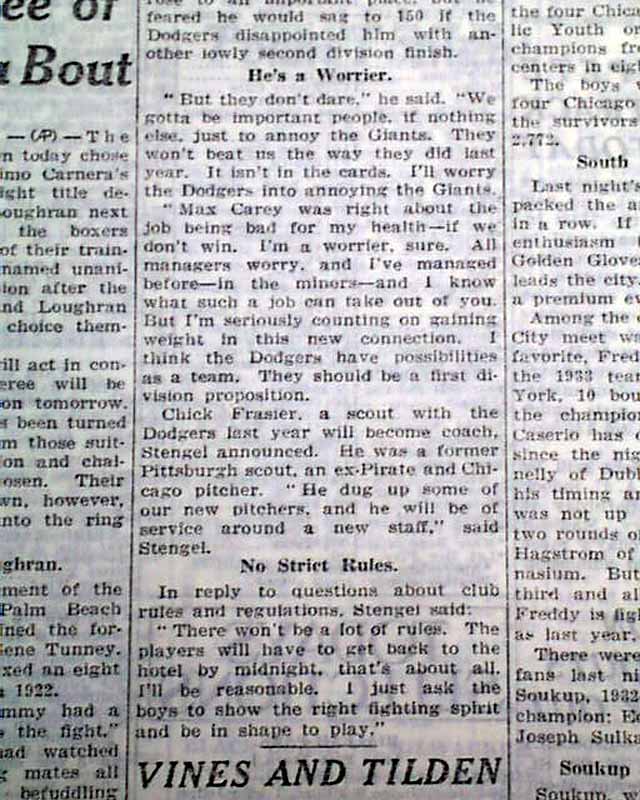
The front page of this section has a one column heading: "STENGEL TO PILOT BROOKLYN CLUB FOR TWO YEARS" with subhead. (see images)
Complete section 2 only with 8 pages, rag edition in very nice condition. A few small binding holes along the spine.
Background: The hiring of Casey Stengel as the Brooklyn Dodgers' manager on February 23, 1934, serves as a fascinating bridge between the "Daffiness Boys" era of Ebbets Field and the tactical brilliance that would later define the New York Yankees' dynasty. While Stengel inherited a lackluster roster and finished his three-year tenure with a losing record of 208–251, the appointment was historically significant for cementing his identity as baseball’s premier "Old Professor" of character and resilience. Tasked with revitalizing a franchise that had grown stagnant under Max Carey, Stengel utilized his sharp wit and eccentric persona to maintain fan engagement despite the team's mediocre performance, famously navigating the financial constraints of the Great Depression. This period was also defined by a legendary act of spite; after the rival New York Giants' manager Bill Terry mockingly asked if Brooklyn was "still in the league," Stengel’s Dodgers famously knocked the Giants out of the 1934 pennant race on the final weekend of the season. Ultimately, his stint in Brooklyn proved that a manager could become a cultural icon through personality alone, providing Stengel with the professional survival skills that would eventually allow him to lead the Yankees to ten pennants and seven World Series titles over a decade later.
Other issues you may like
§ related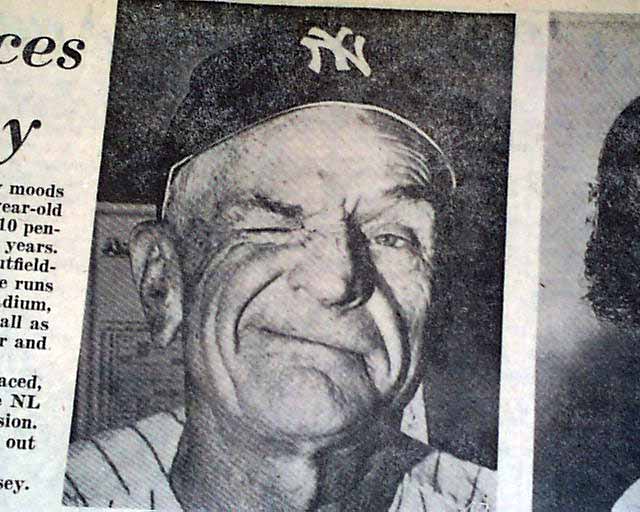
THE DETROIT FREE PRESS, Michigan, October 19, 1960
- Manager Casey Stengel fired
- New York Yankees
- MLB baseball
This 40 page newspaper has a headline above the
...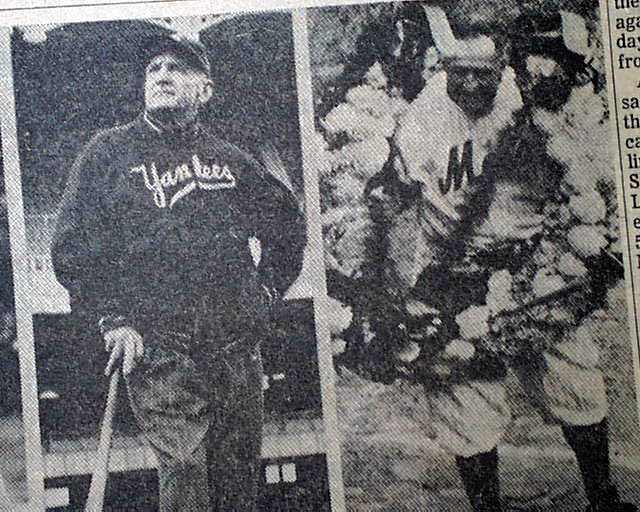
LEOMINSTER ENTERPRISE, Massachusetts, March 9, 1966
- Casey Stengel
- New York Giants, Yankees & Mets
At the bottom of the front page is a three column pictorial
...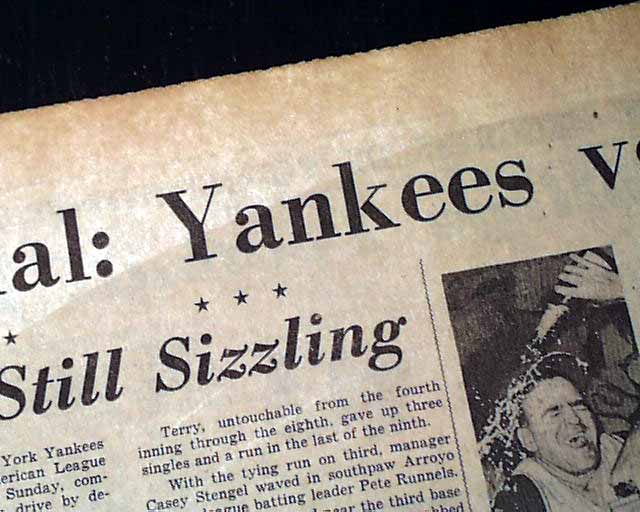
THE DETROIT FREE PRESS, Michigan, September 26, 1960
- New York Yankees win pennant
- Casey Stengel's last season
This 40 page newspaper has a banner headline on
...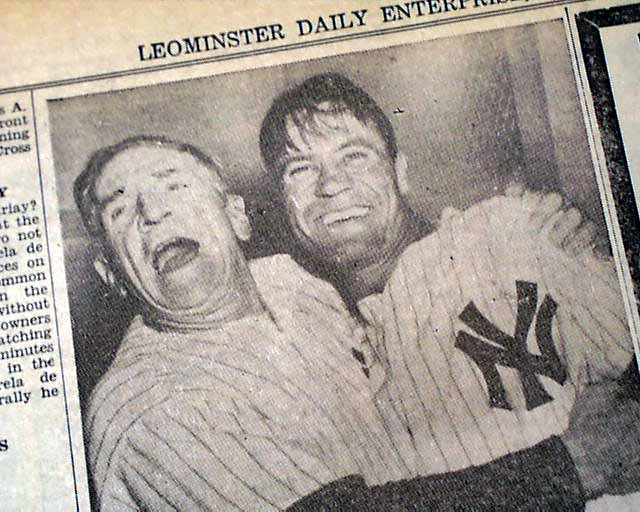
Leominster Daily Enterprise, Leominster, Massachusetts, October 11, 1951 This 14 page newspaper has various headlines on pages 10 & 11: "Stengel Is Atop
...