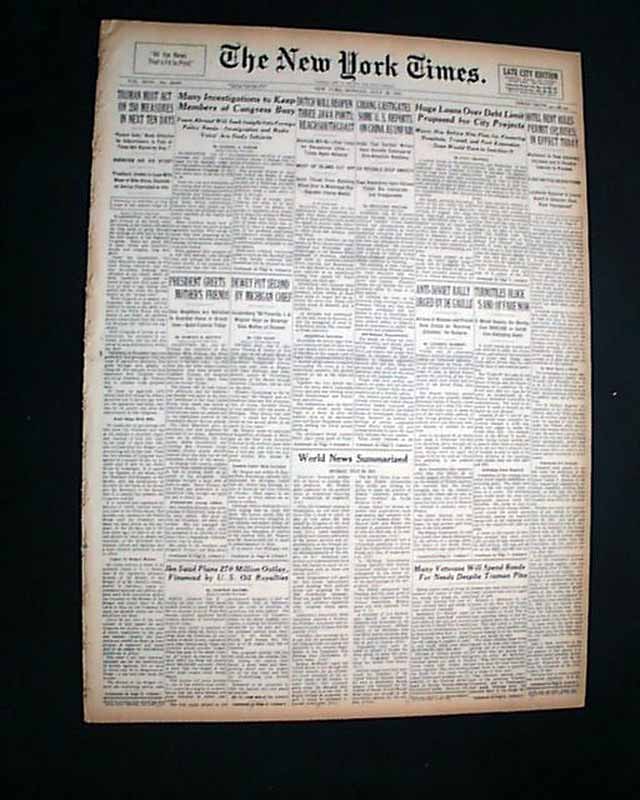
King Ibn Saud & oil production riches....
Item # 726358
·
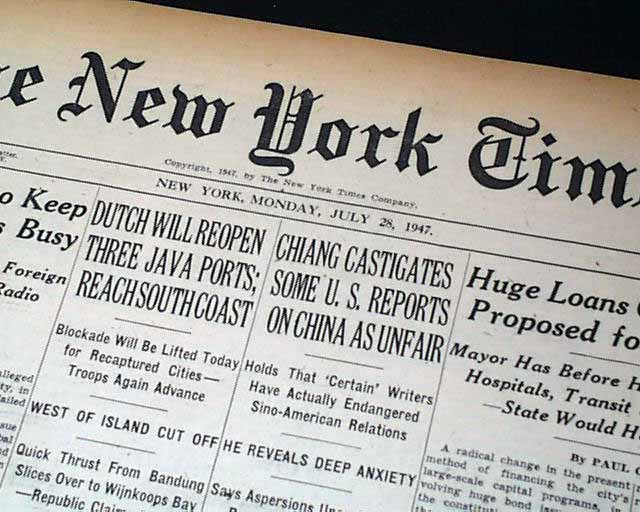
THE NEW YORK TIMES, July 28, 1947
* Ibn Saud - King of Saudi Arabia
* Standard Oil of New Jersey access
* Kingdom transition to global petroleum superpower
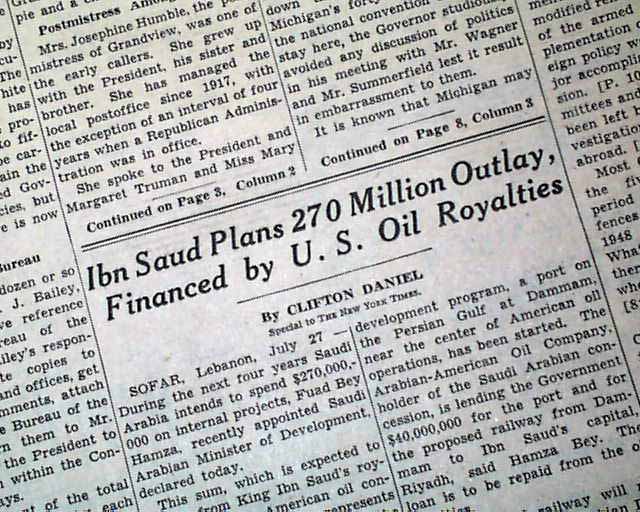
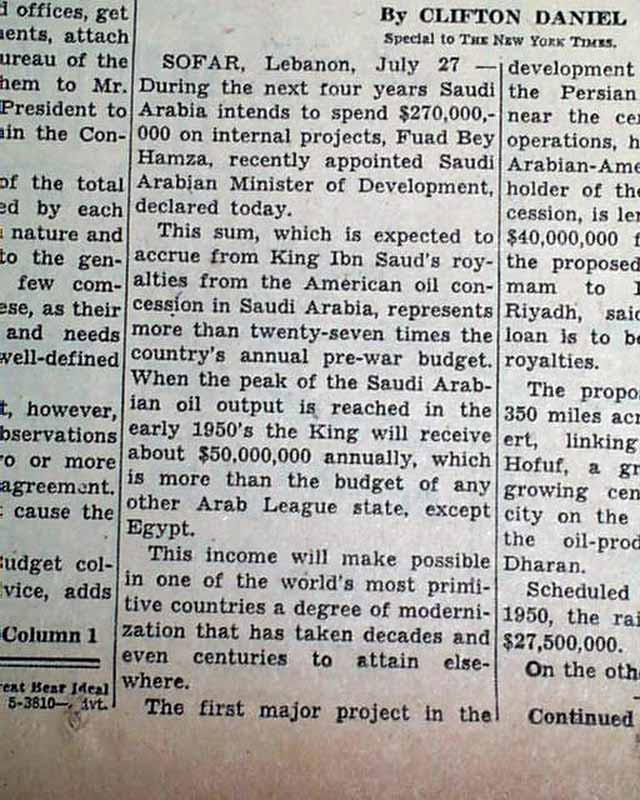
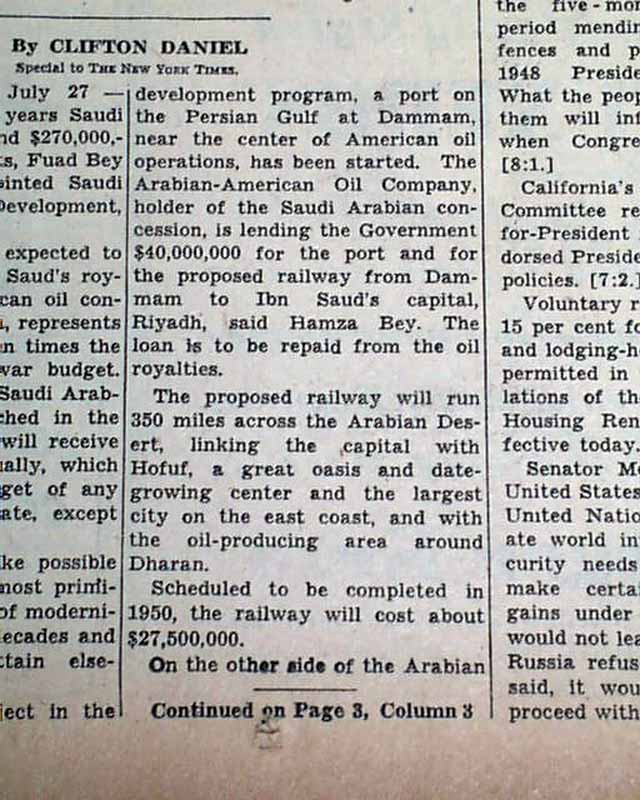
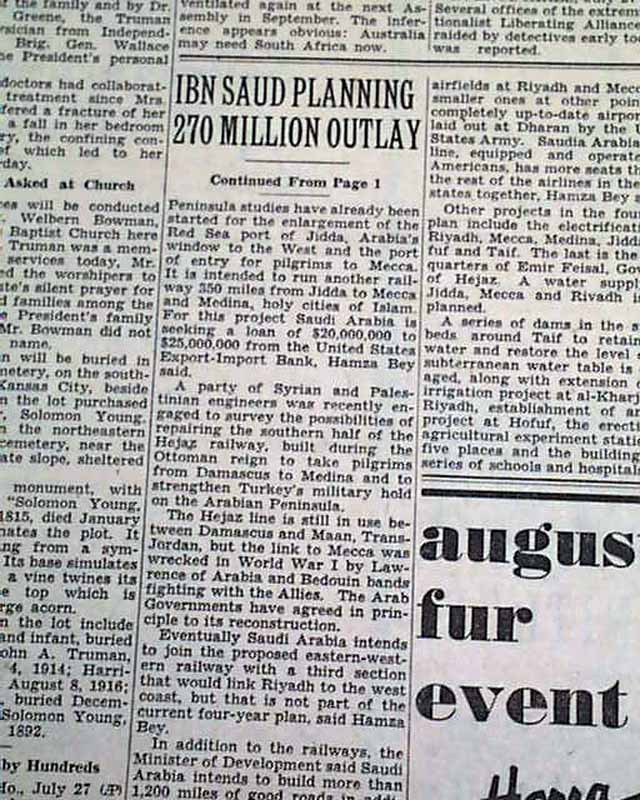
Near the bottom of the front page is a two-column heading: "Ibn Saud Plans 270 Million Outlay, Financed by U. S. Oil Royalties" (see)
Complete with all 34 pages, light toning and minor wear at the margins, generally in very nice condition.
Background: In July 1947, King Ibn Saud’s strategic maneuvering marked a definitive shift in the global energy landscape as he integrated the Saudi oil industry into a broader American-led economic and security framework. This period was historically significant because it saw the finalization of the Aramco expansion, where the entry of Standard Oil of New Jersey and Socony-Vacuum provided the massive capital and market access necessary to transform Saudi Arabia from a struggling desert kingdom into a global petroleum superpower. By leveraging the Trans-Arabian Pipeline (Tapline) project and asserting sovereignty over offshore mineral rights during this exact window, Ibn Saud successfully bypassed British regional influence and secured a direct line to Western markets. This "plan" did more than just increase production; it established the "Oil-for-Security" paradigm, wherein the King traded guaranteed energy flows for American technical expertise—exemplified by the construction of the Dammam-Riyadh railroad—and a commitment to national defense, effectively laying the foundation for the modern Saudi state and the enduring, though often complex, geopolitical alliance between Riyadh and Washington.
* Ibn Saud - King of Saudi Arabia
* Standard Oil of New Jersey access
* Kingdom transition to global petroleum superpower
Near the bottom of the front page is a two-column heading: "Ibn Saud Plans 270 Million Outlay, Financed by U. S. Oil Royalties" (see)
Complete with all 34 pages, light toning and minor wear at the margins, generally in very nice condition.
Background: In July 1947, King Ibn Saud’s strategic maneuvering marked a definitive shift in the global energy landscape as he integrated the Saudi oil industry into a broader American-led economic and security framework. This period was historically significant because it saw the finalization of the Aramco expansion, where the entry of Standard Oil of New Jersey and Socony-Vacuum provided the massive capital and market access necessary to transform Saudi Arabia from a struggling desert kingdom into a global petroleum superpower. By leveraging the Trans-Arabian Pipeline (Tapline) project and asserting sovereignty over offshore mineral rights during this exact window, Ibn Saud successfully bypassed British regional influence and secured a direct line to Western markets. This "plan" did more than just increase production; it established the "Oil-for-Security" paradigm, wherein the King traded guaranteed energy flows for American technical expertise—exemplified by the construction of the Dammam-Riyadh railroad—and a commitment to national defense, effectively laying the foundation for the modern Saudi state and the enduring, though often complex, geopolitical alliance between Riyadh and Washington.
Category: The 20th Century
Price
$58
100% Authentic: Original printing, never a reproduction.
Other issues you may like
§ related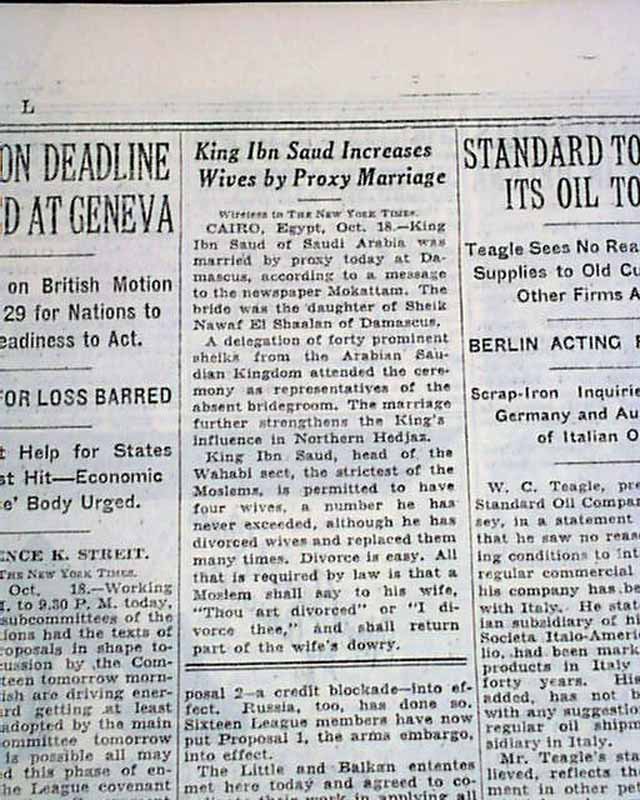
King Ibn Saud adds another wife in 1935...
THE NEW YORK TIMES, October 19, 1935
* King Abdul-Aziz of Saudi Arabia
* 1st monarch of Saudi Arabia
The top of page 6 has a small one column...
* King Abdul-Aziz of Saudi Arabia
* 1st monarch of Saudi Arabia
The top of page 6 has a small one column...
Oct 1935
$57
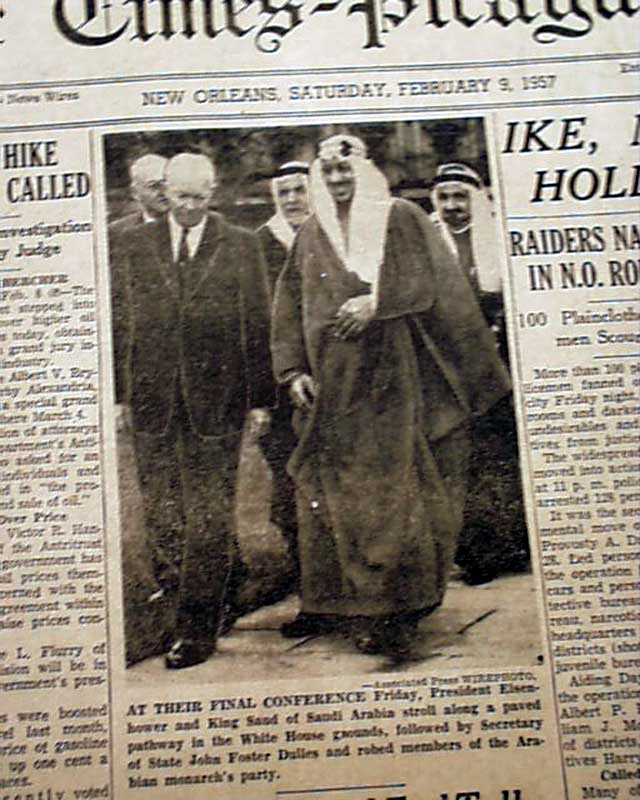
Saud of Saudi Arabia visits White House...
THE TIMES-PICAYUNE, New Orleans, Feb. 9, 1957
* King Saud of Saudi Arabia
* President Dwight Eisenhower
* Foreign relations at White House
The top...
* King Saud of Saudi Arabia
* President Dwight Eisenhower
* Foreign relations at White House
The top...
Feb 1957
$48
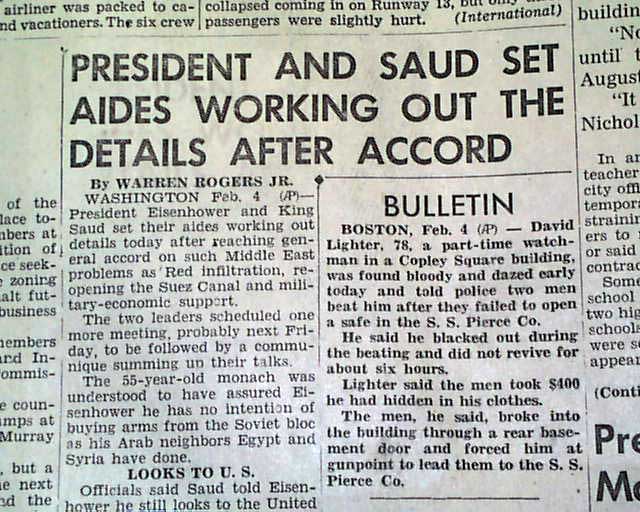
Saud of Saudi Arabia visits White House...
LEOMINSTER DAILY ENTERPRISE, Mass. Feb. 4, 1957
* King Saud of Saudi Arabia
* President Dwight Eisenhower
* Foreign relations at White House
The...
* King Saud of Saudi Arabia
* President Dwight Eisenhower
* Foreign relations at White House
The...
Feb 1957
$40
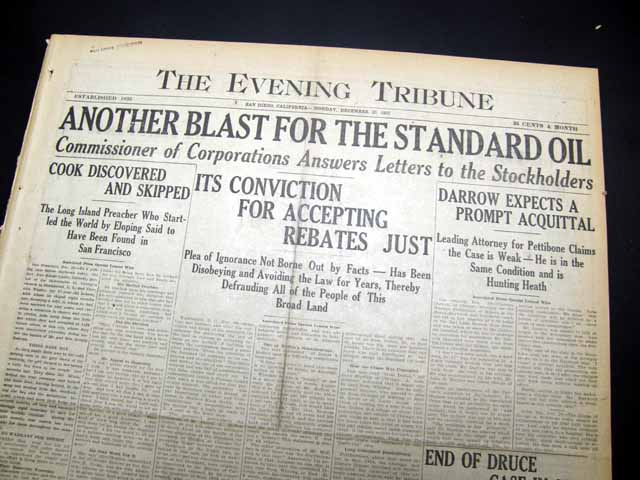
1907 Standard Oil case.... John D. Rockefeller...
THE EVENING TRIBUNE, San Diego, Dec. 30, 1907
* The Standard Oil of New Jersey
* John D. Rockefeller case
The front page has a nice banner headline:...
* The Standard Oil of New Jersey
* John D. Rockefeller case
The front page has a nice banner headline:...
Dec 1907
$48