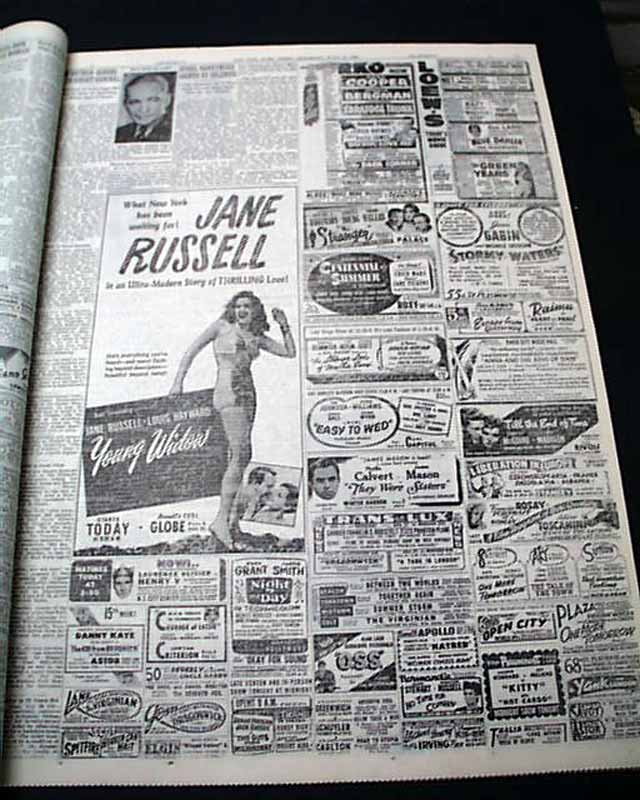
1946 Moore's Ford Bridge lynchings...
Item # 726357
·
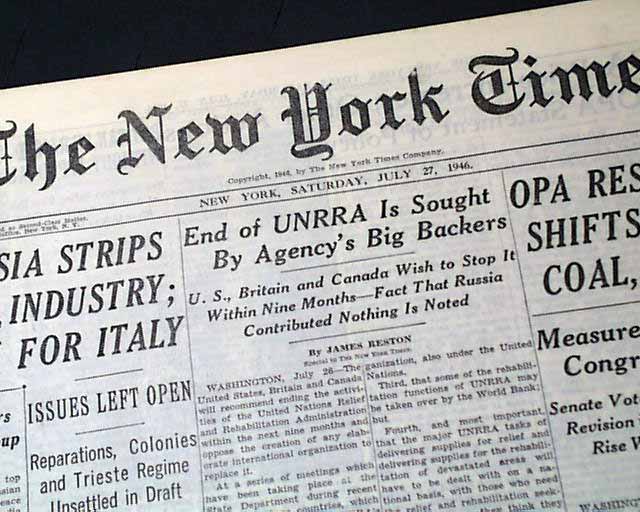
THE NEW YORK TIMES, July 27, 1946
* Moore's Ford Bridge Negro lynchings
* Near Monroe, Walton County, Georgia
* George W. Dorsey & Roger Malcolm (& wives)
* Last mass lynching in United States
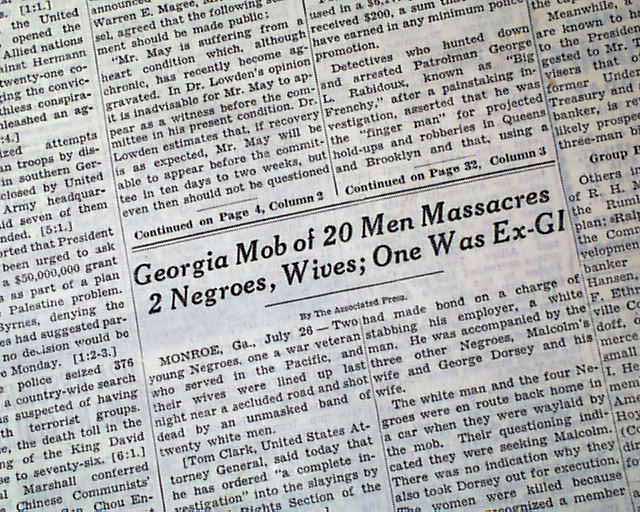
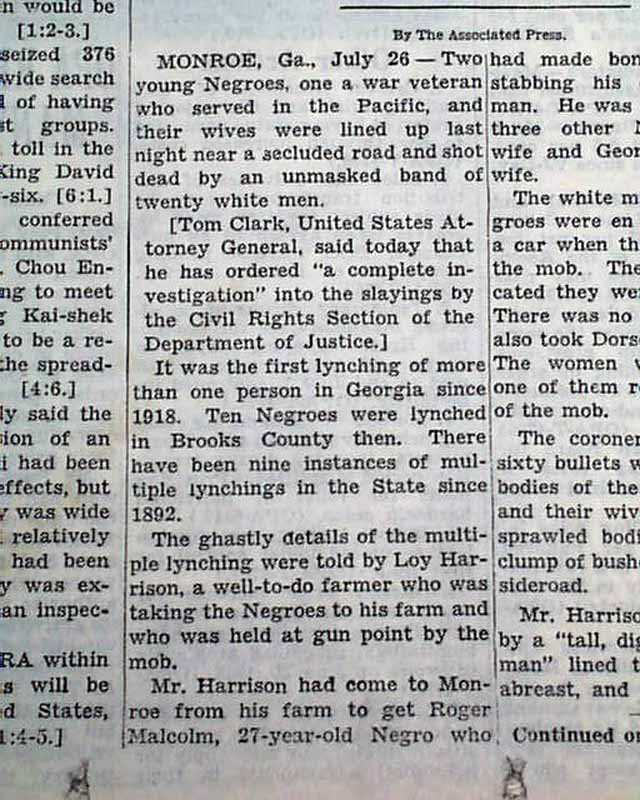
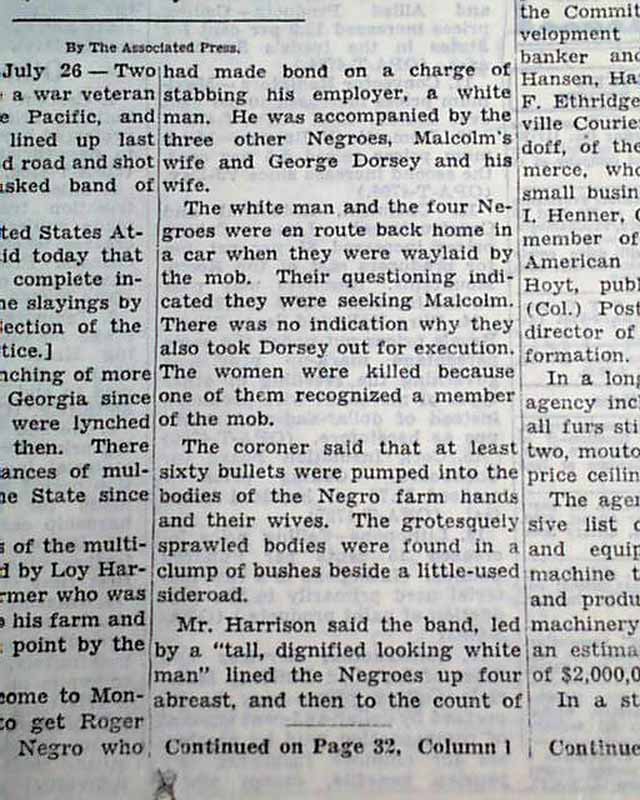
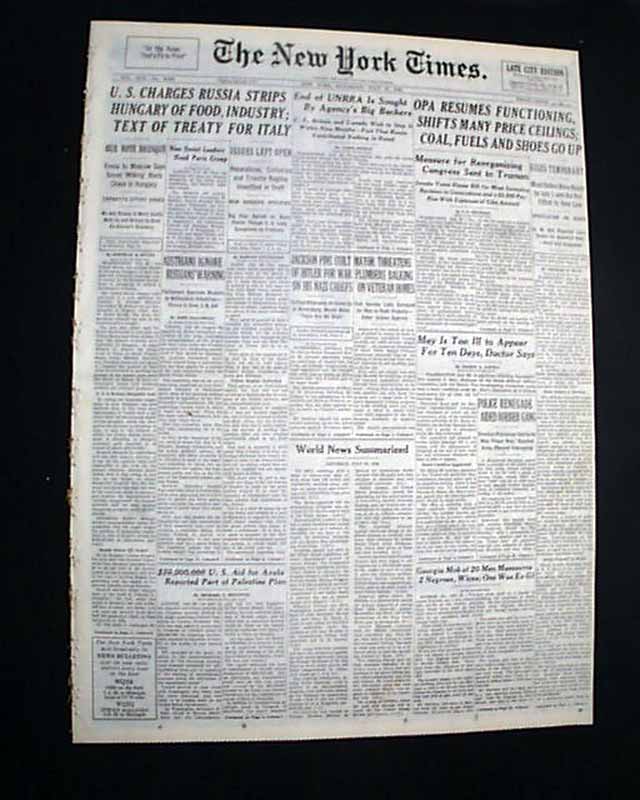
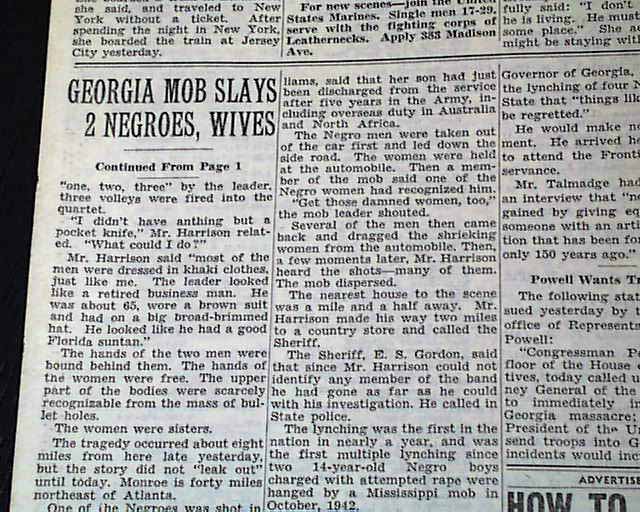
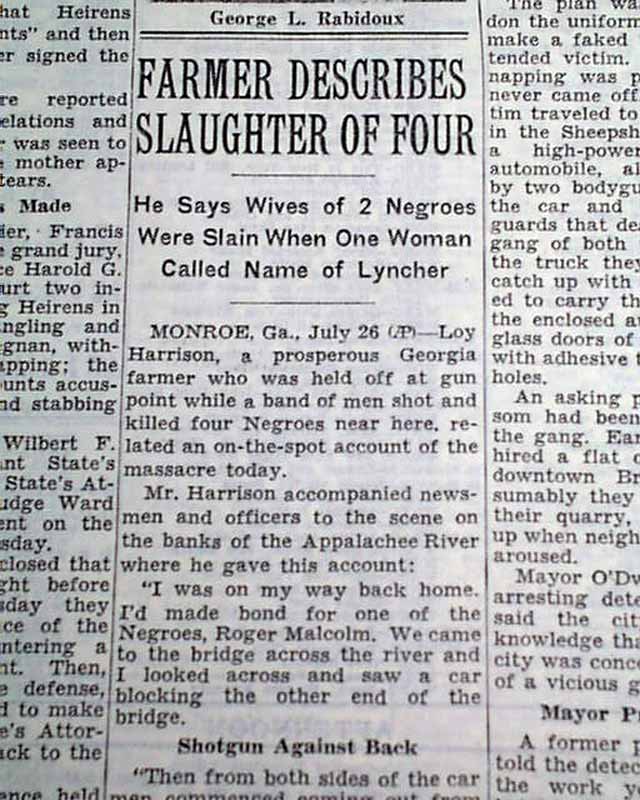
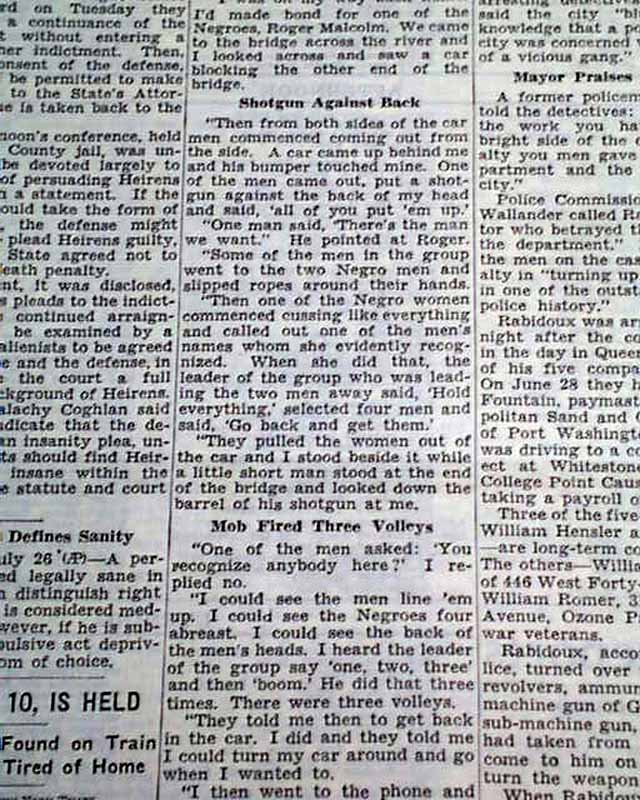
Near the bottom of the front page is a two column heading: "Georgia Mob of 20 Menb Massacres 2 Negroes, Wives; One Was Ex-GI" (see images) More on the back page.
Complete with all 32 pages, rag edition in very nice condition.
Background: The Moore's Ford Bridge lynchings of July 25, 1946, represent a harrowing turning point in American history, serving as the "last mass lynching" and a primary catalyst for the federal government's involvement in civil rights. The event involved the brutal execution of four African Americans—World War II veteran George W. Dorsey, his wife Mae Murray Dorsey, Roger Malcom, and his pregnant wife Dorothy Dorsey Malcom—who were intercepted by a mob of roughly 30 unmasked white men while being driven home from the Walton County jail. Despite the victims being shot over 60 times at point-blank range, a local "wall of silence" prevented any of the 55 identified suspects from being indicted, an injustice that horrified the nation and compelled President Harry S. Truman to take unprecedented action. Truman’s subsequent creation of the President’s Committee on Civil Rights and his push for federal anti-lynching legislation marked the first time the executive branch treated racial violence as a federal emergency, effectively signaling the transition from the era of unchecked Jim Crow violence to the organized, federally-monitored Civil Rights Movement.
* Moore's Ford Bridge Negro lynchings
* Near Monroe, Walton County, Georgia
* George W. Dorsey & Roger Malcolm (& wives)
* Last mass lynching in United States
Near the bottom of the front page is a two column heading: "Georgia Mob of 20 Menb Massacres 2 Negroes, Wives; One Was Ex-GI" (see images) More on the back page.
Complete with all 32 pages, rag edition in very nice condition.
Background: The Moore's Ford Bridge lynchings of July 25, 1946, represent a harrowing turning point in American history, serving as the "last mass lynching" and a primary catalyst for the federal government's involvement in civil rights. The event involved the brutal execution of four African Americans—World War II veteran George W. Dorsey, his wife Mae Murray Dorsey, Roger Malcom, and his pregnant wife Dorothy Dorsey Malcom—who were intercepted by a mob of roughly 30 unmasked white men while being driven home from the Walton County jail. Despite the victims being shot over 60 times at point-blank range, a local "wall of silence" prevented any of the 55 identified suspects from being indicted, an injustice that horrified the nation and compelled President Harry S. Truman to take unprecedented action. Truman’s subsequent creation of the President’s Committee on Civil Rights and his push for federal anti-lynching legislation marked the first time the executive branch treated racial violence as a federal emergency, effectively signaling the transition from the era of unchecked Jim Crow violence to the organized, federally-monitored Civil Rights Movement.
Category: The 20th Century
Price
$58
100% Authentic: Original printing, never a reproduction.
Other issues you may like
§ related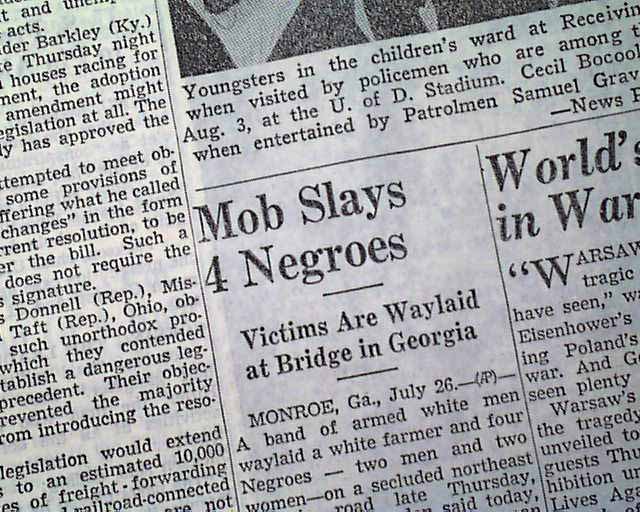
Ernest Thomas lynchings...
THE DETROIT NEWS, Michigan, July 26, 1946
* Roger Malcolm & George Dorsey with wives
* Monroe, Georgia negro massacre
This 36 page newspaper has one...
* Roger Malcolm & George Dorsey with wives
* Monroe, Georgia negro massacre
This 36 page newspaper has one...
Jul 1946
$38
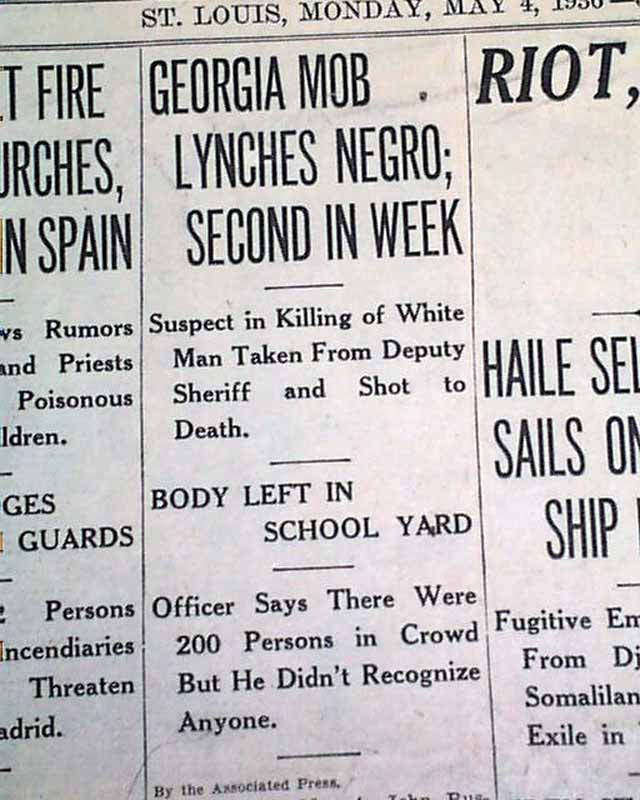
1936 Pavo, Georgia Negro lynching...
ST. LOUIS POST-DISPATCH, May 4, 1936
* Pavo, Thomas County, Georgia
* Negro John Rushin lynching - lynched
The top of the front page has a one column heading:...
* Pavo, Thomas County, Georgia
* Negro John Rushin lynching - lynched
The top of the front page has a one column heading:...
May 1936
$52
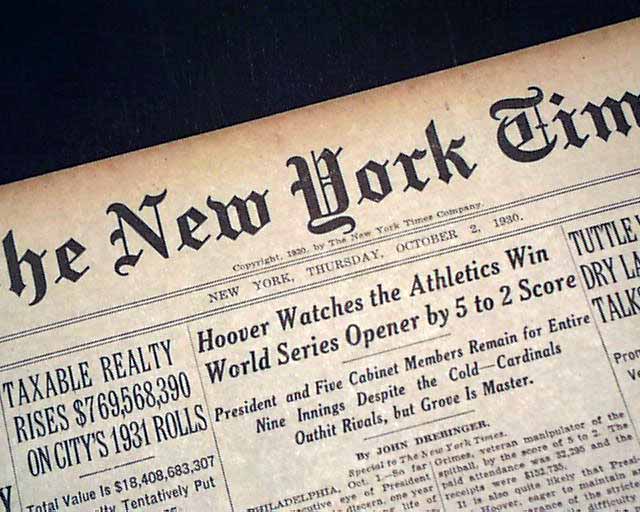
Cartersville GA lynching...
THE NEW YORK TIMES, New York, October 2, 1930 This 52 page newspaper has one column headlines on page 13 that include: "MOB COMES BACK AND LYNCHES NEGRO"...
Oct 1930
$48
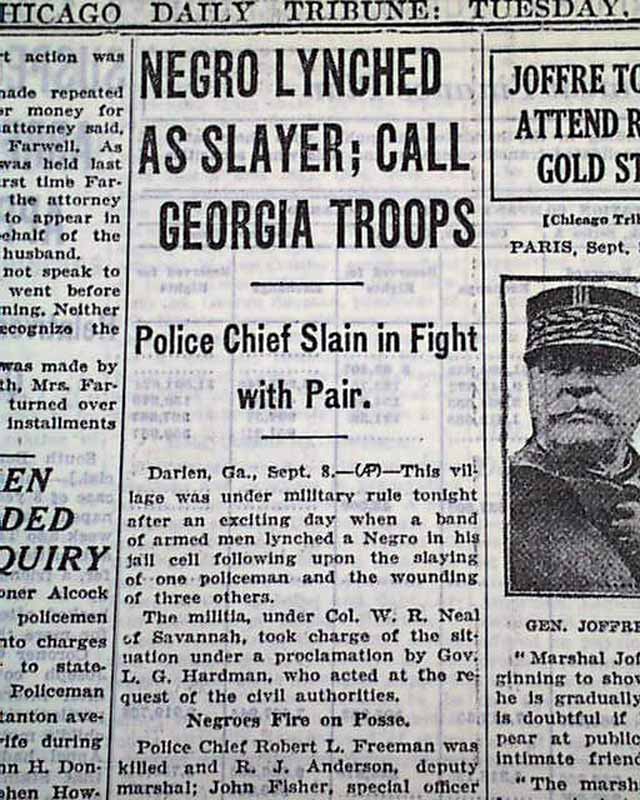
1930 Darien, Georgia Negro lynchings...
CHICAGO DAILY TRIBUNE, September 9, 1930
* George Grant & Willie Bryan Negro lynchings
* Darien, McIntosh County, Georgia martial law
The top of...
* George Grant & Willie Bryan Negro lynchings
* Darien, McIntosh County, Georgia martial law
The top of...
Sep 1930
$57