1918 Spanish Flu pandemic...
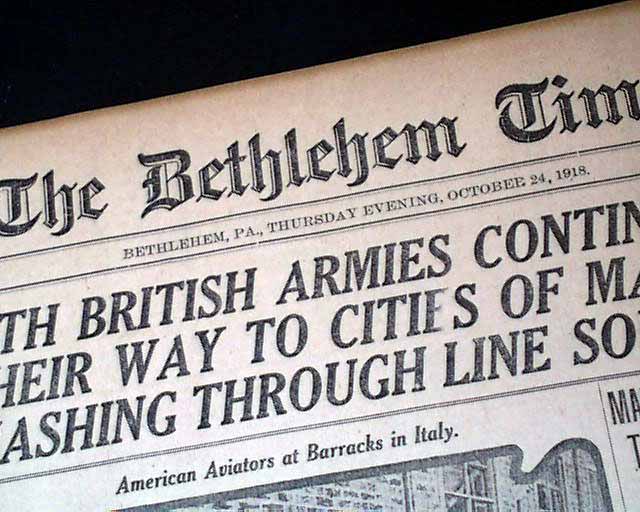
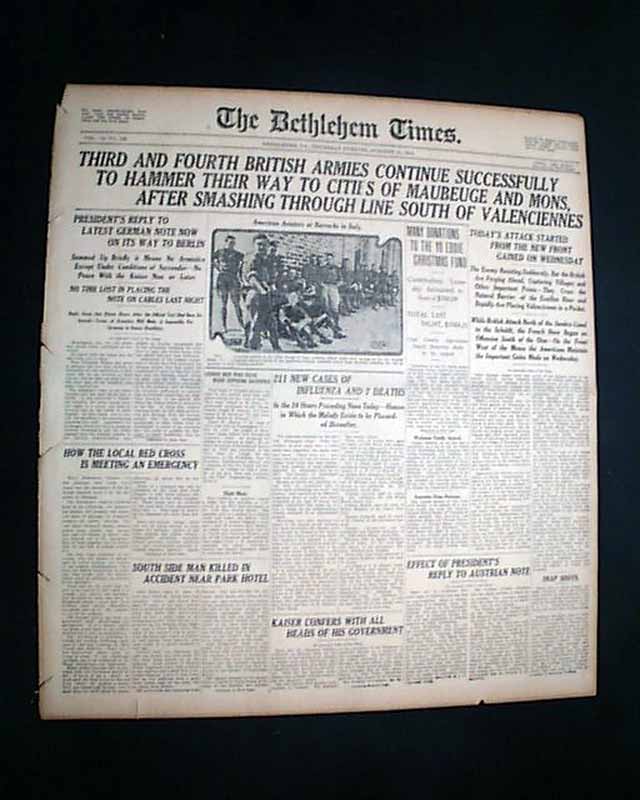
THE BETHLEHEM TIMES, Oct. 24, 1918
- The Spanish flu pandemic
- H1N1 influenza A virus
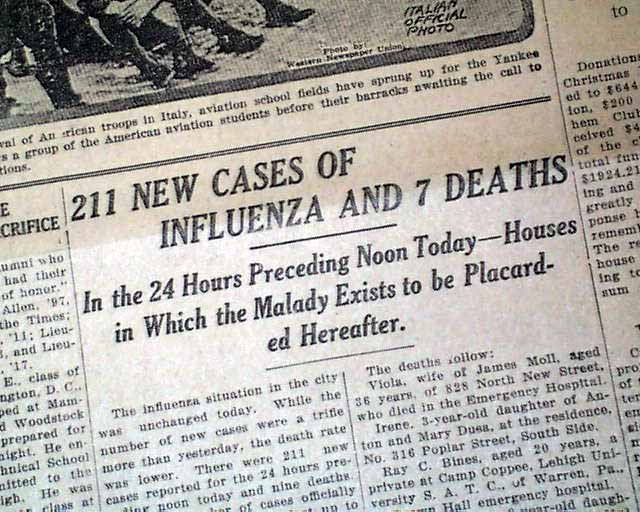
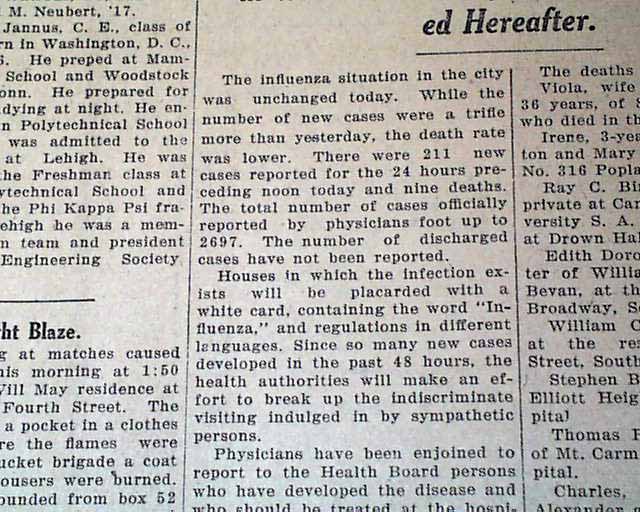
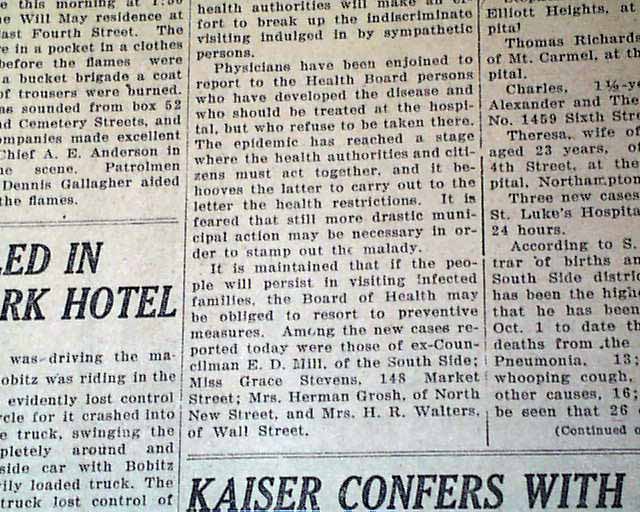
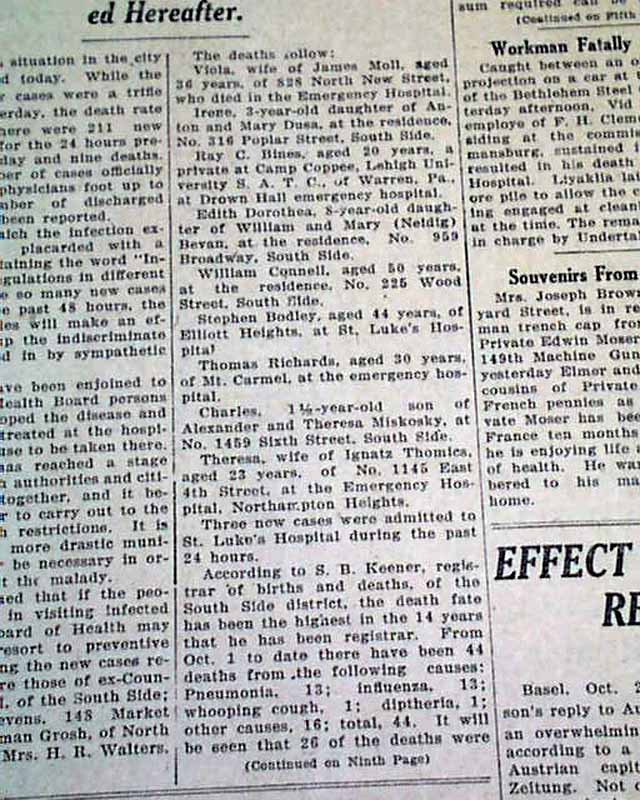
The front page has a two-column heading: "211 NEW CASES OF INFLUENZA AND 7 DEATHS" with subhead. (see images)
Sixteen pages, light toning, some margin wear with a few small tears, MUST be handled with care.
Note: This issue comes with a acid-free folder (gratis) for protection
Background: The October 1918 peak of the Spanish Flu represents a singular, catastrophic inflection point in modern history where a mutated H1N1 strain converged with the logistical chaos of World War I to produce the deadliest month on record. As the virus evolved into a highly virulent form, it triggered "cytokine storms" in healthy young adults, effectively turning their robust immune systems against them and causing rapid, fatal respiratory failure. This biological devastation was accelerated by wartime conditions, including the mass movement of troops in cramped quarters and the suppression of health data by government censors to maintain public morale. In cities like Philadelphia, the refusal to cancel large public gatherings resulted in an immediate, vertical spike in mortality that overwhelmed civic infrastructure; hospitals reached capacity within days, morgues overflowed into the streets, and basic services collapsed as the workforce succumbed. By the time the wave receded toward the end of the year, it had not only claimed nearly 200,000 American lives in thirty-one days but had fundamentally reshaped global public health policy, highlighting the lethal synergy between global connectivity and infectious disease.
Other issues you may like
§ related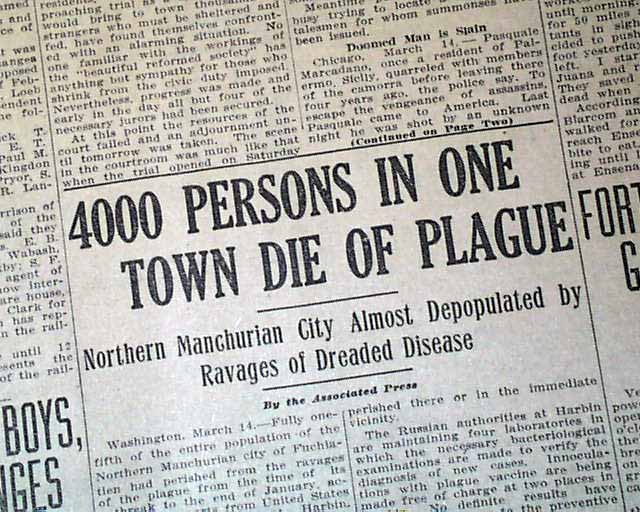
THE EVENING TRIBUNE, San Diego, Mar. 14, 1911
- Manchurian pneumonic lung infection plague
- First use of personal protective equipment
The front page has a two
...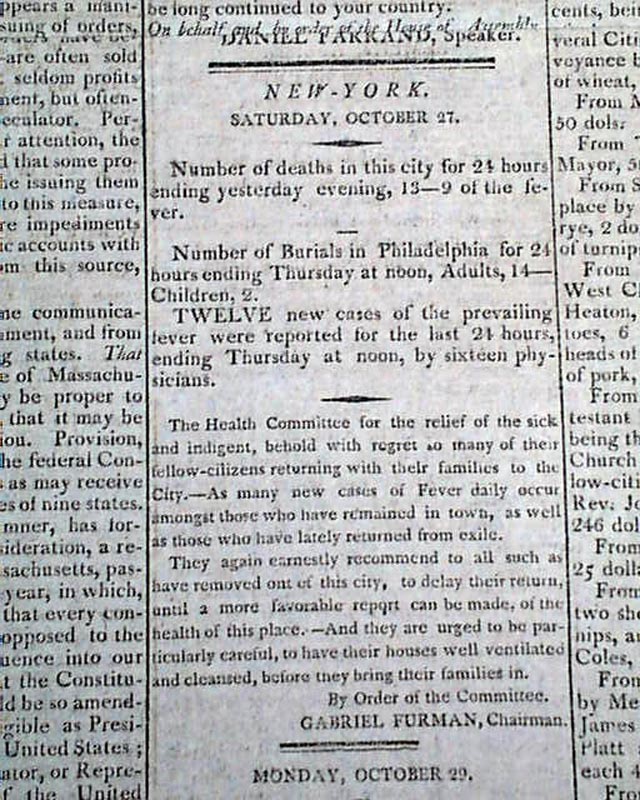
THE SPECTATOR, New York, Oct. 31, 1798
- Philadelphia yellow fever epidemic
An unusual issue being single sheet rather than the typical 4 pages due to the
...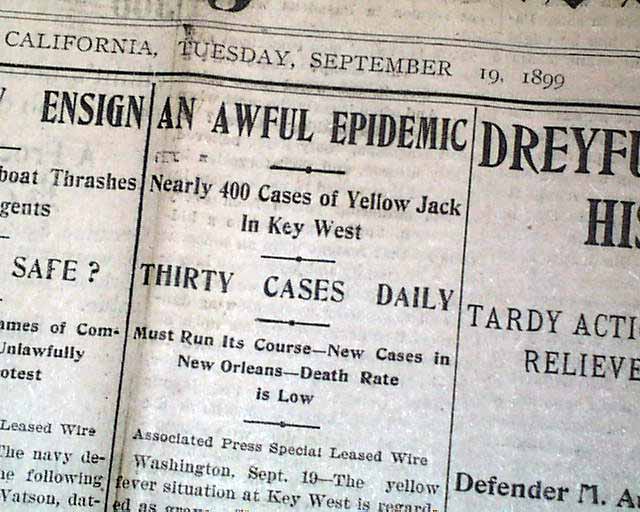
THE EVENING TRIBUNE, San Diego, Sept. 19, 1899
- Key West, Florida
- Yellow fever - jack
- Epidemic - pandemic
The top of the front page has a one column heading:
...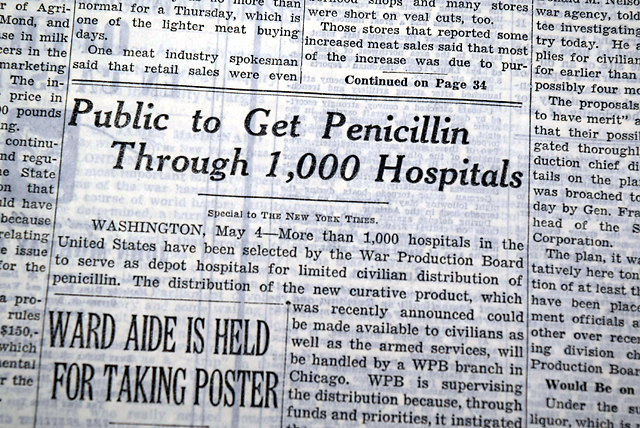
THE NEW YORK TIMES, May 5, 1944
- Alexander Fleming
- Penicillin - Penicillium
- Made available for public use
- World War II - WWII
The front page has a two column
...