Leopold - Loeb case... Bobby Franks murder...
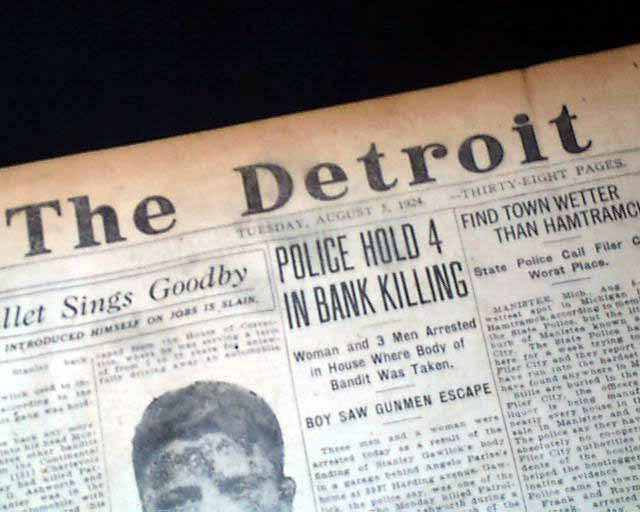
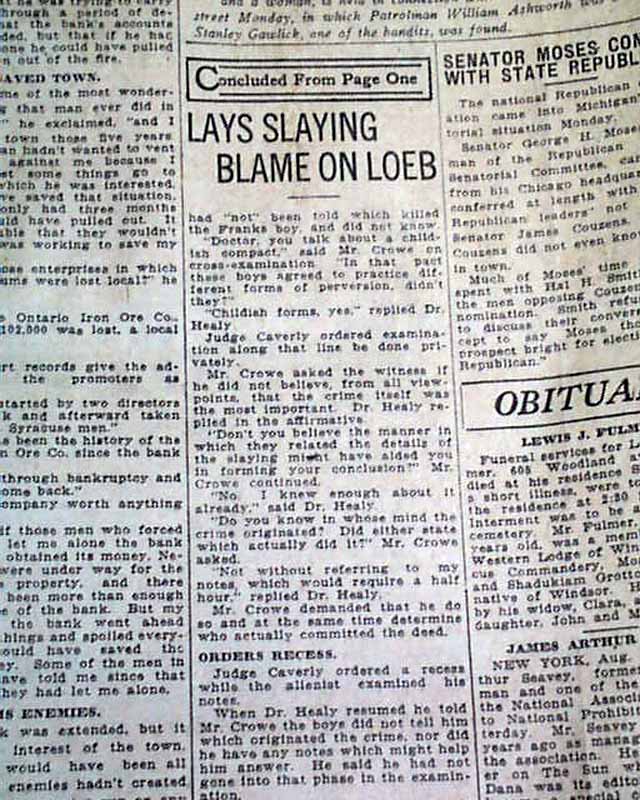
THE DETROIT NEWS, Aug. 5, 1924
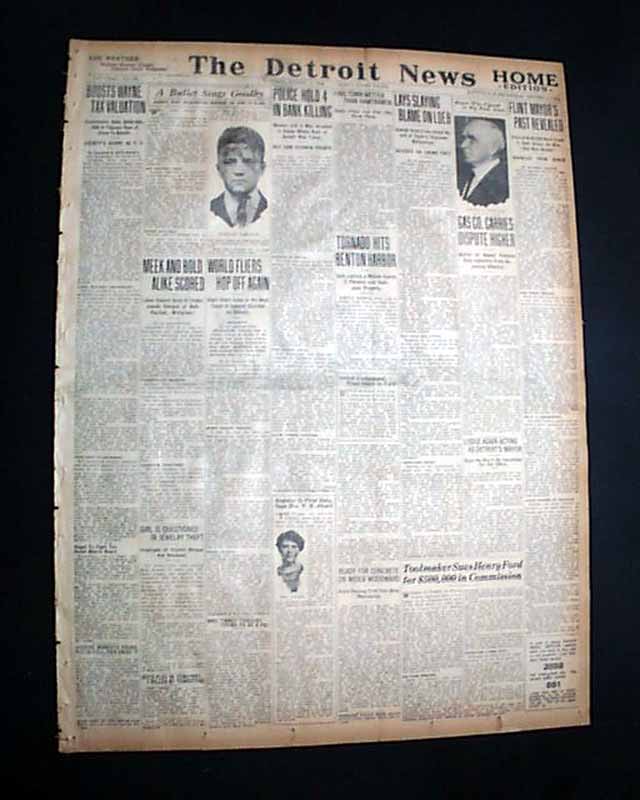
- Leopold & Loeb trial
- Bobby Franks murder
- Thrill Killing case
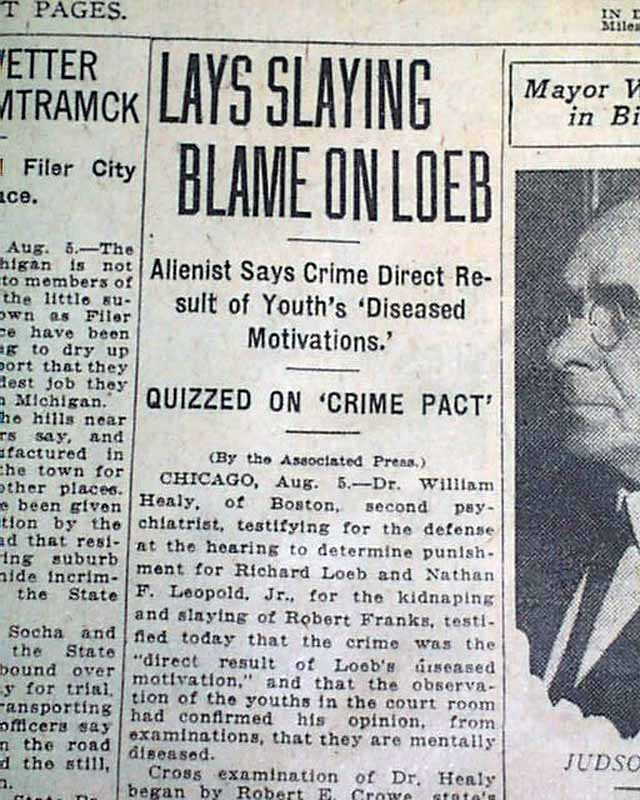
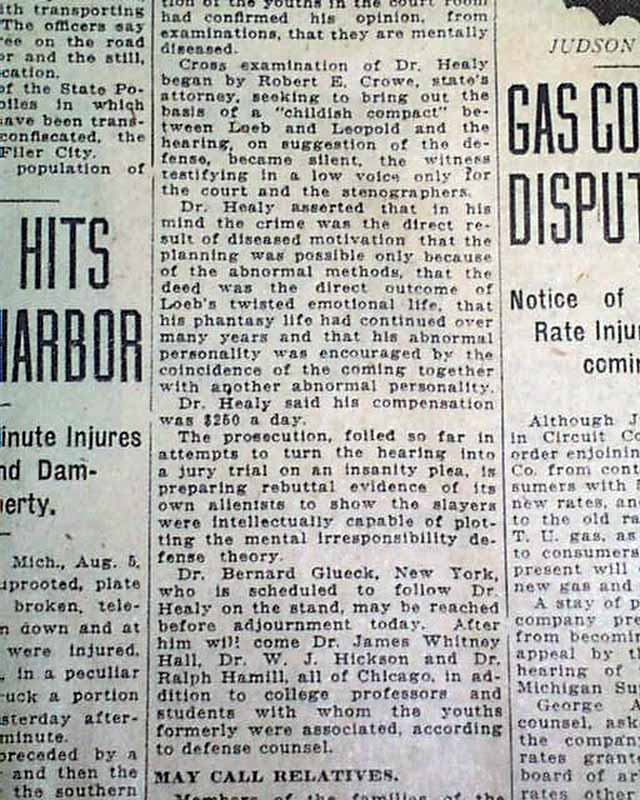
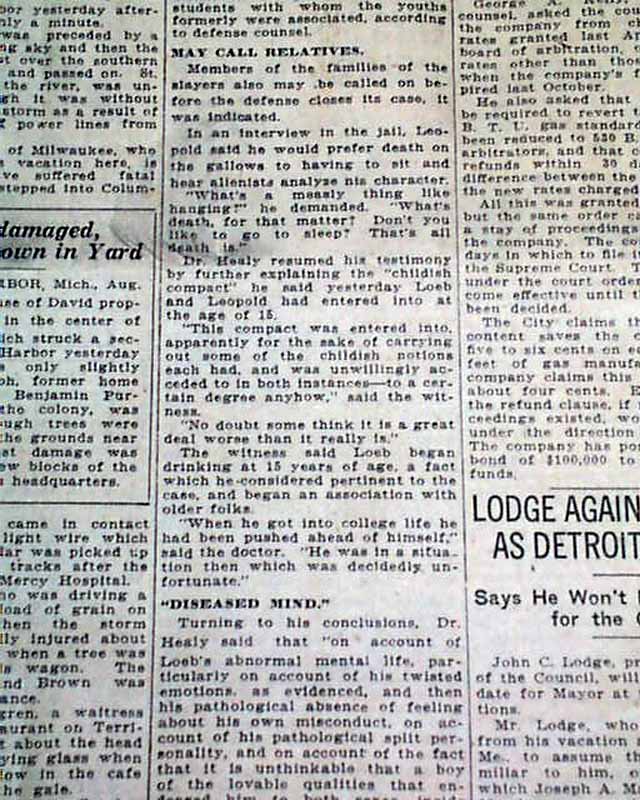
The top of the front page has a one column heading on the Leopold - Loeb case with: "LAYS SLAYING BLAME ON LOEB" with subheads. (see images)
Complete with 38 pages, light toning and a little wear at the margins, generally good.
history notes: The Bobby Franks murder trial in 1924 shocked the nation as it revealed the chilling crime committed by two wealthy and highly intelligent University of Chicago students, Nathan Leopold and Richard Loeb, who murdered 14-year-old Bobby Franks purely for the intellectual thrill of executing the "perfect crime." Motivated by a twisted sense of superiority and Nietzschean philosophy, they lured Franks—Loeb’s distant cousin—into a car, killed him with a chisel, and disposed of his body in a culvert in Indiana. Their plan unraveled quickly when a pair of distinctive eyeglasses left near the body led police to Leopold, and both confessed shortly thereafter. At trial, legendary attorney Clarence Darrow mounted a powerful defense not to prove innocence, but to save the young men from the death penalty. He delivered a now-famous 12-hour summation arguing against capital punishment, emphasizing their youth, mental state, and the societal factors that shaped them. The judge ultimately sentenced both to life in prison plus 99 years, sparing them execution. The case left a lasting legacy in American legal and cultural history, raising profound questions about morality, justice, psychology, and the influence of privilege on crime.
Other issues you may like
§ related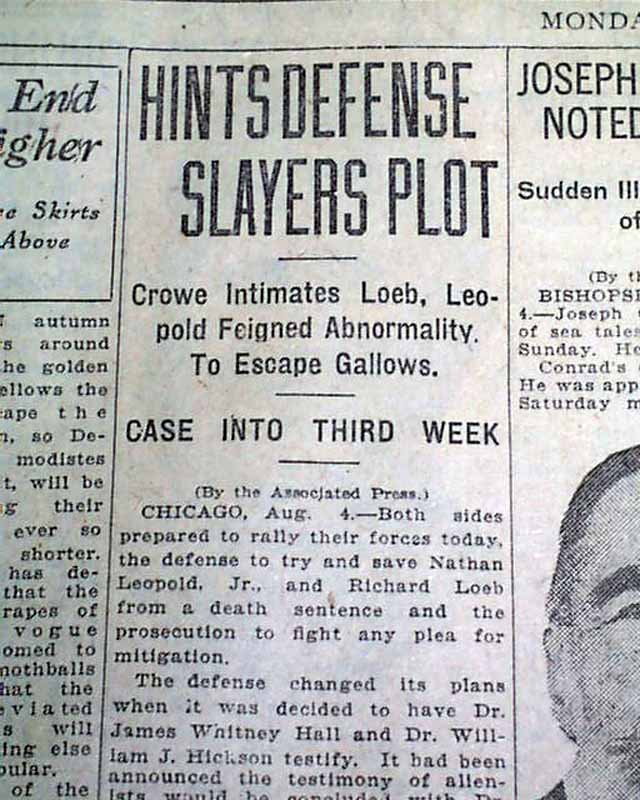
THE DETROIT NEWS, Aug. 4, 1924
- Leopold & Loeb trial
- Bobby Franks murder
- Thrill Killing case
The top of the front page has a one column heading on the Leopold
...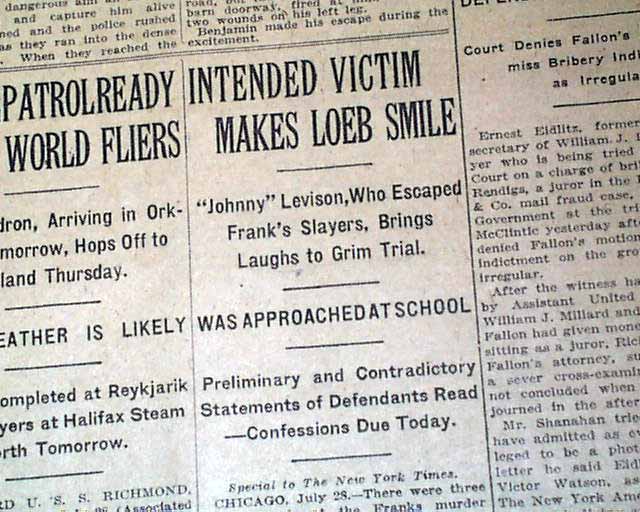
THE NEW YORK TIMES, July 29, 1924
- Leopold & Loeb trial
- Bobby Franks murder
- Thrill Killing case
The front page has a one column heading "INTENDED VICTIM MAKES
...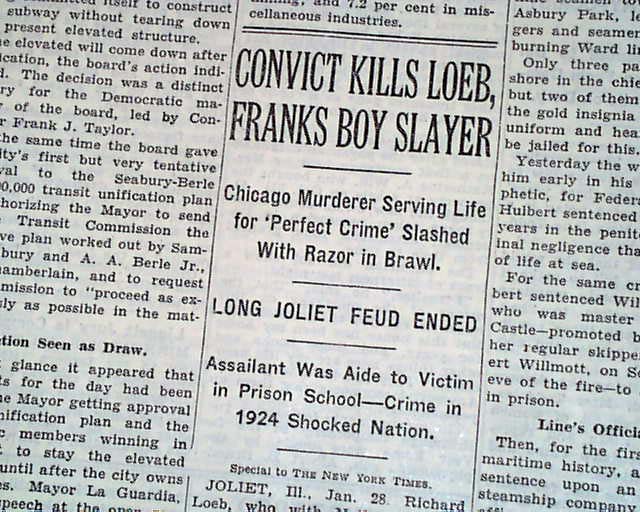
THE NEW YORK TIMES, Jan. 29, 1936
- Richard Loeb killed in prison
- Bobby Franks murderer
- Leopold and Loeb fame
The front page has a one column heading: "CONVICT
...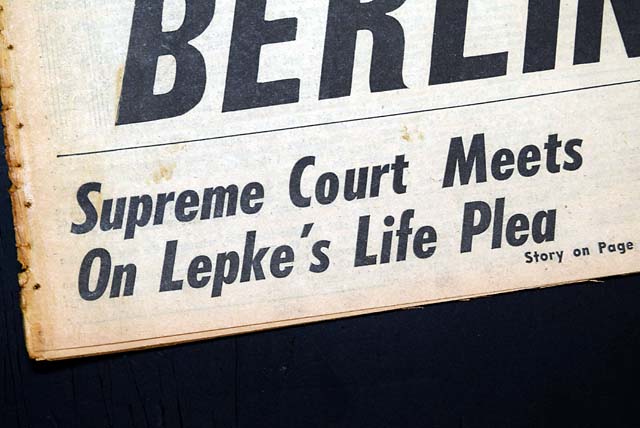
NEW YORK POST, March 5, 1944.
- Mob Boss Louis 'Lepke' Buchalter Execution
- Sing Sing Prison (day of) - appeal & SCOTUS
The bottom of the front page has a
...