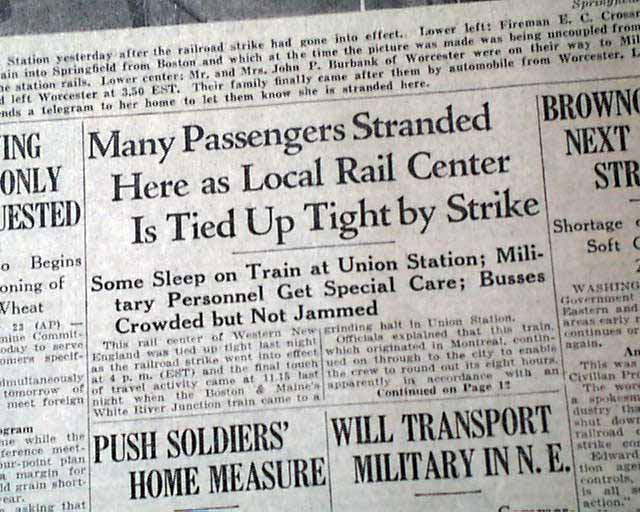
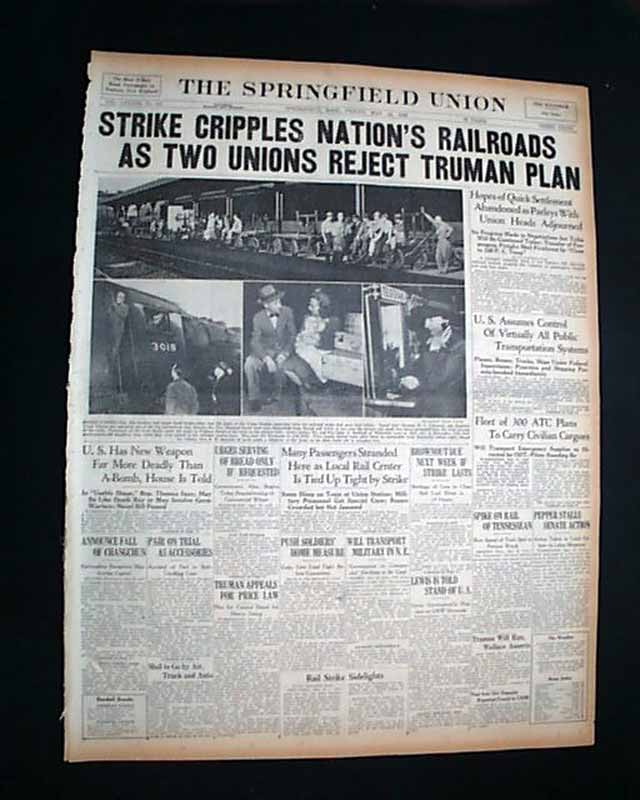
1946 railroad strike begins....
THE SPRINGFIELD UNION, Mass., May 24, 1946
- Railroad workers strike beginning
- Strike wave of 1945-1946
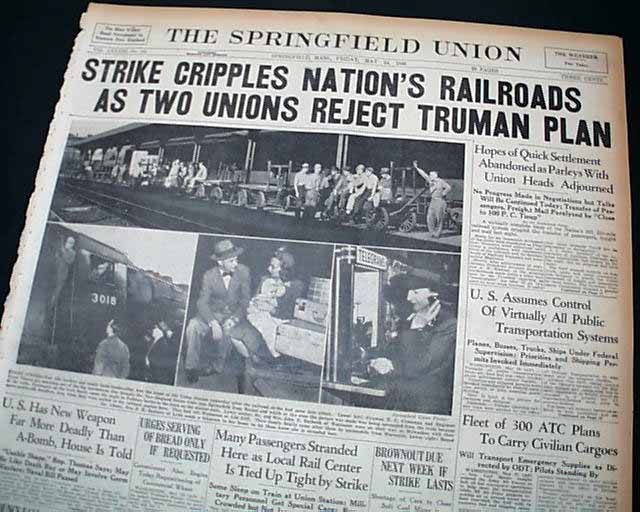
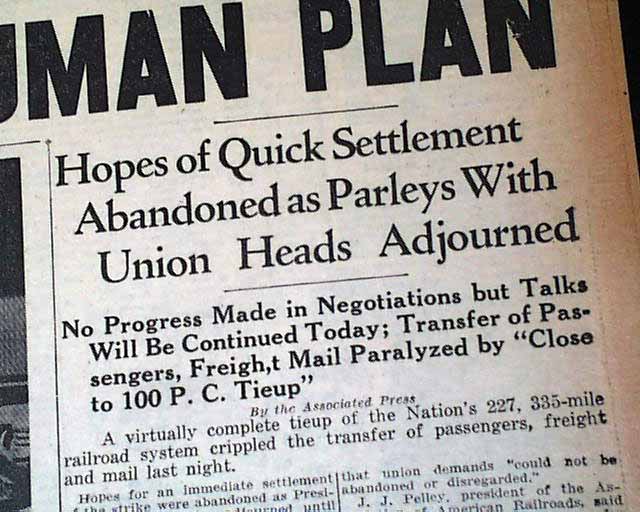
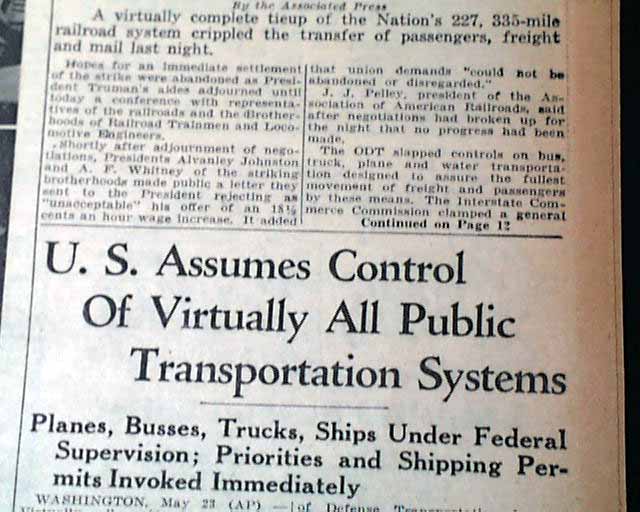
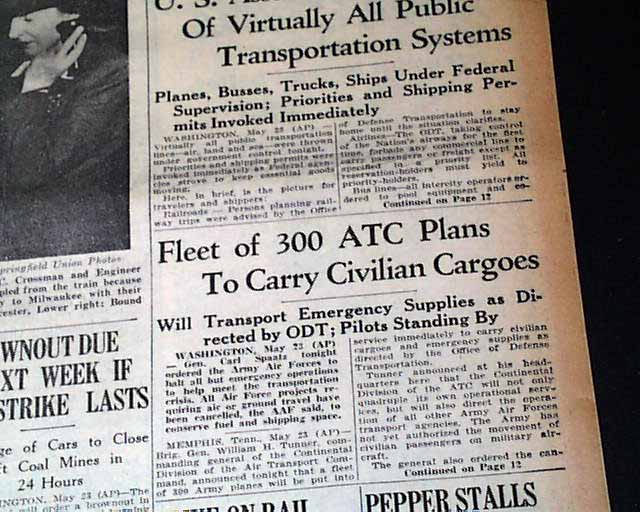
The front page has a nice banner headline: "STRIKE CRIPPLES NATION'S RAILROADS AS TWO UNIONS REJECT TRUMAN PLAN" with many subheads and related photo pictorial. (see images)
Complete with 28 pages, light toning at the margins, nice condition.
background: The Railroad Strike of 1946 stands as a watershed moment in American history because it forced a dramatic re-evaluation of the limits of presidential power and the rights of labor in a post-war society. Occurring at a time when the United States was the primary engine for global reconstruction, the strike threatened to cripple the domestic economy and cause literal starvation in war-torn Europe by halting the delivery of food and fuel. President Harry S. Truman’s aggressive response—seizing the railroads and threatening to draft striking workers into the Army—represented a radical departure from the pro-labor leanings of the New Deal era, signaling that the federal government would prioritize "national stability" over collective bargaining rights in essential industries. This high-stakes confrontation not only fractured the relationship between the Democratic Party and organized labor but also soured public opinion toward unions, providing the political ammunition necessary for Congress to pass the Taft-Hartley Act of 1947. Ultimately, the strike’s resolution shifted the trajectory of American labor law from one of expansion and protection to one of regulation and containment, a framework that continues to govern industrial relations in the United States today.
Other issues you may like
§ related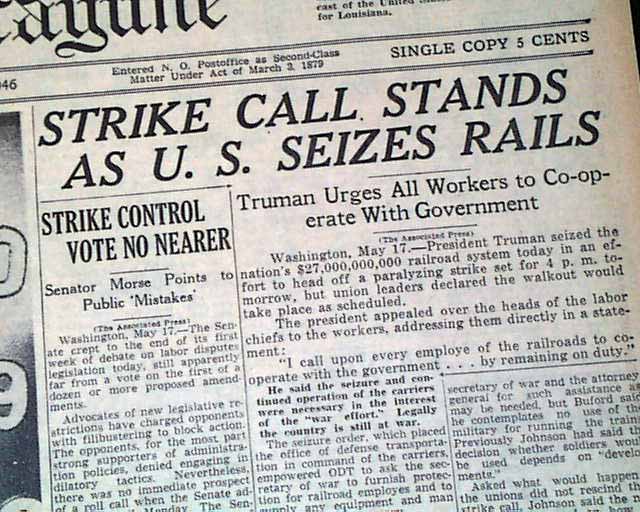
THE TIMES-PICAYUNE, New Orleans, Louisiana, May 18, 1946
- The great railroad strike of 1946
- President Harry Truman speaks
This 20 page newspaper has a three
...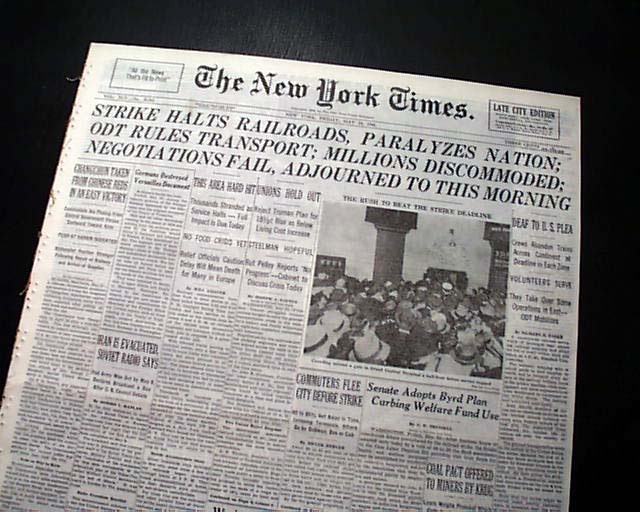
THE NEW YORK TIMES, May 24, 1946
- Railroad workers strike beginning
- Strike wave of 1945-1946
The front page has a nice banner headline: "STRIKE HALTS
...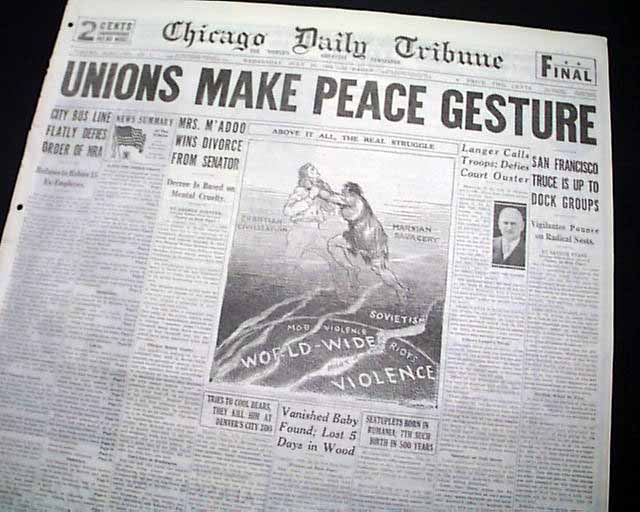
CHICAGO DAILY TRIBUNE, July 18, 1934
- 1934 West Coast waterfront strike (San Francisco)
- International Longshoremen's Association (ILA)
The front page has a
...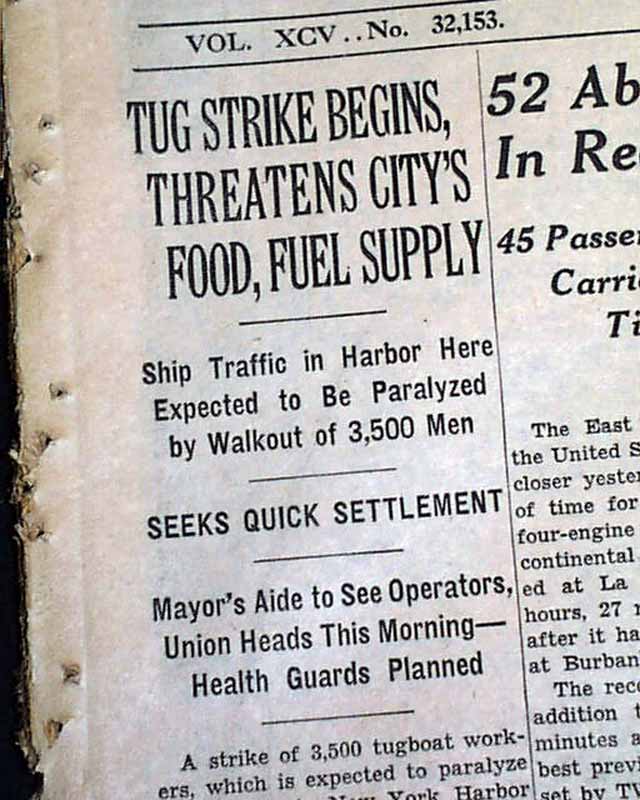
THE NEW YORK TIMES, Feb. 4, 1946
- New York City tugboat strike begins
The top of the front page has a one column heading: "TUG STRIKE BEGINS, THREATENS
...