1966 civil rights movement... Voting rights...
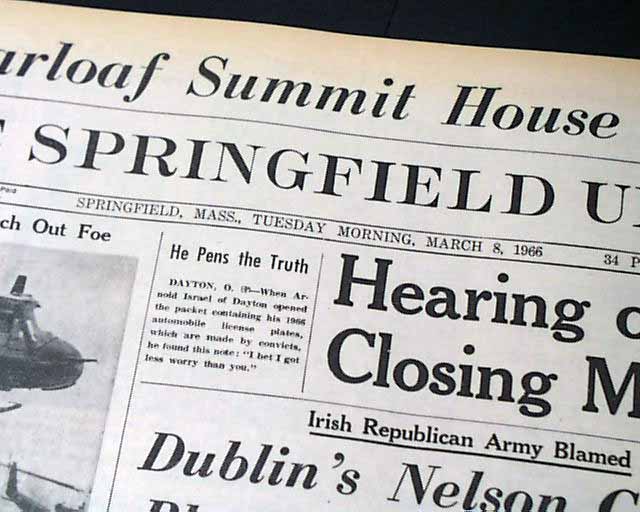
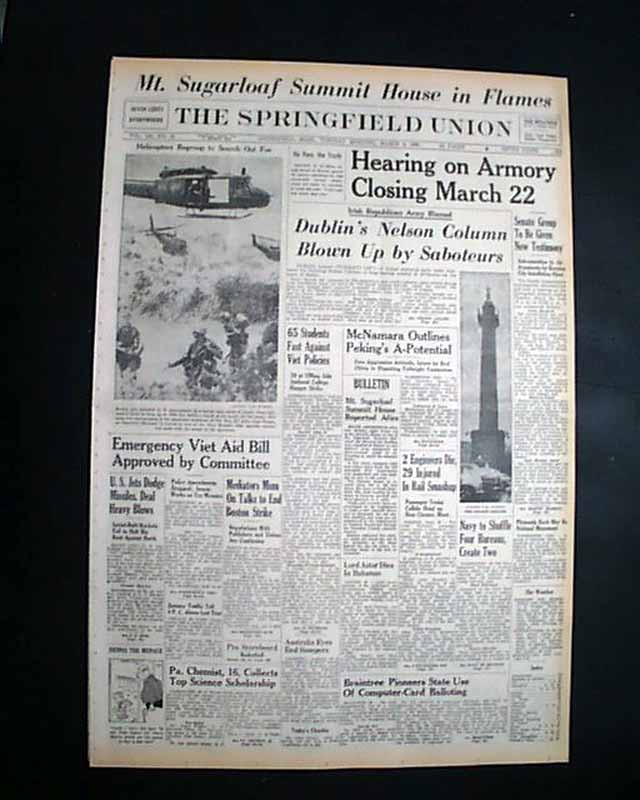
THE SPRINGFIELD UNION, Mass. March 8, 1966
- Voting Rights Act of 1965
- Civil Rights movement in the South
- United States Supreme Court
- South Carolina v. Katzenbach
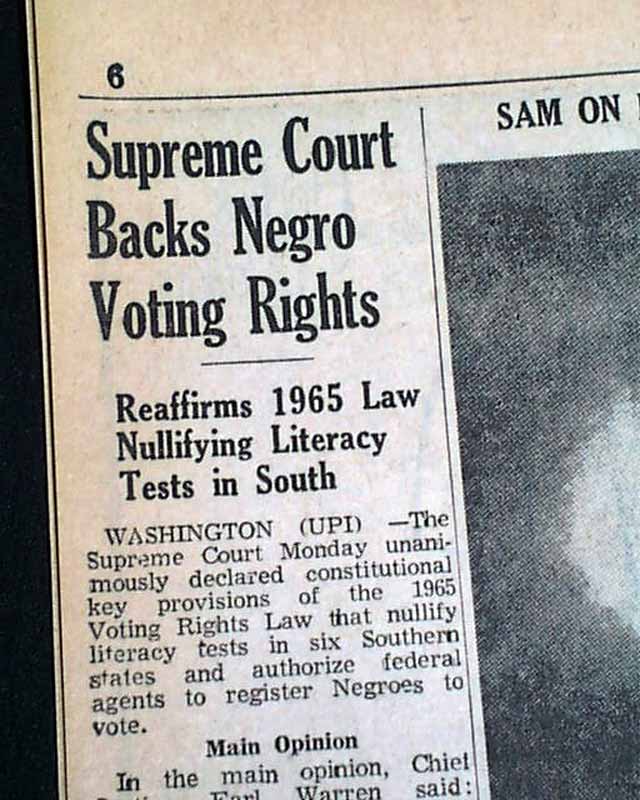
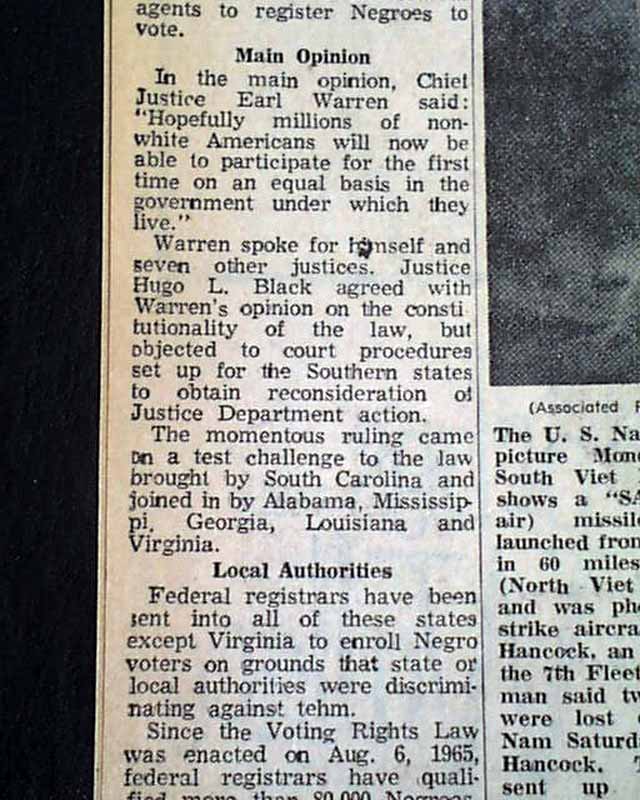
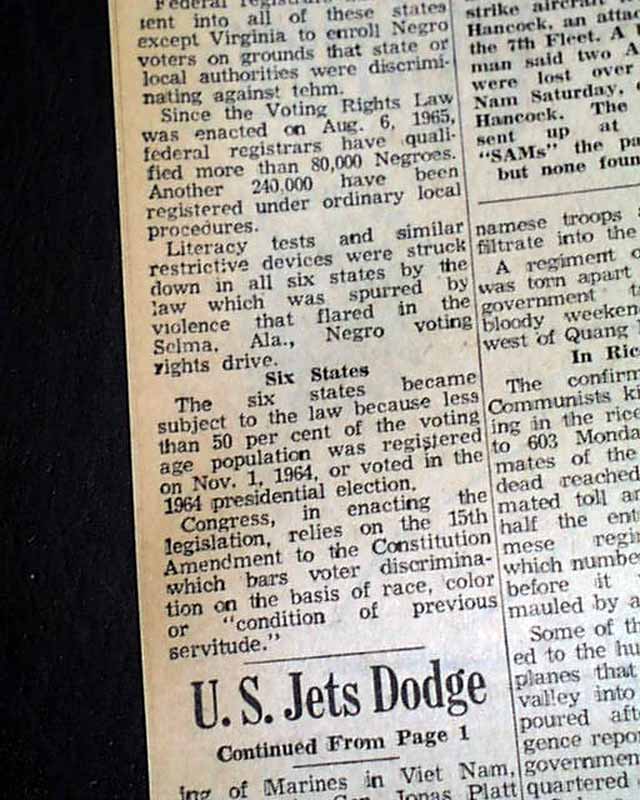
The top of page 6 has a one column heading: "Supreme Court Backs Negro Voting Rights" with subhead. (see images)
Complete with all 34 pages, light toning at the margins, nice condition.
background: On March 7, 1966, the United States Supreme Court delivered a decisive blow to institutionalized disenfranchisement with its ruling in South Carolina v. Katzenbach. Coming exactly one year after the brutal "Bloody Sunday" attacks in Selma, this landmark 8-1 decision upheld the constitutionality of the Voting Rights Act of 1965. South Carolina had challenged the federal government, arguing that the Act's "preclearance" requirements—which forced certain states to get federal approval before changing voting laws—violated states' rights. Chief Justice Earl Warren, writing for the majority, rejected this claim, asserting that Congress possessed the full authority under the 15th Amendment to use "stringent new remedies" to "banish the blight of racial discrimination in voting." By validating the federal government's power to strike down literacy tests and poll taxes, the Court ensured that the hard-won victories of the Selma marchers were legally unshakeable, effectively shifting the burden of proof from the disenfranchised citizens to the states attempting to restrict them.
Other issues you may like
§ related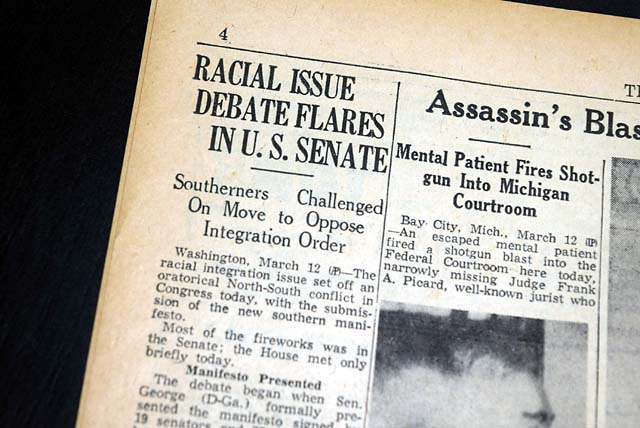
THE SPRINGFIELD UNION, Mass., March 13, 1956
- "Southern Manifesto"signing
- United States Congress presentation
- Defense of White Supremacy - racism
- "Jim Crow" era
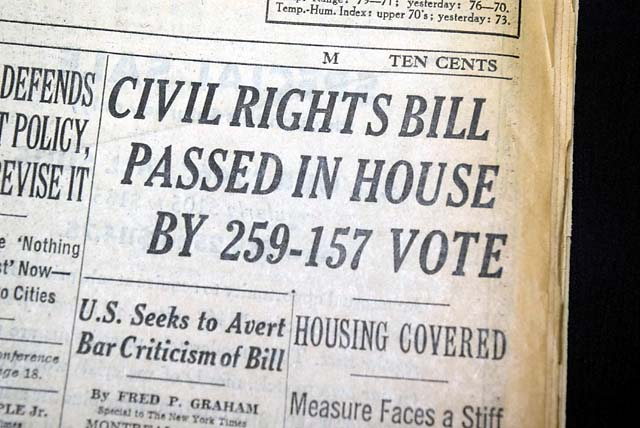
THE NEW YORK TIMES, Aug. 10, 1966
- Civil Rights movement of the 1960's
- Southern "Jim Crow" segregation
The top of the front page has a two column headline:
...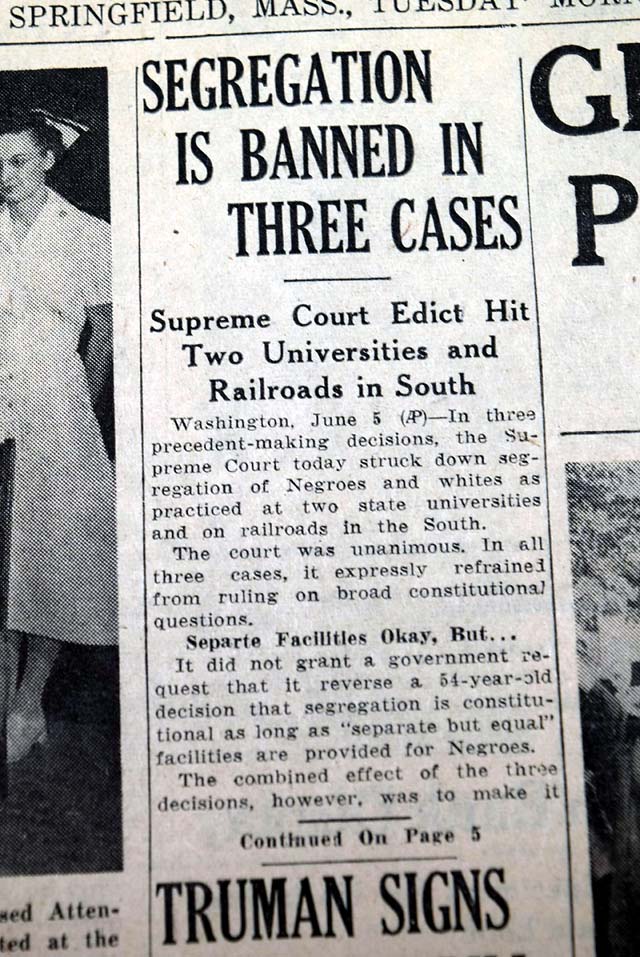
NEW YORK TIMES, June 6, 1950
- Colleges not permitted to discriminate based on race
- McLaurin vs. Oklahoma State Regents & more
- United States Supreme Court
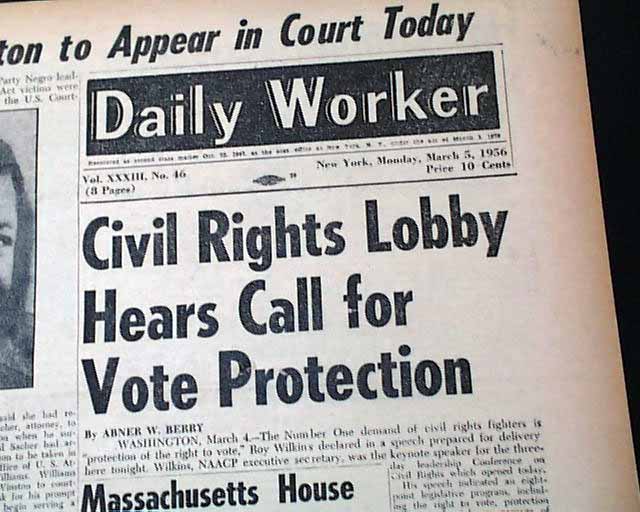
DAILY WORKER, New York, Feb. 16, 1956
- Civil Rights Movement
- Securing the right to vote
- NAACP leader Roy Wilkins
This publication, The Worker, represents the
...