1942 USS Lexington & the Battle of the Coral Sea... Midway...
THE NEW YORK TIMES, June 18, 1942
- USS Lexington & the Battle of the Coral Sea
- Chicago Tribune journalist Stanley Johnston
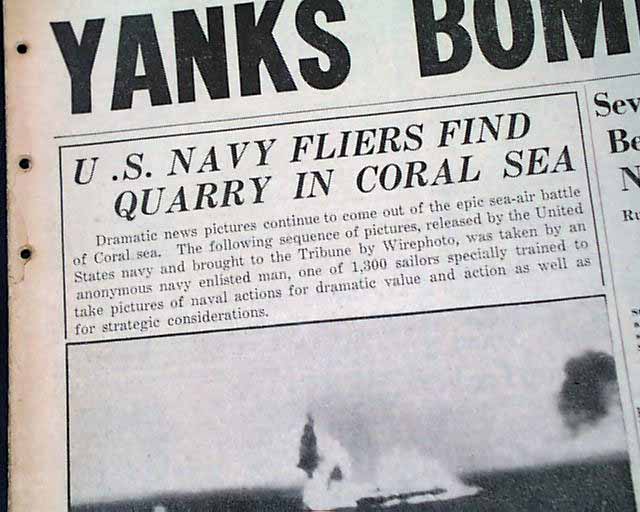
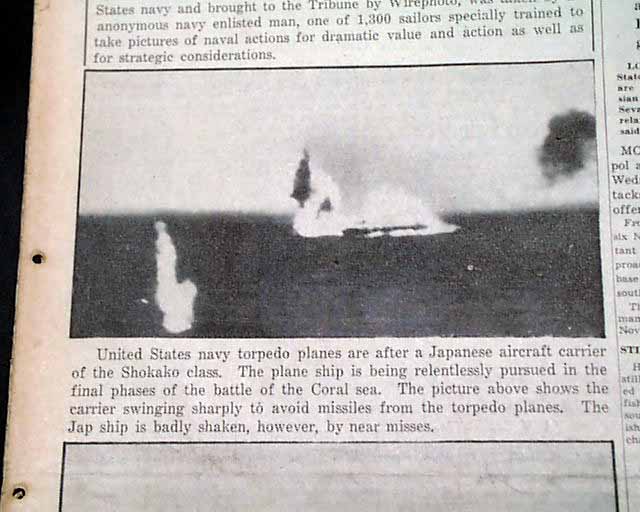
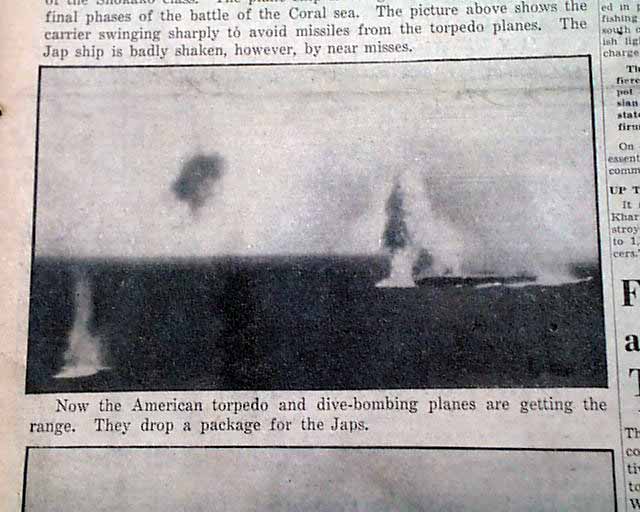
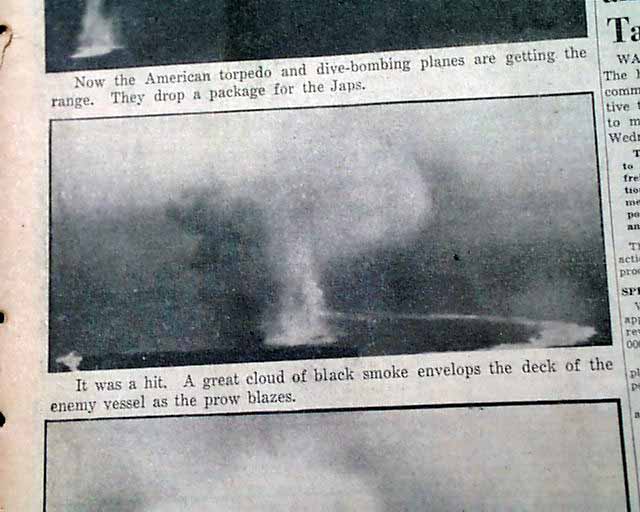
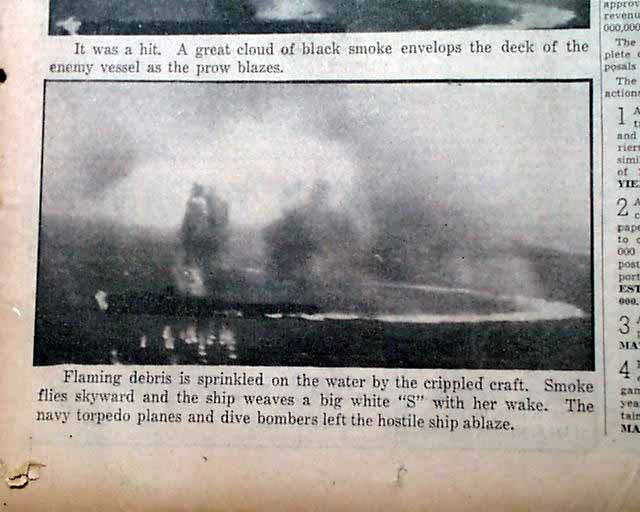
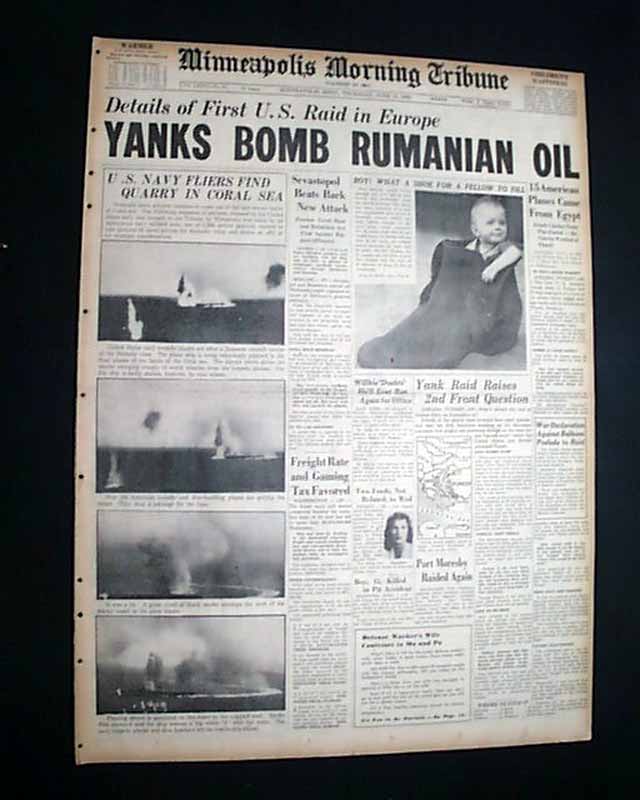
The first three column of the front page are taken up with four related photos with heading: "U.S. NAVY FLIERS FIND QUARRY IN CORAL SEA"
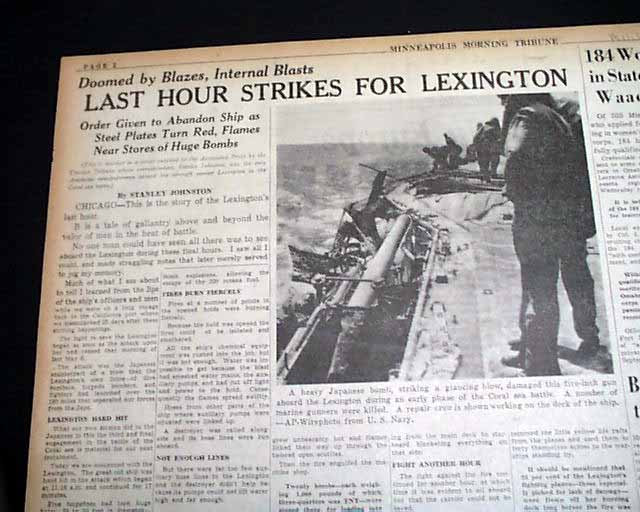
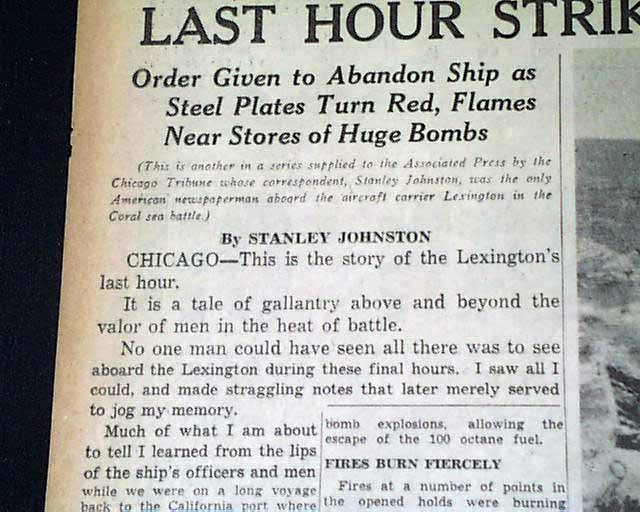
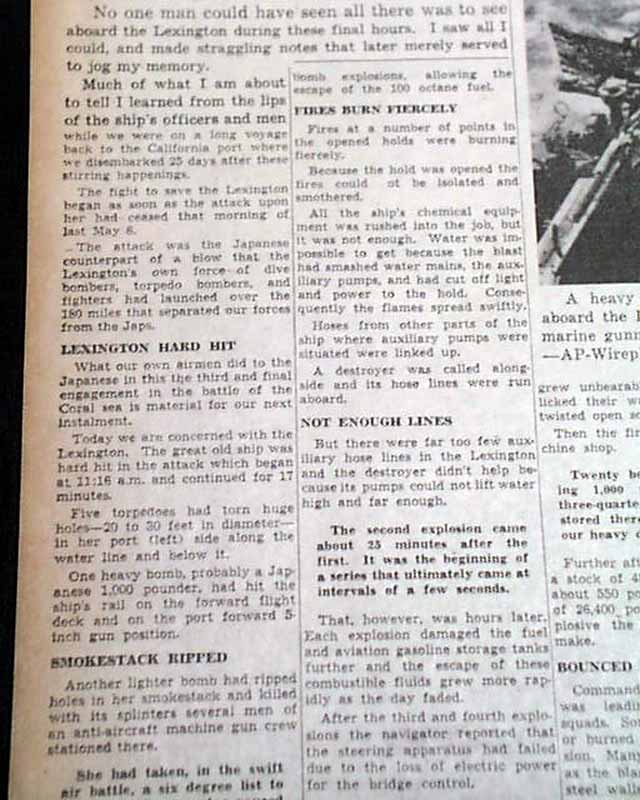
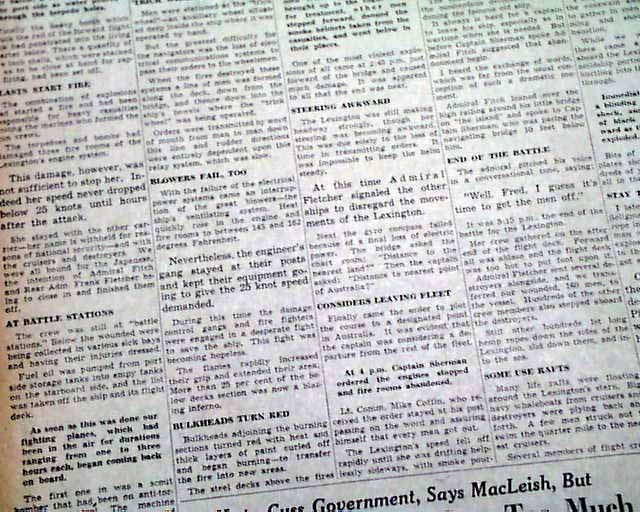
The top of page 2 has a five column heading: "LAST HOUR STRIKES FOR LEXINGTON" with lead-in: "Doomed by Blazes, Internal Blasts" and related photo. (see images)
Complete with 20 pages, light toning and minor wear at the margins, some small binding holes along the spine, generally nice.
background: Stanley Johnston’s account of the Lexington’s demise is defined by a haunting transition from a "victorious" ship to a doomed one, characterized by the eerie contrast between the calm on deck and the inferno below. He famously detailed how, after the initial torpedo strikes were seemingly under control, a massive internal explosion of gasoline vapors turned the ship’s guts into a furnace, yet the crew’s discipline remained unshakable. Johnston captured the surreal imagery of sailors calmly lining up their shoes on the flight deck before sliding down lines into the Pacific, and most iconically, the "ice cream line," where men scooped handfuls of melting chocolate and vanilla from the ship’s stores to enjoy a final treat in the sweltering heat before the order to abandon ship. His narrative reached its climax with the image of Captain Frederick Sherman, the last man to leave, sliding down a rope just before the "Queen of the Flat-tops" was torn apart by final, massive explosions, an ending Johnston described not as a panicked retreat, but as a dignified farewell to a beloved home.
Other issues you may like
§ related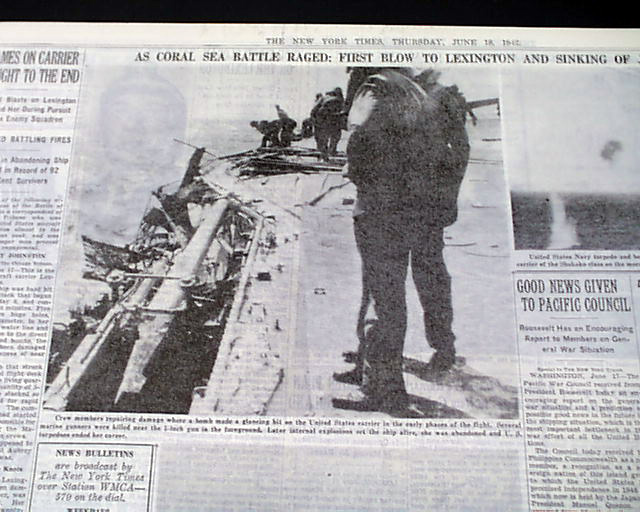
THE NEW YORK TIMES, June 18, 1942
- USS Lexington & the Battle of the Coral Sea
- Chicago Tribune journalist Stanley Johnston
- Battle of Midway aircraft carriers -
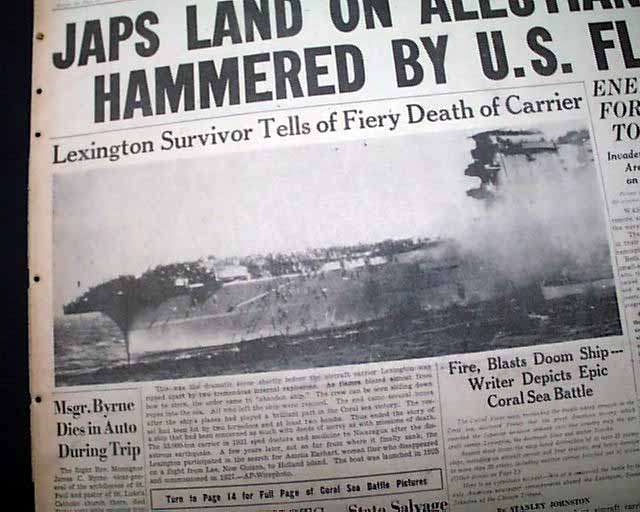
MINNEAPOLIS MORNING TRIBUNE, June 13, 1942
- USS Lexington 'Gray Lady' disaster
- Battle of Coral Sea - World War II
The front page has a very nice six column
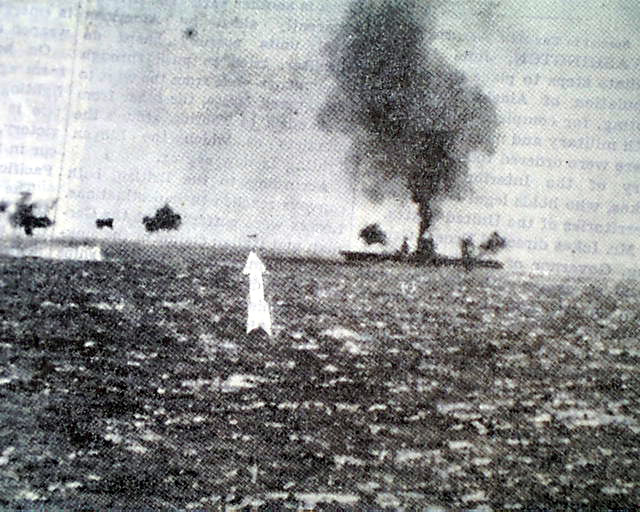
...
THE NEW YORK TIMES, June 17, 1942
- Battle of Midway naval & air engagement
- Attack on the United States Navy carrier described
- Chicago Tribune journalist
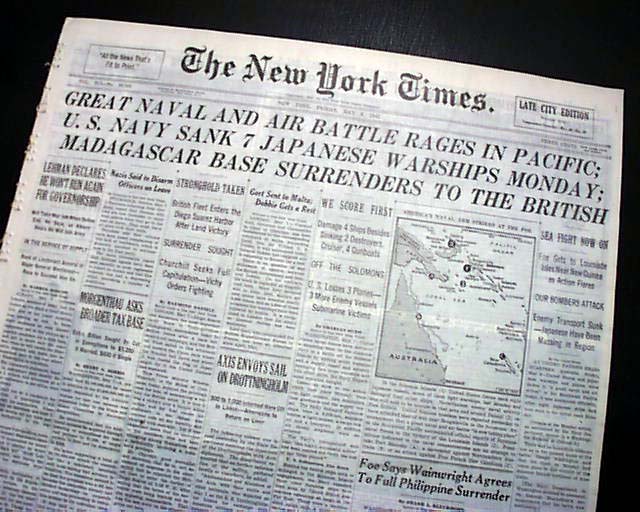
THE NEW YORK TIMES, May 8, 1942
- Battle of the Coral Sea is on
- Imperial Japanese verses U.S. Navy
- USS Lexington & Yorktown fame
- Pacific Ocean theater - aircraft