On Mormon wives testifying against their husbands...
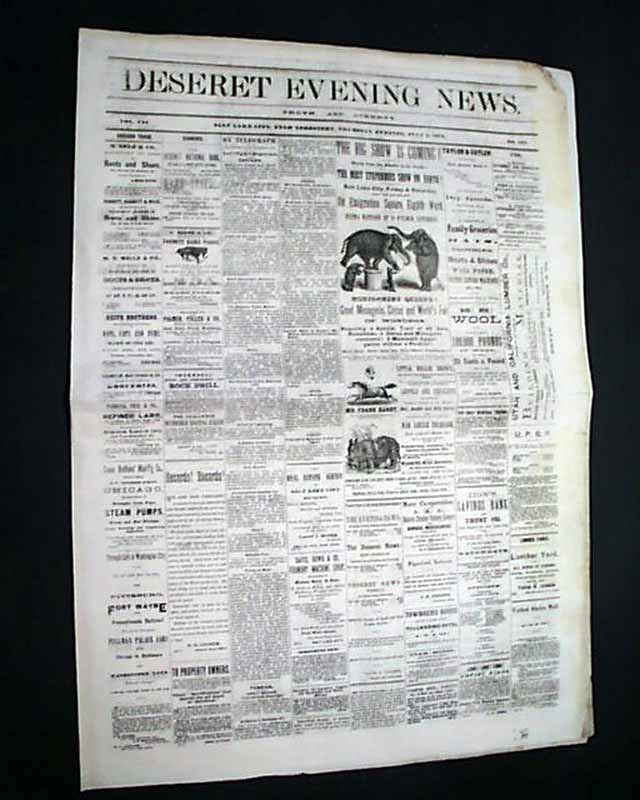
DESERET EVENING NEWS, Salt Lake City, Utah Territory, July 9, 1874
- Mormons - Mormons - LDS
- Secular vs. Ecclesiastical Authority
- Targeting the "School of the Prophets"
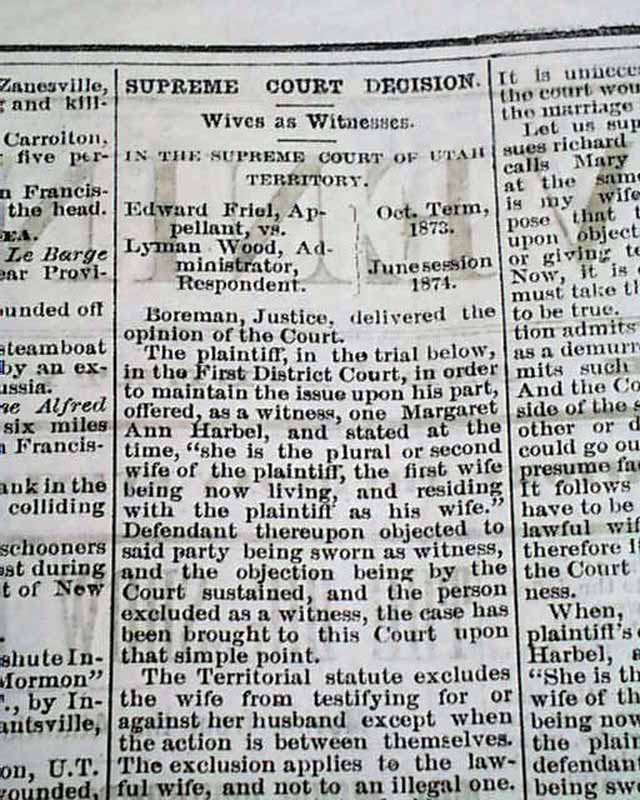
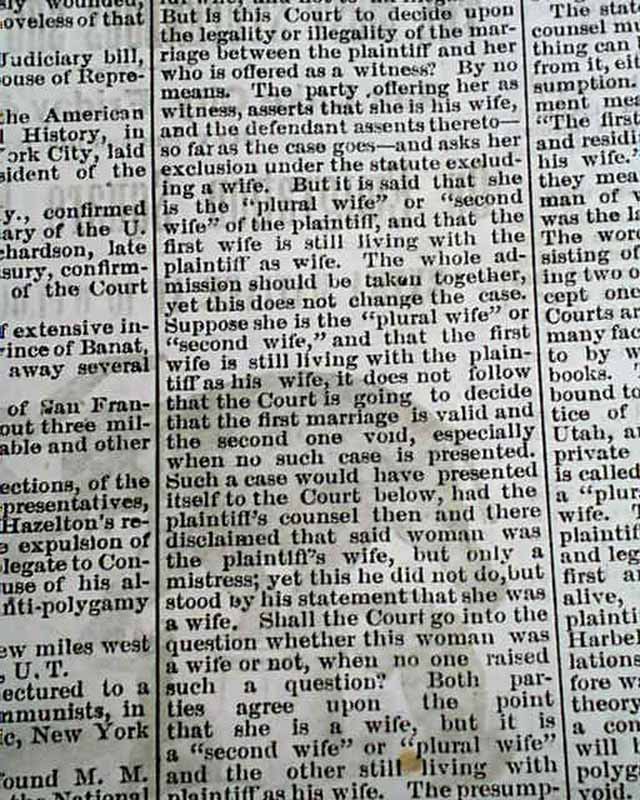
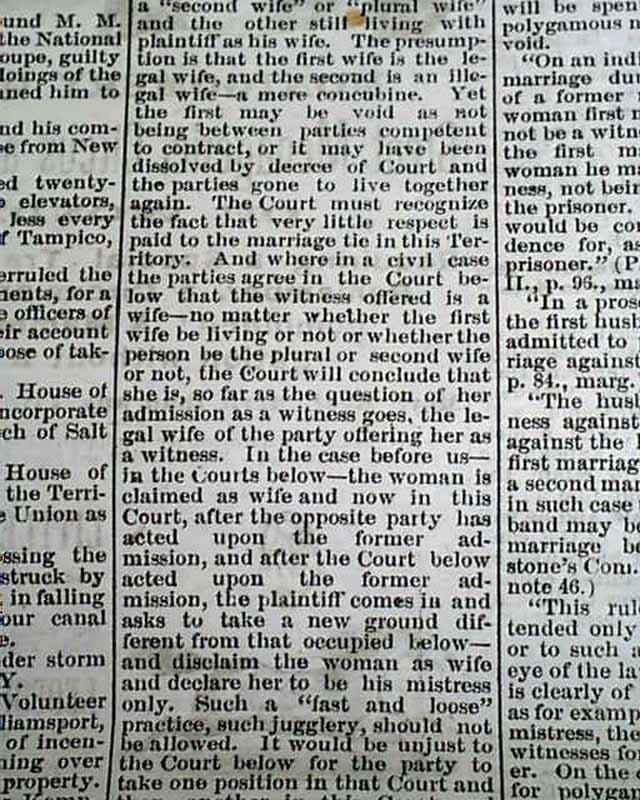
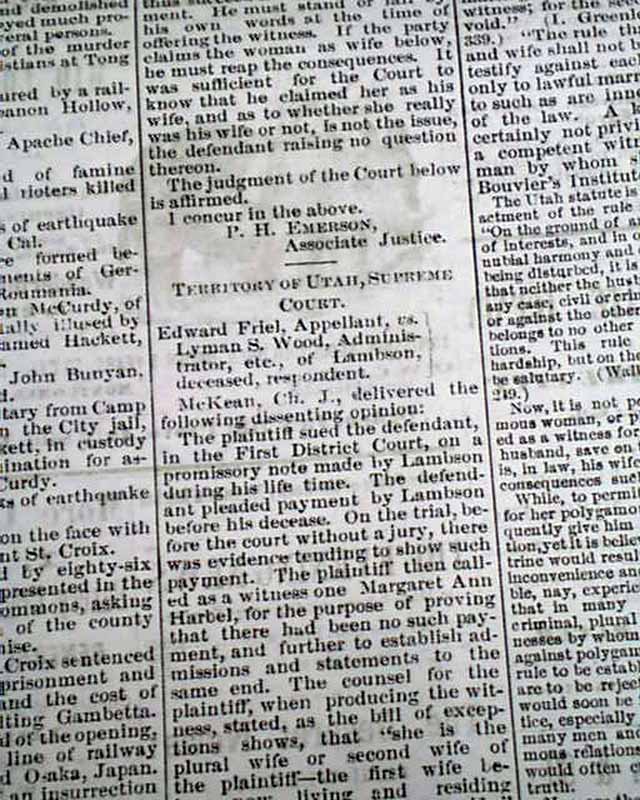
Page 2 has nearly two columns taken up with the details report of a Utah Supreme Court case concerning wives testifying as witnesses against their husbands.
The report is headed "Supreme Court Decision" "Wives as Witnesses" being the case of Edward Friel vs. Lyman Wood.
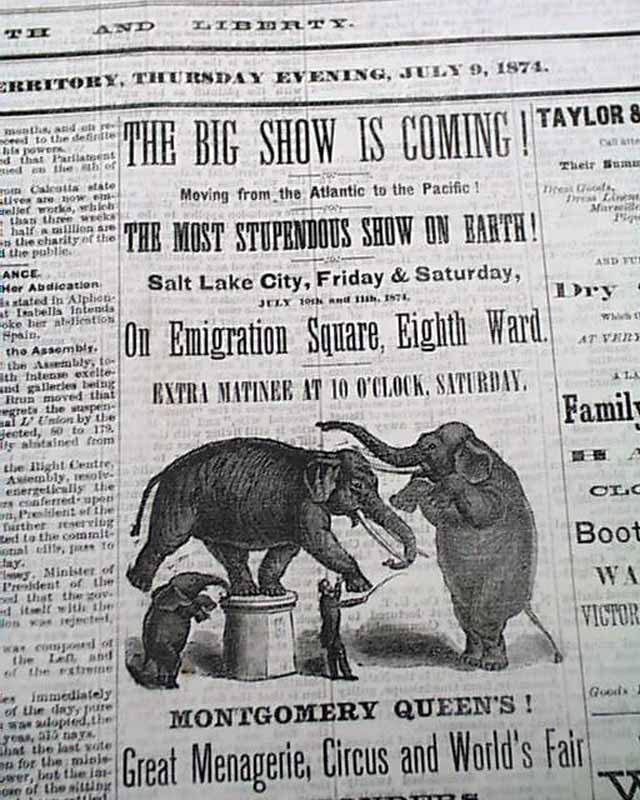
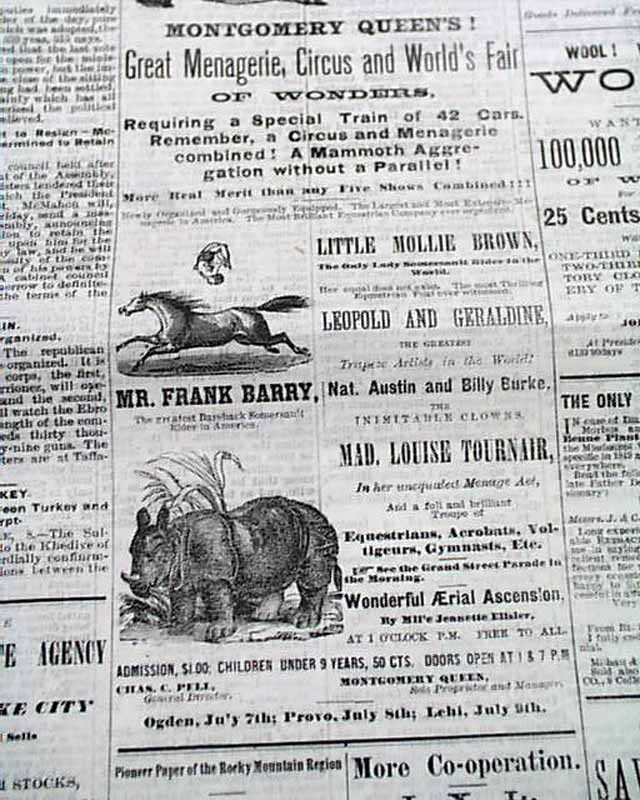
The front page has a lengthy, illustrated advertisement for a circus coming to Salt Lake City. The photos include the details.
Four pages, very nice condition. The folder size noted is for the issue folded in half.
Background: The 1874 case of Friel v. Wood stands as a pivotal moment in the legal history of the American West, representing the direct collision between the Lyman Wood-supported Mormon "theodemocracy" and the federal government's insistence on secular judicial supremacy. Historically significant for challenging the economic isolationism of Brigham Young’s Zion's Cooperative Mercantile Institution (ZCMI), the case arose when Edward Friel, a non-LDS merchant, sued to recover a debt that Wood sought to avoid under the protection of church-mandated boycotts against "Gentile" businesses. By ruling in favor of Friel, the Supreme Court of the Territory of Utah effectively dismantled the legal shield of the School of the Prophets, a secretive ecclesiastical body that coordinated trade exclusively among church members. This decision signaled to the LDS leadership that religious covenants could not supersede federal contract law or interfere with the commercial rights of outsiders, marking a crucial step in the federal "judicial crusade" that eventually forced the integration of Utah’s unique ecclesiastical economy into the broader United States market system.
Other issues you may like
§ related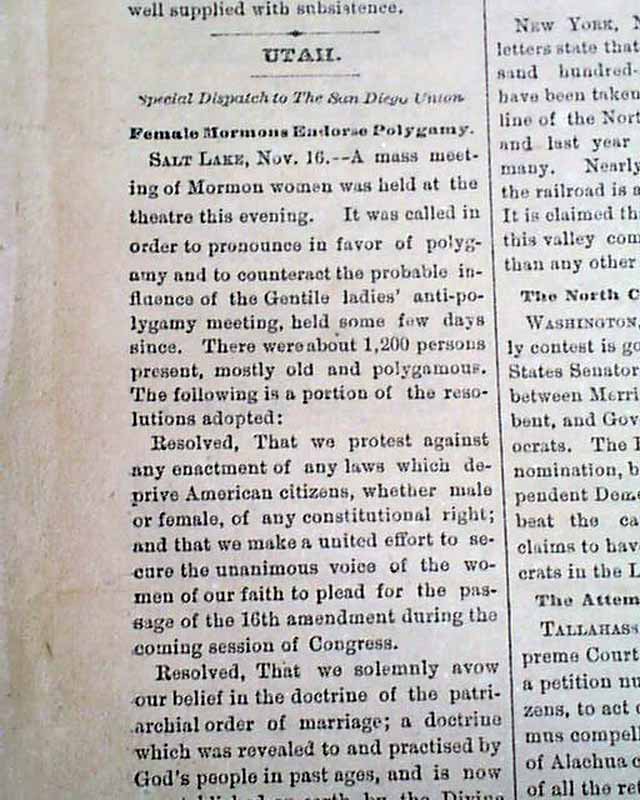
THE SAN DIEGO UNION, California, Nov. 17, 1878
- Mormons Mormonism
- Women & polygamy
The front page has an article: "UTAH" "Female Mormons Endorse Polygamy"
...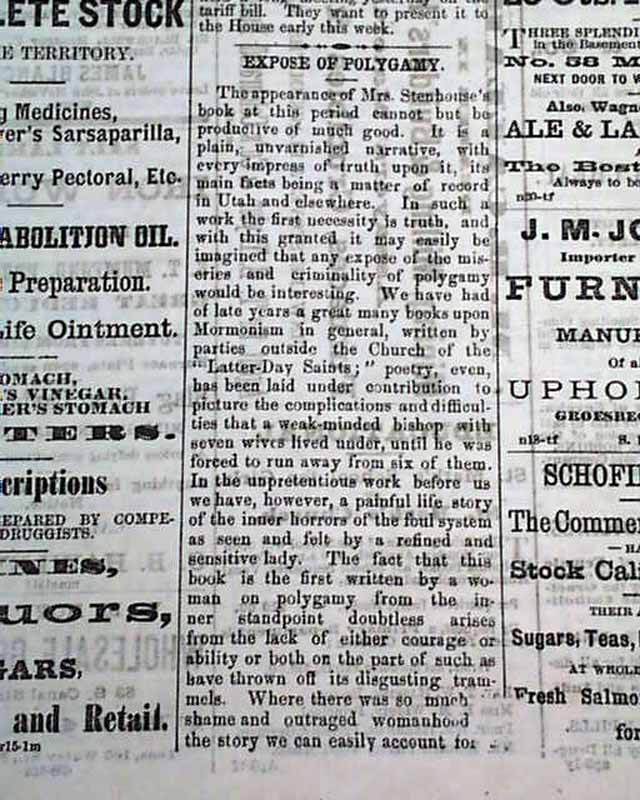
SALT LAKE DAILY TRIBUNE & UTAH MINING GAZETTE, April 9, 1872
- "Expose of Polygamy in Utah" (plural marriages) released
- Woman author Fanny Stenhouse
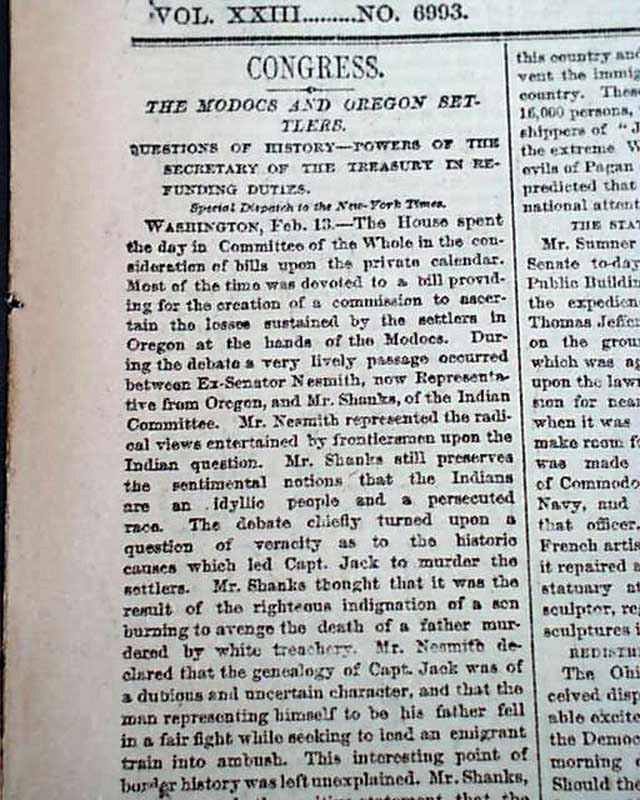
THE MISSOURI REPUBLICAN, St. Louis, Feb. 9, 1879 Page 7 has an article: "The Mormon Question" "Petition of the Anti-Polygamy Society to Congress" datelined
...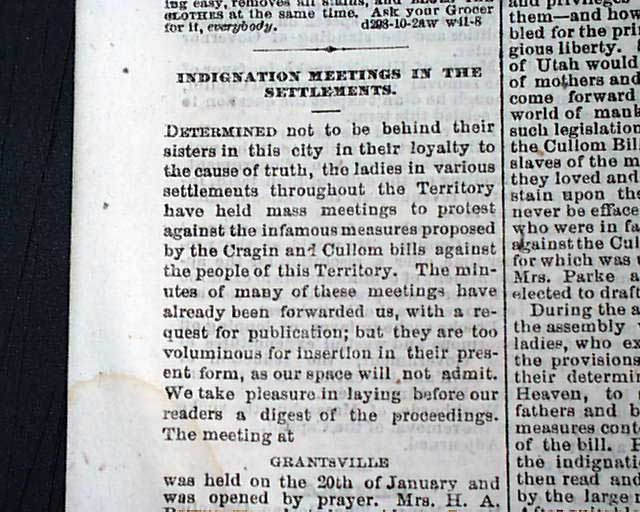
THE DESERET NEWS, Salt Lake City, Utah, Feb. 2, 1870
- Mormons - Mormonism
- Utah polygamy argument
This newspaper was published 26 years before Utah became a
...