
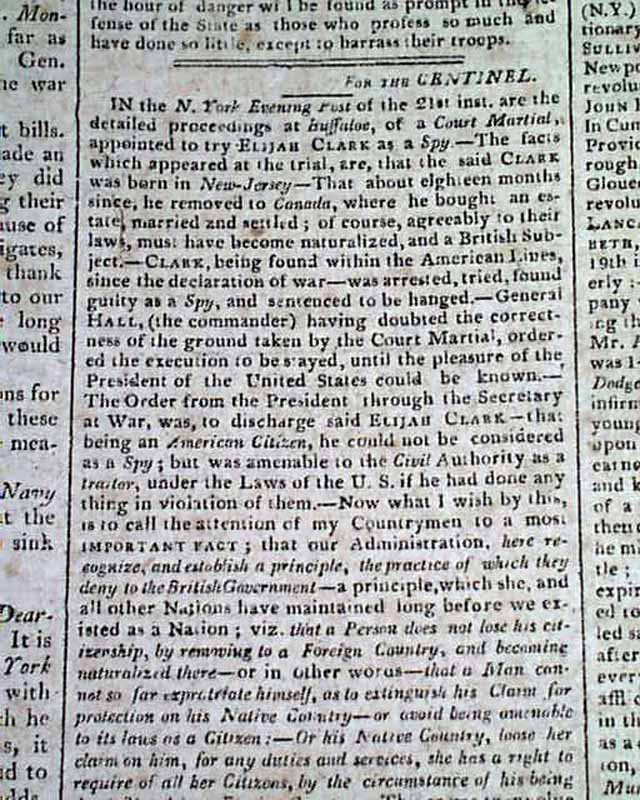
Trial and conviction of a spy...
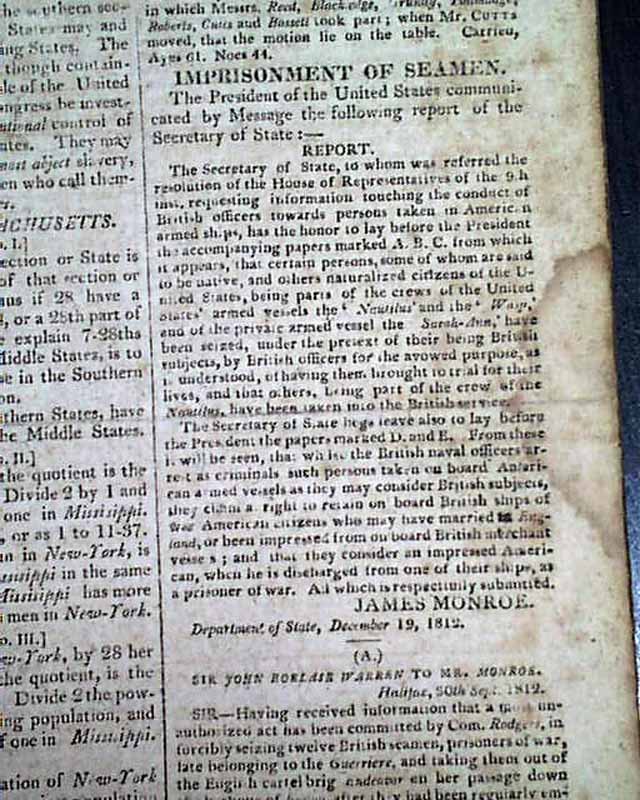
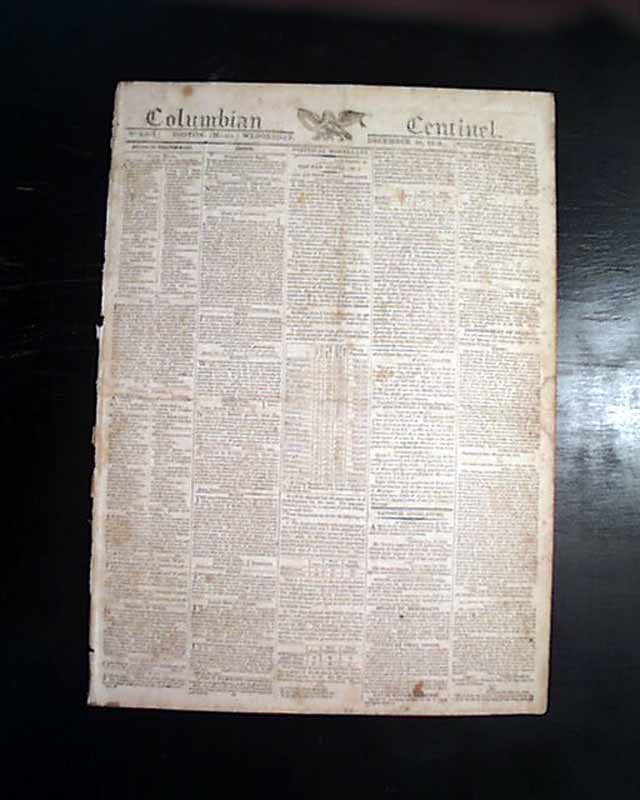
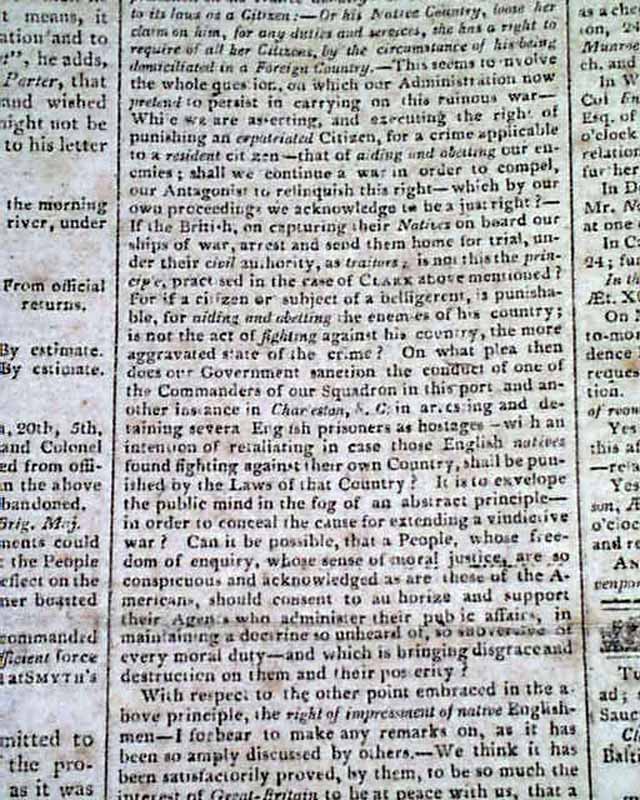
COLUMBIAN CENTINEL, Boston, Dec. 30, 1812 Page 2 has an interesting report, taking about half a column, beginning: "...proceedings at Buffaloe, of a Court Martial appointed to try Elijah Clark as a Spy. The facts which appeared at the trial are that the said Clark was born in New Jersey...he removed to Canada...must have become naturalized & a British subject. Clark, being found within the American Lines since the declaration of war--was arrested, tried, found guilty as a Spy, and sentenced to be hanged...." and the balance of the article reports the various details of his situation.
Rarely do we find accounts of trials for spying.
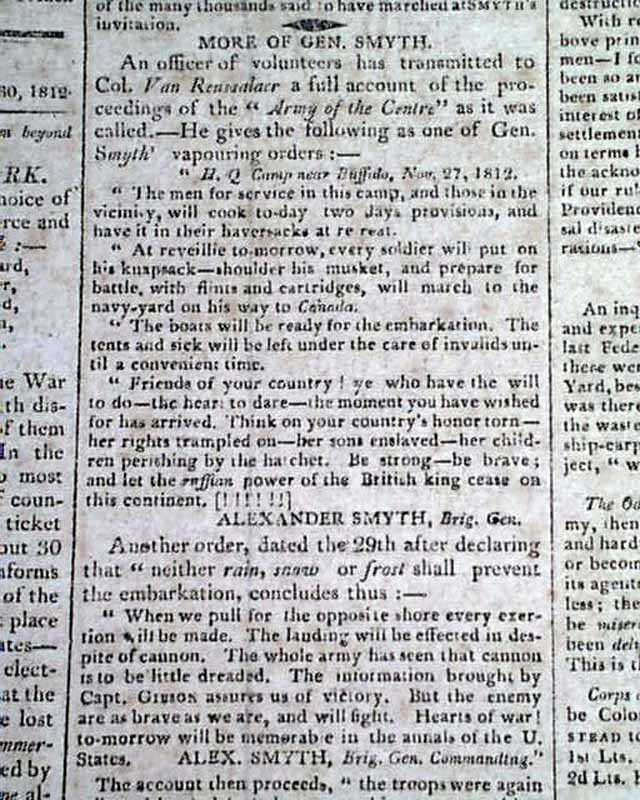
Other reports on the War of 1812.
Four pages, scattered foxing, good condition.
Background: The historical significance of Elijah Clark’s 1812 trial lies at the chaotic intersection of early American citizenship law, military jurisdiction, and civil liberties during wartime. The case is an exceedingly rare specimen in American legal history because it forced the Madison administration to legally define the boundaries of national allegiance at a time when the concept of citizenship was still fluid. By overruling the military court-martial, Madison established a vital legal precedent: the United States government maintained that native-born Americans could not arbitrarily cast off their citizenship (expatriate) to become British subjects, meaning the military lacked the constitutional authority to try them as alien spies. Instead, such citizens had to be tried for treason in a civil court with full constitutional protections. This distinctively rare intersection of an espionage trial, the rejection of the right to expatriation, and a presidential intervention safeguarding civilian legal rights over military tribunals makes the Clark case a foundational milestone in the evolution of American constitutional law during a national crisis.
Other issues you may like
§ related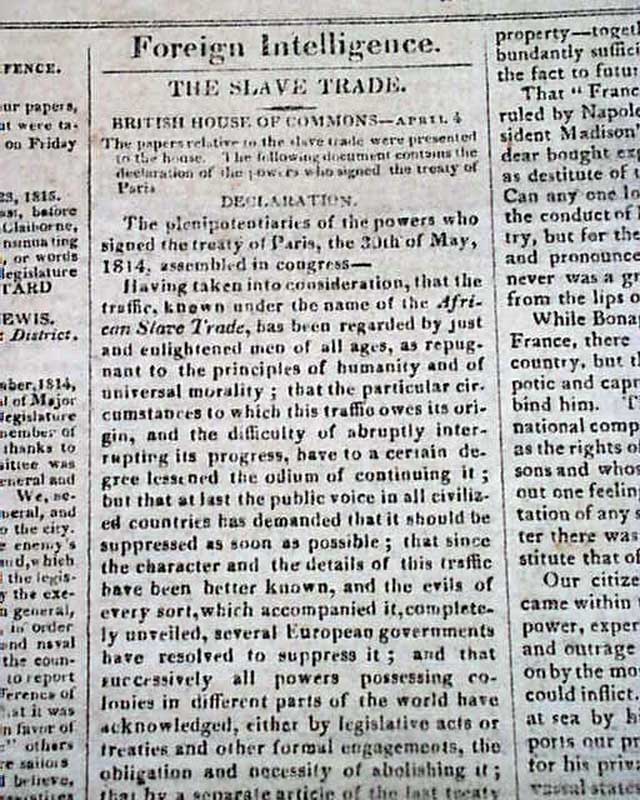
THE WEEKLY MESSENGER, Boston, June 2, 1815 The front page has most of a column taken up with: "The Slave Trade". Nearly half of the front page is tan up
...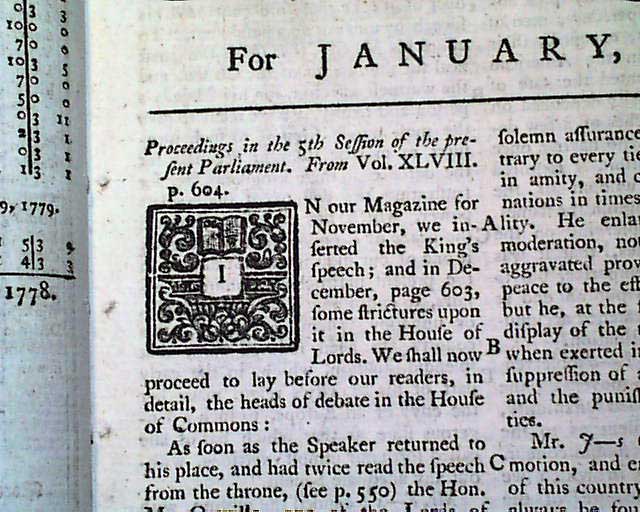
THE GENTLEMAN'S MAGAZINE, London, January, 1779
- Abraham Carlisle & John Roberts
- Treason trials - Revolutionary War
The first article: "Summary of Proceedings
...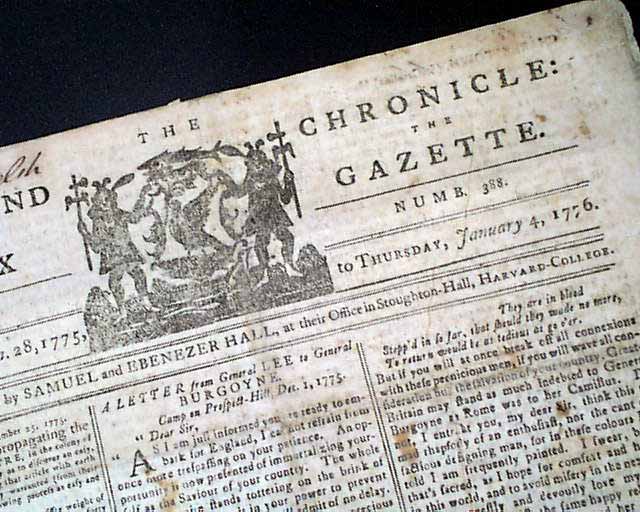
NEW ENGLAND CHRONICLE OR THE ESSEX GAZETTE, Cambridge, Jan. 4, 1776
- Traitor Dr. Benjamin Church
- British General Thomas Gage
- American Revolutionary War
- Great
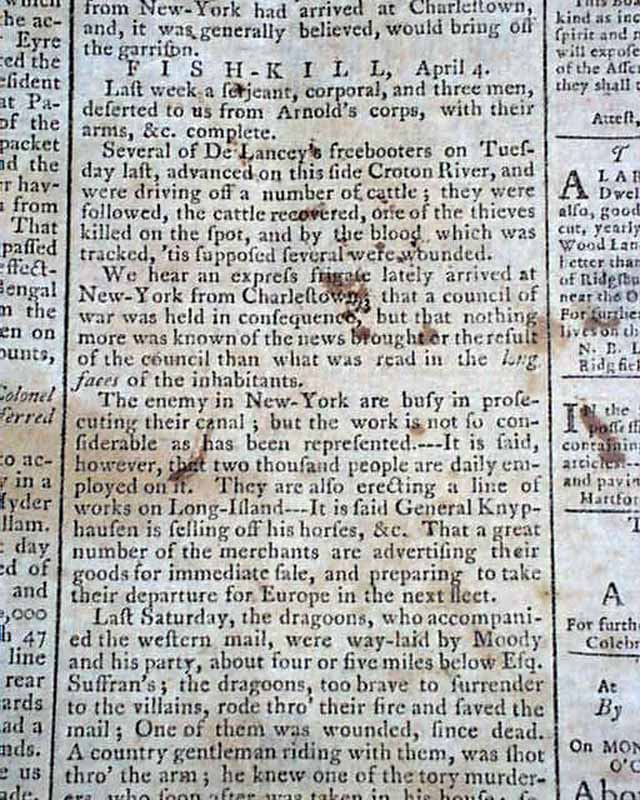
THE CONNECTICUT COURANT & WEEKLY INTELLIGENCER, Hartford, April 9, 1782
- American Revolutionary War
- America sympathizers jailed
- Independence ?
Page 2 includes:
...