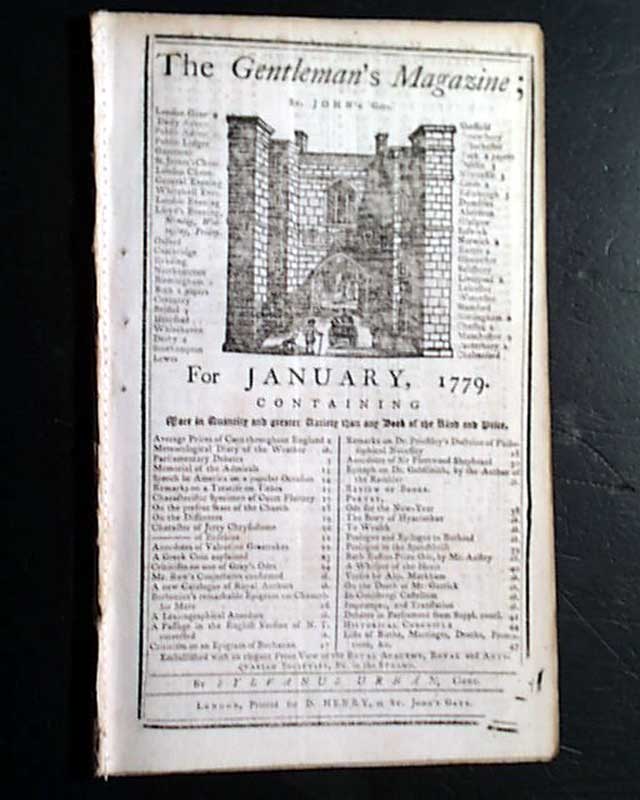
On the Roberts & Carlisle treason... Discussion on the American war...
THE GENTLEMAN'S MAGAZINE, London, January, 1779
- Abraham Carlisle & John Roberts
- Treason trials - Revolutionary War
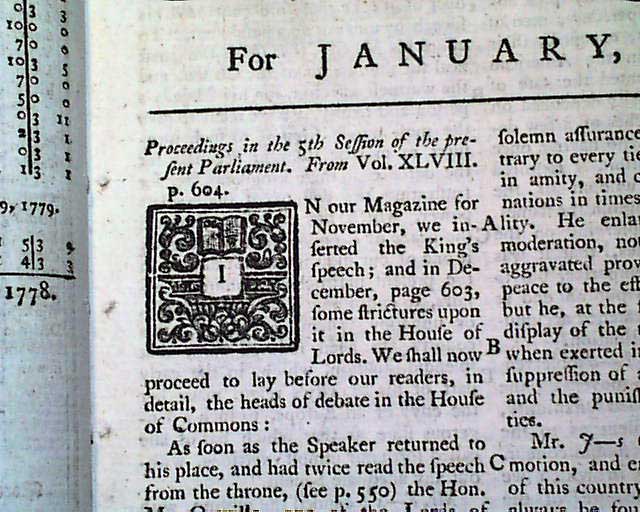
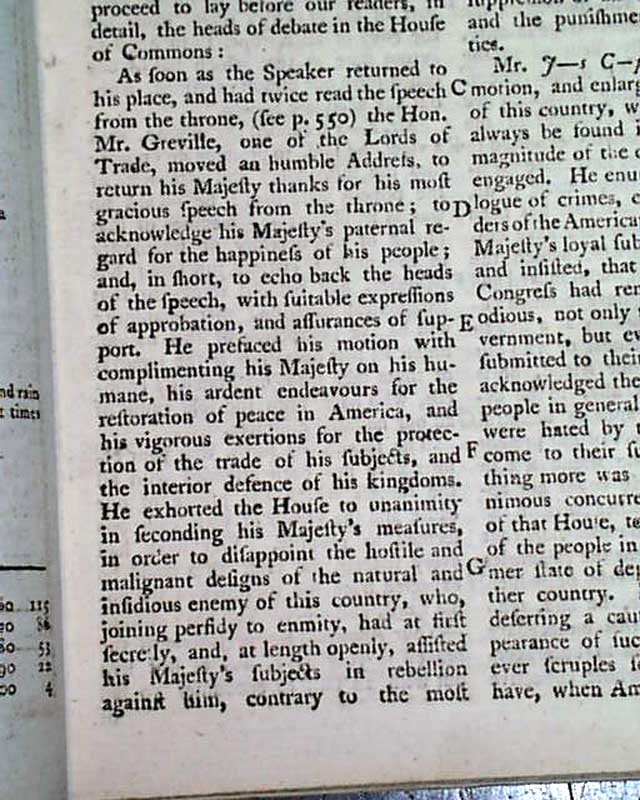
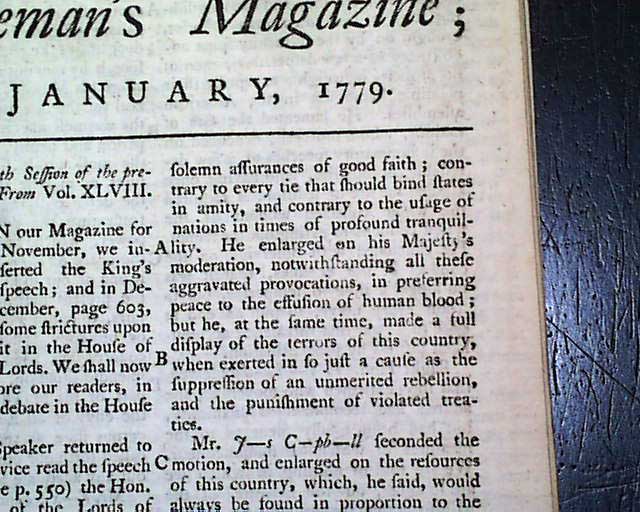
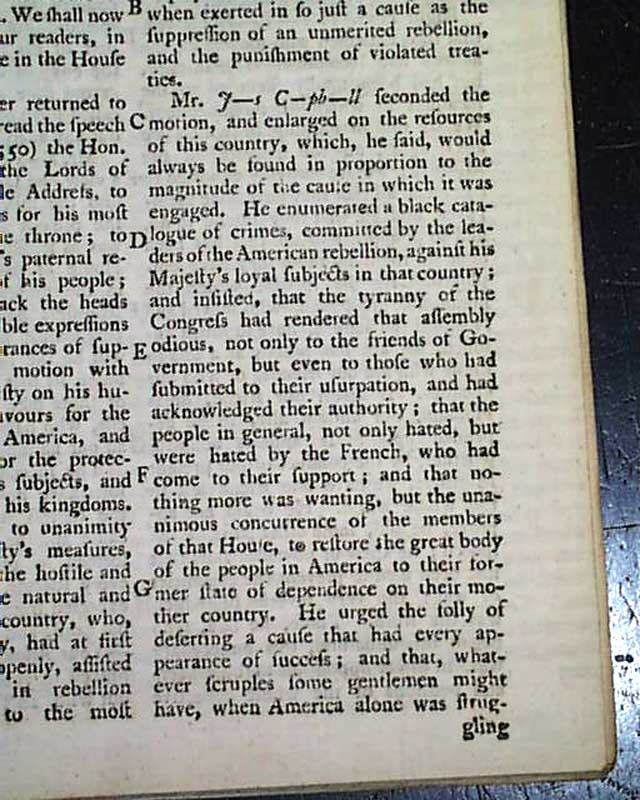
The first article: "Summary of Proceedings in the Present Parliament" takes ten pages and includes much talk of the on-going Revolutionary War, bits including: "...He enumerated a black catalogue of crimes committed by the leaders of the American rebellion against his Majesty's loyal subjects in that country..." and further on: "...he took occasion to lament the melancholy fate of those brave men who laid down their arms at Saratoga, languishing, he said, under the power of a set of men who have violated every idea of public faith..." and too much more to mention here.
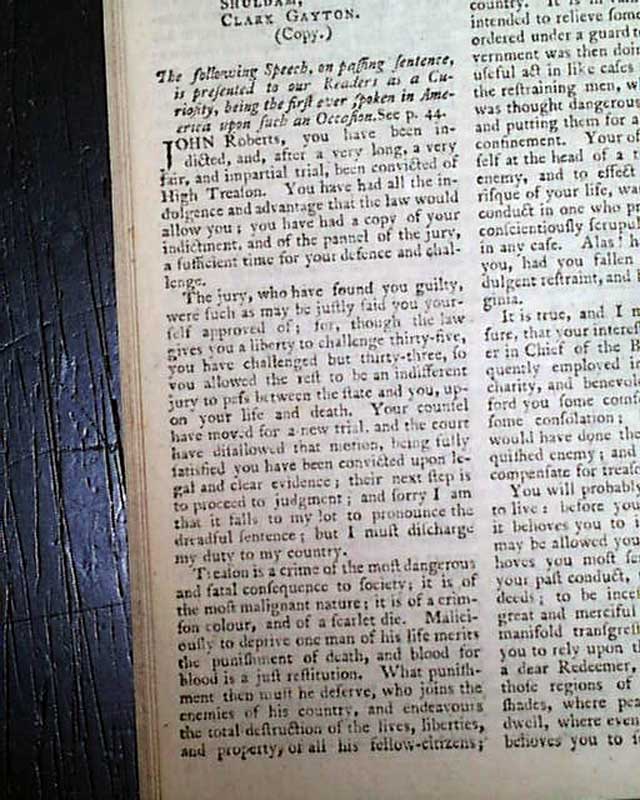
There is an article on the speech of a judge passing sentence of high treason on John Roberts. The report begins: "John Roberts, you have been indicted, and, after a very long, a very fair, & impartial trial, been convicted of High Treason..." and ends with: "...You shall be taken back to the place from whence you came & from thence to the place of execution & there to be hanged by the neck until dead. May God be merciful to your soul!"
The internet provides considering reporting on this treason case of John Roberts, victims of a politically motivated sentence for treason.
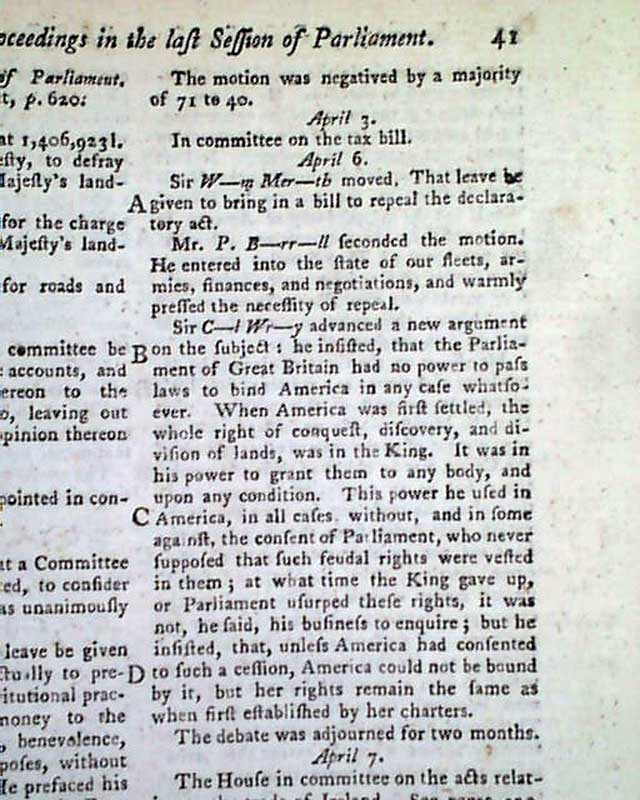
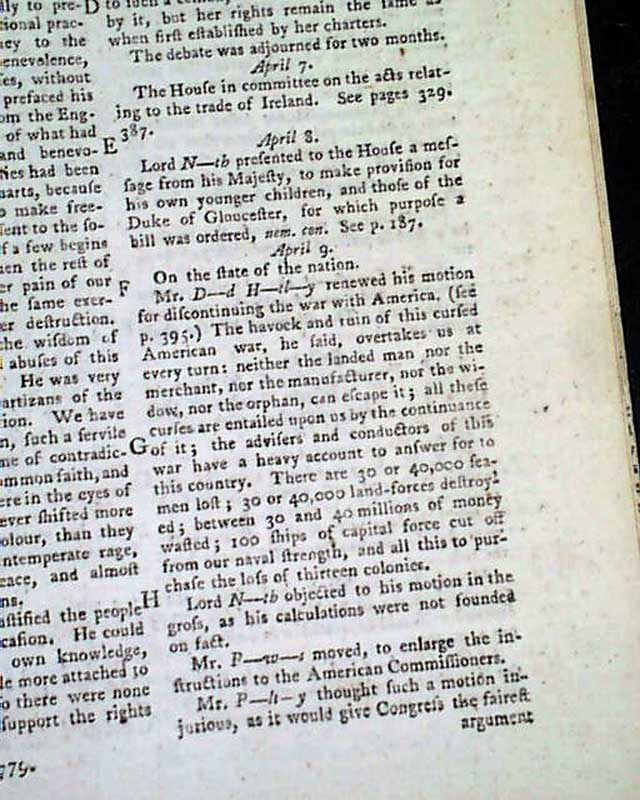
Half a page has discussion in Parliament on the war, bits including: "...that the Parliament of Great Britain had no power to pass laws to bind America in any case whatsoever..." and further on: "....renewed his motion for discontinuing the war with America. The havoc & ruin of this cursed American war, he said, overtakes us at every turn..." and more.
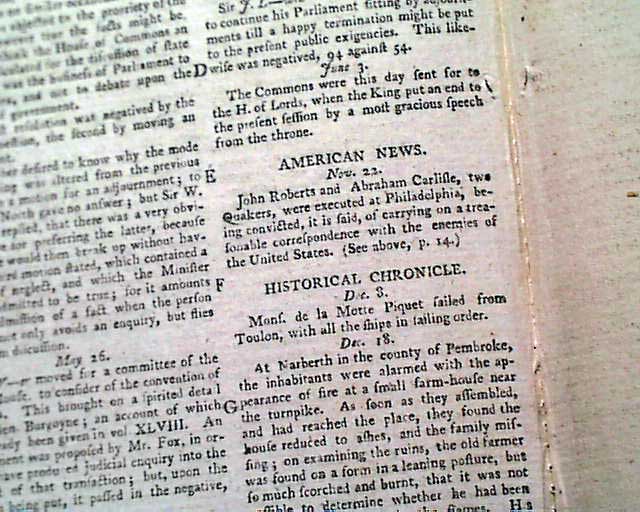
Near the back is the "Historical Chronicle" which includes under: "American News": "John Roberts and Abraham Carlisle, two Quakers, were executed at Philadelphia, being convicted, it is said, of carrying on a treasonable correspondence with the enemies of the United States."
Lacking the plate called for.
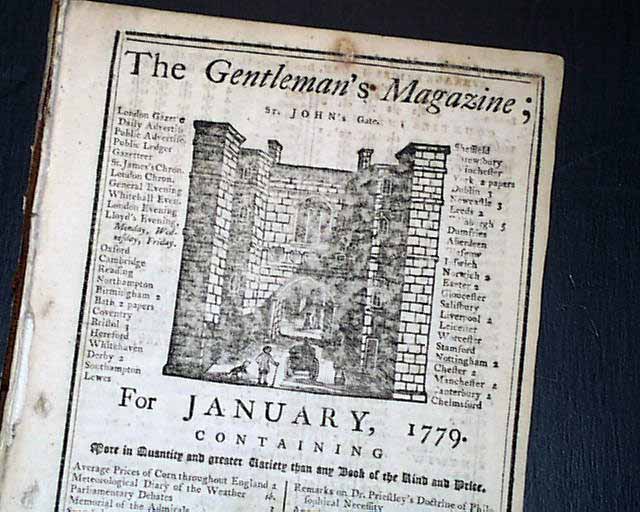
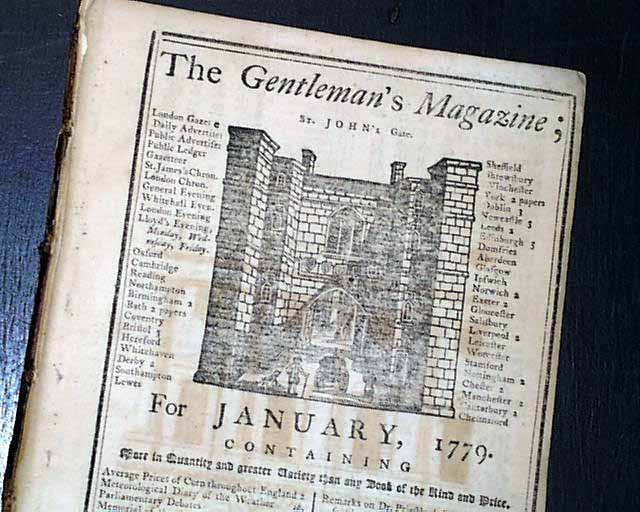
Complete in 48 pages, 5 by 8 1/4 inches, full title/contents page featuring an engraving of St. John's Gate, nice condition.
Background: The trials and subsequent executions of the Quaker loyalists John Roberts and Abraham Carlisle in November 1778, as relayed across the Atlantic to a divided British Parliament in early 1779, carry profound historical significance as a microcosm of the brutal, fratricidal nature of the American Revolution. Rather than a unified uprising against a distant monarch, this event underscores that the war was fundamentally America's first civil war, where the line between political dissent and capital treason was violently redrawn. The executions marked a radical, escalatory pivot by the Pennsylvania revolutionary government to enforce wartime ideological conformity and assert its fragile legitimacy by making an example of wealthy, pacifist citizens who had merely aided the British during the occupation of Philadelphia. Internationally, as documented in The Gentleman's Magazine, the event served as potent propaganda for both sides: it fueled British outrage over American "barbarity" and the violation of public faith (echoing the ongoing anger over the treatment of the Saratoga prisoners), while at home, it signaled to domestic Loyalists that the newly formed United States would use the gallows to eliminate internal opposition and secure total submission to the republican cause.
Other issues you may like
§ related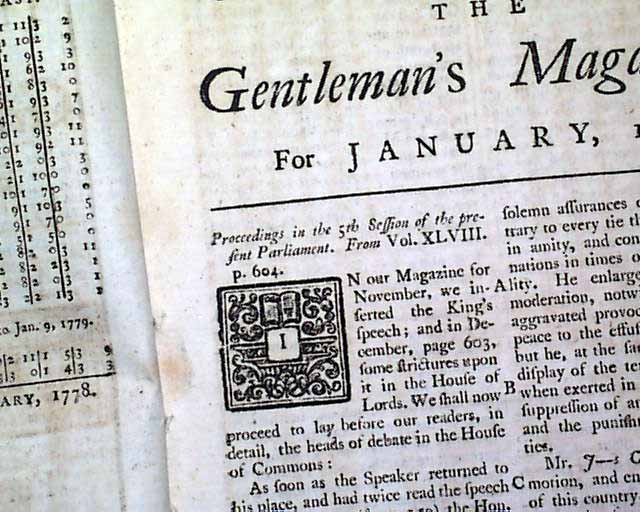
THE GENTLEMAN'S MAGAZINE, London, January, 1779
- Abraham Carlisle & John Roberts
- Treason trials - Revolutionary War
The first article: "Summary of Proceedings
...
THE GENTLEMAN'S MAGAZINE, London, January, 1779 The first article: "Summary of Proceedings in the Present Parliament" takes ten pages and includes much
...
THE GENTLEMAN'S MAGAZINE, London, January, 1779
- Discussion of the American War
The first article: "Summary of Proceedings in the Present Parliament" takes
...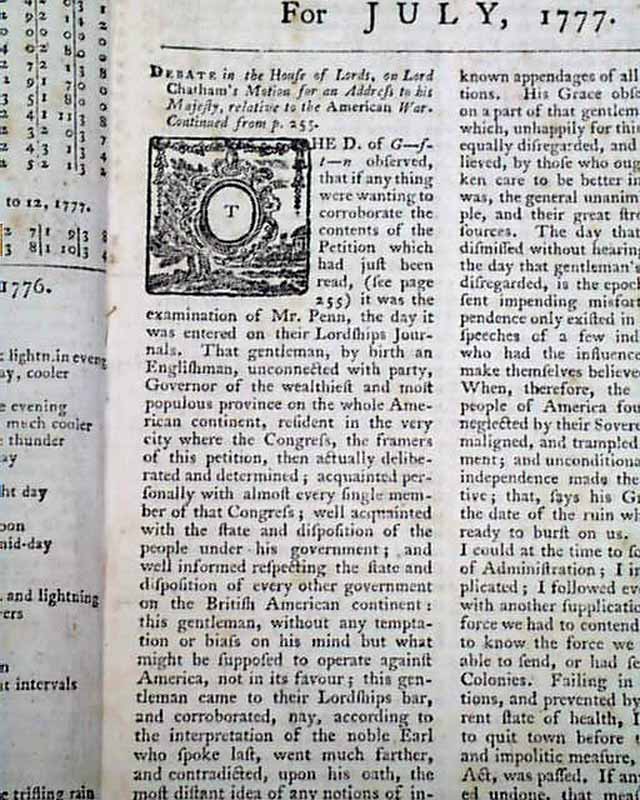
THE GENTLEMAN'S MAGAZINE, London, July, 1777
- General William Howe
- Charles Cornwallis
- American Independence ?
The issue begins with a continuation of the:
...