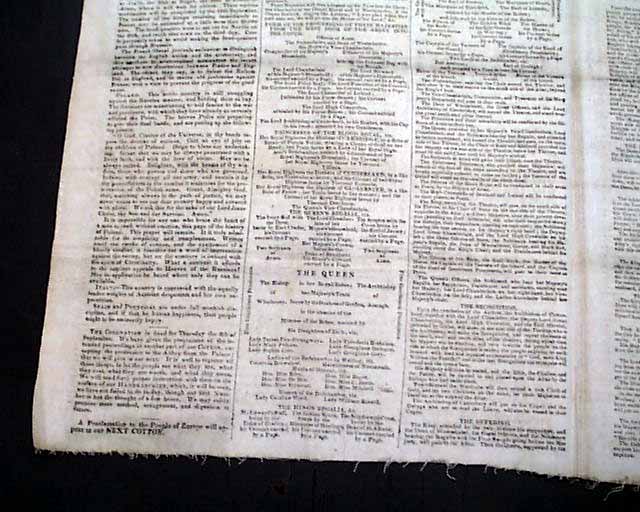
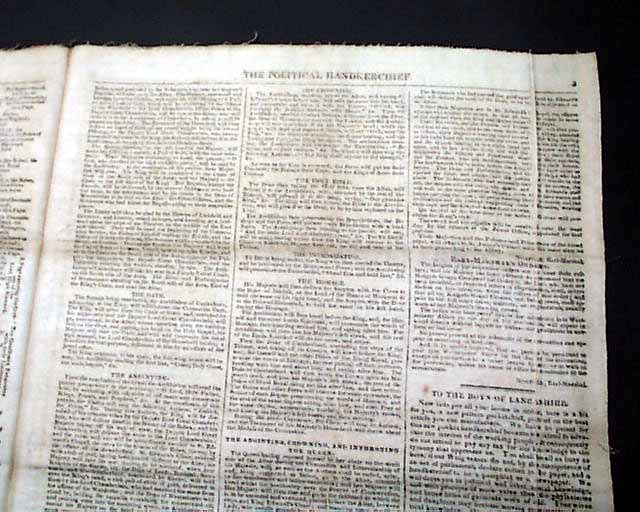
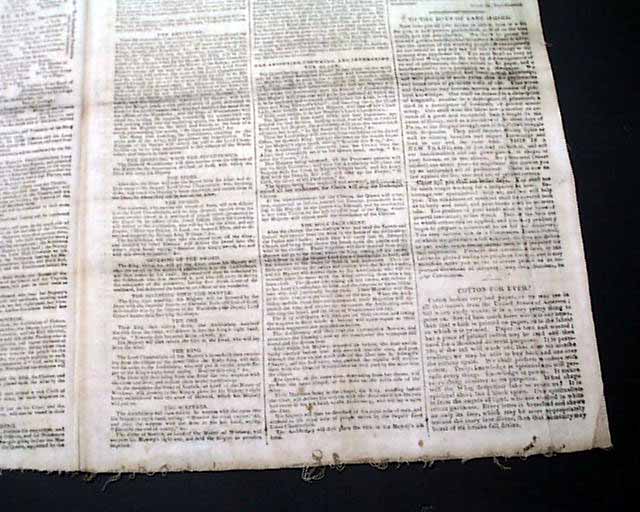
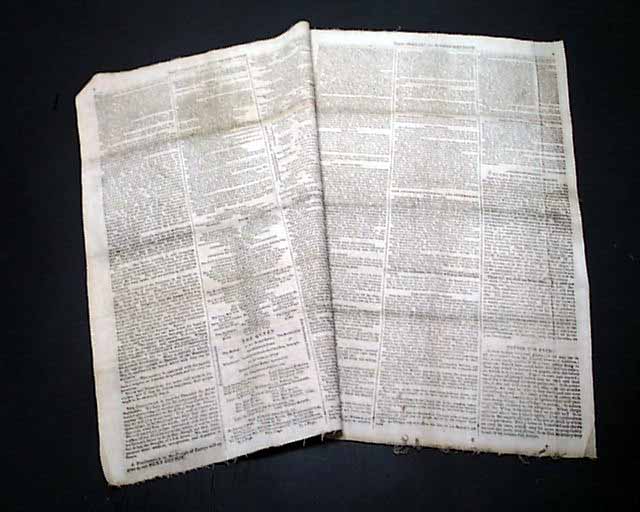
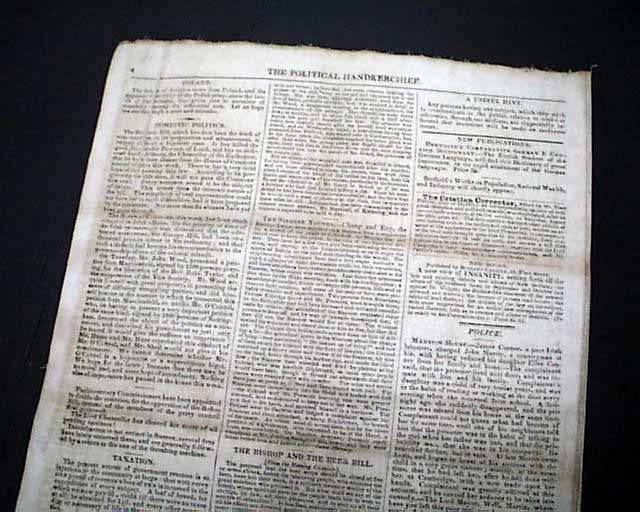
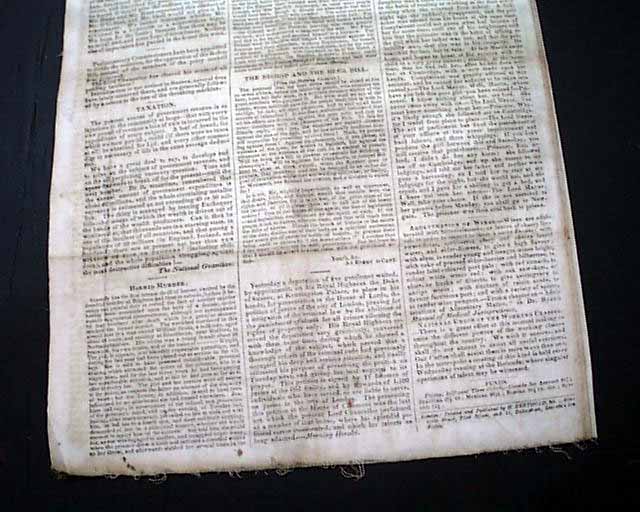
An 1831 newspaper printed on cotton cloth to avoid the tax on paper...
Item # 715939
·
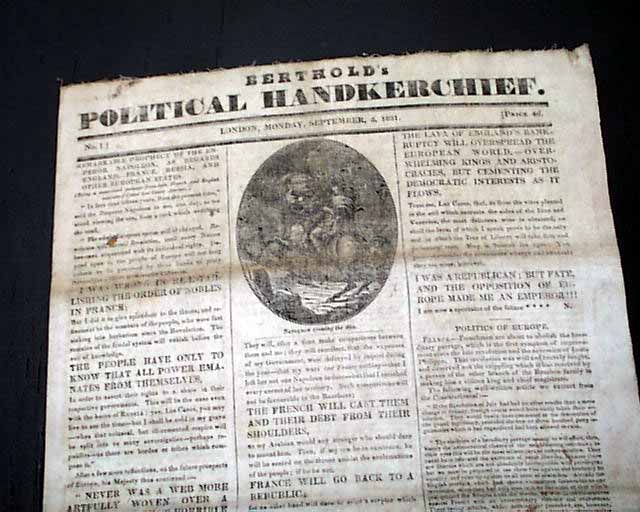
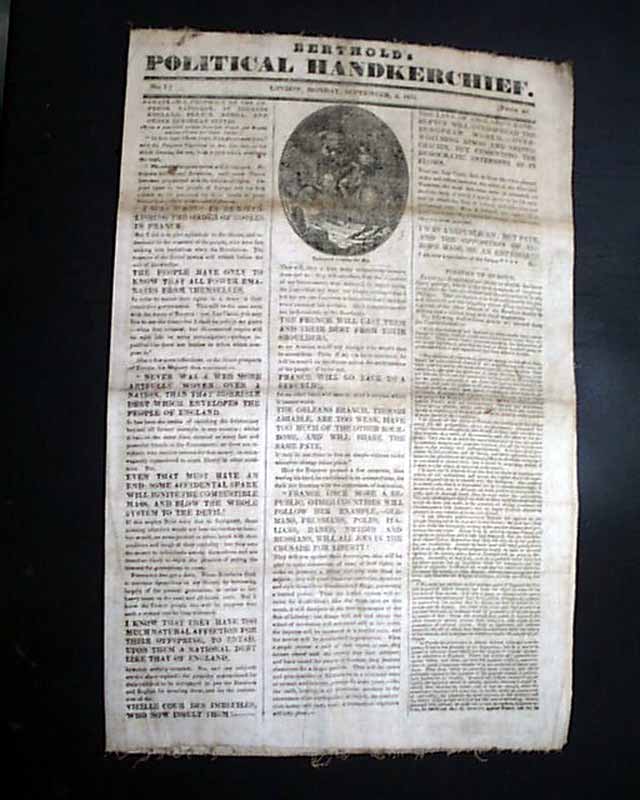
BERTHOLD'S POLLITICAL HANDKERCHIEF, London, England, Sept. 5, 1831
* Extremely rare woven cotton fabric publication
* Thirty years prior to the American Civil War
Under the category of "fascinating & unusual," this newspaper might rise to the top.
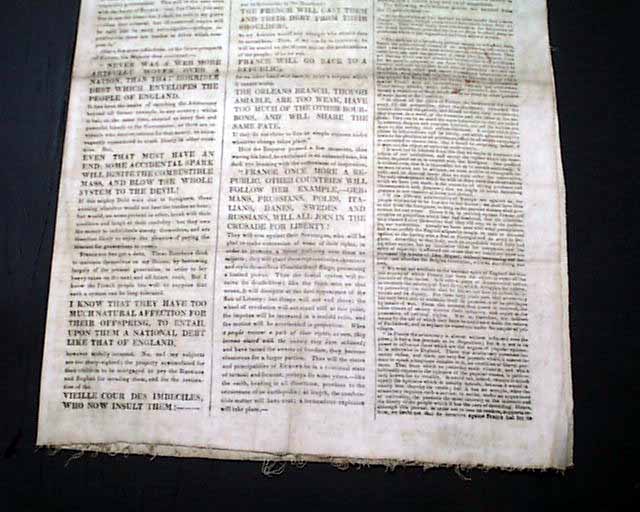
This was a radical newspaper published in London by the political writer Henry Berthold that was printed on calico (plain cotton cloth). This was done so, in part, to avoid paying the stamp duty on paper, claiming that it wasn't a newspaper because it contained no paper. However, the stamp duties of the time allegedly applied to printing on paper or any other material.
The choice of printing material also connoted an allegiance to textile workers. The newspaper urged people to revolt against national debt and the government.Ten issues were published between September 3 and November 5, 1831. Berthold claimed that, once the ink would have worn out of the cloth, readers could bring the handkerchief back so it could be printed again. At the time, selling the newspaper was illegal and was a cause of arrest. On November 28, 1833, Henry Berthold was accused of stealing a boa and condemned to penal transportation for seven years. He died in the prison hospital at Macquarie Harbour Penal Station after serving just three years of his sentence. (credit Wikipedia)
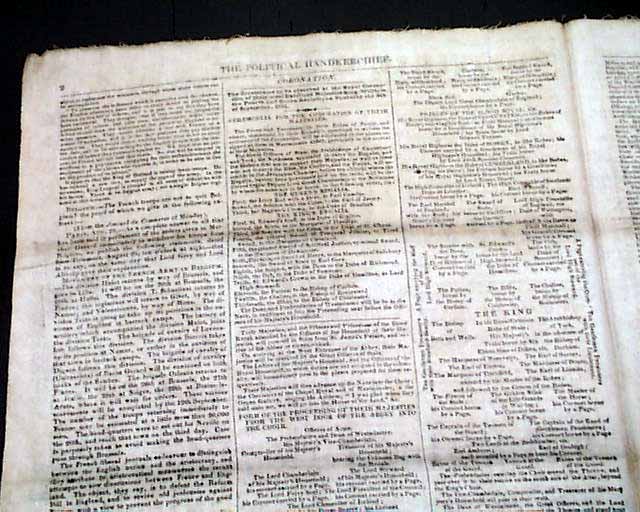
There is some notable content as well, with page 2 and 3 containing lengthy detail on the planned coronation of William IV and Adelaide on September 8.
Four pages, formatted very much like any other newspaper of the daytime, 11 by 17 1/4 inches, some dirtiness to the front page, in surprisingly nice condition for a nearly 200 year-old "newspaper" printed on cotton cloth.
Background: The significance of Henry Berthold’s Political Handkerchief lies in its embodiment of the fierce, working-class resistance against the British "Taxes on Knowledge"—a systematic effort by the elite to weaponize the price of print and suppress radical ideas. By printing on calico, Berthold did more than just attempt a clever legal loophole to evade the crushing newspaper stamp duty; he physically fused radical journalism with the textile trade, transforming a daily commodity into a subversive tool of political dissent that defied state censorship. His ingenious suggestion that the fabric could be washed and reprinted anticipated modern concepts of sustainable media distribution while underscoring the severe economic barriers independent publishers faced. Furthermore, Berthold’s ultimate conviction for theft and his subsequent death in a penal colony highlight the perilous reality for 19th-century radicals, illustrating how easily the state could silence systemic political agitation by reducing a revolutionary figure to a common criminal. Ultimately, this short-lived publication stands as a testament to the lengths to which early reformers would go to democratize information and challenge the socio-economic status quo.
* Extremely rare woven cotton fabric publication
* Thirty years prior to the American Civil War
Under the category of "fascinating & unusual," this newspaper might rise to the top.
This was a radical newspaper published in London by the political writer Henry Berthold that was printed on calico (plain cotton cloth). This was done so, in part, to avoid paying the stamp duty on paper, claiming that it wasn't a newspaper because it contained no paper. However, the stamp duties of the time allegedly applied to printing on paper or any other material.
The choice of printing material also connoted an allegiance to textile workers. The newspaper urged people to revolt against national debt and the government.Ten issues were published between September 3 and November 5, 1831. Berthold claimed that, once the ink would have worn out of the cloth, readers could bring the handkerchief back so it could be printed again. At the time, selling the newspaper was illegal and was a cause of arrest. On November 28, 1833, Henry Berthold was accused of stealing a boa and condemned to penal transportation for seven years. He died in the prison hospital at Macquarie Harbour Penal Station after serving just three years of his sentence. (credit Wikipedia)
There is some notable content as well, with page 2 and 3 containing lengthy detail on the planned coronation of William IV and Adelaide on September 8.
Four pages, formatted very much like any other newspaper of the daytime, 11 by 17 1/4 inches, some dirtiness to the front page, in surprisingly nice condition for a nearly 200 year-old "newspaper" printed on cotton cloth.
Background: The significance of Henry Berthold’s Political Handkerchief lies in its embodiment of the fierce, working-class resistance against the British "Taxes on Knowledge"—a systematic effort by the elite to weaponize the price of print and suppress radical ideas. By printing on calico, Berthold did more than just attempt a clever legal loophole to evade the crushing newspaper stamp duty; he physically fused radical journalism with the textile trade, transforming a daily commodity into a subversive tool of political dissent that defied state censorship. His ingenious suggestion that the fabric could be washed and reprinted anticipated modern concepts of sustainable media distribution while underscoring the severe economic barriers independent publishers faced. Furthermore, Berthold’s ultimate conviction for theft and his subsequent death in a penal colony highlight the perilous reality for 19th-century radicals, illustrating how easily the state could silence systemic political agitation by reducing a revolutionary figure to a common criminal. Ultimately, this short-lived publication stands as a testament to the lengths to which early reformers would go to democratize information and challenge the socio-economic status quo.
Category: Pre-Civil War
Price
$870
100% Authentic: Original printing, never a reproduction.
Other issues you may like
§ related
A rare title which rarely comes into hands of collectors...
THE HYP-DOCTOR, London, Oct. 9, 1733
* Very rare 18th century publication
The title is an archaic phrase for a "hodgepodge of nonsense". This curious...
* Very rare 18th century publication
The title is an archaic phrase for a "hodgepodge of nonsense". This curious...
May 1733
$78
One of the more fascinating publishers from the Civil War...
BROWNLOW’S KNOXVILLE WHIG, AND REBEL VENTILATOR, Tennessee, Oct. 19, 1864
* Very rare American Civil War publication
* William Gannaway "Parson" Brownlow
W....
* Very rare American Civil War publication
* William Gannaway "Parson" Brownlow
W....
Oct 1864
$175
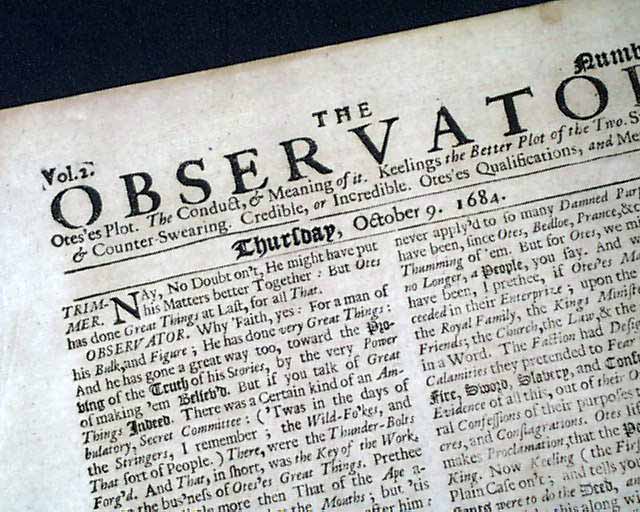
Handsome, 340 year old newspaper... published by Charles Brome...
THE OBSERVATOR, London, England, Oct. 9, 1684
* Architect of the Partisan Press
* A Watershed for Women in Journalism
* During the reign of King Charles II
A...
* Architect of the Partisan Press
* A Watershed for Women in Journalism
* During the reign of King Charles II
A...
$48
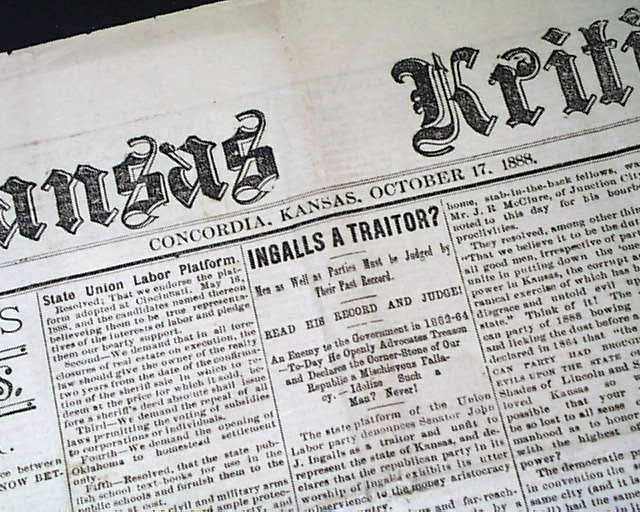
Scarce title from Kansas...
KANSAS KRITIC, Concordia, Oct. 17, 1888
* From the 19th century Frontier
In the masthead is; "An Advocate of the People; Defending Their Rights and...
* From the 19th century Frontier
In the masthead is; "An Advocate of the People; Defending Their Rights and...
Oct 1888
$38