A pirate hanged in New York City...
Item # 711835
·
NILES' WEEKLY REGISTER, Baltimore, Oct. 30, 1819
* Pirate George Brown execution by hanging
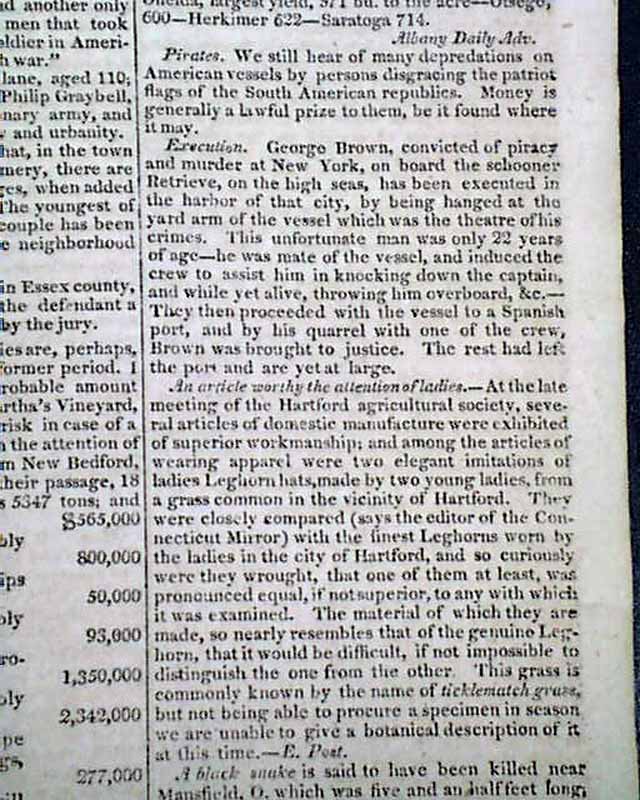
Page 15 has a brief article: "Pirates". This is followed by: "Execution", beginning: "George Brown, convicted of piracy and murder at New York, on board the schooner Retrieve...on the high seas, has been executed in the harbor of that city by being hanged at the yard arm of the vessel which was the theatre of his crimes. This unfortunate man was only 22 years of age...".
George Brown (given name William Tinsdale) served aboard the schooner Retrieve on its voyage from Cadiz, on the south coast of Spain, to New Orleans. En route, Brown and other sailors mutinied, robbing and killing Captain Lewis and taking control of the ship. They sailed into Omoa, on the Spanish Main (present-day Honduras). While there, one of the crew members reported the crime, leading to their arrest.The mutineers were transported to New York City. After a four-hour trial, Brown was convicted of murder on the high seas and sentenced to death. George Brown was hanged onboard the Retrieve anchored amidst numerous boats carrying onlookers in the East River on October 22, 1819.
Sixteen pages, 6 by 9 1/2 inches, very nice condition.
Background: The execution of George Brown aboard the Retrieve in October 1819 signifies a pivotal enforcement turning point in American maritime history, reflecting a aggressive federal crackdown on Atlantic piracy. Following the War of 1812 and the Spanish-American wars of independence, the high seas were inundated with privateers turned lawless buccaneers, crippling international trade and forcing the U.S. Congress to pass the sweeping Piracy Act of March 1819. Brown's highly theatrical execution—hanged directly from the yardarm of his own crime scene within the bustling New York harbor—was a calculated act of psychological deterrence designed by the federal government. By bringing the ultimate penalty of the law to the immediate view of merchant crews and the public, the execution boldly asserted the young nation's sovereign jurisdiction over maritime law, signaling to global powers and criminal syndicates alike that the United States possessed both the legislative teeth and the naval resolve to brutally eradicate piracy.
* Pirate George Brown execution by hanging
Page 15 has a brief article: "Pirates". This is followed by: "Execution", beginning: "George Brown, convicted of piracy and murder at New York, on board the schooner Retrieve...on the high seas, has been executed in the harbor of that city by being hanged at the yard arm of the vessel which was the theatre of his crimes. This unfortunate man was only 22 years of age...".
George Brown (given name William Tinsdale) served aboard the schooner Retrieve on its voyage from Cadiz, on the south coast of Spain, to New Orleans. En route, Brown and other sailors mutinied, robbing and killing Captain Lewis and taking control of the ship. They sailed into Omoa, on the Spanish Main (present-day Honduras). While there, one of the crew members reported the crime, leading to their arrest.The mutineers were transported to New York City. After a four-hour trial, Brown was convicted of murder on the high seas and sentenced to death. George Brown was hanged onboard the Retrieve anchored amidst numerous boats carrying onlookers in the East River on October 22, 1819.
Sixteen pages, 6 by 9 1/2 inches, very nice condition.
Background: The execution of George Brown aboard the Retrieve in October 1819 signifies a pivotal enforcement turning point in American maritime history, reflecting a aggressive federal crackdown on Atlantic piracy. Following the War of 1812 and the Spanish-American wars of independence, the high seas were inundated with privateers turned lawless buccaneers, crippling international trade and forcing the U.S. Congress to pass the sweeping Piracy Act of March 1819. Brown's highly theatrical execution—hanged directly from the yardarm of his own crime scene within the bustling New York harbor—was a calculated act of psychological deterrence designed by the federal government. By bringing the ultimate penalty of the law to the immediate view of merchant crews and the public, the execution boldly asserted the young nation's sovereign jurisdiction over maritime law, signaling to global powers and criminal syndicates alike that the United States possessed both the legislative teeth and the naval resolve to brutally eradicate piracy.
Category: Pre-Civil War
Price
$28
100% Authentic: Original printing, never a reproduction.
Other issues you may like
§ related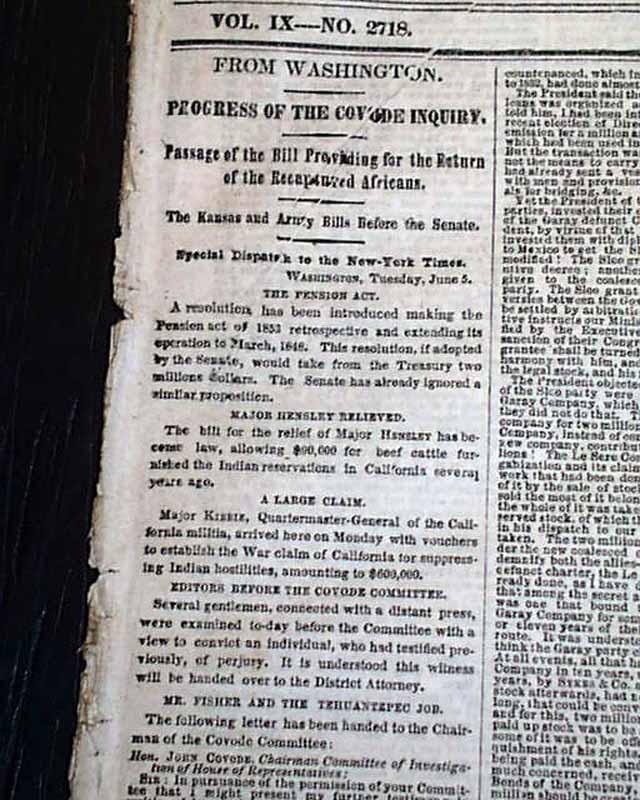
Pirate Hicks confesses his guilt...
NEW YORK TIMES, June 6, 1860 The front page has over half a column headed: "The Murders On the Oyster Sloop" "A Partial Confession from Hicks--He Admits...
Jun 1860
$43
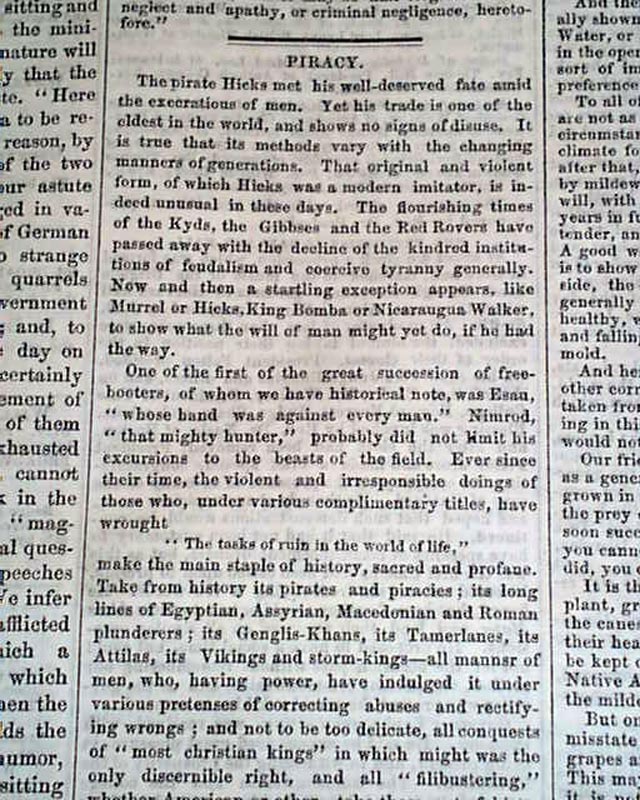
On the execution of "Pirate Hicks" at Liberty Island...
THE WORLD, New York, July 20, 1860
* Albert W. Hicks hanging at Liberty Island
* Last pirate executed in the United States
Page 3 has almost an...
* Albert W. Hicks hanging at Liberty Island
* Last pirate executed in the United States
Page 3 has almost an...
Jul 1860
$48
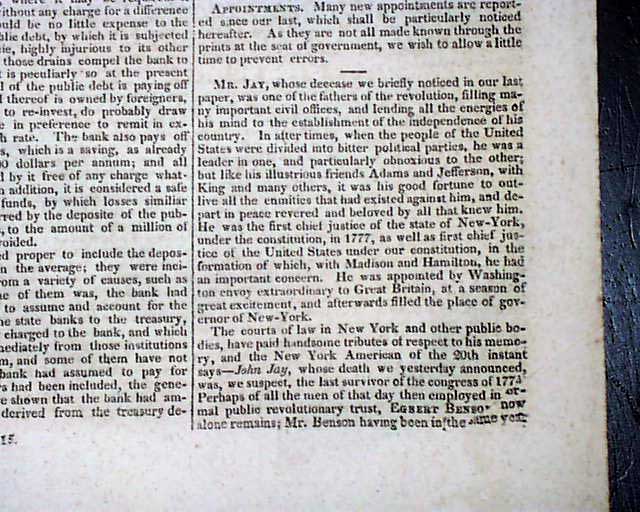
Death Of John Jay... Pirates hanged, and slave ships captured...
NILES' WEEKLY REGISTER, Baltimore, May 30, 1829
* John Jay death
* Pirates & slave ships
Pages 1 and 2 have an article concerning the death of John...
* John Jay death
* Pirates & slave ships
Pages 1 and 2 have an article concerning the death of John...
May 1829
$40
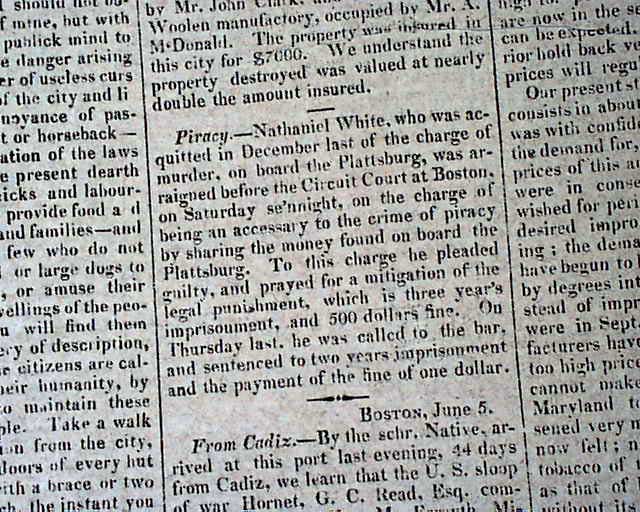
Charged with piracy...
THE UNION, Philadelphia, June 12, 1819 Page 3 has an article: "Piracy" noting in part: "Nathaniel White, who was acquitted in December last of the charge...
Jun 1819
$27