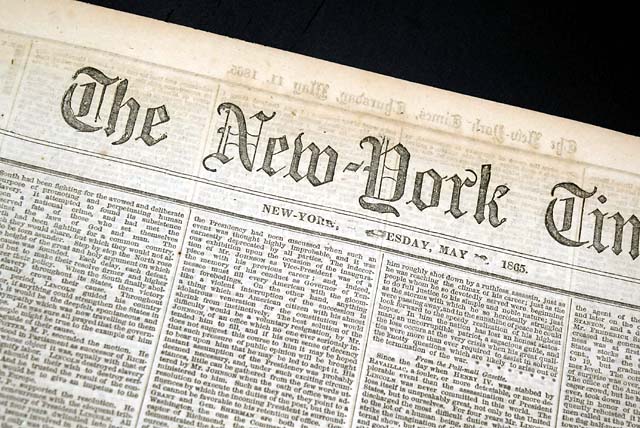
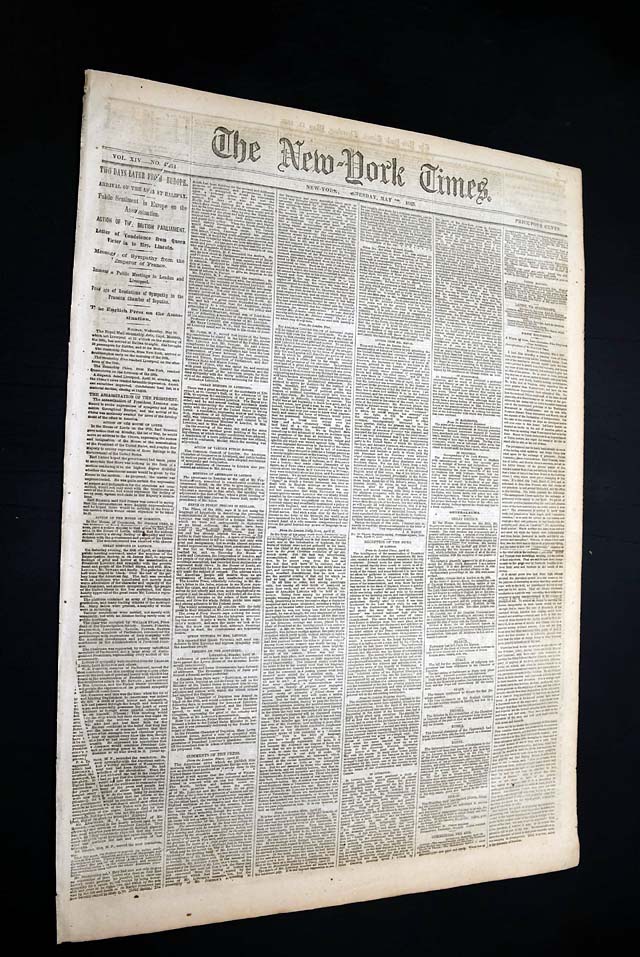
End of the Civil War... Frederick Douglass speaks at the Anti-Slavery Society...
NEW YORK TIMES, May 11, 1865
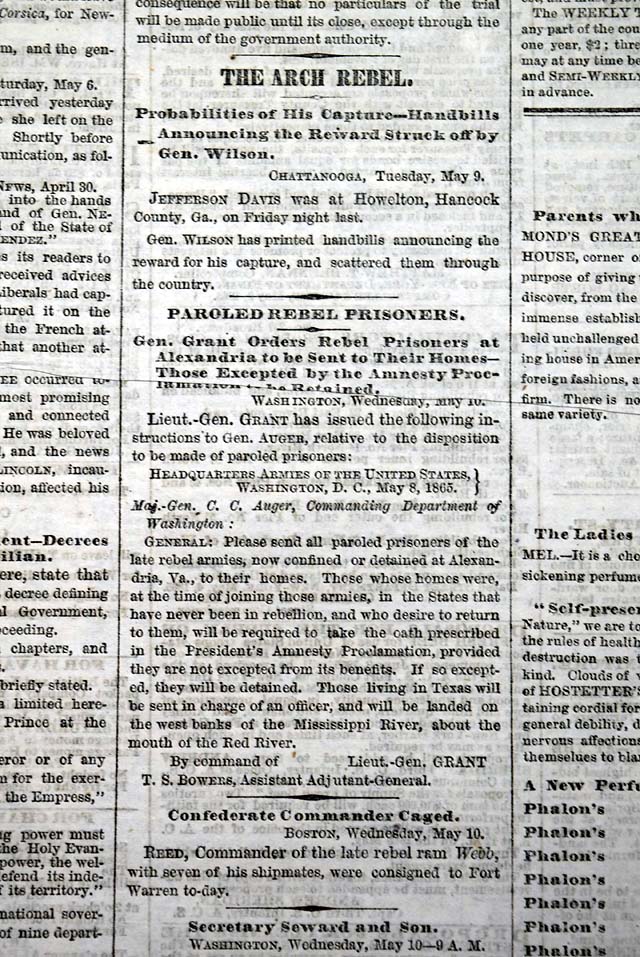
- Closing events of the Civil War
- Frederick Douglass speech
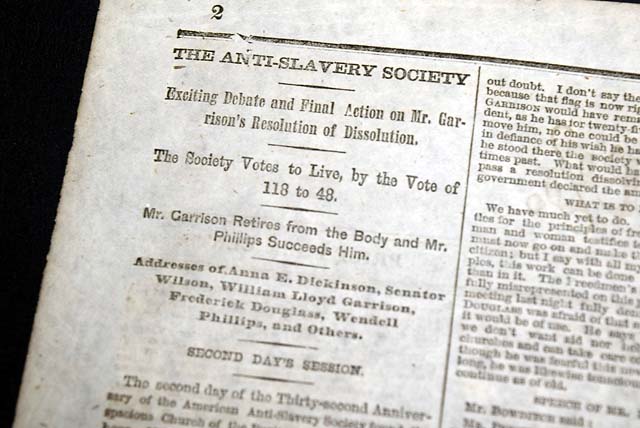
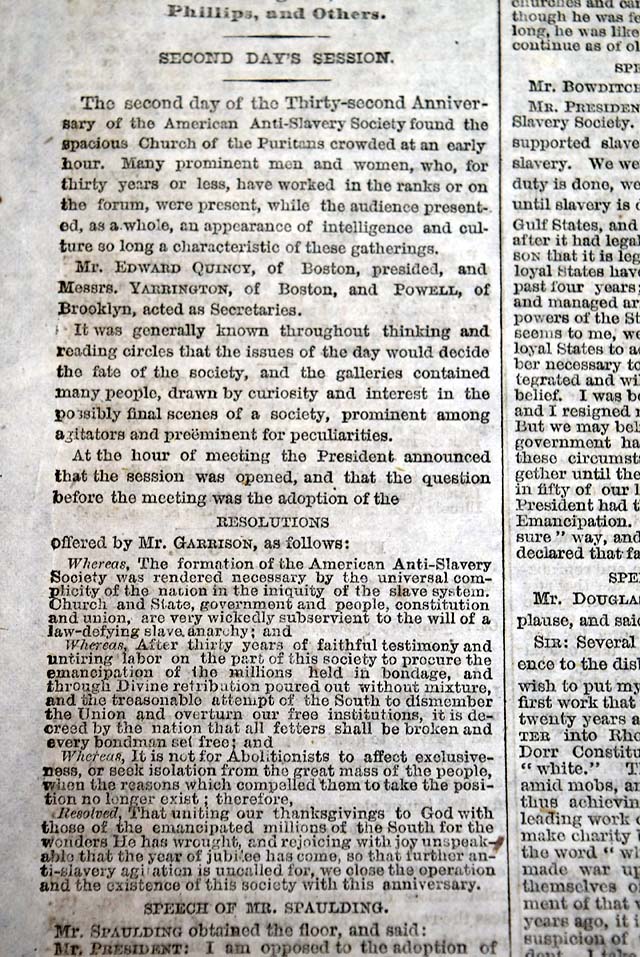
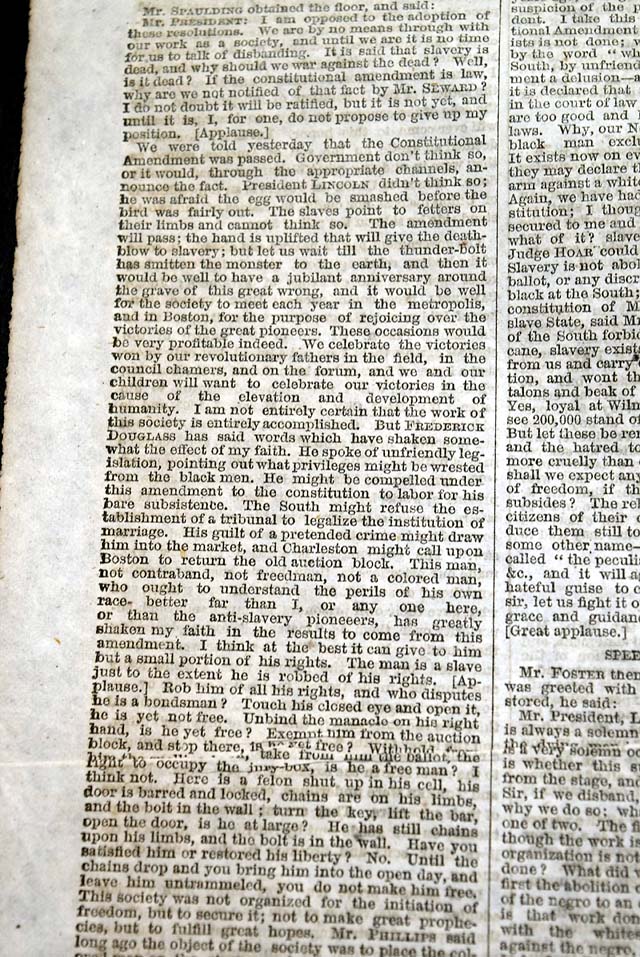
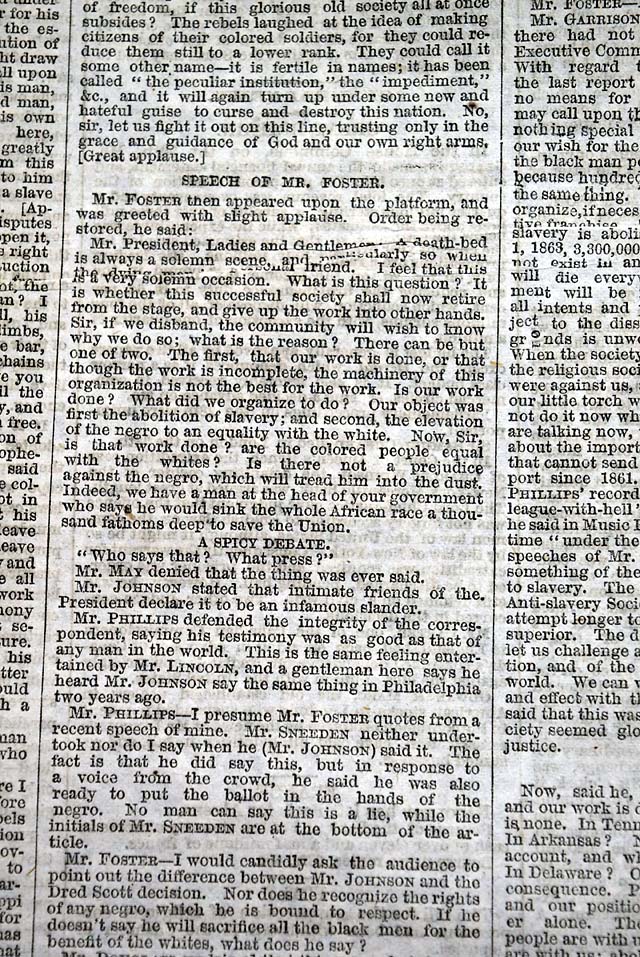
Although the front page has reports headed: "From Richmond--A View of Gen. Lee--Arrests--The Negroes--Our Soldiers", the prime content is found on page 2 with: "The Anti-Slavery Society" "Exciting Debate and Final Action on Mr. Garrison's Resolution of Dissolution" "The Society Votes to Live, by the Vote of 118 to 48" "Address of Anna E. Dickinson, Senator Wilson, William Lloyd Garrison, Frederick Douglass, Wendell Phillips, and Others" with this coverage taking over 3 1/2 columns.
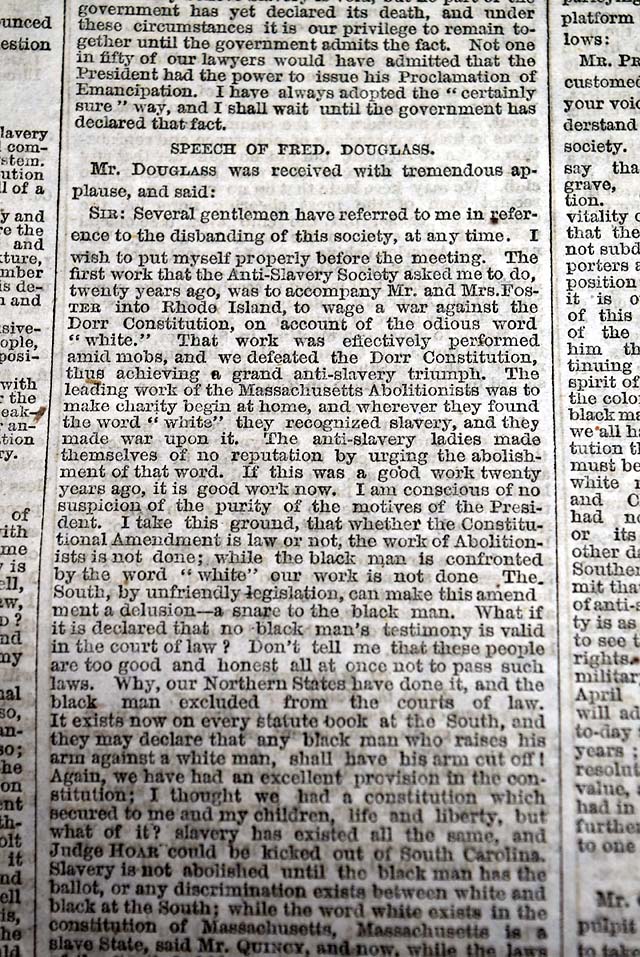
One of the subheads is: "Speech of Fred. Douglass" with the text of his speech, in which he advocates for the continuation of the Society. Among other subheads are: "Speech of Wm. L. Garrison [editor of the Liberator], "Slavery Is Dead" "Final Scenes" "Resolutions" and more.
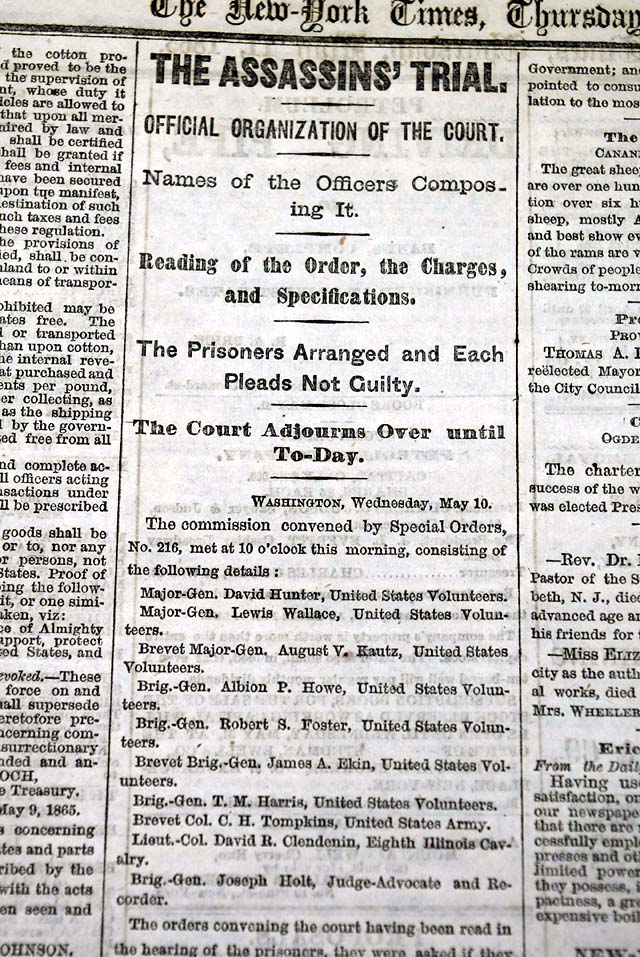
Page 5 has nice reporting on: "The Assassins' Trial".
Eight pages, nice condition.
Background: At the May 1865 annual meeting of the American Anti-Slavery Society, Frederick Douglass delivered a impassioned defense against William Lloyd Garrison's proposal to disband the organization, arguing that emancipation was incomplete without full political equality and the right to vote. Rejecting paternalism, Douglass famously addressed white America's question of "What shall we do with the Negro?" with a direct plea: "Do nothing with us! ... All I ask is, give him a chance to stand on his own legs!" He highlighted the hypocrisy of relying on Black soldiers as citizens during wartime only to reduce them to second-class aliens in peace, asserting that freedom without the ballot left former slaves vulnerable to new forms of oppression. By emphasizing that enfranchisement was a matter of fundamental justice rather than charity, Douglass successfully persuaded the Society to remain active, helping fuel the political momentum that ultimately secured the 14th and 15th Amendments.
Item from last month's catalog - #370 - released for September, 2026
Other issues you may like
§ related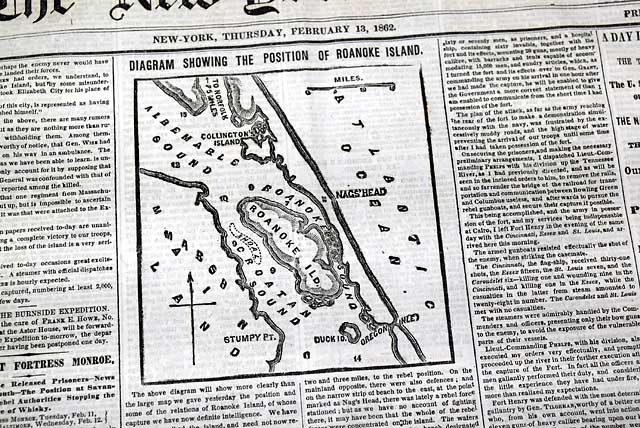
NEW YORK TIMES, Feb. 13, 1862 Certainly, the most notable content is found on the back page, headed: "Fred. Douglass On The War" "An Interesting Meeting at
...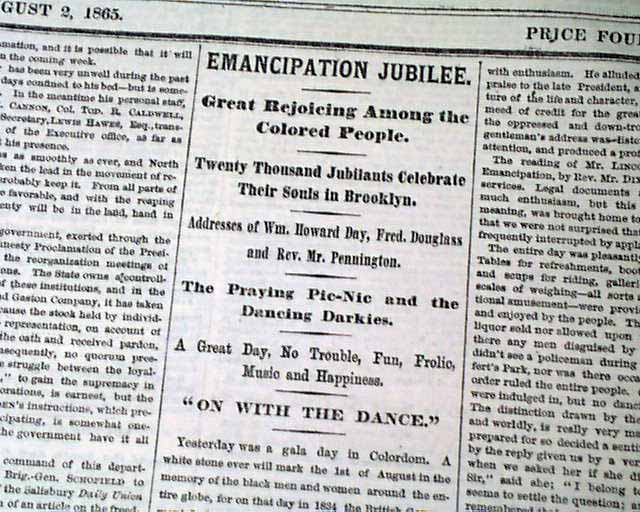
NEW YORK TIMES, Aug. 2, 1865
- Frederick Douglass speech
- Emancipation of Southern slaves
The top of the front page has: "EMANCIPATION JUBILEE" "Great Rejoicing
...
NEW YORK TIMES, May 13, 1865
- "When Johnny Comes Marching Home"
- Closing events of the American Civil War
- re. Abraham Lincoln's assassination
Among the front
...
THE LIBERATOR, Boston, July 1, 1864
- Rare anti-slavery title
- For freedom of slaves
- Slave auction illustration
- American Civil War era
This is the famous
...