Soldiers are going home... Negro suffrage...
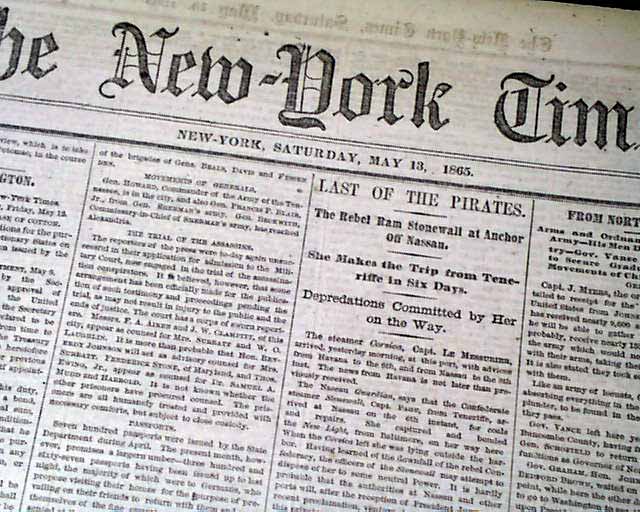
NEW YORK TIMES, May 13, 1865
- "When Johnny Comes Marching Home"
- Closing events of the American Civil War
- re. Abraham Lincoln's assassination
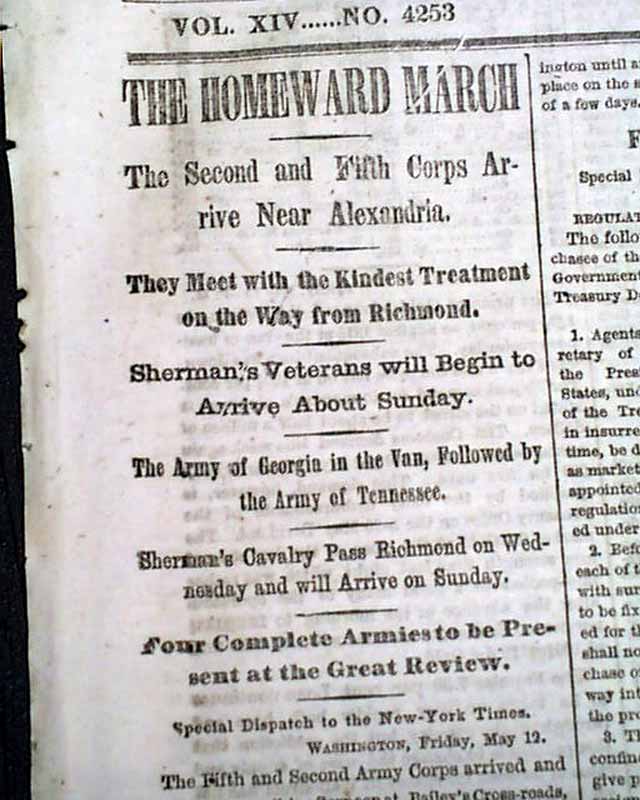
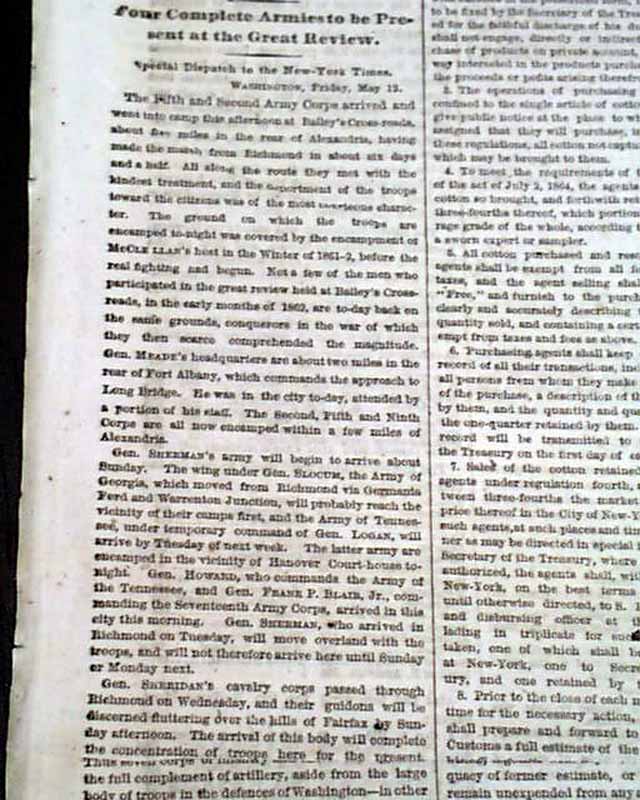
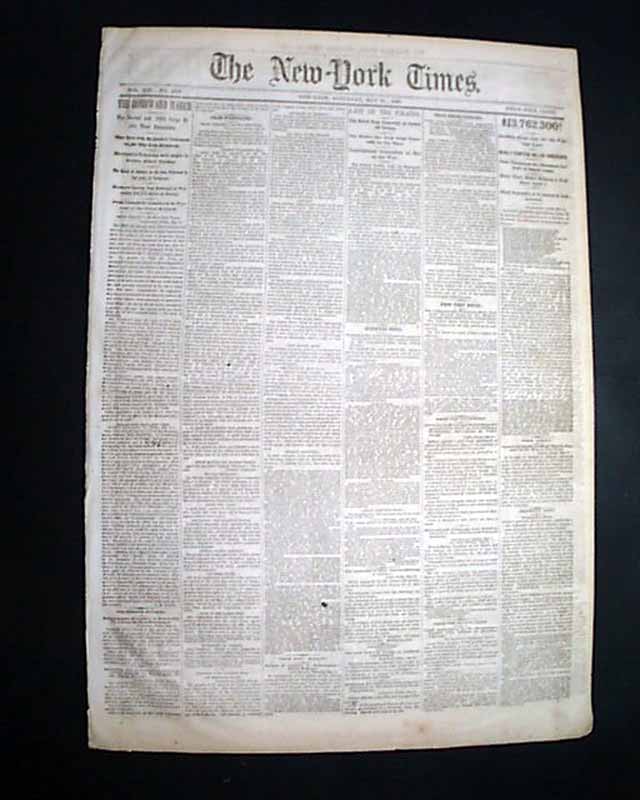
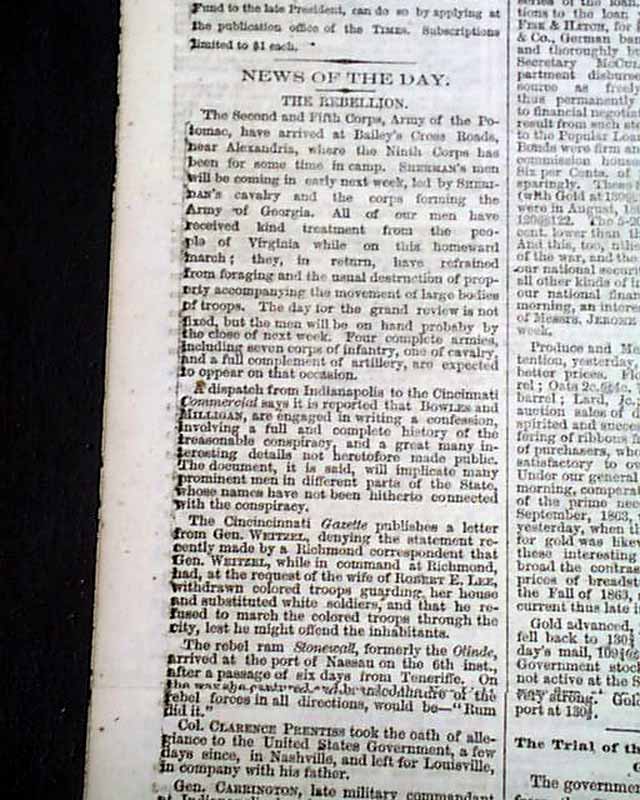
Among the front page column heads on the ending events of the Civil War are: "THE HOMEWARD MARCH" "The Second & Fifth Corps Arrive Near Alexandria" "They Meet with the Kindest Treatment on the Way from Richmond" "Sherman's Veterans Will Begin to Arrive About Sunday" and more.
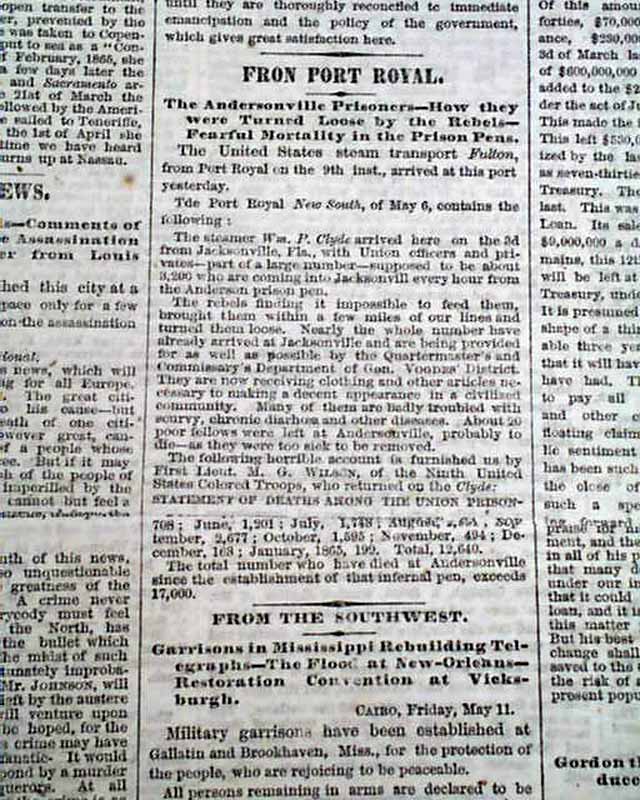
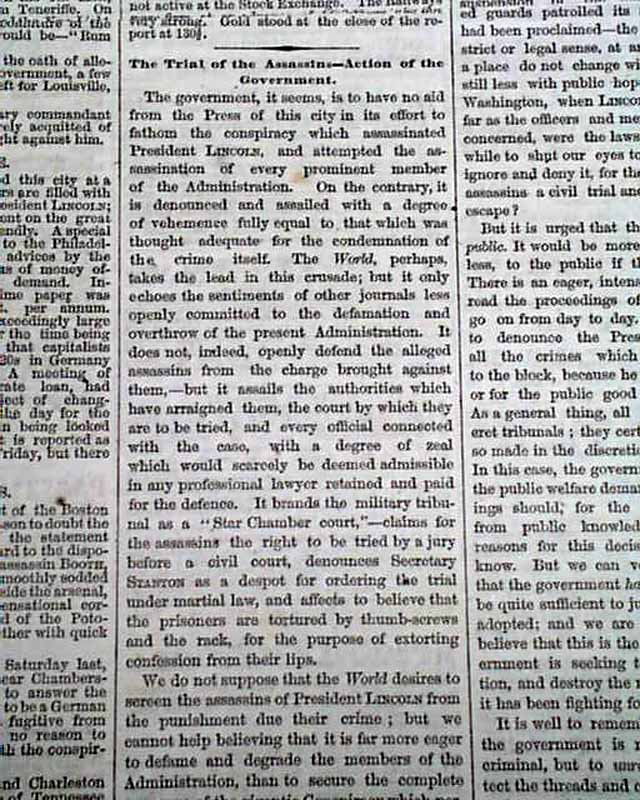
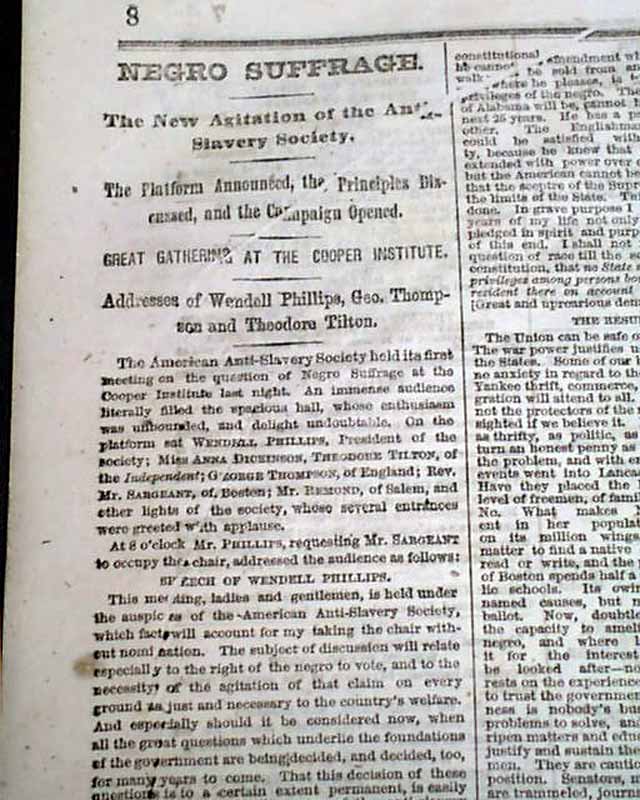
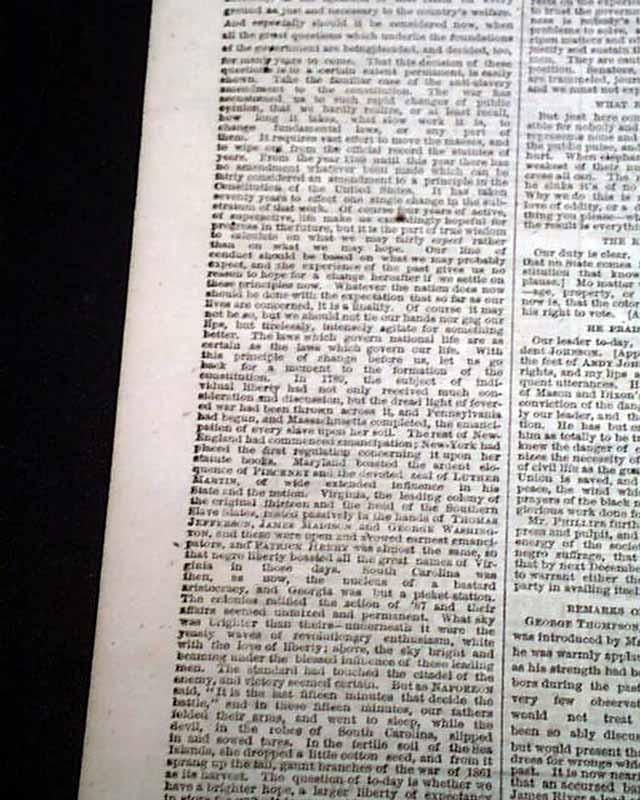
Page 4 has: "The Trial of the Assassins--Action of the Government". The back page has: "NEGRO SUFFRAGE" "The New Agitation of the Anti-Slavery Society" with more on this.
Eight pages, nice condition.
Background: This May 13, 1865 issue of the New York Times serves as a profound historical capsule capturing a nation in simultaneous transition, grief, and ideological evolution immediately following the American Civil War. The front-page accounts of the "Homeward March" and the arrival of the Second, Fifth, and Sherman’s corps detail the massive, unprecedented logistical demobilization of hundreds of thousands of Union soldiers converging on the capital for the Grand Review, signaling the definitive military conclusion of the four-year conflict. Concurrently, the page 4 coverage of "The Trial of the Assassins" documents the opening days of the historic military tribunal prosecuting the Lincoln assassination conspirators, reflecting a fractured government seeking swift justice and stability in the raw, chaotic wake of the first presidential assassination. Meanwhile, the back-page coverage of the American Anti-Slavery Society's "New Agitation" for "Negro Suffrage" captures the precise ideological pivot of the abolitionist movement; having legally dismantled slavery, leaders like Frederick Douglass immediately redirected their efforts toward securing political enfranchisement, foreshadowing the intense legal and social battles of the Reconstruction Era and the eventual passage of the 15th Amendment. Together, these elements frame a singular, volatile moment in American history where the logistics of peace, the pursuit of justice, and the definition of civil rights collided.
Other issues you may like
§ related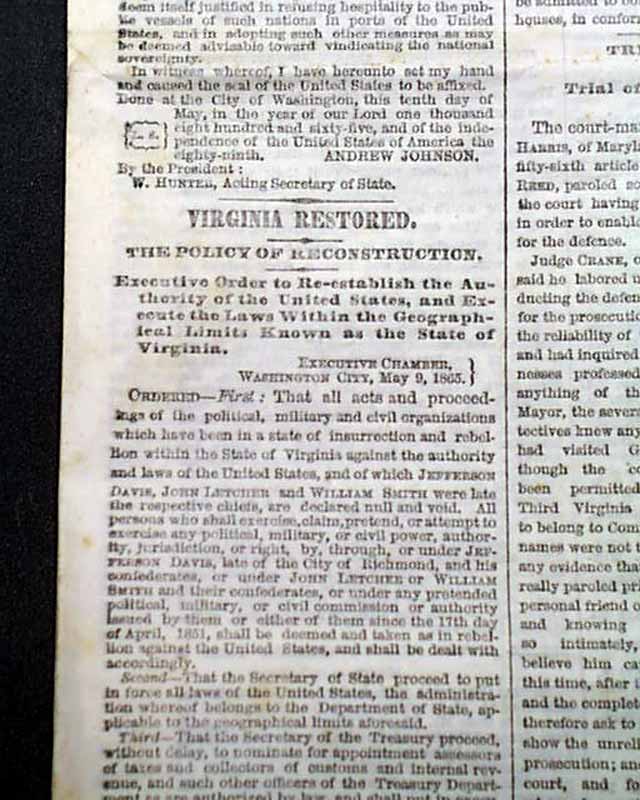
NEW YORK TIMES, May 12, 1865
- Dick Taylor surrenders
- Civil War ending events
- Abe Lincoln Murder trial
The front page has reports on the closing moments of the
...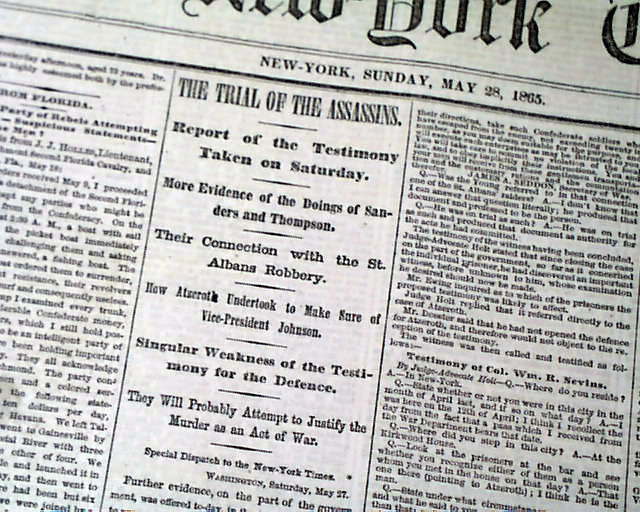
NEW YORK TIMES, May 28, 1865
- Last of the Confederate forces surrender
- Formal end of the American Civil War
- re. Abraham Lincoln assassination
- Trial of the
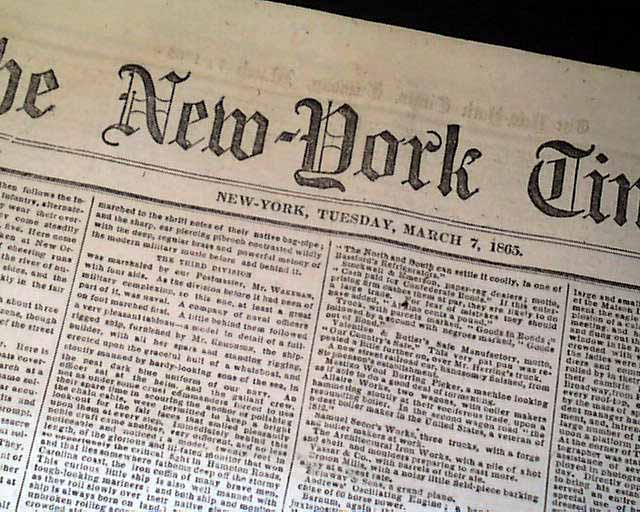
THE NEW YORK TIMES, New York City, March 7, 1865 This Genuine newspaper has a Wealth of Civil War reporting from during Abraham Lincoln's administration.
...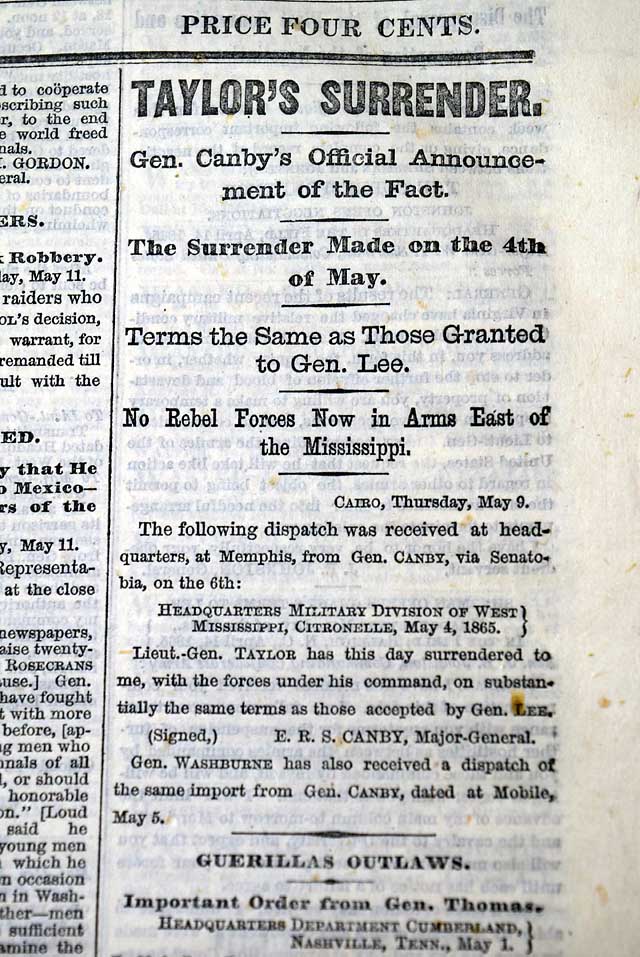
NEW YORK TIMES, May 12, 1865 The front page has reports on the closing moments of the Civil War, including: "TAYLOR'S SURRENDER" "Gen. Canby's Official
...