

The slave ship Amistad... The birth of photography...
Item # 710527
September 28, 1839
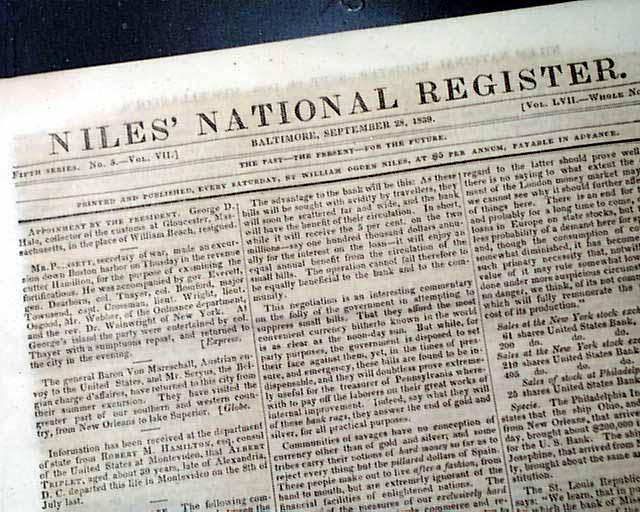
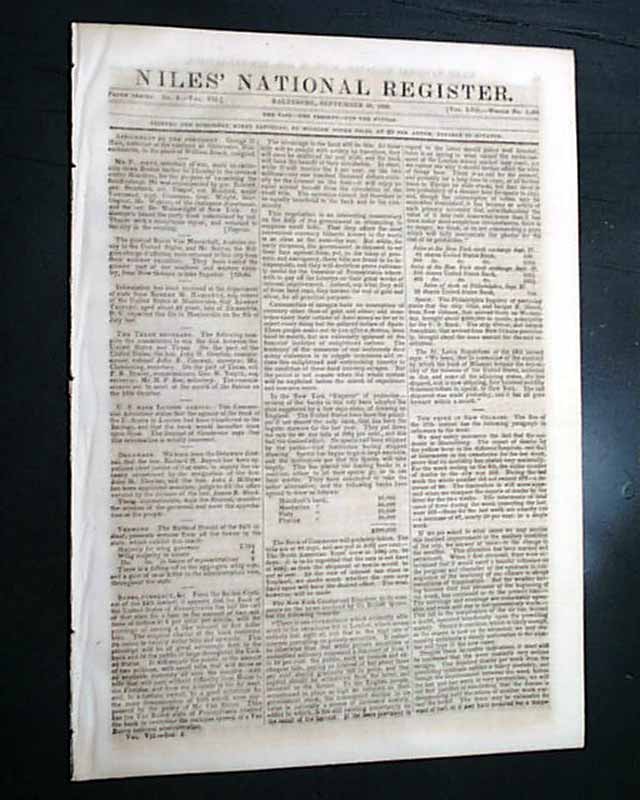
NILES' NATIONAL REGISTER, Baltimore, Sept. 28, 1839
* Verdict of the Amistad Slave Ship Case
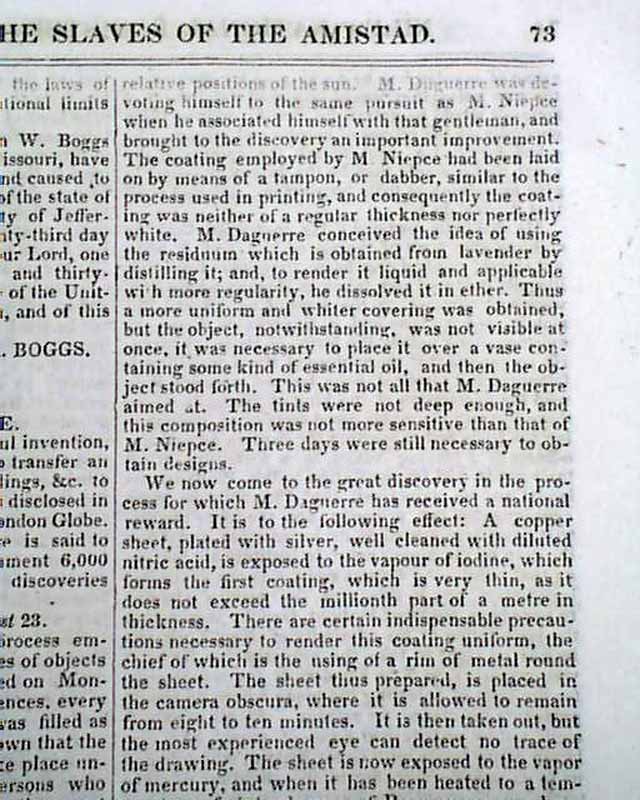
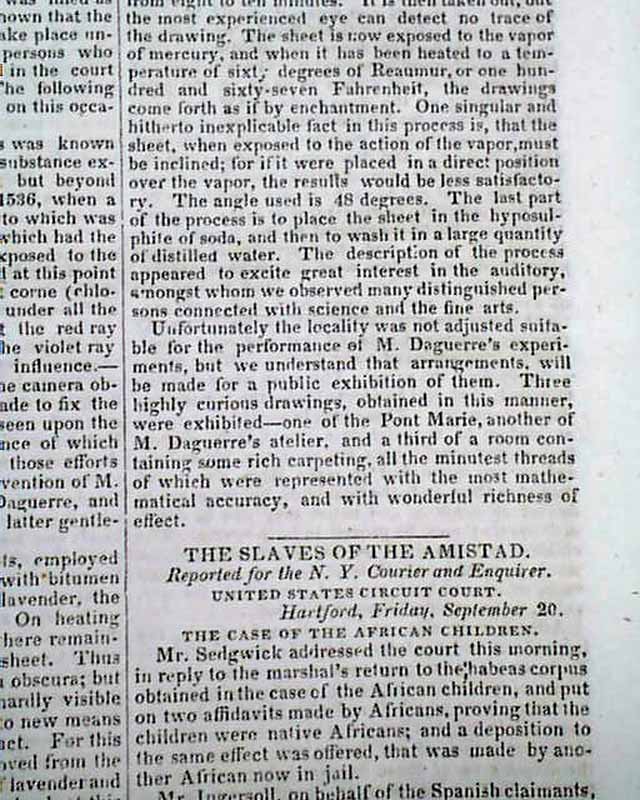
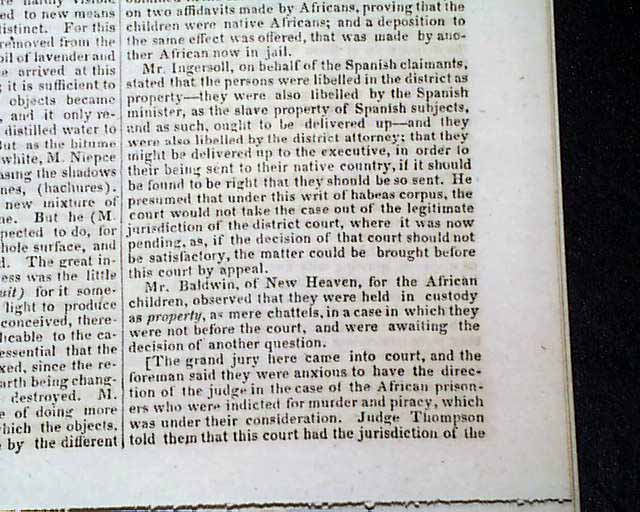
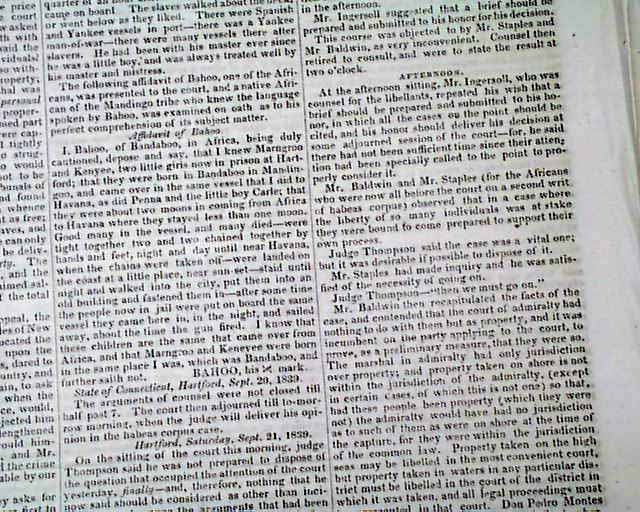
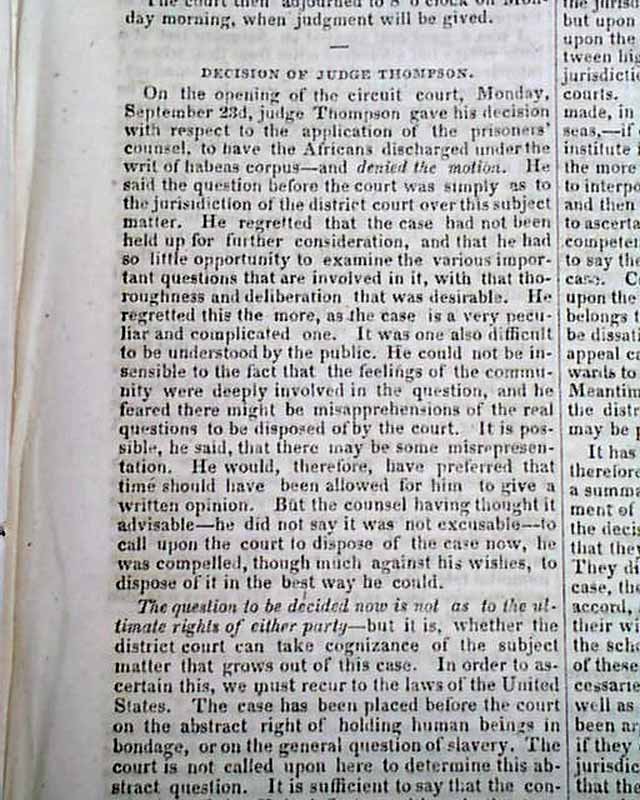
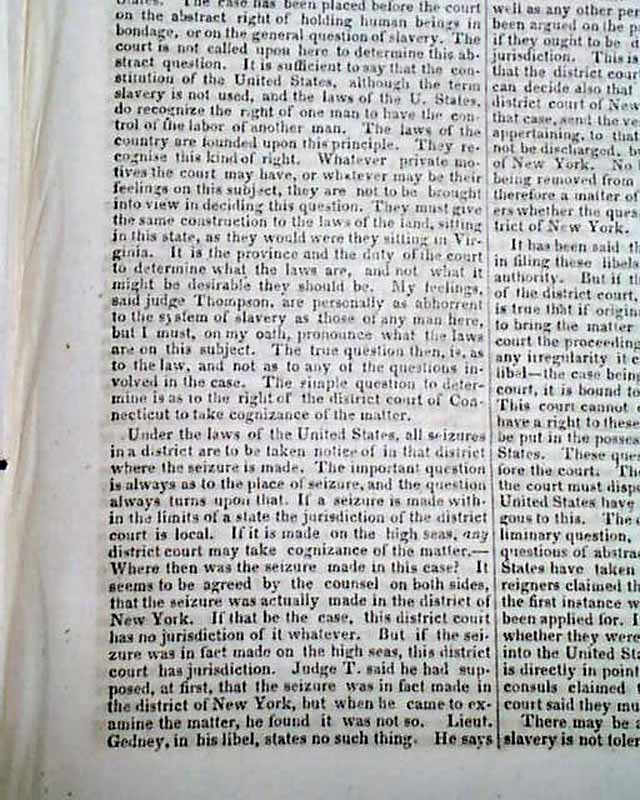
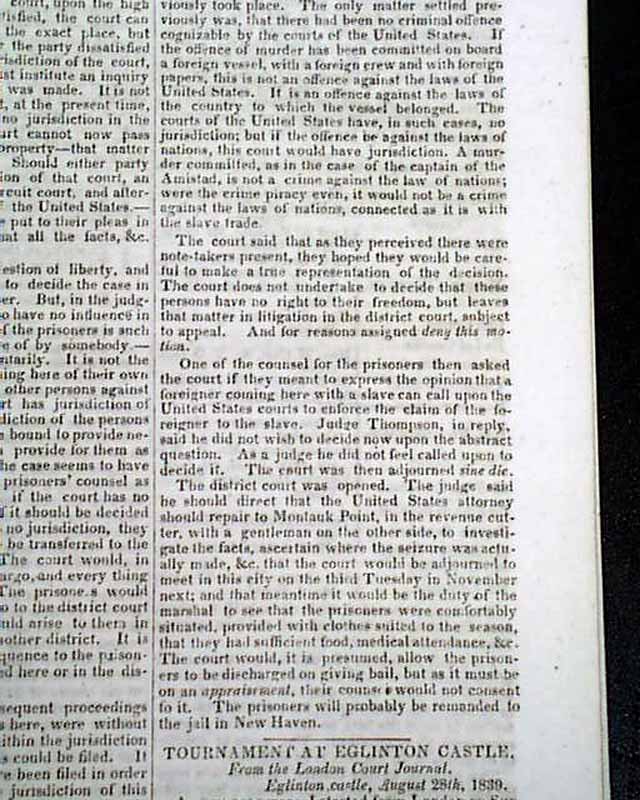
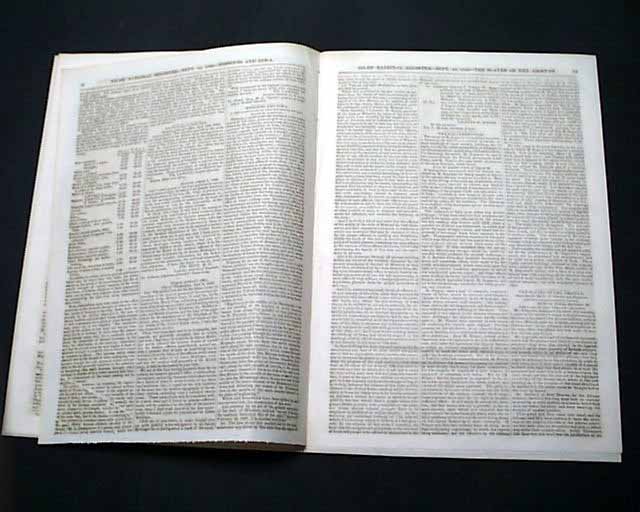
Inside has a lengthy & historic two page article headed: "The Slaves Of The Amistad" being a detailed account of their trial in Hartford, including subheads "Affidavit of Bahoo" with his "X" signature mark; "Afternoon" and: "Decision of Judge Thompson". An excellent & detailed article, only portions of which are shown in the photos.
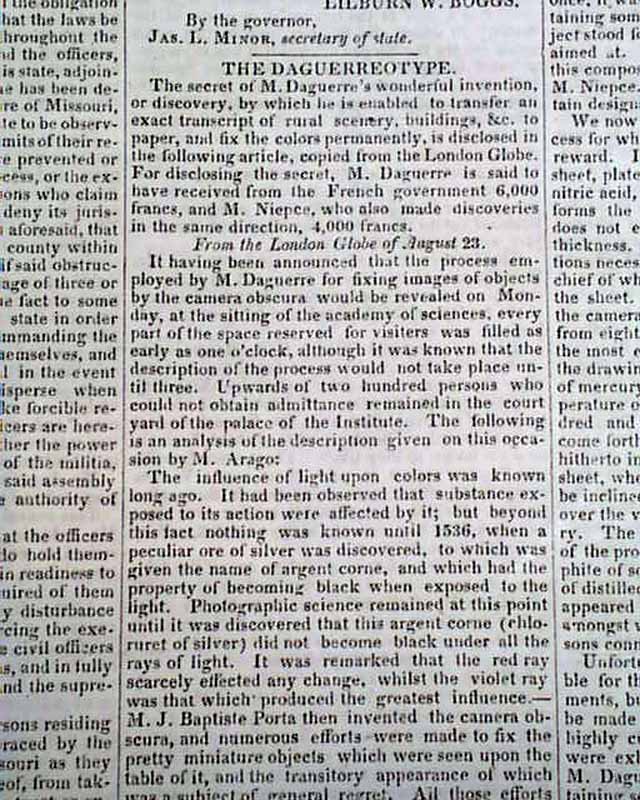
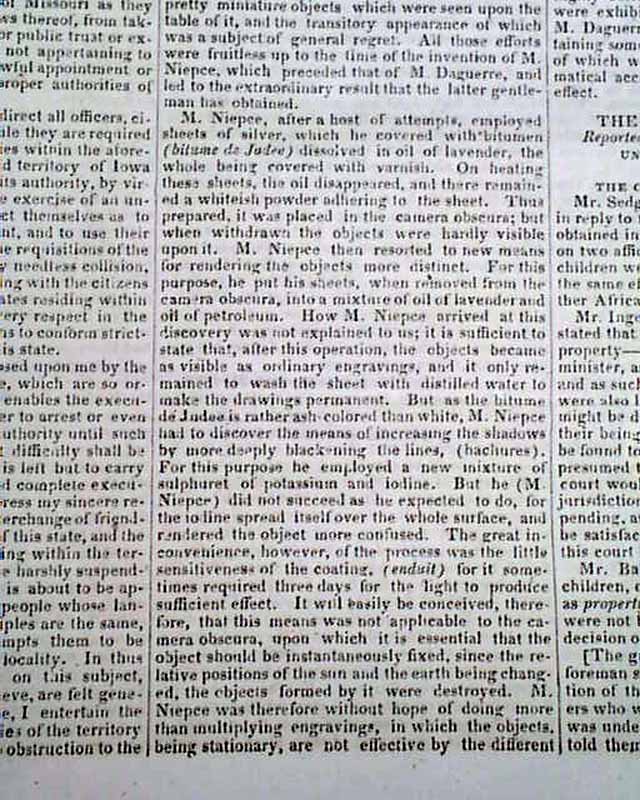
Also inside is an early & quite historic article on photography headed: "The Daguerreotype", with much detail on the invention & method of making Daguerreotypes taking nearly half of the page.
The daguerreotype was the first commercially successful photographic process, invented by French photographer & artist Louis-Jacques-Mande Daguerre on January 7, 1839.
The daguerreotype marked the beginning of practical photography. Before its invention, photography was a cumbersome & slow process, and the daguerreotype offered a relatively quicker & more accessible method, making photography available to a broader audience.
Other articles of interest include: "The Fever In New Orleans" "Destructive Fire at Natchez" "Alcoholic Strength of Wines" & many more.
Sixteen pages, 8 1/2 by 12 inches, nice condition.
background: The September 28, 1839, issue of Niles' National Register serves as a profound dual witness to the evolution of human rights and modern technology, most notably through its extensive coverage of the Amistad captives and the dawn of photography. By documenting the "Affidavit of Bahoo" and Judge Thompson’s early rulings, the periodical captures the critical legal pivot where the Mende people’s humanity began to challenge international maritime law, providing a raw, contemporary look at a case that would eventually reach the Supreme Court. Simultaneously, the publication bridges the gap between the old world and the new by detailing Louis Daguerre’s revolutionary "Daguerreotype" process just weeks after its public unveiling in France. This detailed technical account—appearing alongside reports of devastating fires in Natchez and yellow fever in New Orleans—illustrates a society in a state of rapid transition, making the issue a rare artifact that preserves the exact moment when the "mirror with a memory" was introduced to the American public.
As noted in Wikipedia, this title: "...(was) one of the most widely-circulated magazines in the United States...Devoted primarily to politics...considered an important source for the history of the period."
* Verdict of the Amistad Slave Ship Case
Inside has a lengthy & historic two page article headed: "The Slaves Of The Amistad" being a detailed account of their trial in Hartford, including subheads "Affidavit of Bahoo" with his "X" signature mark; "Afternoon" and: "Decision of Judge Thompson". An excellent & detailed article, only portions of which are shown in the photos.
Also inside is an early & quite historic article on photography headed: "The Daguerreotype", with much detail on the invention & method of making Daguerreotypes taking nearly half of the page.
The daguerreotype was the first commercially successful photographic process, invented by French photographer & artist Louis-Jacques-Mande Daguerre on January 7, 1839.
The daguerreotype marked the beginning of practical photography. Before its invention, photography was a cumbersome & slow process, and the daguerreotype offered a relatively quicker & more accessible method, making photography available to a broader audience.
Other articles of interest include: "The Fever In New Orleans" "Destructive Fire at Natchez" "Alcoholic Strength of Wines" & many more.
Sixteen pages, 8 1/2 by 12 inches, nice condition.
background: The September 28, 1839, issue of Niles' National Register serves as a profound dual witness to the evolution of human rights and modern technology, most notably through its extensive coverage of the Amistad captives and the dawn of photography. By documenting the "Affidavit of Bahoo" and Judge Thompson’s early rulings, the periodical captures the critical legal pivot where the Mende people’s humanity began to challenge international maritime law, providing a raw, contemporary look at a case that would eventually reach the Supreme Court. Simultaneously, the publication bridges the gap between the old world and the new by detailing Louis Daguerre’s revolutionary "Daguerreotype" process just weeks after its public unveiling in France. This detailed technical account—appearing alongside reports of devastating fires in Natchez and yellow fever in New Orleans—illustrates a society in a state of rapid transition, making the issue a rare artifact that preserves the exact moment when the "mirror with a memory" was introduced to the American public.
As noted in Wikipedia, this title: "...(was) one of the most widely-circulated magazines in the United States...Devoted primarily to politics...considered an important source for the history of the period."
Category: Pre-Civil War


