


Much on the Mormons in Illinois... Much on a captured slave ship...
NILES' NATIONAL REGISTER, Baltimore, May 24, 1845
- Mormons Mormonism
- Nauvoo, Illinois settlement
- Capture of the slaver "Spitfire"
Inside has a full column of reports concerning the Mormons in Illinois. A few bits include: "There are large numbers of Mormon emigrants flocking from Europe, most of whom are bound for the city of Nauvoo...the trial of the prisoners indicted for the murder of Joseph and Hiram Smith was to commence...Among the indicted are some six or seven of the most respectable citizens of the county...The Mormons and antis can never live in peace any more; the hatred existing between them is deep, deadly, and inveterate..." and much more.
The back page has: "A Slaver Captured" noting in part: "The American schooner 'Spitfire'...arrived at Boston...having been captured on the 26th March at a slave factory some distance up the Rio Pongo, coast of Africa..." with considerable detail.
Sixteen pages, 8 1/2 by 12 inches, nice condition.
Background: This specific issue of Niles’ National Register captures a critical tipping point in American history, documenting the profound internal and external struggles shaping the nation in 1845. The reports from Nauvoo, Illinois, mark the volatile prelude to the Mormon Exodus; following the 1844 assassination of Joseph Smith, the deep-seated cultural and political animosity ("deep, deadly, and inveterate") between Latter-day Saints and local non-Mormon "antis" reached a point of total breakdown, ensuring that the trial of Smith's accused killers would serve as a catalyst for the eventual forced migration of tens of thousands to the Great Salt Lake Valley. Simultaneously, the capture of the schooner Spitfire on the Rio Pongo highlights the intense international friction surrounding the illegal transatlantic slave trade. Despite the United States banning the importation of enslaved people in 1808, American-built ships and citizens frequently defied the law, and the interception of the Spitfire by British or American naval forces under the Webster-Ashburton Treaty underscores the complex, often hypocritical enforcement efforts of an era when the domestic expansion of slavery was threatening to tear the United States apart from within.
Other issues you may like
§ related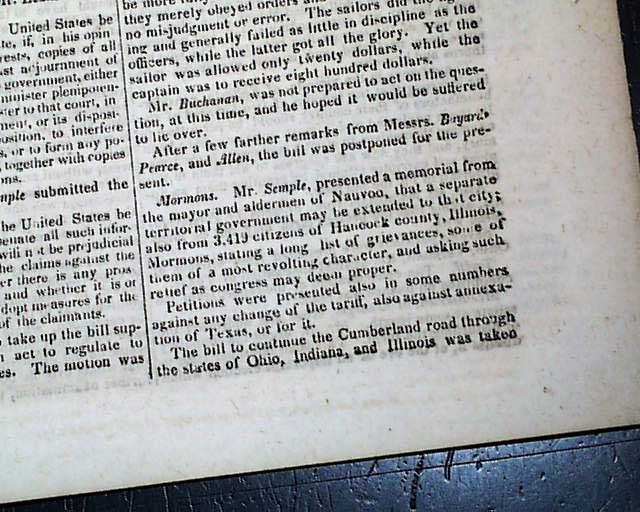
NILES' NATIONAL REGISTER, Baltimore, April 13, 1844
- Mormons - Mormonism
- Nauvoo, Illinois
An inside page has a brief item discussed in the federal Congress
...
NILES' NATIONAL REGISTER, Baltimore, Feb. 3, 1844
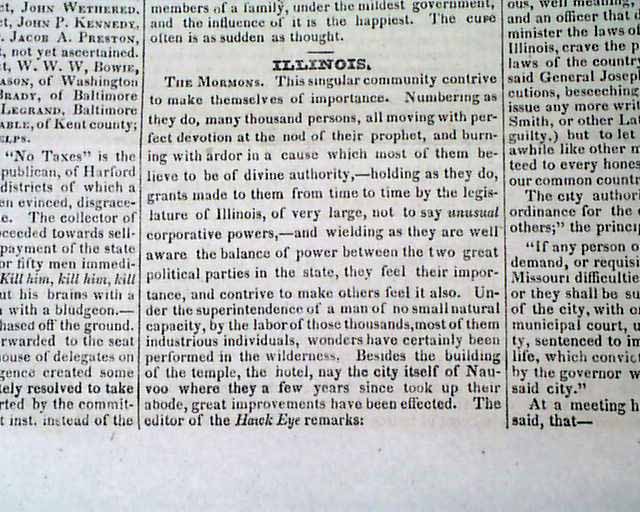
- Mormons - Mormonism
- The Rise of Nauvoo, Illinois
- Frontier Conflict and Kidnappings
- The Calhoun-Smith Letters
NILES' NATIONAL REGISTER, Baltimore, Sept. 27, 1845
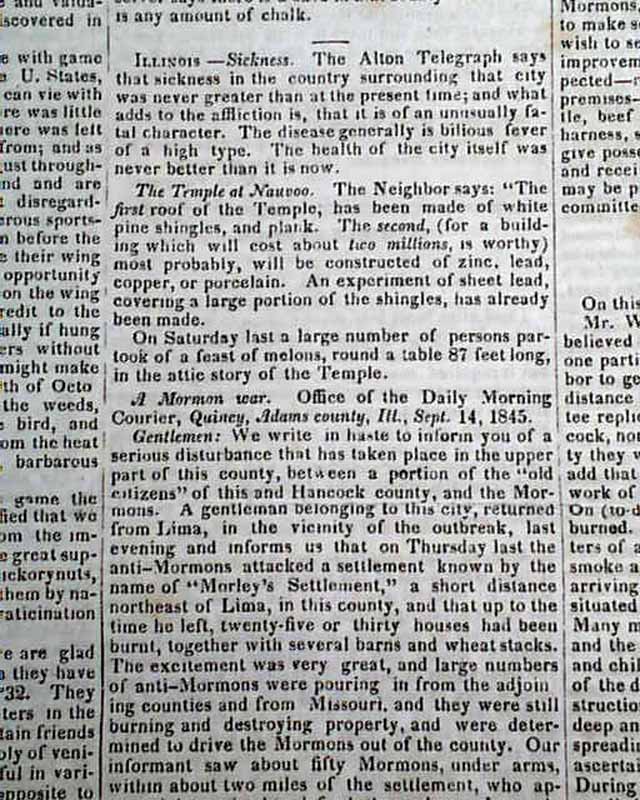
- The Mormon War
- Hancock County, Illinois
- Nauvoo Temple construction
Inside has various reports under:
...
NILES' NATIONAL REGISTER, Baltimore, Nov. 1, 1845
- Early Mormons - Mormonism
- Nauvoo, Hancock County, Illinois
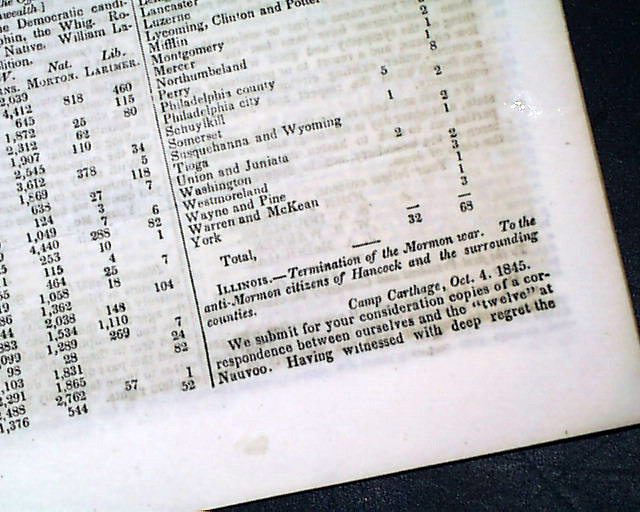
Inside has an address to the anti-Mormon
...