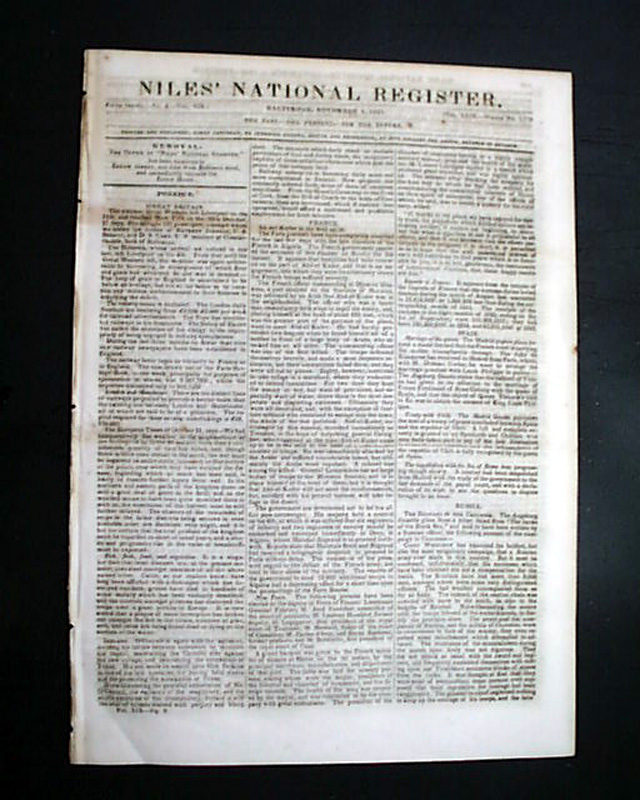
Removing Mormon's from the state...
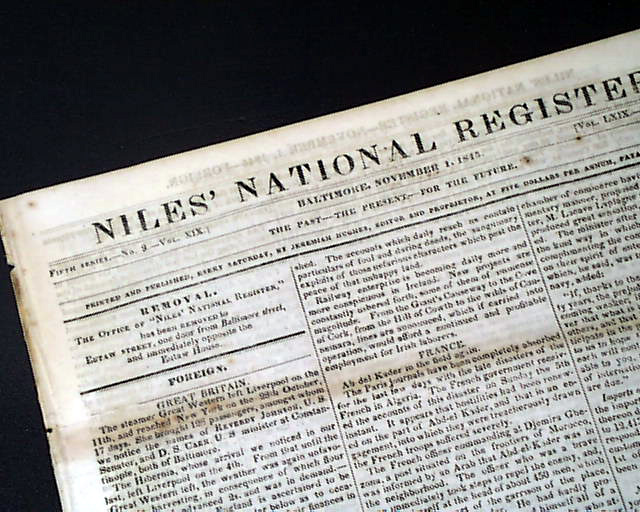
NILES' NATIONAL REGISTER, Baltimore, Nov. 1, 1845
- Early Mormons - Mormonism
- Nauvoo, Hancock County, Illinois
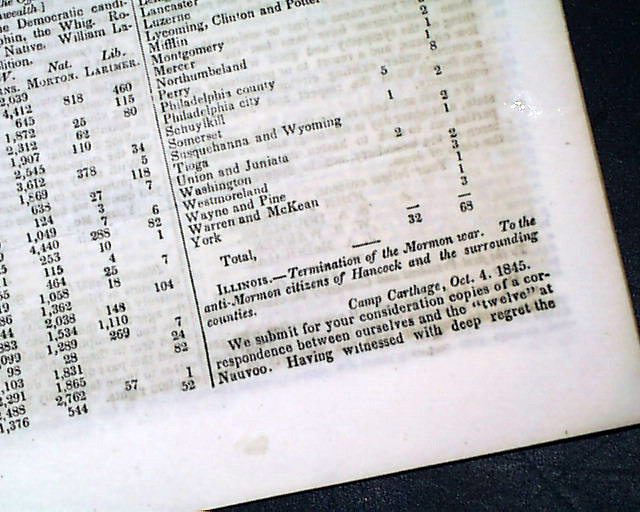
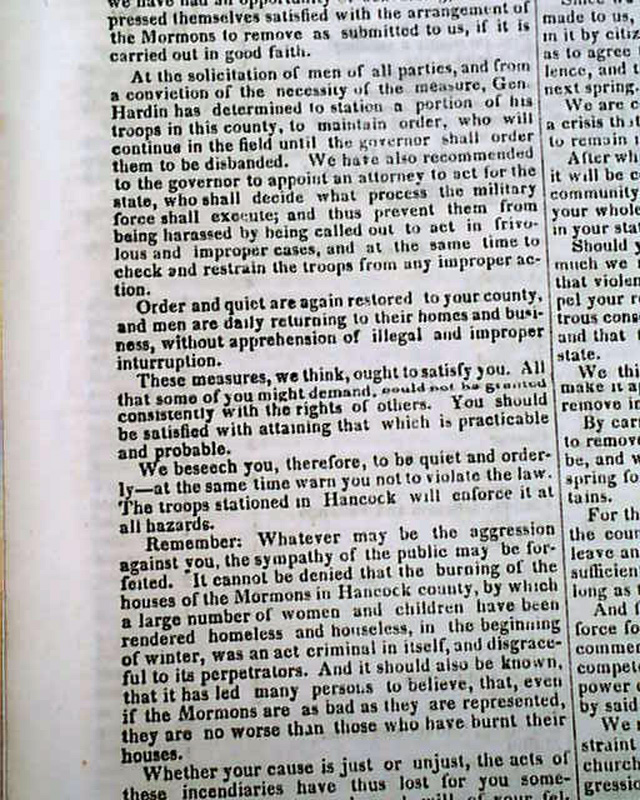
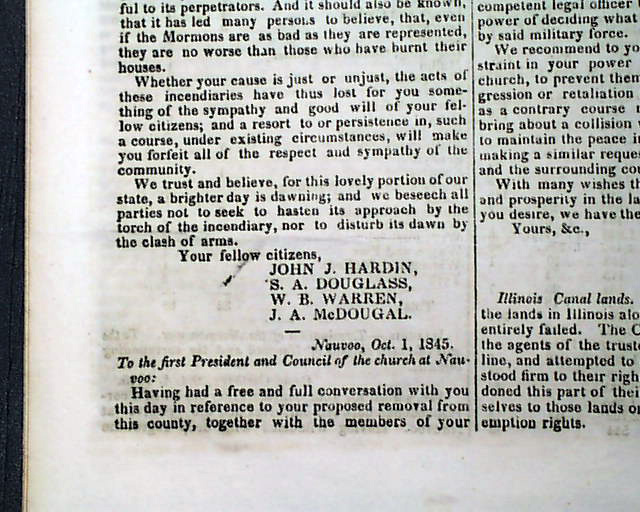
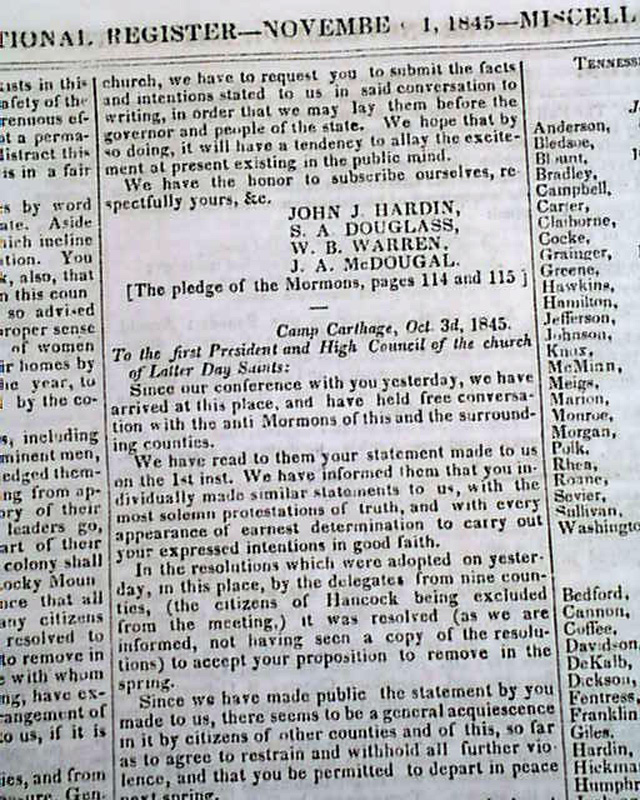
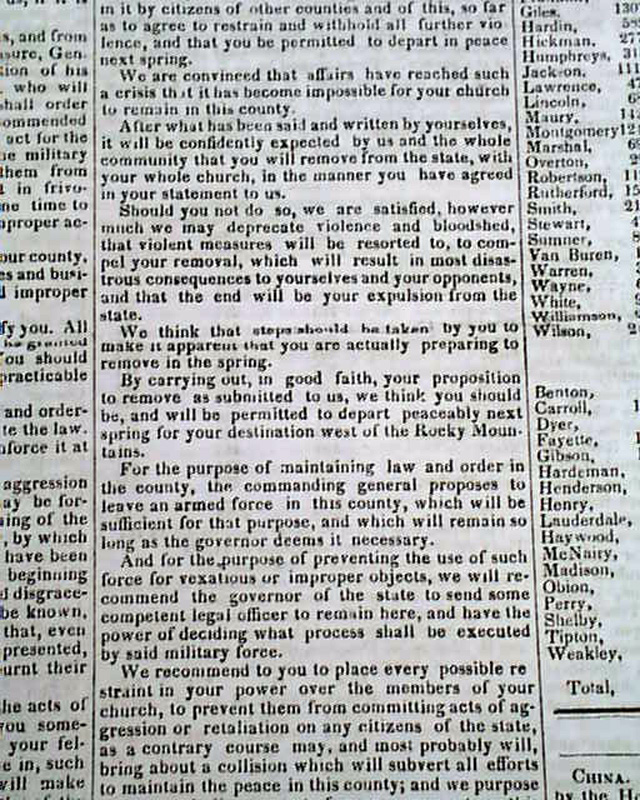
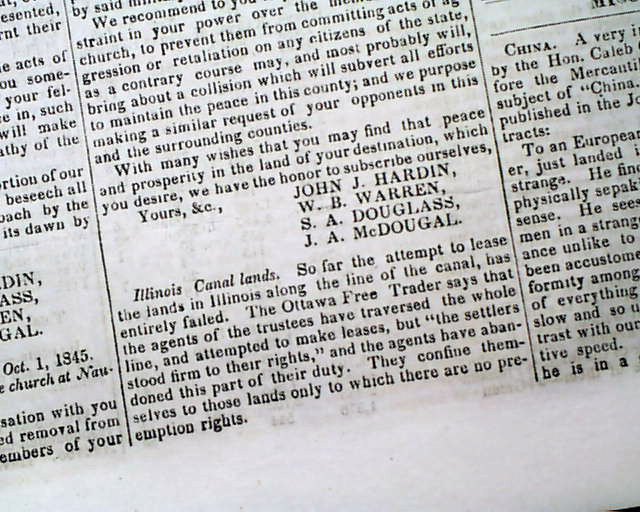
Inside has an address to the anti-Mormon citizens of Hancock (Ill.), submitting copies of a correspondence between a group of citizens and the "twelve" at Nauvoo.
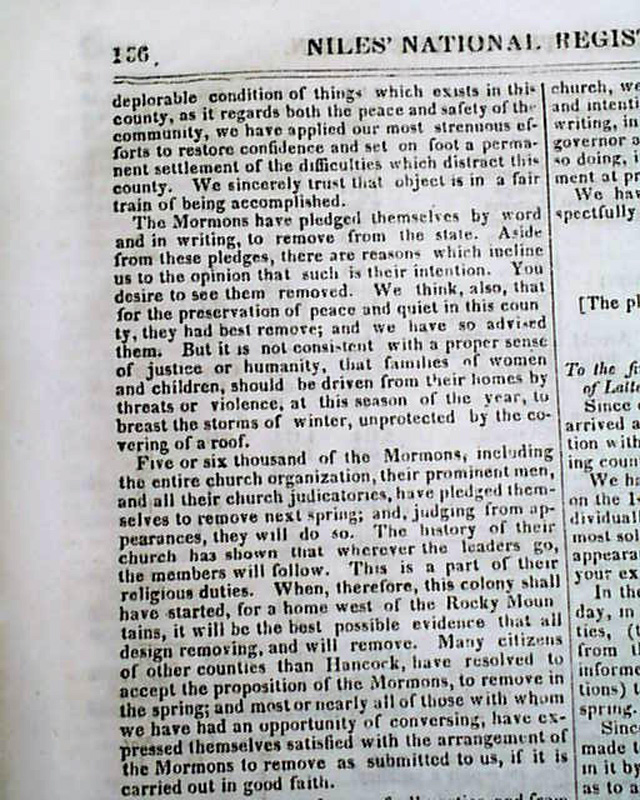
This discusses the removal of the Mormons from the state, including: "...The history of their church has shown that wherever the leaders go, the members will follow. This is part of their religious duties. When, therefore, this colony shall have started, for a home west of the Rocky Mountains...". Hereafter are the two letters addressed to the President & Council of the church at Nauvoo.
Sixteen pages, 8 1/2 by 12 inches, nice condition.
background: This specific entry in Niles’ National Register serves as a primary legal and social record of the "treaty" that effectively ended the Mormon presence in Illinois, documenting the precise moment when the Quorum of the Twelve Apostles formally surrendered their position in Nauvoo. By publishing the correspondence between the anti-Mormon committee and church leadership, the Register captured the forced pragmatism of Brigham Young and his associates, who agreed to a mass migration to avoid total annihilation. The text is particularly revealing for its clinical assessment of Mormon devotion; the observation that the laity would follow their leaders anywhere "as part of their religious duties" highlights the contemporary perception of the church as a disciplined, monolithic entity that could only be managed through its hierarchy. Ultimately, this document acts as the official prologue to the Mormon Pioneer Trek, marking the transition of the movement from a domestic political nuisance in the eyes of the State to a self-sovereign expedition toward the Mexican-controlled Great Basin.
As noted in Wikipedia, this title: "...(was) one of the most widely-circulated magazines in the United States...Devoted primarily to politics...considered an important source for the history of the period."
Other issues you may like
§ related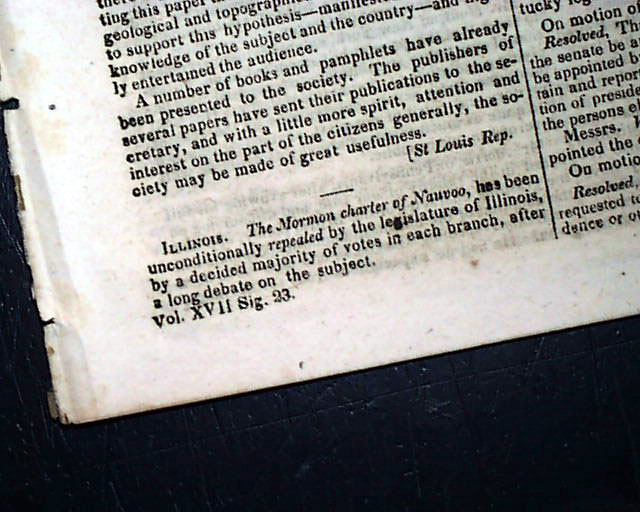
NILES' NATIONAL REGISTER, Baltimore, Feb. 8, 1845
- Nauvoo Charter - Mormons - Mormonsim
- Illinois legislature repeals - post Joseph Smith murder
- Prelude to
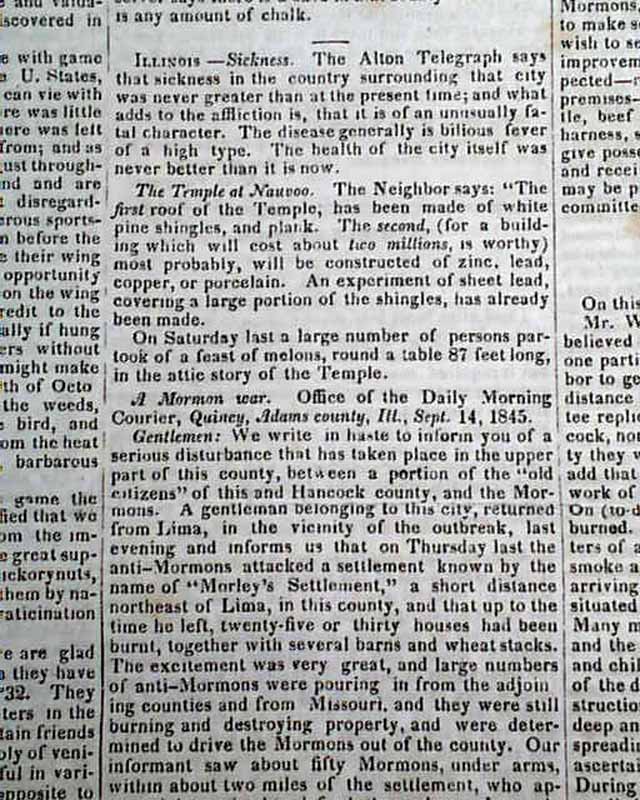
NILES' NATIONAL REGISTER, Baltimore, Sept. 27, 1845
- The Mormon War
- Hancock County, Illinois
- Nauvoo Temple construction
Inside has various reports under:
...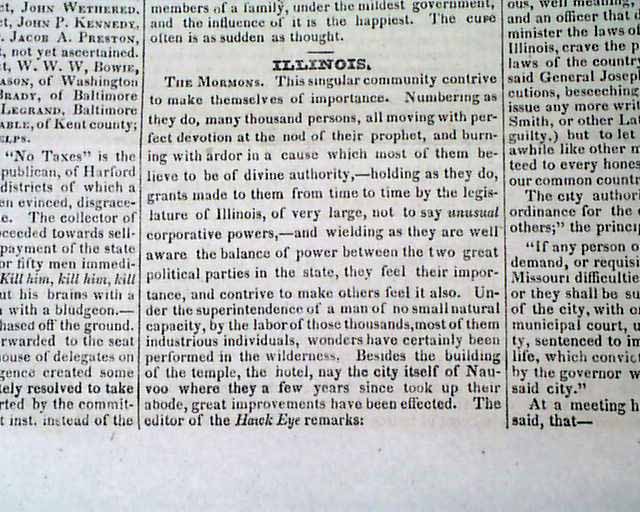
NILES' NATIONAL REGISTER, Baltimore, Feb. 3, 1844
- Mormons - Mormonism
- The Rise of Nauvoo, Illinois
- Frontier Conflict and Kidnappings
- The Calhoun-Smith Letters
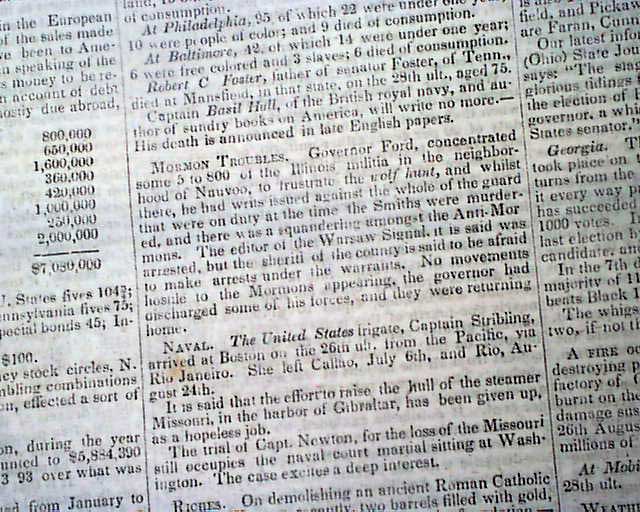
NILES' NATIONAL REGISTER, Baltimore, Oct. 12, 1844
- Nauvoo Legion militia - Illinois
- Mormons - Mormonism War ?
- Governor Thomas Ford
The back page has a report:
...