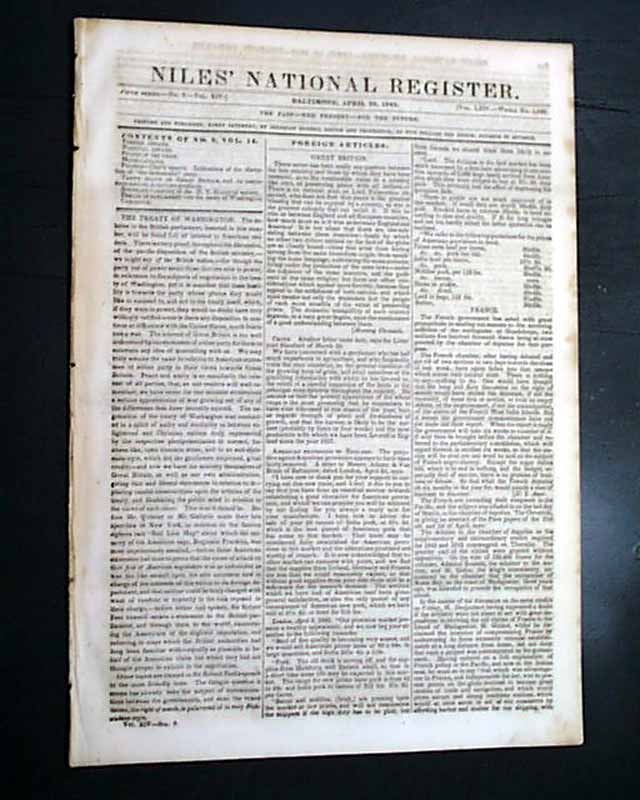
The Millerite prediction did not happen...
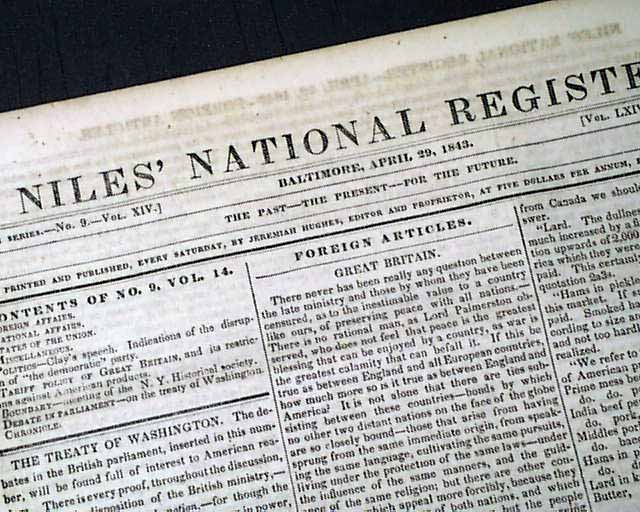
NILES' NATIONAL REGISTER, Baltimore, April 29, 1843
- Millerism - Millerites
- "The Great Disappointment"
- "Second Great Awakening"
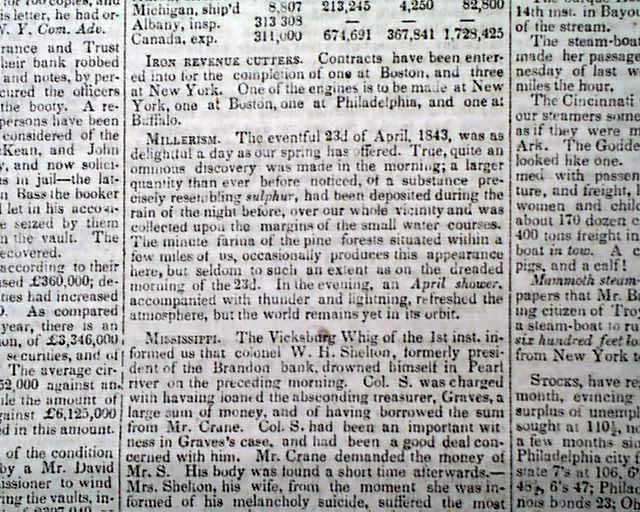
The back page has a report: "Millerism" which is a fine report on the Millerite prediction that the world would end on April 23.
It includes: "The eventful 23d of April, 1843 was as delightful a day as our spring has offered. True, quite an ominous discovery was made in the morning; a large quantity than ever before noticed of a substance precisely resembling sulphur had been deposited during the rain of the night before...in the evening an April shower, accompanied with thunder and lightning, refreshed the atmosphere, but the world remains yet in its orbit."
The Millerites were followers of the teachings of William Miller, who in 1831 first shared publicly his belief that the Second Advent of Jesus Christ would occur in roughly the year 1843.
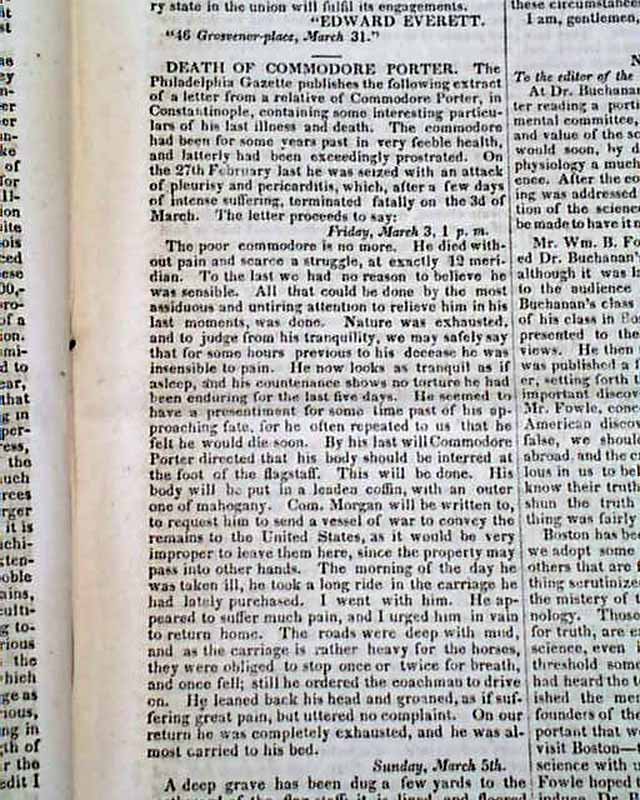
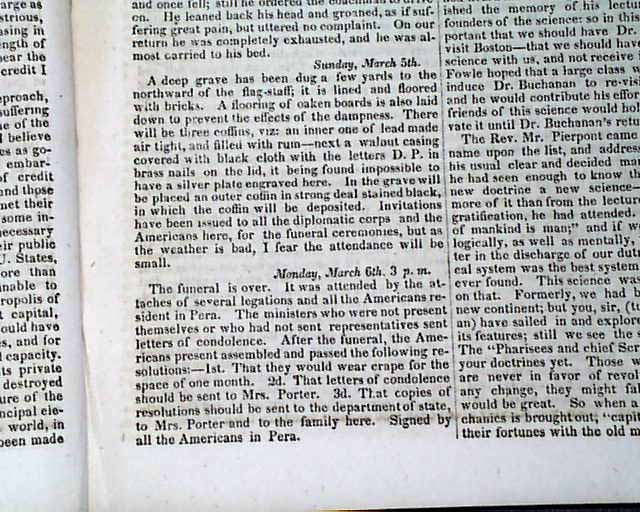
An inside page has a report on the: "Death Of Commodore Porter".
Sixteen pages, 8 1/2 by 12 inches, very nice condition.
background: This specific issue of Niles' National Register serves as a poignant time capsule of 1843 American life, juxtaposing the fervor of the Second Great Awakening with the somber passing of a national military icon. The "Millerism" report on the back page highlights the psychological climate of the era, where even a routine biological event—the heavy deposit of yellow pine pollen during a spring rain—was interpreted through a lens of apocalyptic dread as "sulphur" from the heavens. While the Millerites waited in trembling expectation for the world to end on April 23, the inside pages remained grounded in the earthly realities of the young Republic, mourning Commodore David Porter, a naval legend whose career spanned the War of 1812 and the fight against West Indies piracy. The existence of this sixteen-page register in fine condition is remarkable, as it preserves the literal "day after" perspective of a society caught between the superstitious anxiety of a predicted Doomsday and the institutional continuity of the United States Navy.
As noted in Wikipedia, this title: "...(was) one of the most widely-circulated magazines in the United States...Devoted primarily to politics...considered an important source for the history of the period."
Other issues you may like
§ related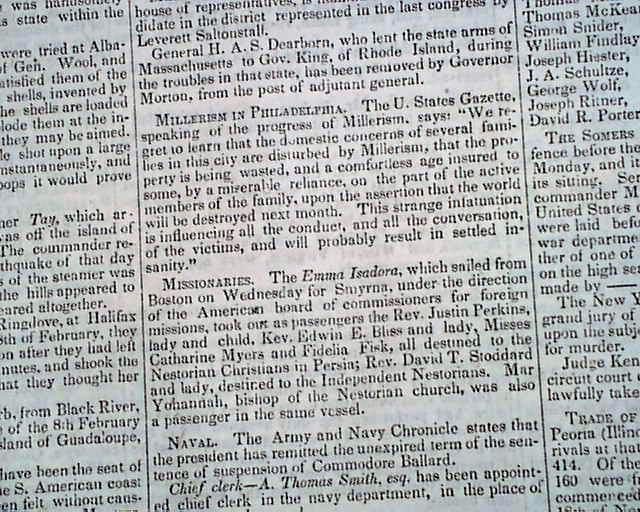
NILES' NATIONAL REGISTER, Baltimore, March 11, 1843
- William Millerites - Millerism
The back page has an interesting report headed: "Millerism In
...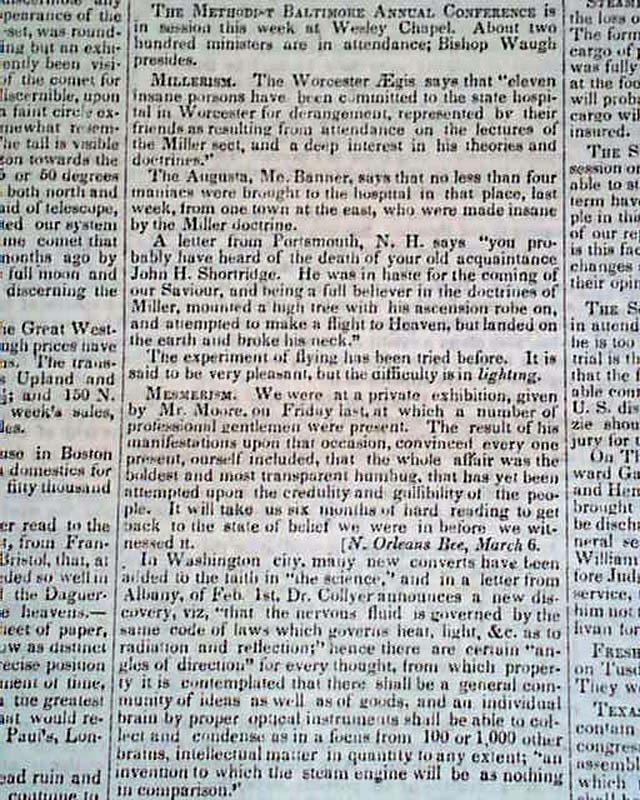
NILES' NATIONAL REGISTER, Baltimore, March 18, 1843
- William Millerites - Millerism
The back page has a report headed: "Millerism" which is about
...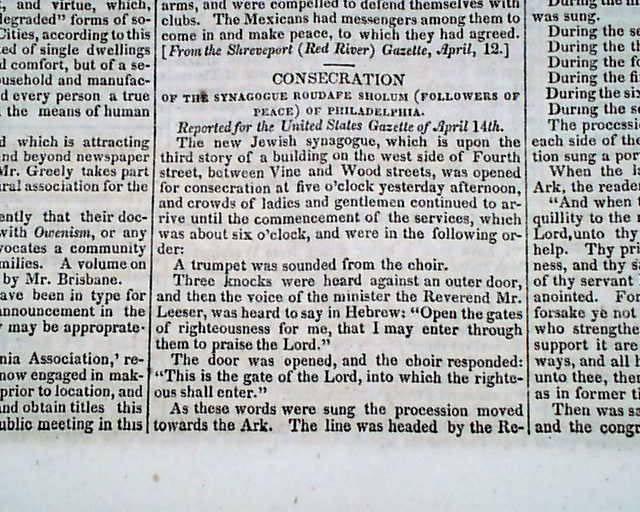
NILES' NATIONAL REGISTER, Baltimore, May 6, 1843
- Congregation Rodeph Shalom (Philadelphia)
- Jewish synagogue - Jews - Judaica
- William Millerites - Millerism
NILES' NATIONAL REGISTER, Baltimore, May 13, 1843
- Boston Tabernacle dedication
- William Millerites - Millerism
- Second Advent of Jesus Christ
Page 3 has over
...