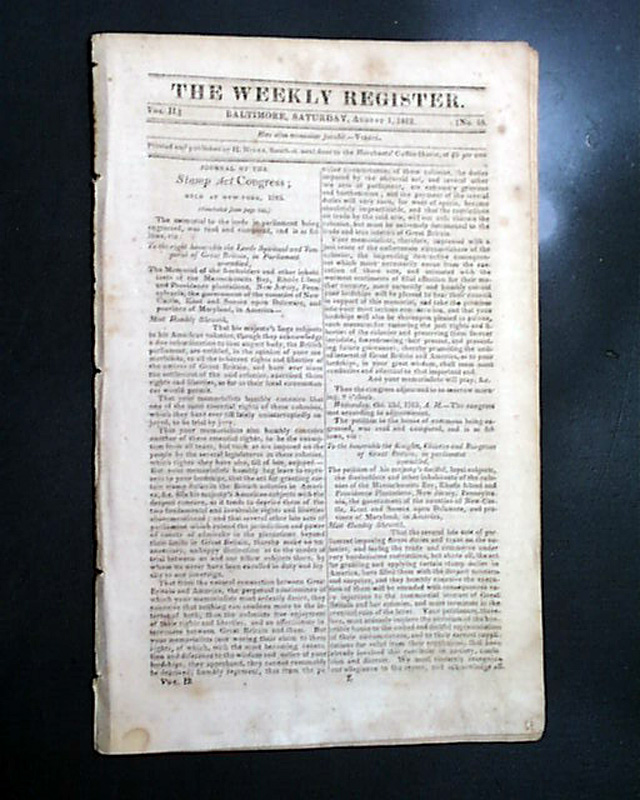
Success of General Hull in Canada, and more on the War of 1812...
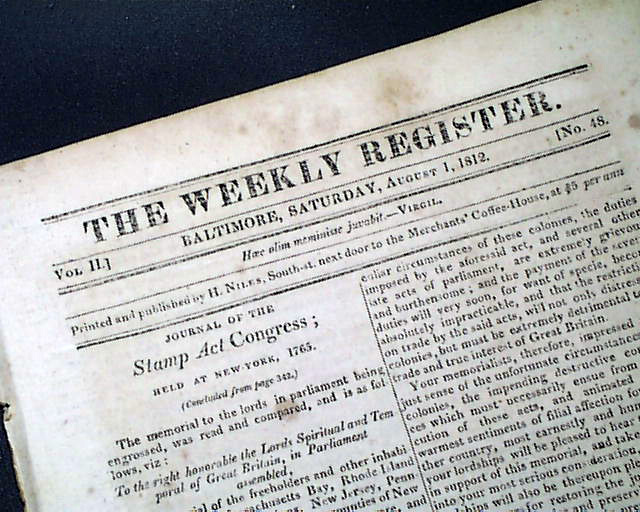
THE WEEKLY REGISTER, Baltimore, Aug. 1, 1812
- General William Hull
- Invasion of Canada success
- War of 1812
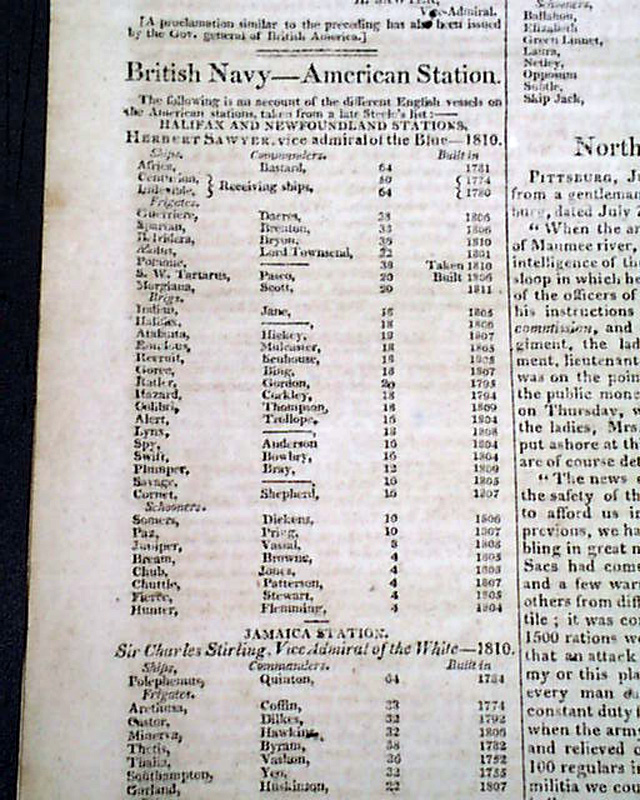
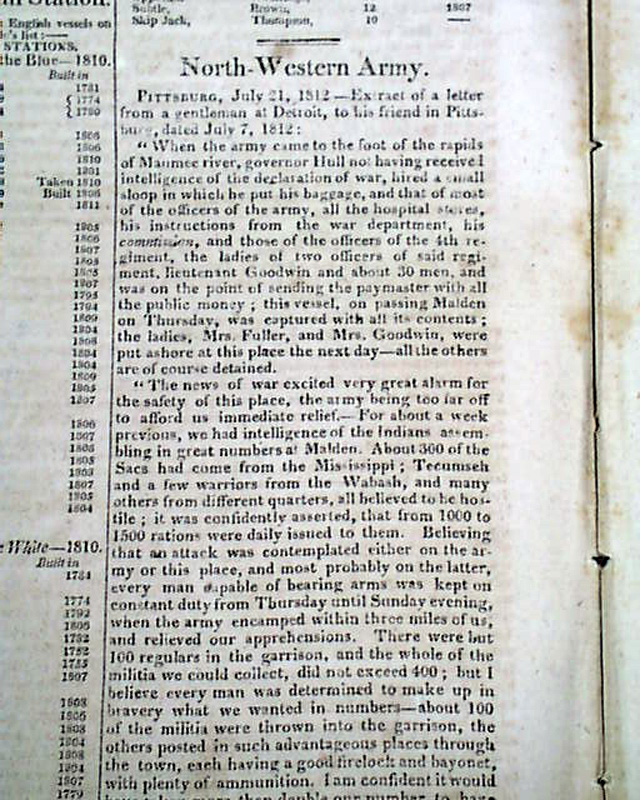
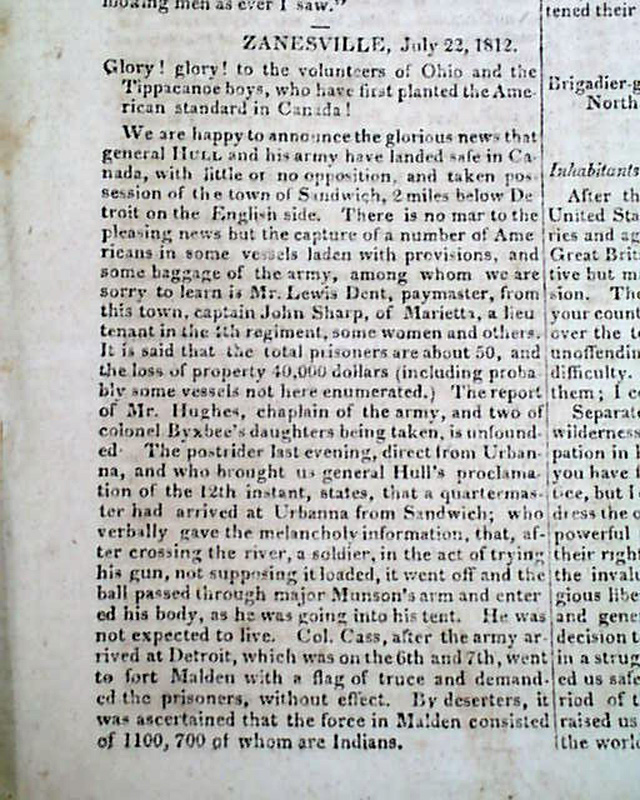
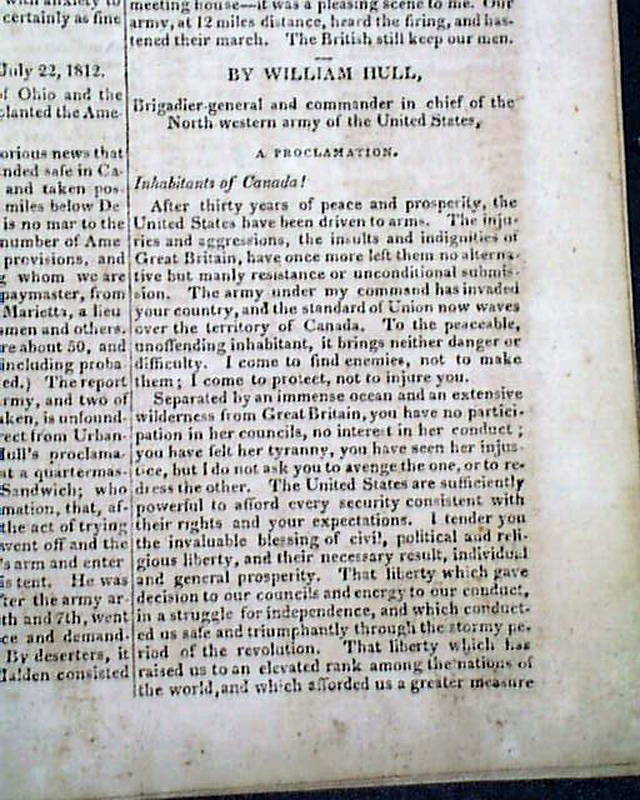
Much from the early months of the War of 1812 including: "British Navy--American Station" being a chart of their ships commanders, and size; "North-Western Army" which is a nice letter beginning: "When the army came to the foot of the rapids of Maumee river, governor Hull not having received intelligence of the declaration of war...". Also a great letter from Zanesville, Ohio, beginning: "Glory! glory! to the volunteers of Ohio and the Tippecanoe boys who have first planted the American standard in Canada! We are happy to announce the glorious news that general Hull & his army have landed safe in Canada with little or no opposition & taken possession of the town of Sandwich, 2 miles below Detroit...". Then: "A Proclamation" by William Hull, to the inhabitants of Canada.
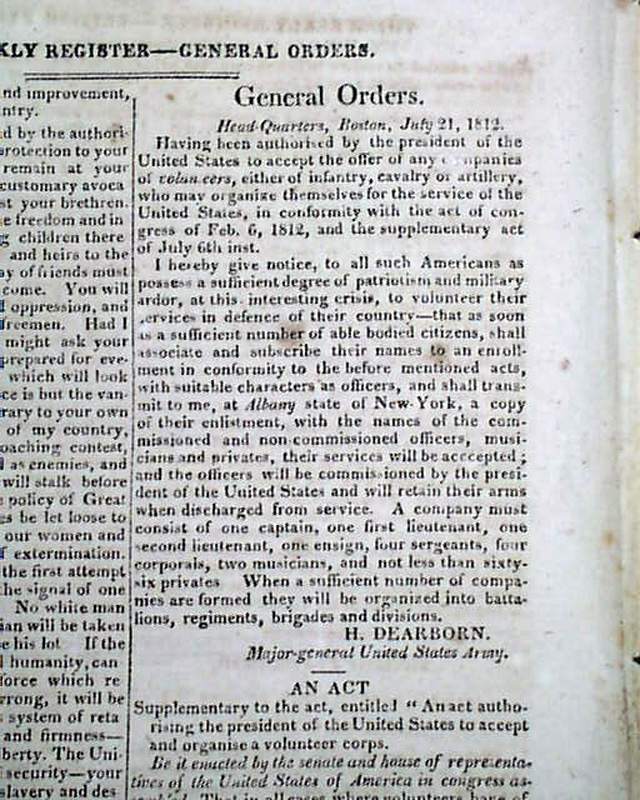
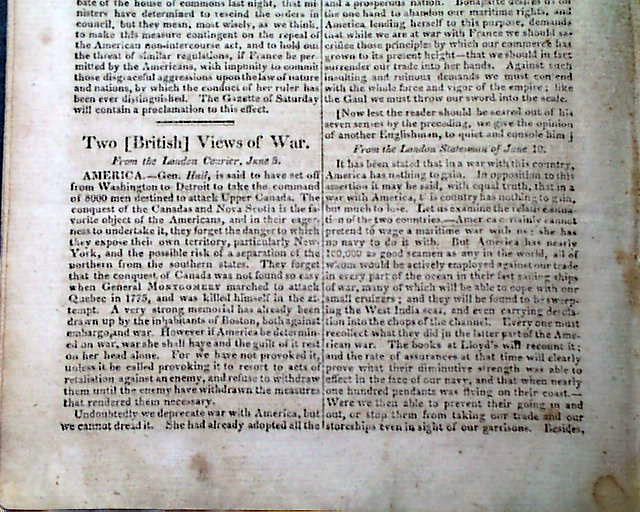
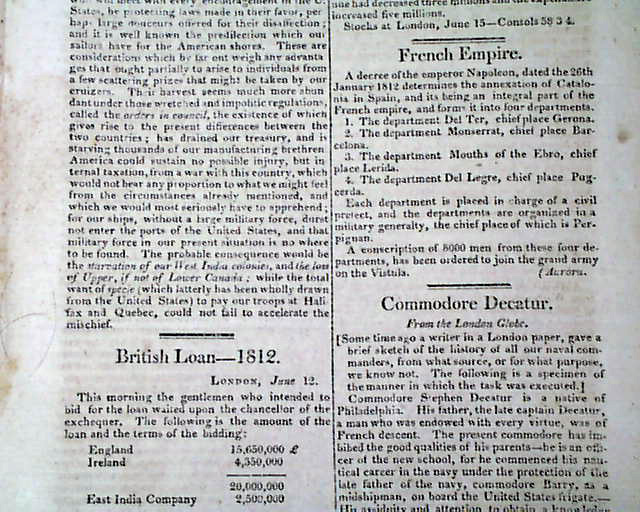
More as well including a letter from Urbana, and "General Orders" signed by: H. Dearborn. "Two British Views of War" "Commander Decatur" and even more.
Sixteen pages, 6 1/4 by 9 3/4 inches, very nice condition.
background: This issue of Niles’ Weekly Register serves as a poignant time capsule of American hubris and the "fog of war" that defined the summer of 1812. The exuberant "Glory! glory!" report from Zanesville and the text of General William Hull’s proclamation to the Canadians illustrate a brief window of colonial optimism, where the American public believed the conquest of Canada would be a "mere matter of marching." The irony embedded in these pages is profound: while the Baltimore readers were celebrating Hull’s "safe landing" at Sandwich and his bold promises of protection to British subjects, Hull himself was already succumbing to the hesitation and supply-line anxieties that would lead to his ignominious surrender of Detroit just fifteen days after this paper’s publication. By pairing these boots-on-the-ground letters with the cold data of the British Navy’s "American Station" chart and General Dearborn’s official orders, the register captures the exact moment the United States shifted from a peacetime Republic to a nation grappling with the terrifying logistical realities of a global maritime conflict.
Other issues you may like
§ related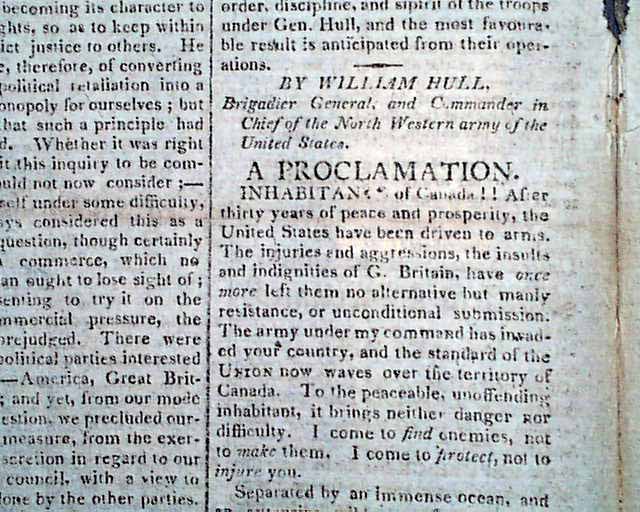
THOMAS'S MASSACHUSETTS SPY OR WORCESTER GAZETTE, Aug. 5, 1812
- General William Hull proclamation
All of the front page, much of page 2, & over half of page 4
...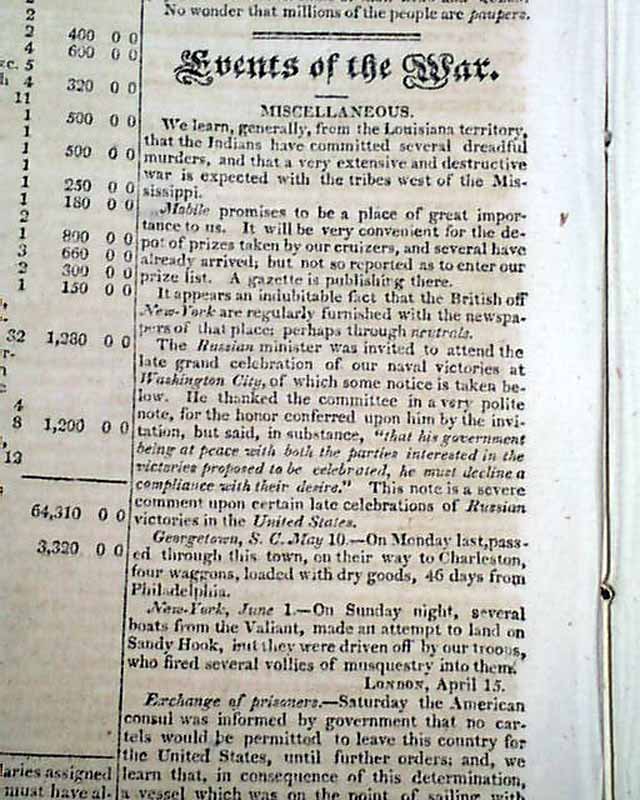
THE WEEKLY REGISTER, Baltimore, June 5, 1813
- Battle of York - Toronto - Upper Canada
- Second Battle of Sacket's Harbor - War of 1812
Much reporting on the War
...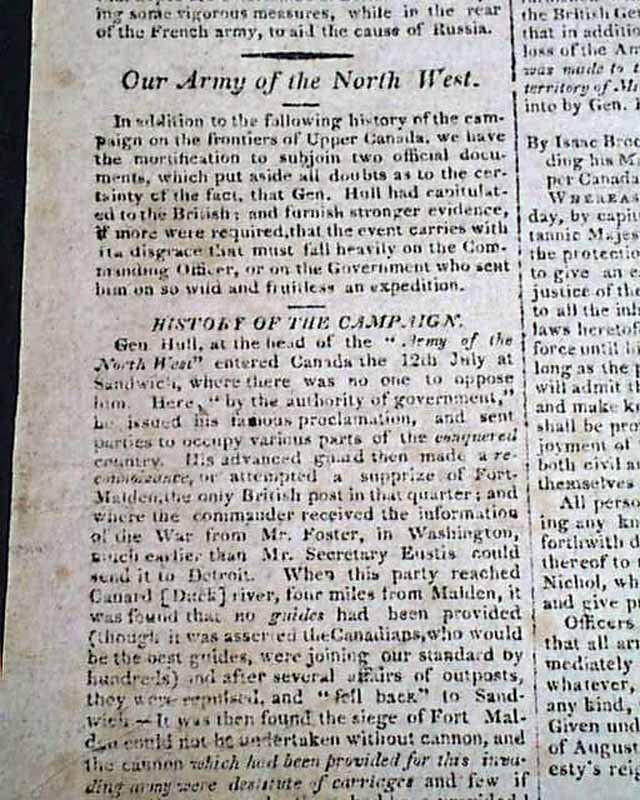
BOSTON GAZETTE, Sept. 7, 1812
- Siege of Detroit - surrender
- Battle of Fort Detroit
- General William Hull
Page 2 has some reports on the War of 1812 with: "Our
...
THE WEEKLY REGISTER, Baltimore, Feb. 13, 1813 Inside has; "Law of Ohio - An Act for the Encouragement of Volunteers in the North-Western Army of the United
...