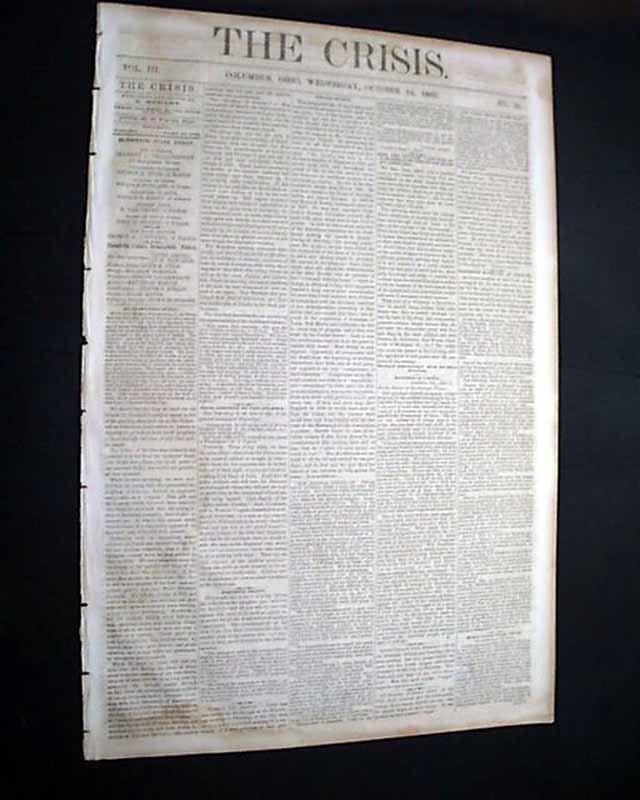
Lincoln proclaims the first, official national Thanksgiving...
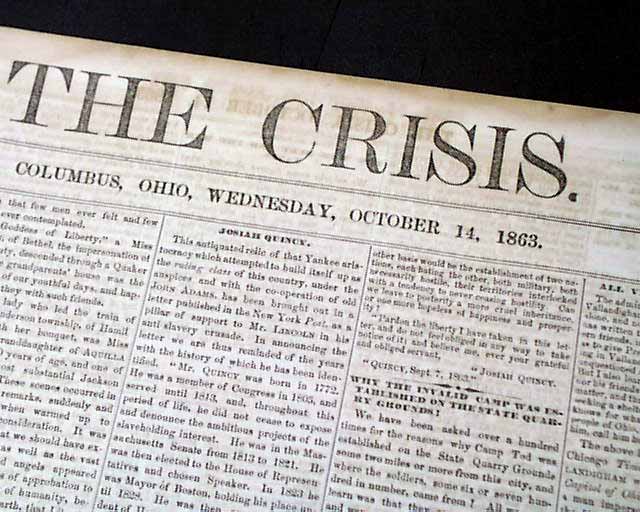
THE CRISIS, Columbus, Ohio, Oct. 14, 1863
- Abraham Lincoln "Thanksgiving" proclamation (1st)
This anti-war newspaper insisted slavery should not be abolished, so consequently, much content has an anti-North bias.
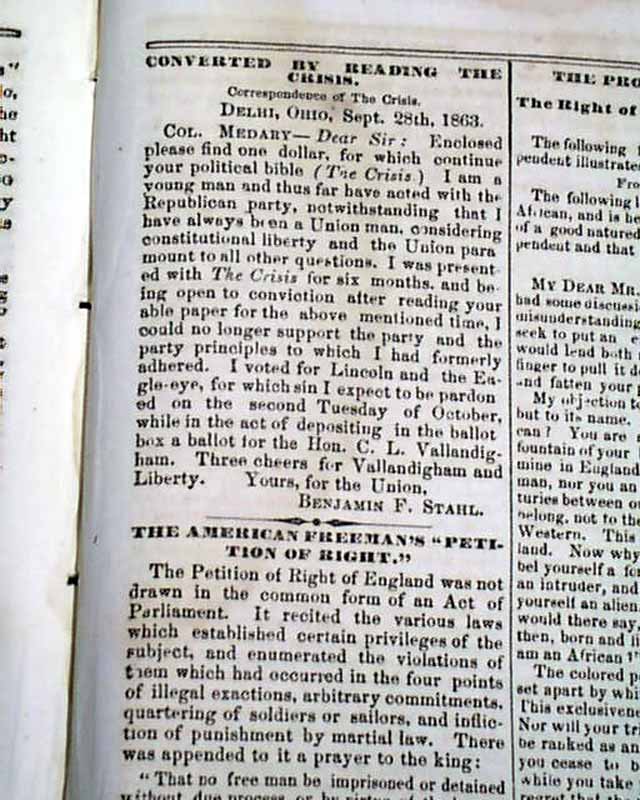
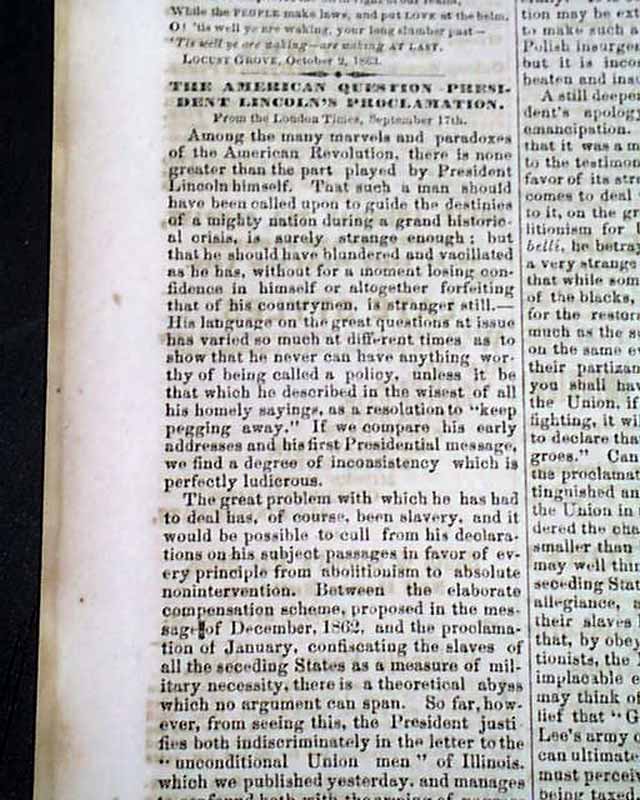
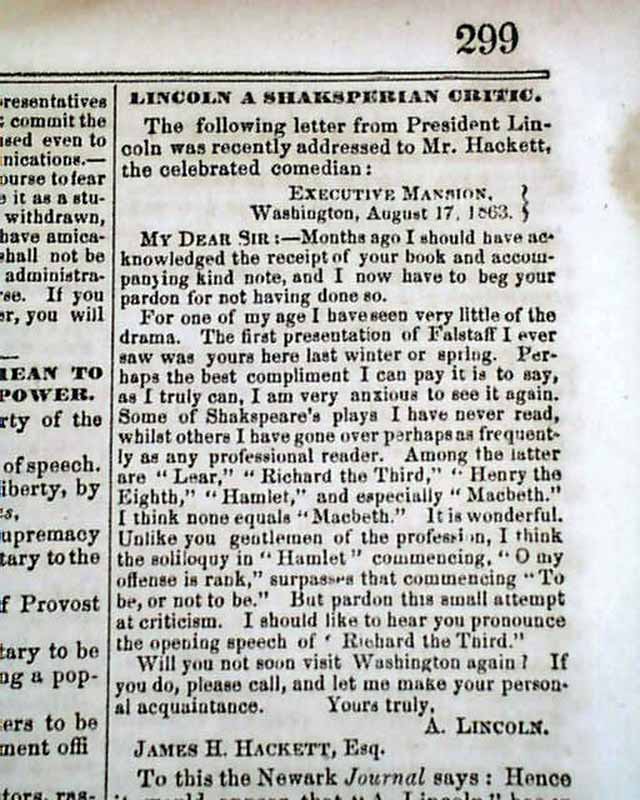
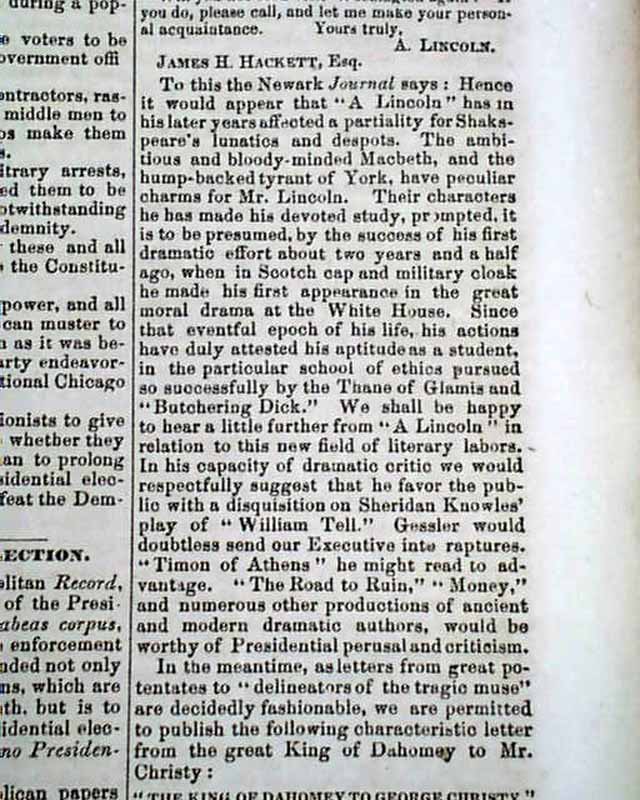
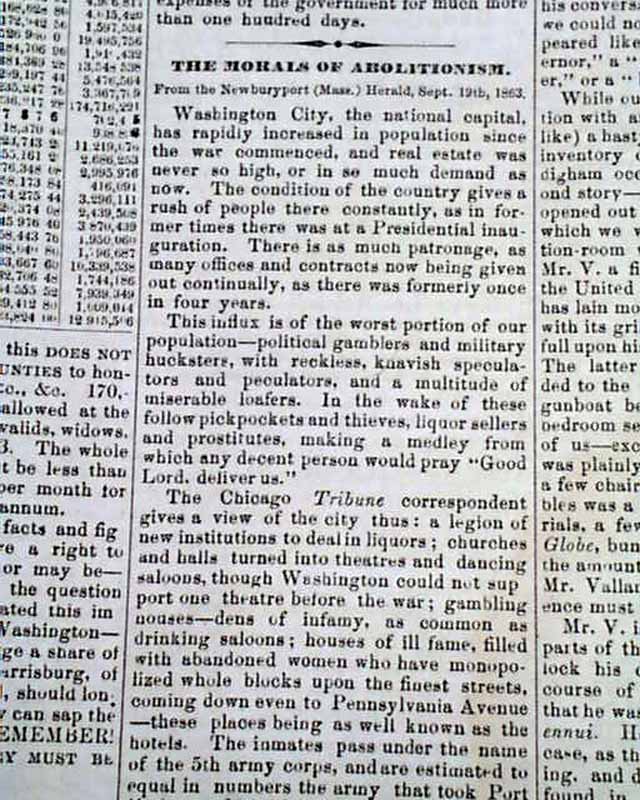
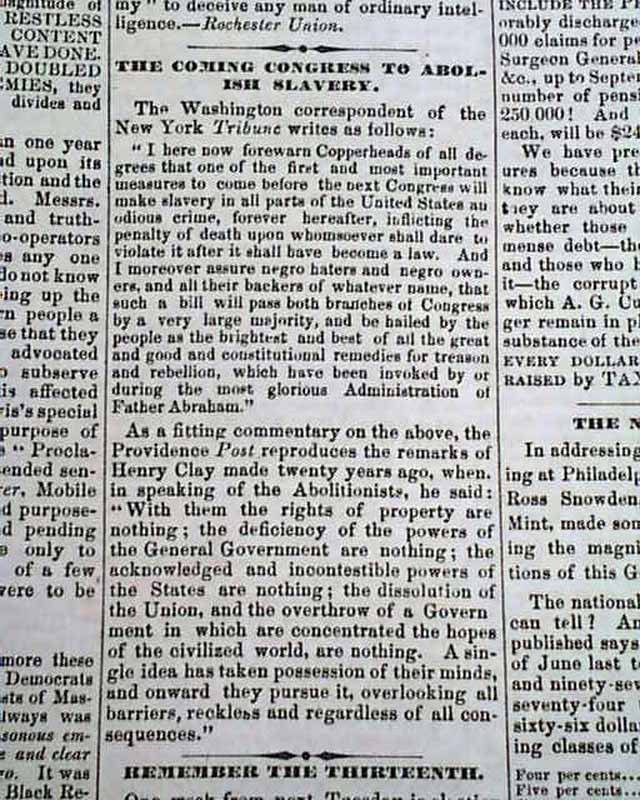
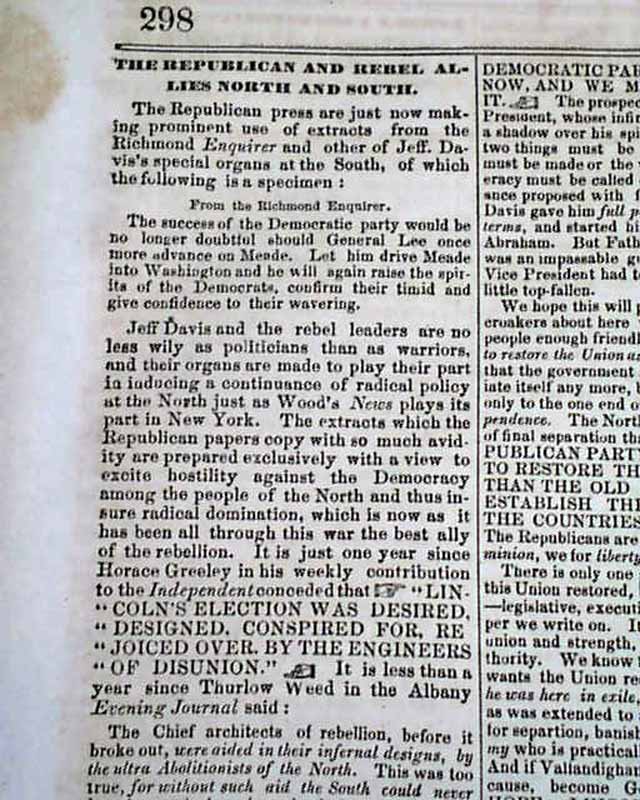
Articles within include: "Civil Libery of the Soldiers" "Another Draft" "The Republican & Rebel Allies North & South" "The Coming Congress to Abolish Slavery" "The Morals of Abolitionism" "Lincoln A Shakspearian Critic" includes a letter signed by him: A. Lincoln; "The American Freeman's 'Petition of Right' " "The American Question President Lincoln's Proclamation" which takes over a full column.
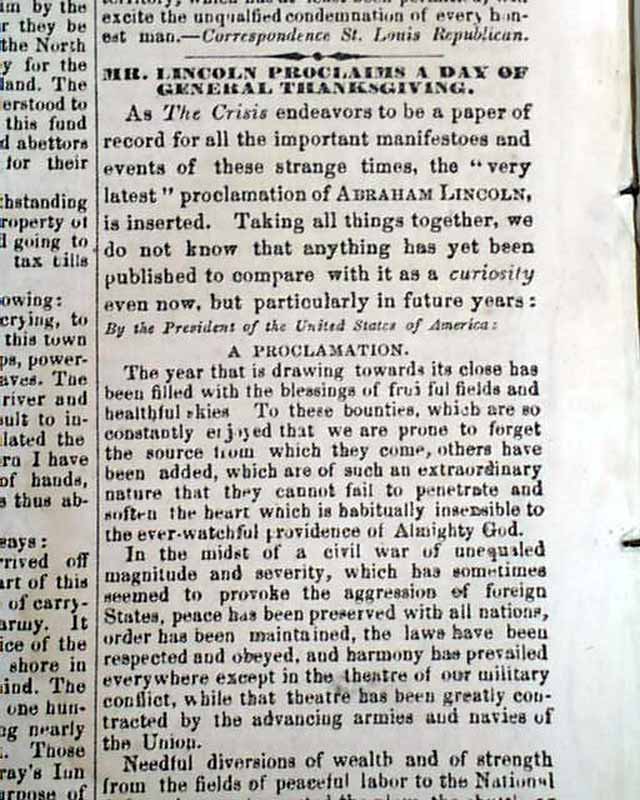
But of most historic note is: "Mr. Lincoln Proclaims A Day of General Thanksgiving" signed in type: Abraham Lincoln. This was the very first "official" national Thanksgiving Day Proclamation, issued by Lincoln as a result of recent editorials by Sarah J. Hale for Godey's Lady Book and the Boston Lady's Magazine in 1863.
Thanksgiving was proclaimed by every president after Lincoln. The date was changed a couple of times, most recently by Franklin Roosevelt in order to create a longer Christmas shopping season.
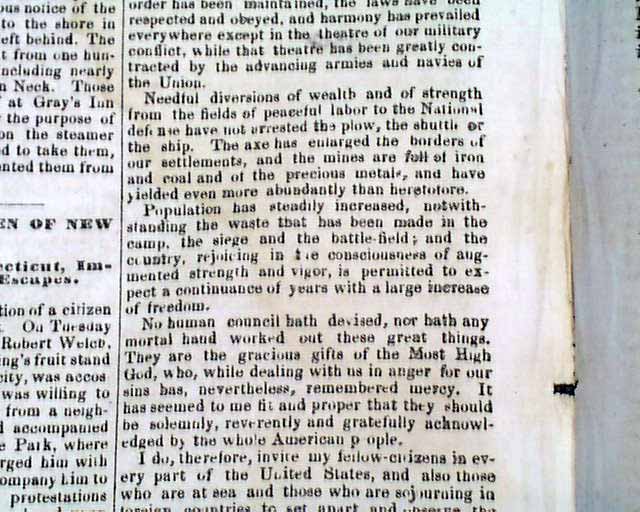
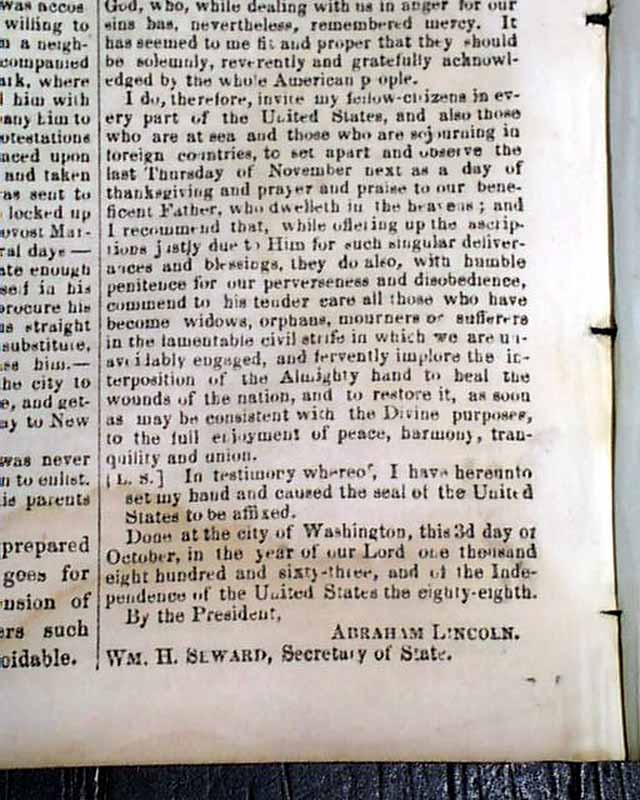
The Proclamation is identical to the text found on several Thanksgiving websites, and includes: "...They are the gracious gifts of the Most High God, who...has...remembered mercy...set apart & observe the last Thursday of November next as a day of thanksgiving & prayer and praise to our beneficent Father who dwelleth in the heavens...and fervently implore the interposition of the Almighty hand to heal the wounds of the nation..." signed in type: Abraham Lincoln.
Eight pages, nice condition.
Background: The October 14, 1863 issue of The Crisis—an anti-war, pro-slavery newspaper published in Columbus, Ohio by Peace Democrat Samuel Medary—captures a defining moment in American history by printing Abraham Lincoln's landmark October 3, 1863 Proclamation establishing the first official, annual national Thanksgiving Day on the last Thursday of November. Prompted by a 36-year campaign led by Sarah Josepha Hale, editor of Godey's Lady's Book, Lincoln and Secretary of State William H. Seward framed the executive proclamation around "healing the wounds of the nation" amidst the bloody turmoil of the Civil War. Paradoxically appearing inside a eight-page Copperhead publication fiercely opposed to the Union war effort, emancipation, and Lincoln's administration—and published immediately following the defeat of exiled Peace Democrat Clement Vallandigham in the Ohio gubernatorial election—this rare historical artifact highlights how official presidential decrees bridged even the most bitterly divided news outlets, setting a national precedent that every subsequent president followed until Franklin D. Roosevelt and Congress eventually codified the holiday to its modern fourth-Thursday schedule.
Described as "The Hottest Rebel Sheet to be found in the North or the South", this newspaper opposed the war and attracted the hatred of the Republicans and the Lincoln administration. It insisted that slavery could not be prohibited by law. So obnoxious was this paper to Unionists that it was denied circulation in some cities. In 1863 the press was raided by a hateful mob.
Other issues you may like
§ related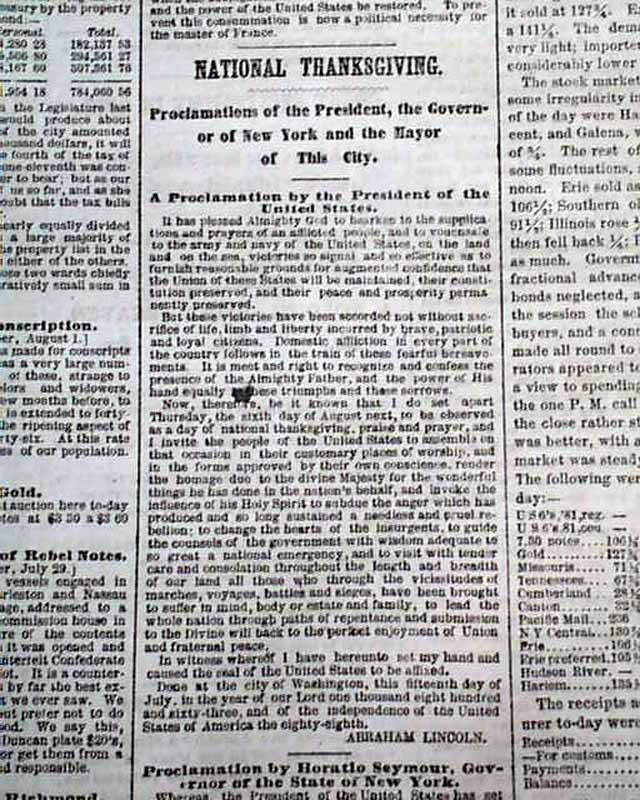
NEW YORK HERALD, Aug. 6, 1863
- President Abraham Lincoln
- National Thanksgiving Proclamation
- re. the recent Battles of Gettysburg & Vicksburg
The most
...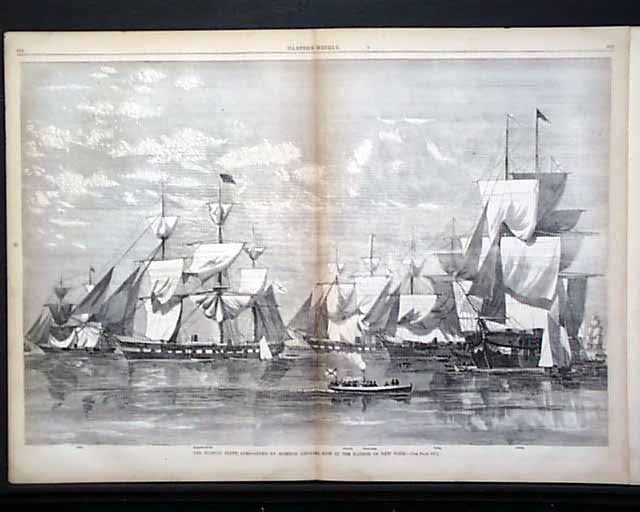
HARPER'S WEEKLY, New York, October 17, 1863 The full front page shows: "Reception of the Common Council Committee by Admiral Lisovski on Board the
...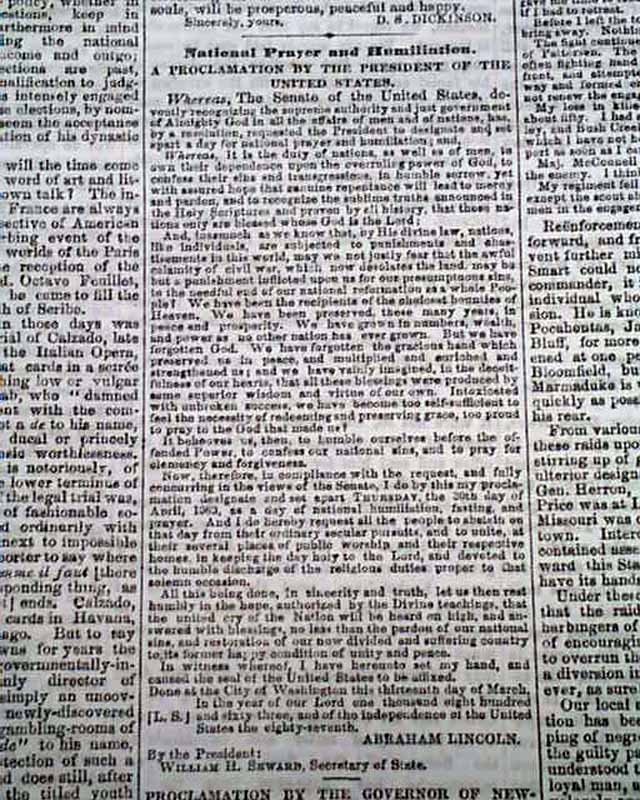
NEW YORK TRIBUNE, April 30, 1863
- "We have forgotten God..." - American Civil War
- Lincoln's Day of Fasting, Humiliation and Prayer
Page 3 contains a very
...
THE NEW YORK HERALD, Oct. 30, 1865
- President Andrew Johnson
- Thanksgiving proclamation 147
- 1st after the end of the Civil War
Page 5 has coverage of the
...