Lincoln's famous "We have forgotten God" proclamation...
NEW YORK TRIBUNE, April 30, 1863
- "We have forgotten God..." - American Civil War
- Lincoln's Day of Fasting, Humiliation and Prayer
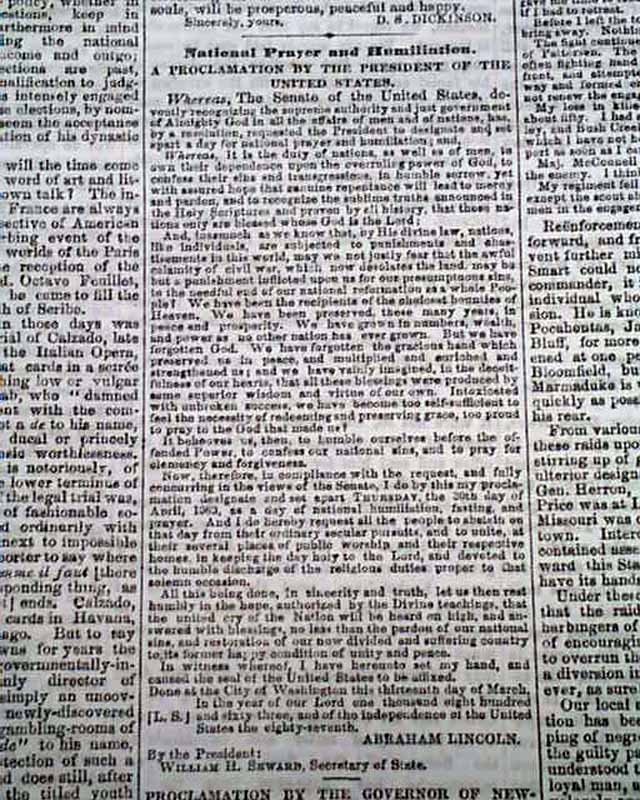
Page 3 contains a very notable Proclamation by Lincoln headed: "National Prayer and Humiliation. A Proclamation by the President of the United States" which contains the full text for the National Day of Fasting, Humiliation, and Prayer.
A few portions include: "...Senate of the United States devoutly recognizing the supreme authority & just government of Almighty God in all the affairs of men...has...set apart a day for National prayer and humiliation...It is the duty of nations, as well as of men, to own their dependence upon the overruling power of God...We have been the recipients of the choicest bounties of Heaven...But we have forgotten God. We have forgotten the gracious hand which preserved us in peace...Intoxicated with unbroken success, we have become too self-sufficient to feel the necessity of redeeming and preserving grace, too proud to pray to the God that made us?...to humble ourselves before the offended Power..." with much more.It is dated March 30, 1863 & signed in type at its conclusion: ABRAHAM LINCOLN. See note below for significance.
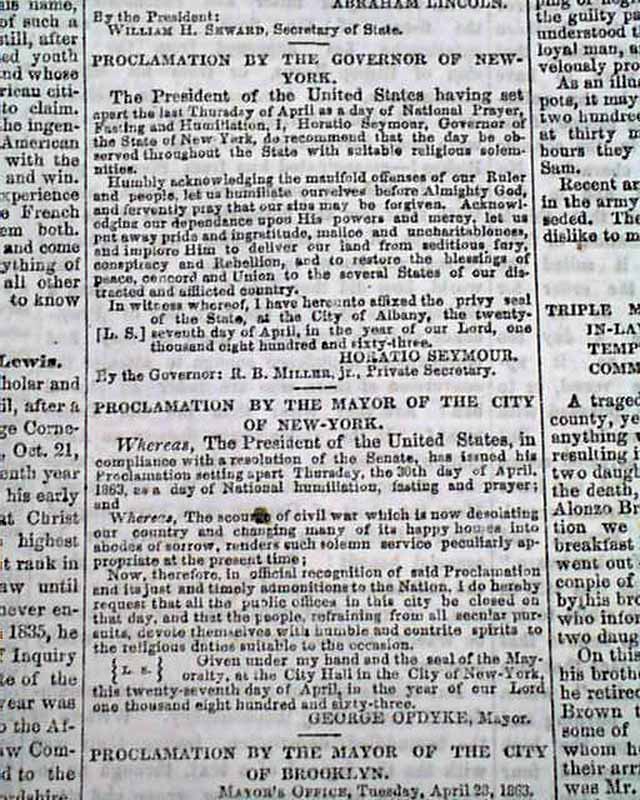
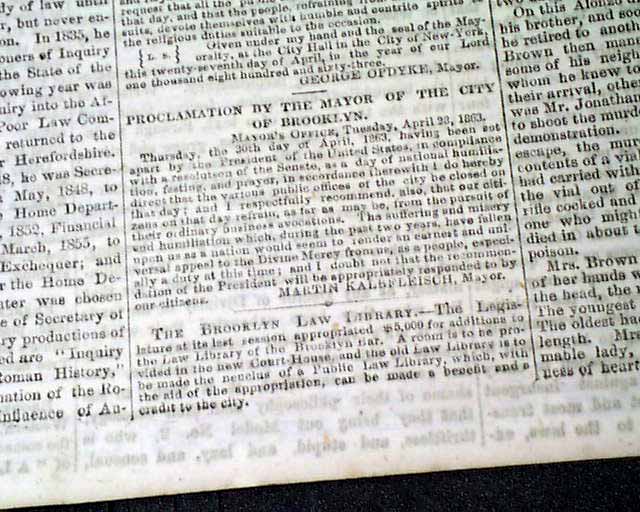
Following Lincoln's proclamation are similar proclamations by the Governor of New York, the mayor of New York City, and the Mayor of Brooklyn, as well as an additional lengthy article in response to the proclamation.
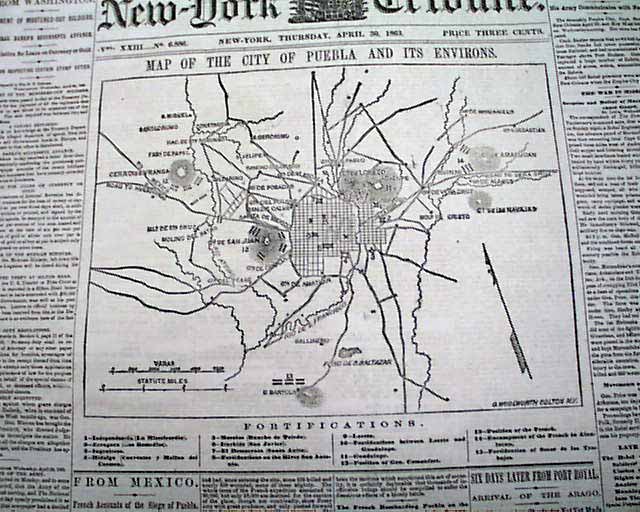
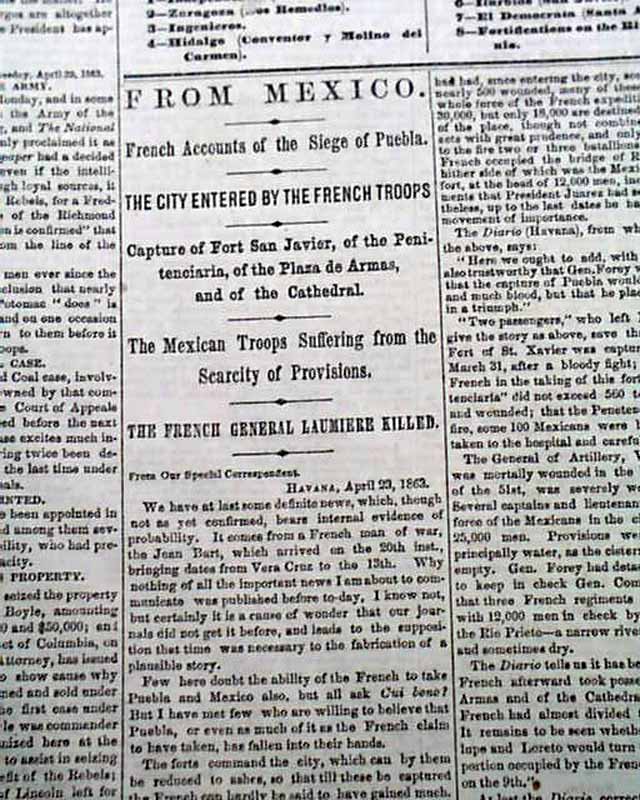
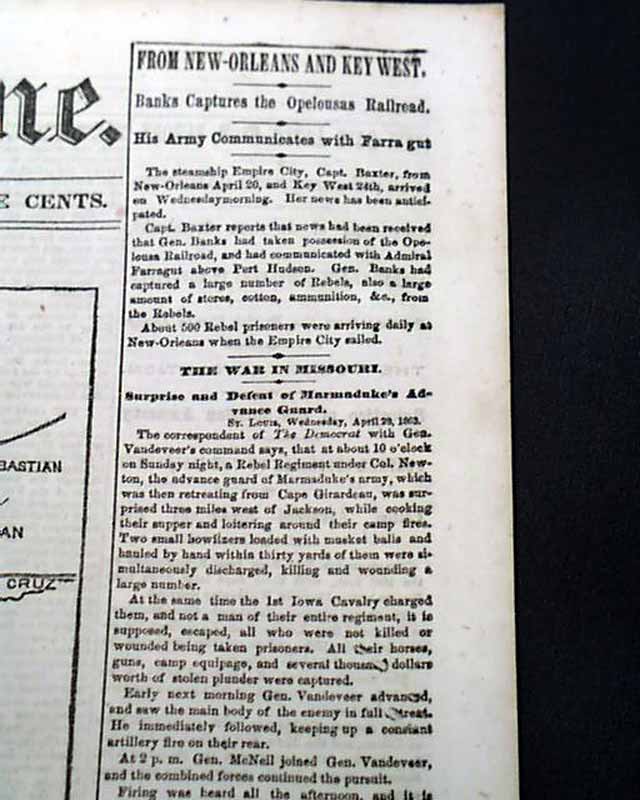
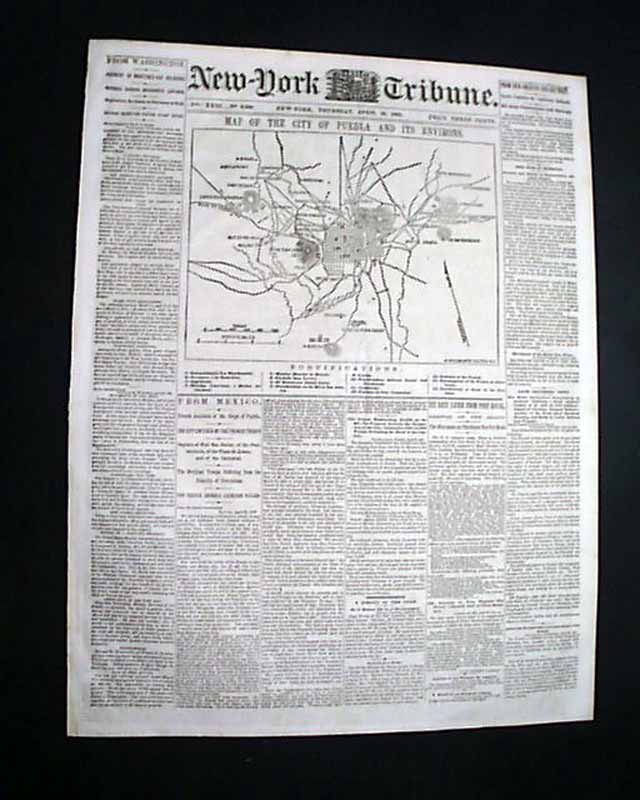
Additionally, the front features a nice & very detailed map headed: "Map Of The City of Puebla And Its Environs" with a key as to the principal buildings, etc. The front page has related heads and reports on the Civil War, with: "From Mexico" "French Accounts of the Siege of Puebla" "The City Entered by the French Troops" "From New Orleans & Key West" "Banks Captures the Opelousas Railroad" "From Washington" "Payment Of Mustered Out Soldiers" "General Banks's Successful Advance" and more. More war content inside as well.
Eight pages, very nice condition.
Background: The publication of the New York Tribune on April 30, 1863, serves as a profound historical intersection of American spiritual crisis, domestic military strategy, and international geopolitical tension. Central to this issue is Lincoln’s "National Day of Fasting, Humiliation, and Prayer" proclamation, a document of immense theological depth in which the President reframed the Civil War not merely as a political rebellion, but as a divine retribution for a nation "intoxicated" by its own success and guilty of forgetting its dependence on God. This internal moral reckoning was juxtaposed with the urgent tactical reports of General Nathaniel P. Banks’s success in Louisiana, specifically the seizure of the Opelousas Railroad, which was a critical step in isolating Confederate strongholds along the Mississippi. Simultaneously, the detailed map and reports of the Siege of Puebla highlighted the Union's anxiety regarding the French Intervention in Mexico; the fall of Puebla to French forces represented a direct threat to the Monroe Doctrine and raised the terrifying possibility of a European-backed Confederate ally on the Southern border. Together, these elements capture a moment where the United States was forced to simultaneously defend its territory, its democratic sovereignty against foreign influence, and its very soul through national penance.
Note: Multiple websites consider this proclamation to be a prelude to his historic Thanksgiving proclamation given six months later and as a precursor to what is now the National Day of Prayer (adopted July 4, 1953). On September 27, 2000, the Senate, in a response to growing internal tensions, took up a resolution to reaffirm Lincoln's March 30, 1863 proclamation. The resolution was not adopted.
Other issues you may like
§ related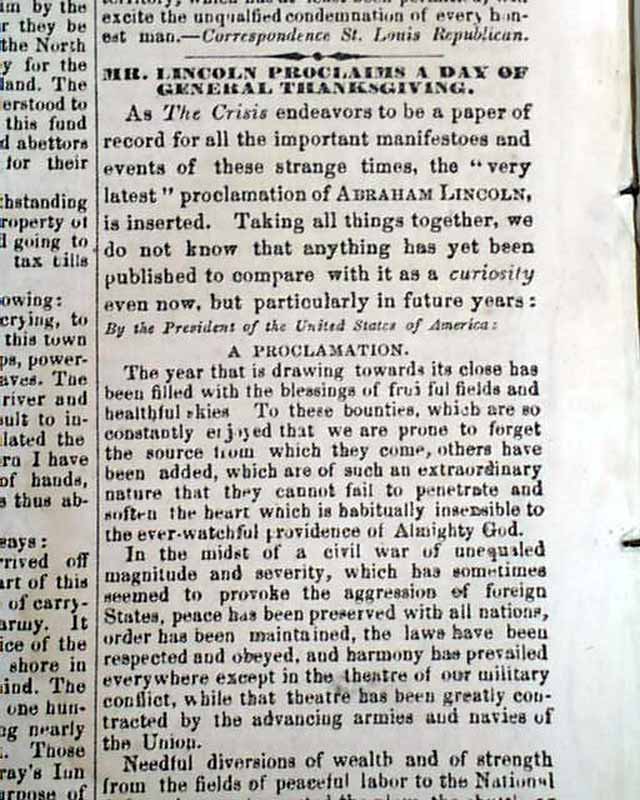
THE CRISIS, Columbus, Ohio, Oct. 14, 1863
- Abraham Lincoln "Thanksgiving" proclamation (1st)
This anti-war newspaper insisted slavery should not be
...
THE CRISIS, Columbus, Ohio, May 9, 1861
- Abraham Lincoln proclamation
- Calls for more troops - soldiers
- Rare pro-Confederate title
- First weeks of the Civil War
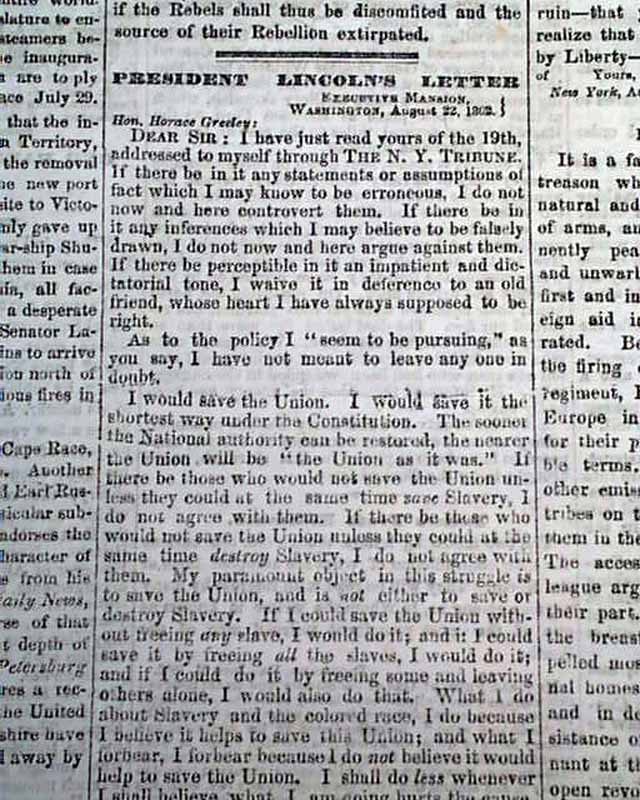
NEW YORK TRIBUNE, Aug. 25, 1862
- Famous Abraham Lincoln letter
- "A Prayer of Twenty Millions" reply
- Tribune publisher Horace Greeley
On page 4 is one of the
...
NEW YORK TRIBUNE, Dec. 10, 1863
- President Abraham Lincoln
- State of the Union Address
- Year of Battle of Gettysburg
From the midst of the Civil War with front
...