Regarding John D. Lee's confession on the Mountain Meadows Massacre...
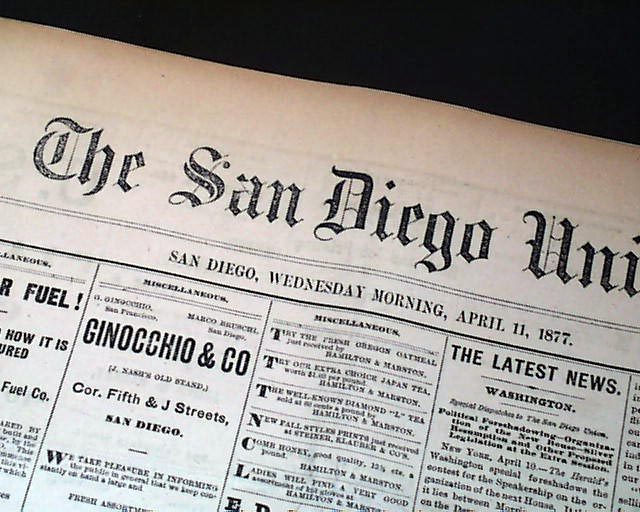
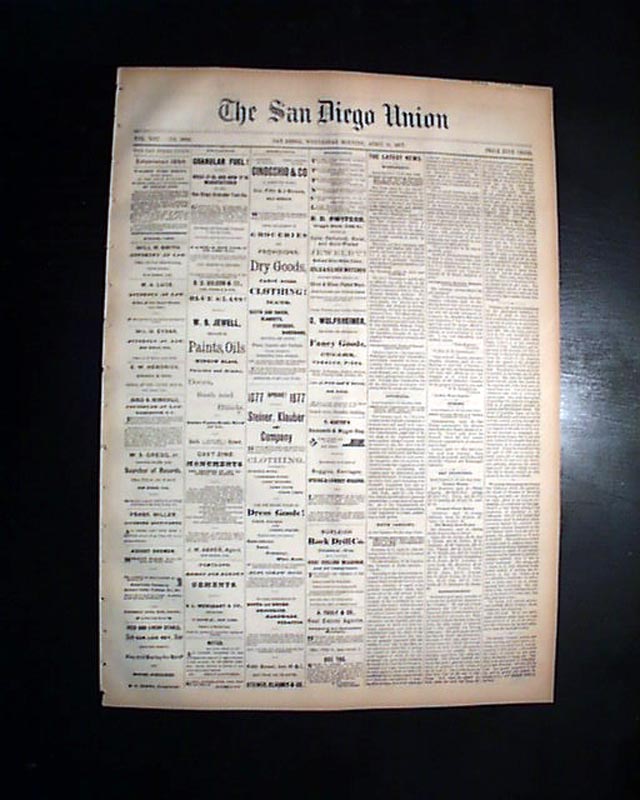
THE SAN DIEGO UNION, California, April 11, 1877
- John D. Lee confession (execution)
- Mountain Meadows Massacre
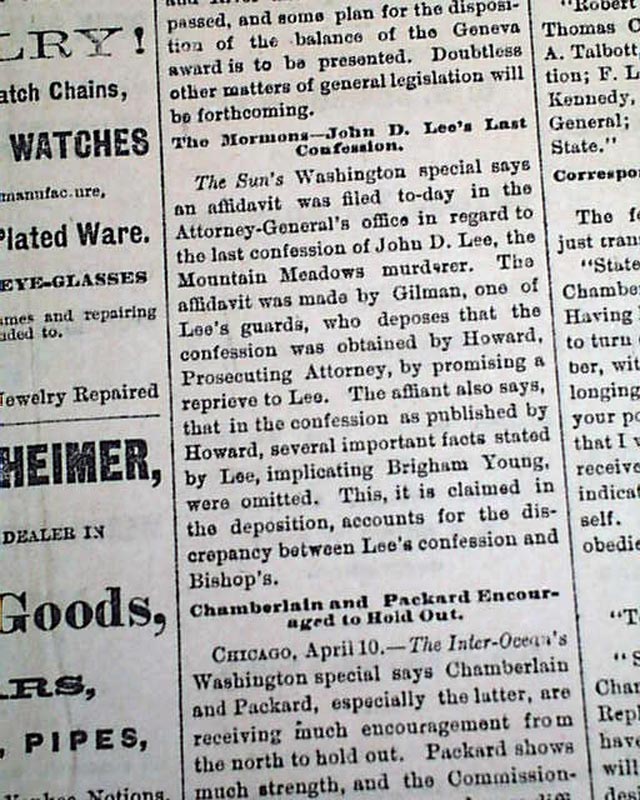
Among the front page articles: "The Mormons--John D. Lee's Last Confession" which mentions in part: "...in regard to the last confession of John D. Lee, the Mountain Meadows murderer...The affiant also says that in the confession as published by Howard, several important facts stated by Lee, implicating Brigham Young, were omitted...".
Lee was executed on March 23.
Four pages, small binding holes at the blank spine, generally good condition. A bit fragile so should be handled carefully.
Background: In the days leading up to his execution by firing squad at Mountain Meadows, Lee prepared and dictated a final confession in which he professed his innocence of intentional wrongdoing, insisted he had done everything in his power to save the emigrants, and lamented that he wept and mourned over what happened, emphasizing that he “would have given worlds … to have averted that evil.” He acknowledged his complicity in the tragic events but maintained that his blood could not help the victims and that he could not atone for the massacre by his death; Lee claimed his conscience was “clear before God and man” and repeatedly asserted that he was being made a victim or scapegoat, sacrificed to satisfy the vindictive feelings of others rather than justly punished solely for his own actions. In his spoken last words he expressed calm resignation, declared his faith in the gospel as taught by Joseph Smith while criticizing the contemporary teachings of Brigham Young, and reiterated that he had never intentionally done wrong in the affair, framing his execution as the culmination of decades of loyal service turned against him.
Other issues you may like
§ related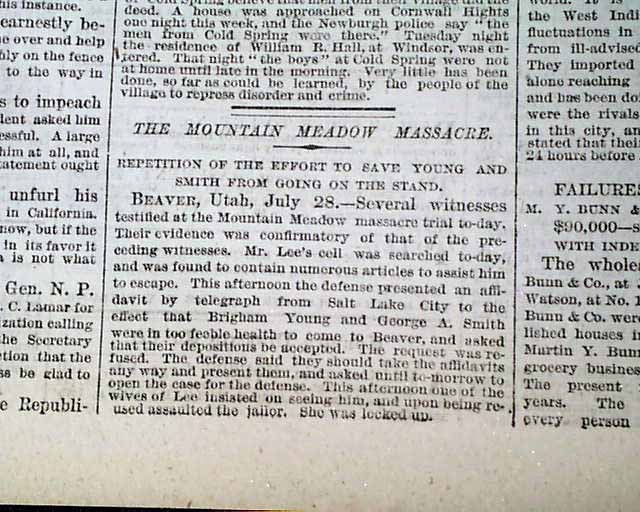
NEW YORK TRIBUNE, July 29, 1875
- Mountain Meadows Massacre
- Mormons - Mormonism trial
- John D. Lee - Brigham Young
The bottom of page 5 has a brief article: "The
...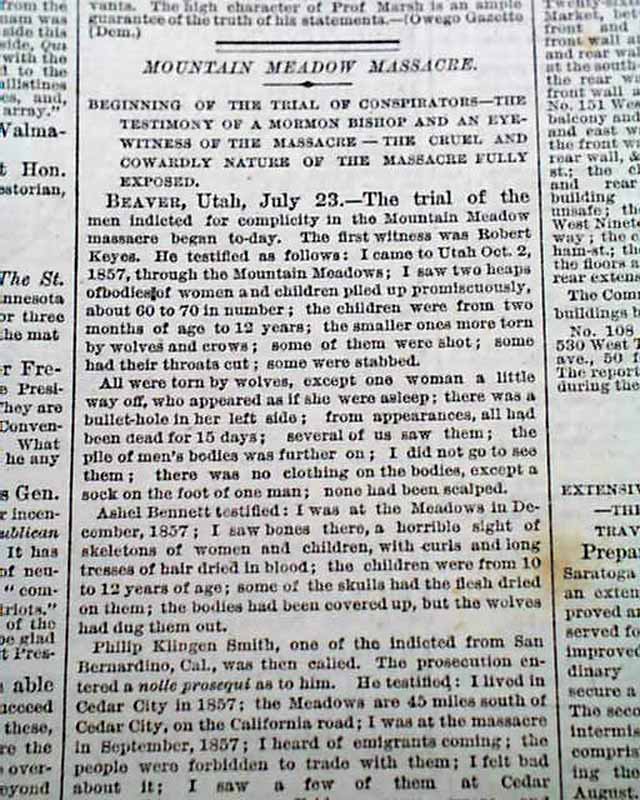
NEW YORK TRIBUNE, July 24, 1875
- Mountain Meadows Massacre
- Mormons - Mormonism trial
- John D. Lee - Brigham Young
- Trial of the conspirators begins
Page 7 has a
...
NEW YORK TRIBUNE, July 20, 1875
- Mountain Meadows Massacre
- Mormons - Mormonism trial
- John D. Lee - Brigham Young
- Trial of the conspirators begins
The bottom of
...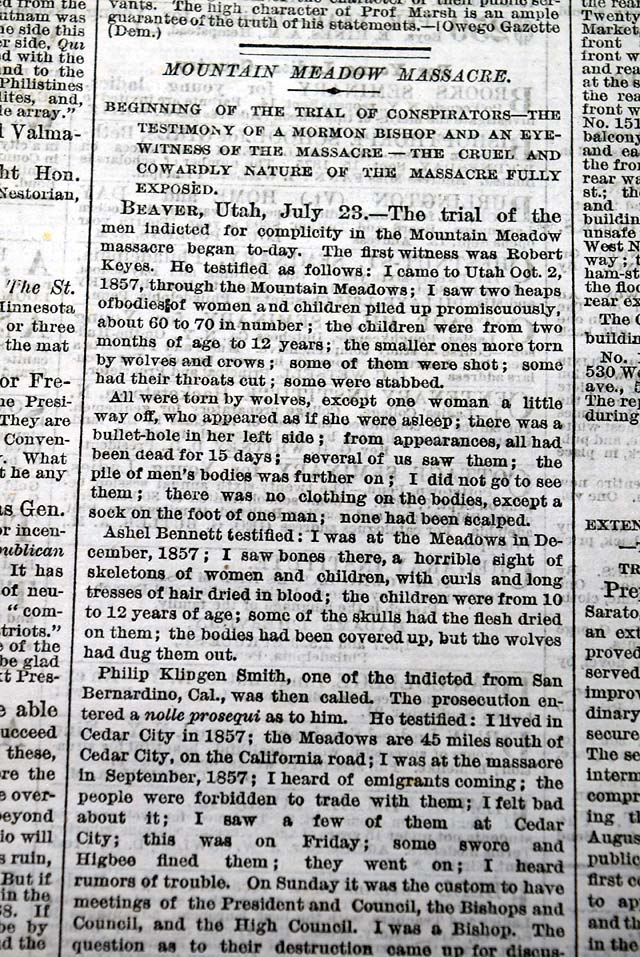
NEW YORK TRIBUNE, July 24, 1875 Page 7 has a report taking over half a column headed: "Mountain Meadow Massacre" "B beginning of the Trial of
...