Commerce opens up west of the Mississippi...
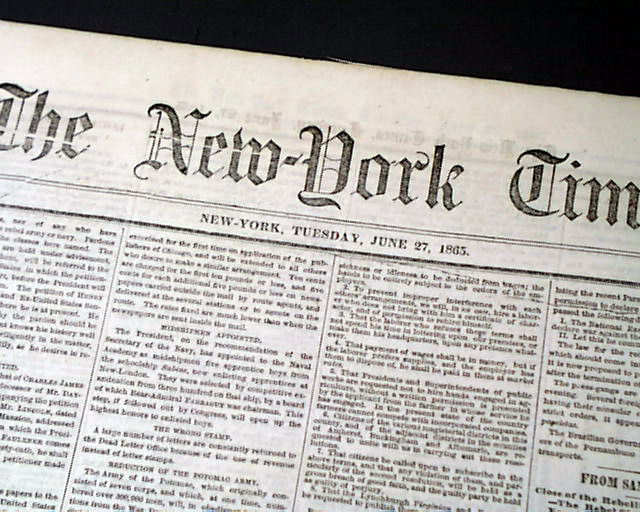
NEW-YORK TIMES, June 27, 1865
- Post Civil War reconstruction era
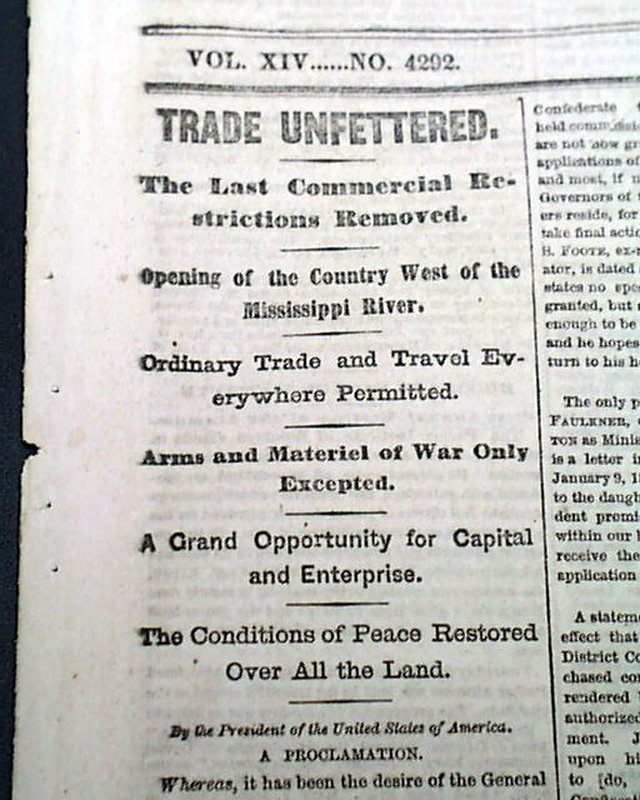
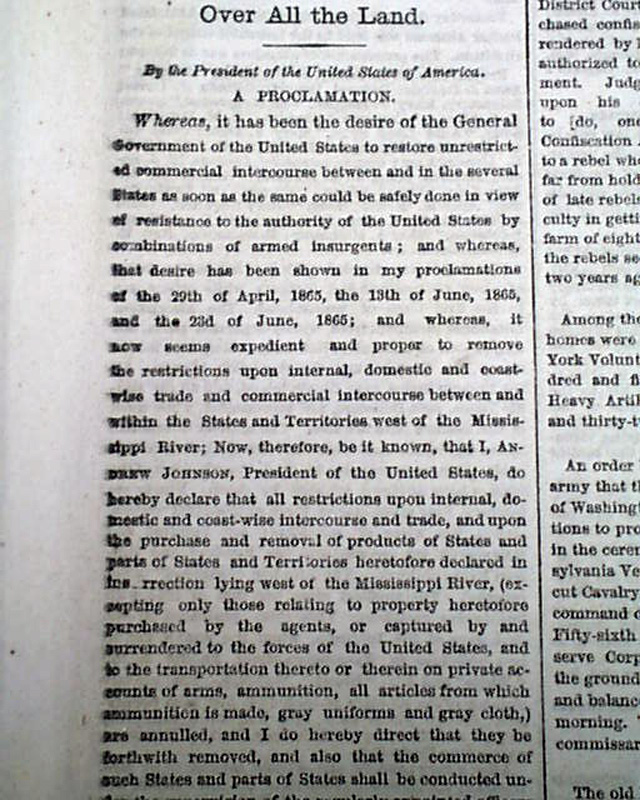
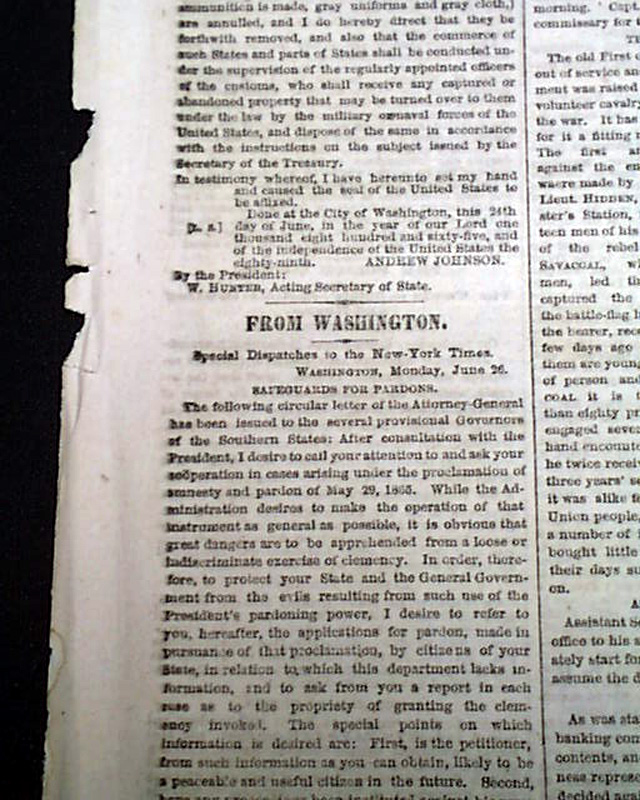
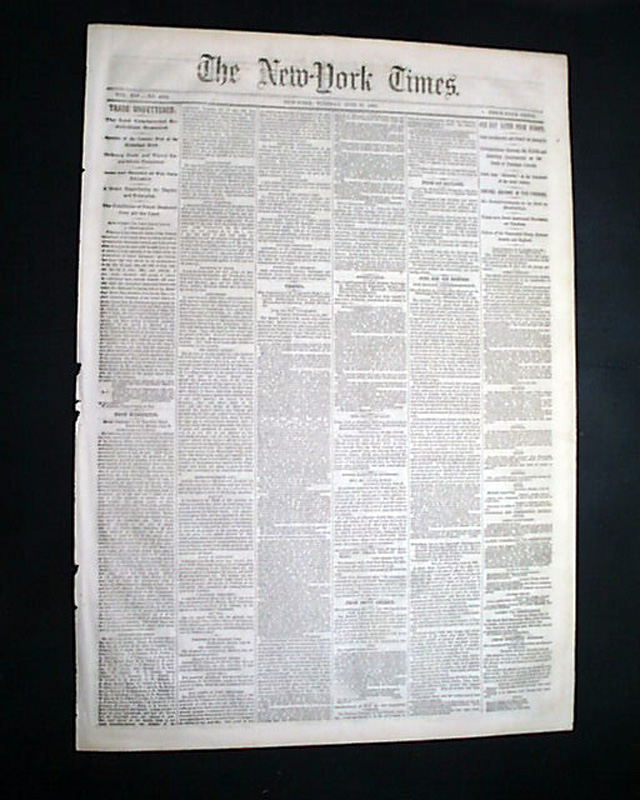
The front page has various column heads on Reconstruction efforts: "Trade Unfettered" "The Last Commercial Restrictions Removed" "Opening of the Country West of the Mississippi River" with the: "Proclamation" removing the restrictions is signed in type: Andrew Johnson.
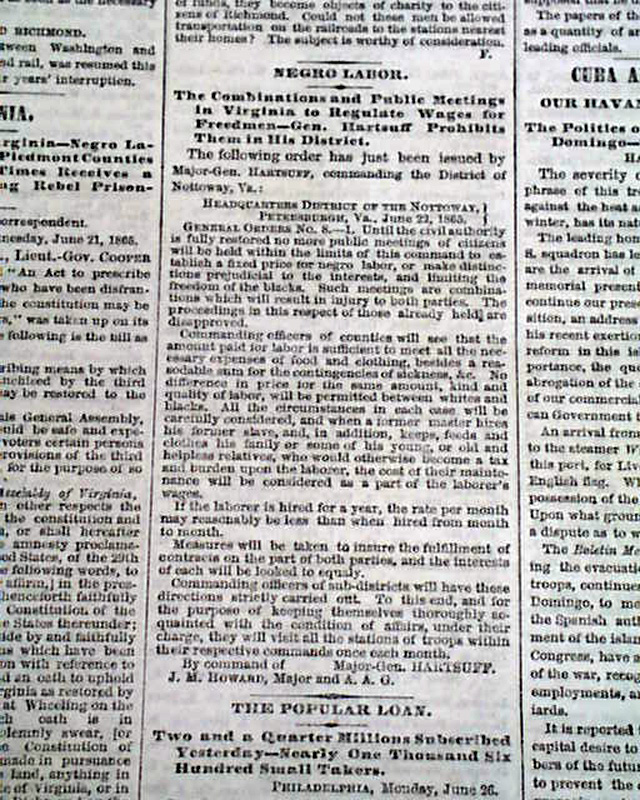
Also within: "Negro Labor" "Virginia - Negro Labor Question in the Piedmont Counties..." "The Late Rebellion, and the Lack of True Inspiration in Those who Rebelled" "What Rebellion Has Cost the South Pecuniarily" "Destitution at the South" "Florence Nightingale" among other reports.
Eight pages, very nice condition.
background: This edition of the New York Times from June 27, 1865, serves as a profound historical ledger, capturing the United States at a volatile crossroads as it transitioned from the bloodiest conflict in its history toward the uncertain dawn of the Reconstruction Era. The "Trade Unfettered" headlines and Andrew Johnson’s proclamation signify a desperate federal push to jumpstart a paralyzed economy, effectively signaling the end of the wartime era and the aggressive reopening of Western expansion. However, the darker realities of this transition are laid bare in the reports on "Negro Labor" in the Piedmont counties and the "Destitution at the South," which reflect a society grappling with the total collapse of the plantation economy and the shift from enslaved labor to a free-market system that many white Southerners resisted through emerging Black Codes. By pairing these domestic struggles with a feature on Florence Nightingale and an accounting of the "pecuniary" (financial) ruin of the rebellion, the paper encapsulates the era's dual nature: a Northern sense of moral and economic triumph contrasted against a Southern landscape of physical and social wreckage, all printed on high-rag-content paper that has allowed these urgent dispatches to survive with remarkable clarity for over a century and a half.
Other issues you may like
§ related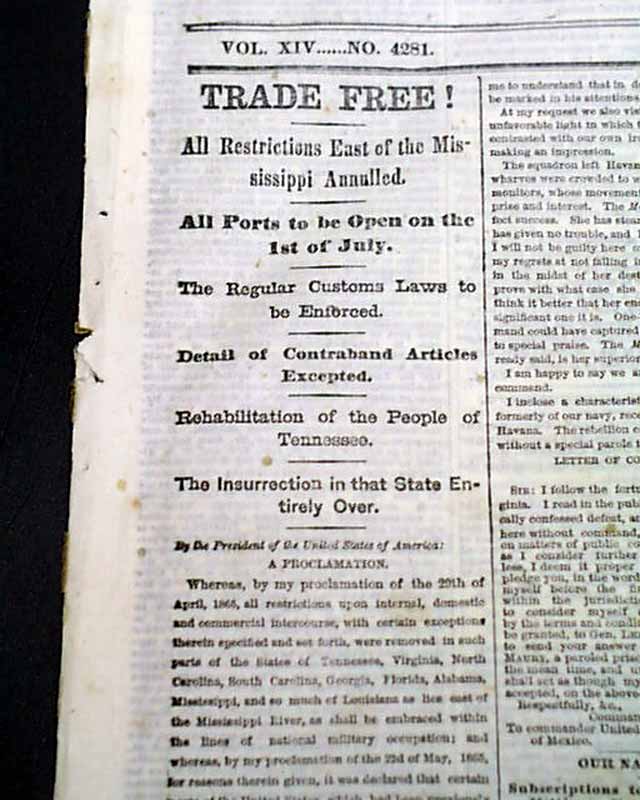
NEW-YORK TIMES, June 14, 1865 Among front page column heads: "Trade Free!" "All Restrictions East of the Mississippi Annulled" "Reconstruction" "President
...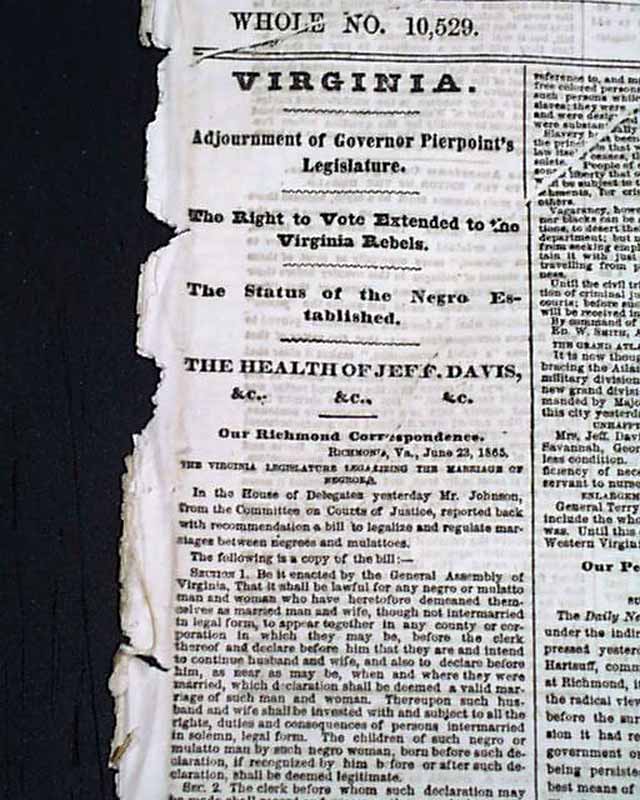
NEW YORK HERALD, June 27, 1865
- Post Civil War reconstruction era
Among the front page column heads relating to reconstruction efforts after the Civil War
...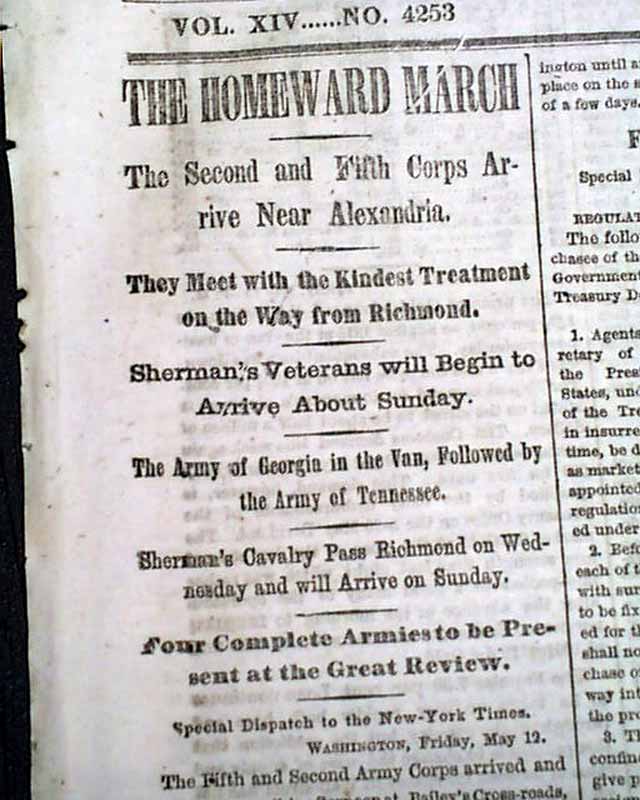
NEW YORK TIMES, May 13, 1865
- "When Johnny Comes Marching Home"
- Closing events of the American Civil War
- re. Abraham Lincoln's assassination
Among the front
...
THE NEW YORK TIMES, June - August, 1865
- Five newspapers at the Civil War's end
When the last hostilities of the Civil War ended in May, 1865, it began the
...