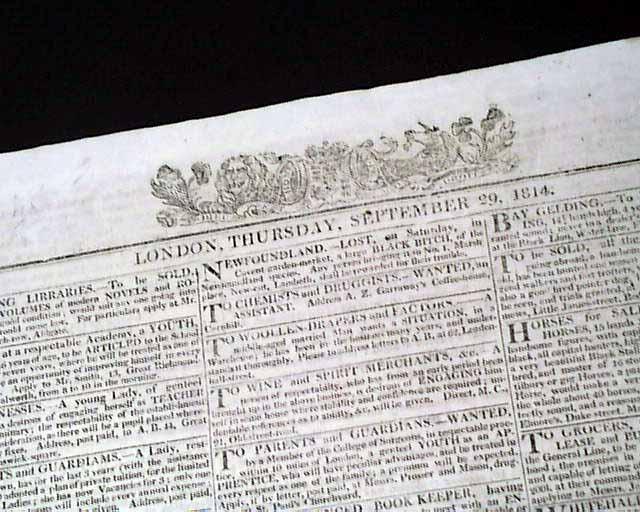
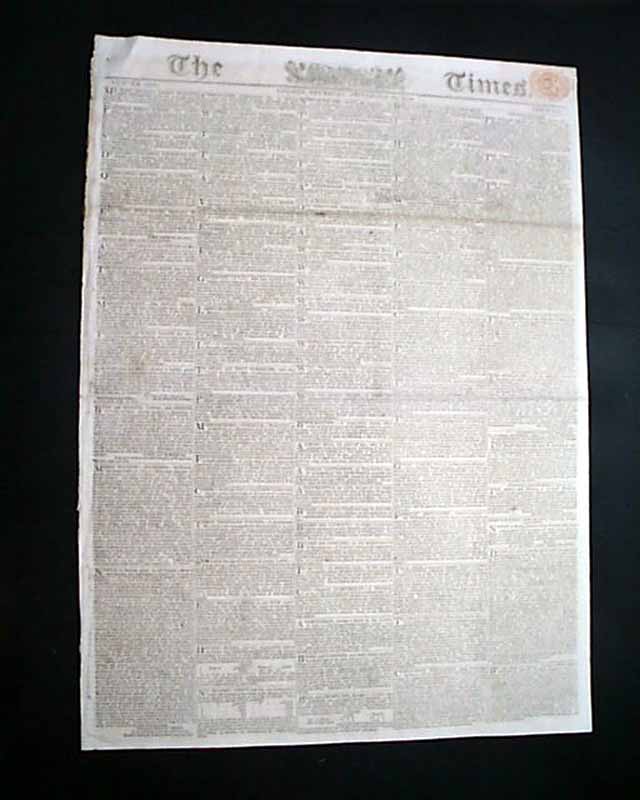
The British capture Washington, D.C: in a London newspaper...
THE TIMES, London, England, Sept. 29, 1814
- Burning of Washington D.C.
- British invasion & capture
- War of 1812 - Chesapeake campaign
- In a British publication
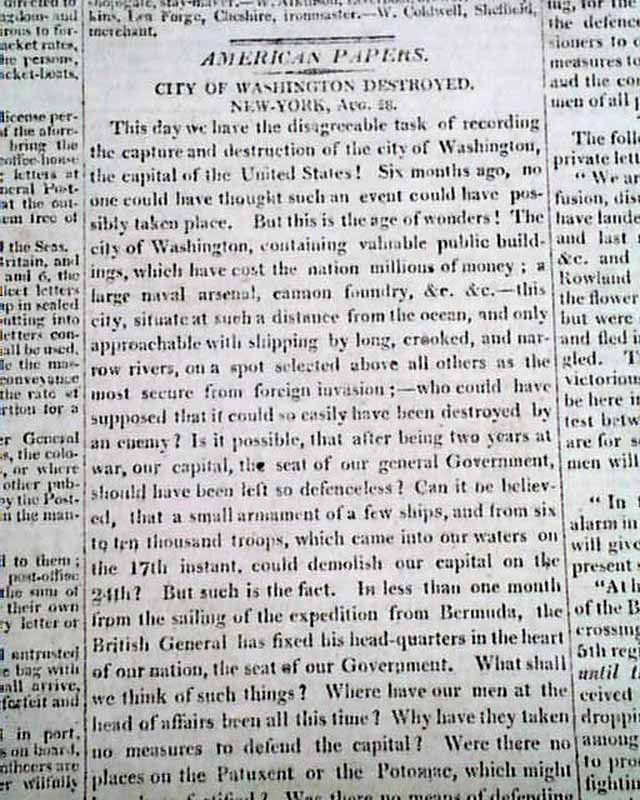
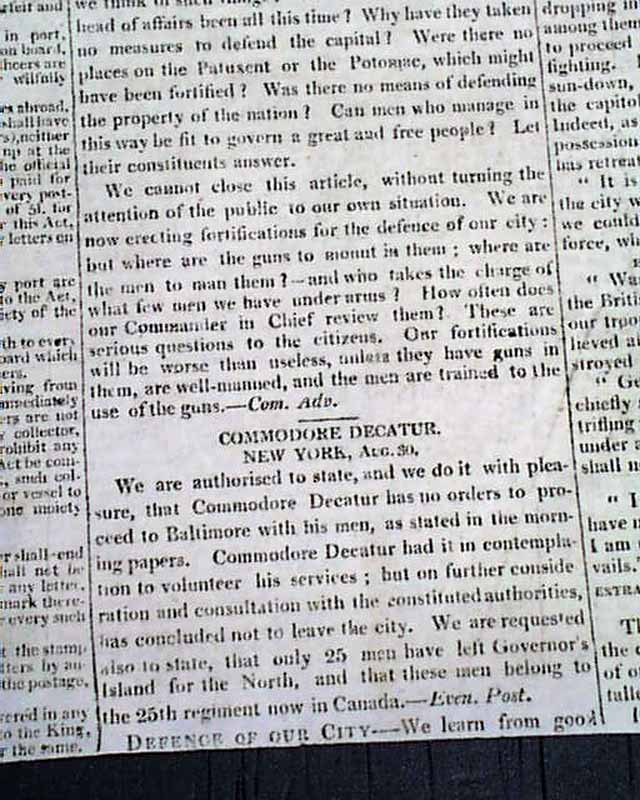
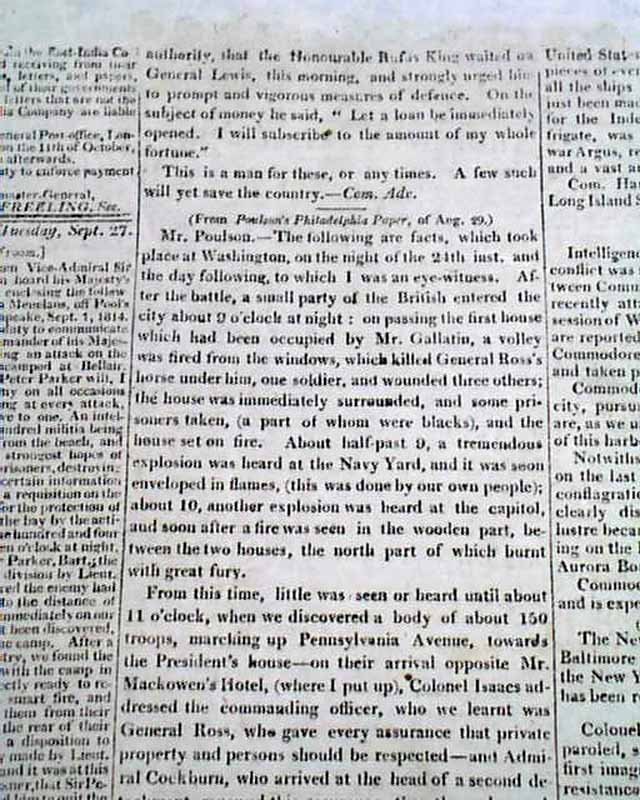
Page 2 has a report headed: "City Of Washington Destroyed" as taken from American newspapers.
The report begins: "This day we have the disagreeable task of recording the capture & destruction of the city of Washington, the capital of the United States! Six months ago, no one could have thought such an event could have possibly taken place. But this is the age of wonders!..." with much more.
Great to have this report in this famous London newspaper.
Four pages, very nice condition.
Background: The Burning of Washington on August 24, 1814, stands as one of the most symbolic episodes of the War of 1812, marking the only time since the American Revolutionary War that a foreign power has captured and occupied the United States capital. Following a decisive victory at the Battle of Bladensburg, British forces led by Major General Robert Ross and Rear Admiral George Cockburn entered the city and systematically set fire to essential government buildings, including the White House, the U.S. Capitol, and the Treasury, largely in retaliation for the American burning of Upper Canada’s capital, York, the previous year. The event’s historical significance is magnified by the narrow escape of President James Madison and the bravery of First Lady Dolley Madison, who famously saved the Gilbert Stuart portrait of George Washington before fleeing. Although the occupation lasted only roughly 26 hours—abruptly curtailed by a freak "hurricane" and tornado that extinguished the fires and drove the British back to their ships—the psychological impact was profound. It galvanized a previously divided American public, transformed the charred ruins of the "President’s Mansion" into a lasting symbol of national resilience, and ultimately led to a surge in American nationalism that helped define the nation's identity in the post-war "Era of Good Feelings."
Other issues you may like
§ related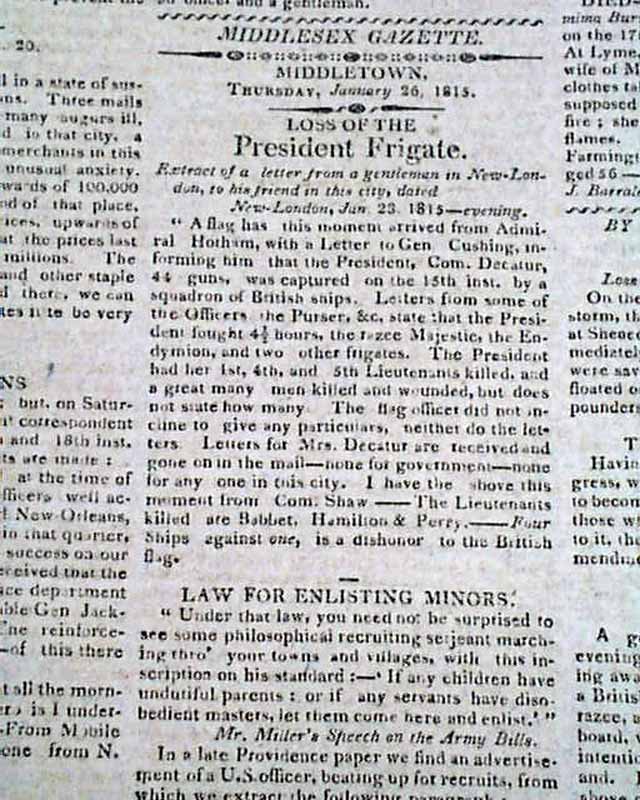
MIDDLESEX GAZETTE, Middletown, Connecticut, Jan. 26, 1815
- Battle of Bladensburg
- War of 1812 Maryland
The front page has over a full column, & carrying over
...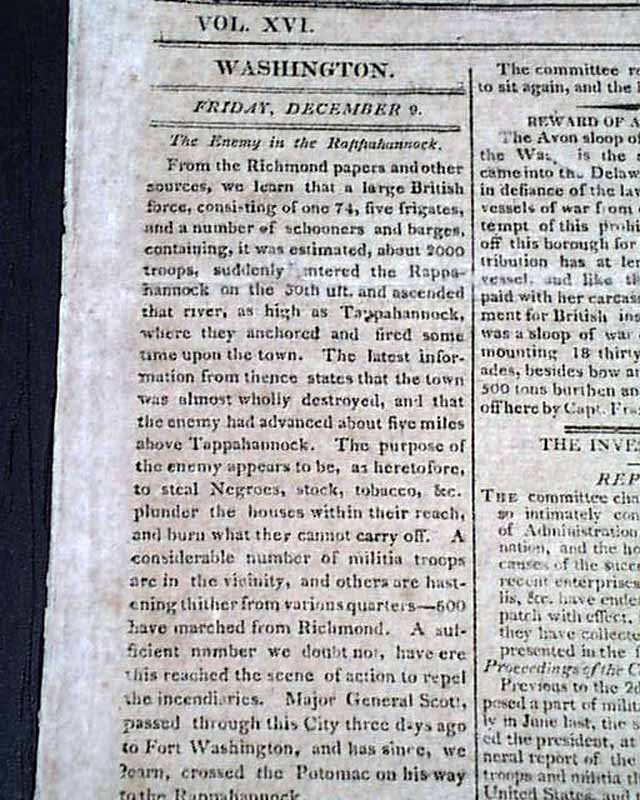
NATIONAL INTELLIGENCER, Washington, D.C., Dec. 10, 1814 This is from a critical period in the War of 1812, as the British had taken this city just over 3
...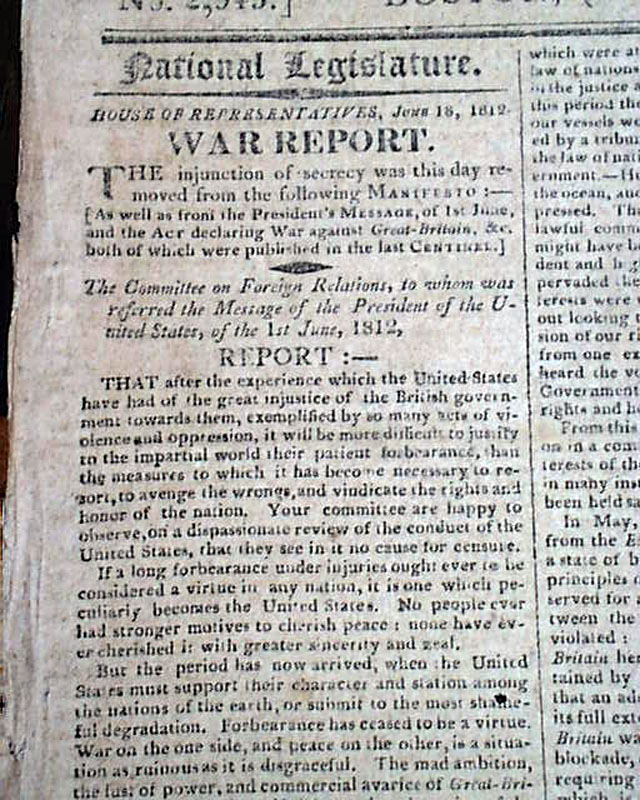
COLUMBIAN CENTINEL, Boston, June 27, 1812
- War of 1812 declaration by United States
- President James Madison proclamation
In the last column of the front page
...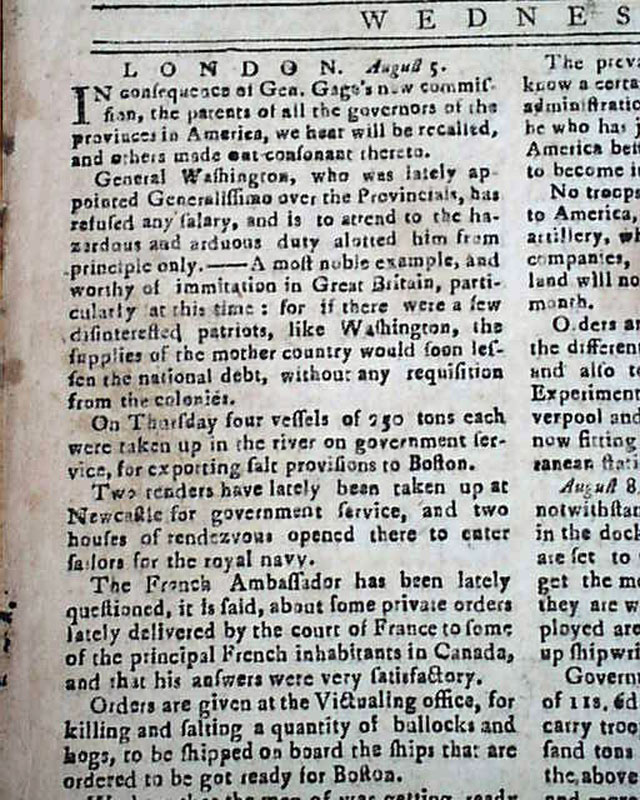
THE CONNECTICUT JOURNAL, New Haven, Oct. 18, 1775
- General George Washington
- Named Commander-in-Chief
- Continental Army - British reaction
The front page begins
...