

The influence of Paine's Common Sense...
Item # 704407Sorry, but this item is no longer available. Please be in touch at info@rarenewspapers.com if you would like to be placed on a want list or are interested in a potential alternate issue.
March 07, 1776
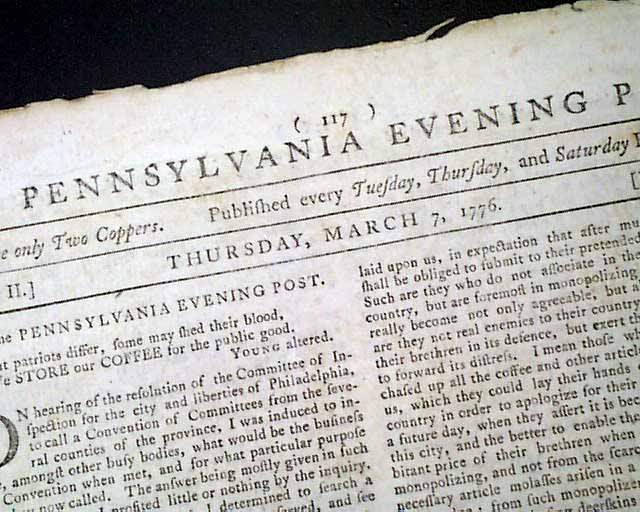
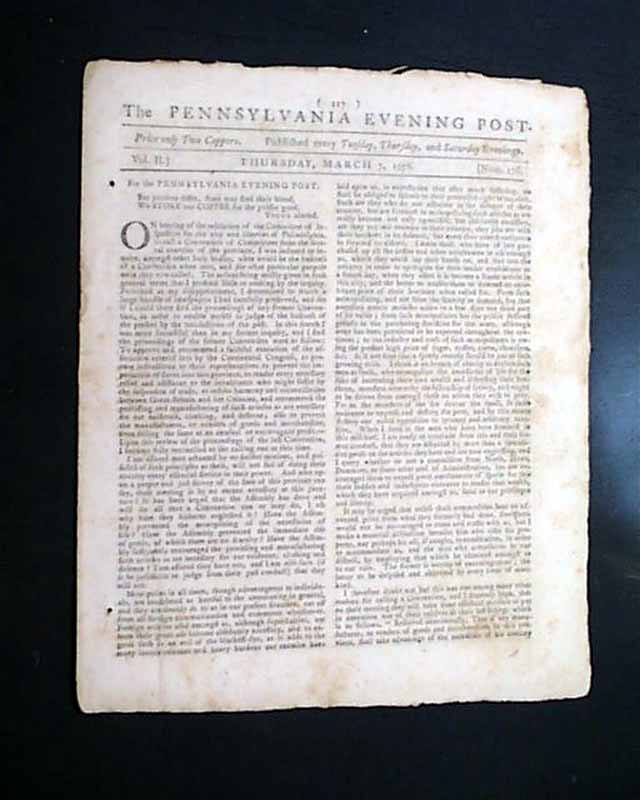
THE PENNSYLVANIA EVENING POST, Philadelphia, March 7, 1776
* Thomas Paine's "Common Sense"
* American Revolutionary War
* Great year for collectors (1776)
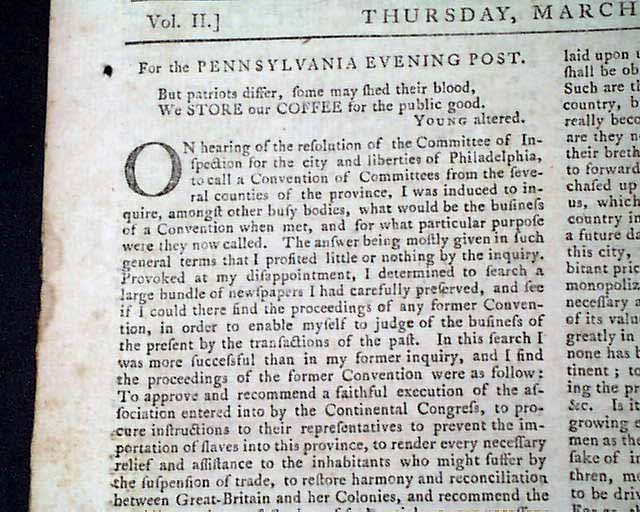
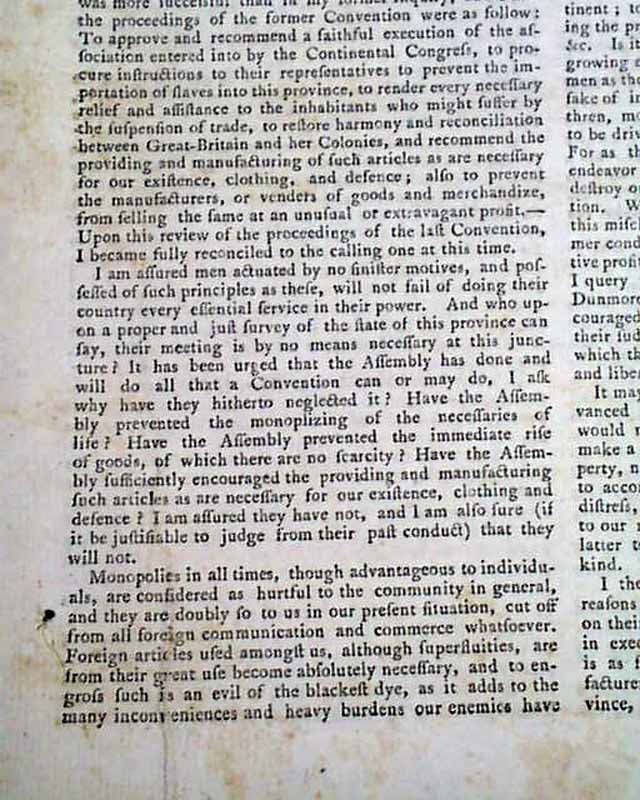
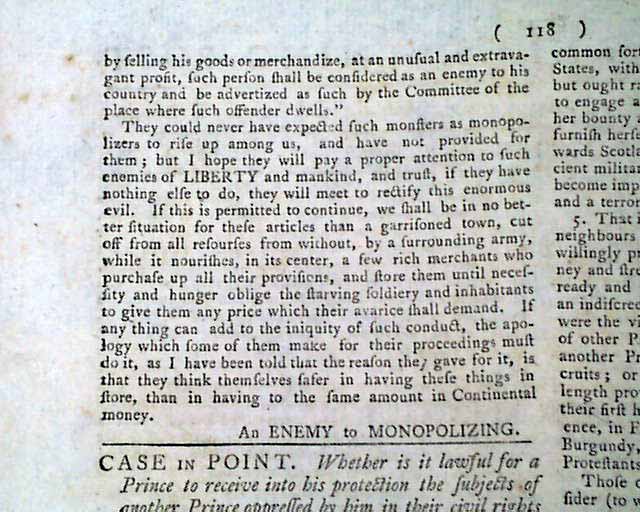
The entire front page & a bit of page 2 are taken up with a letter calling for a convention of the Committee of Inspection in the city of Phila. It focuses on the dangers of monopolies & is signed: "An Enemy to Monopolizing".
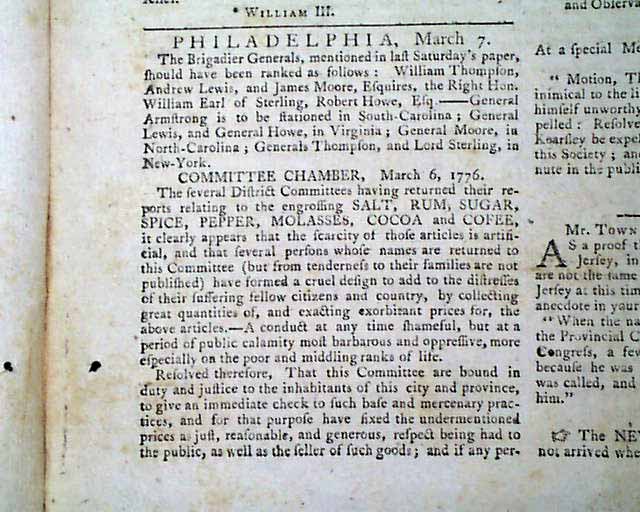
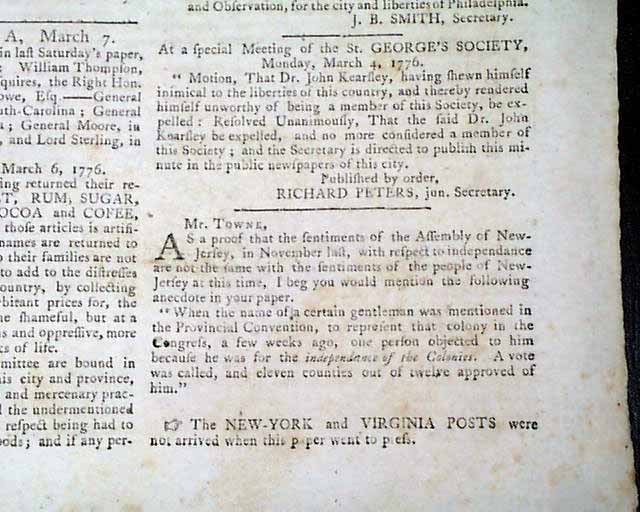
Page 3 has a paragraph on the ranking of brigadier generals, and another page 3 item includes: "As a proof that the sentiments of the Assembly of New Jersey...with respect to the independence are not the same with the sentiments of the people of New Jersey at this time, I beg you would mention the following anecdote in your paper..." which can be seen in the photo. This gives evidence to the degree to which Common Sense changed the minds of so many towards independence from England.
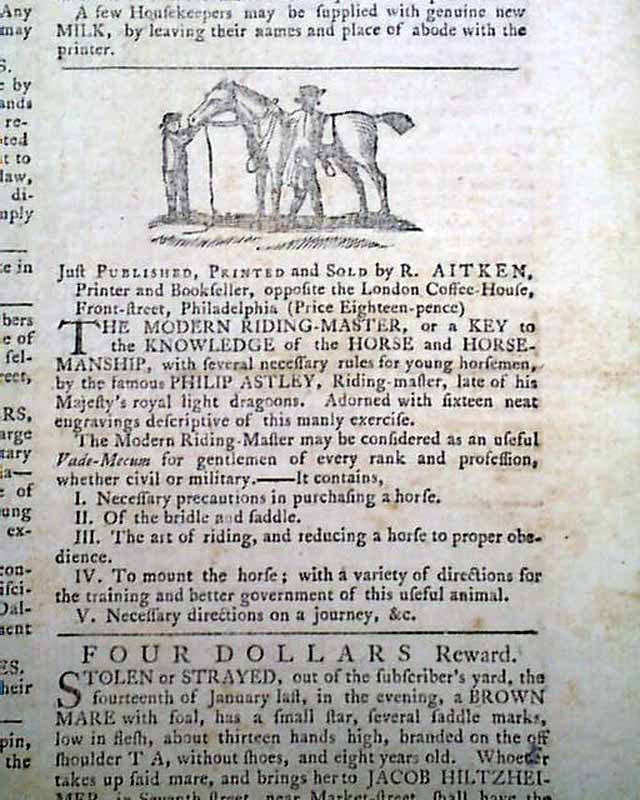
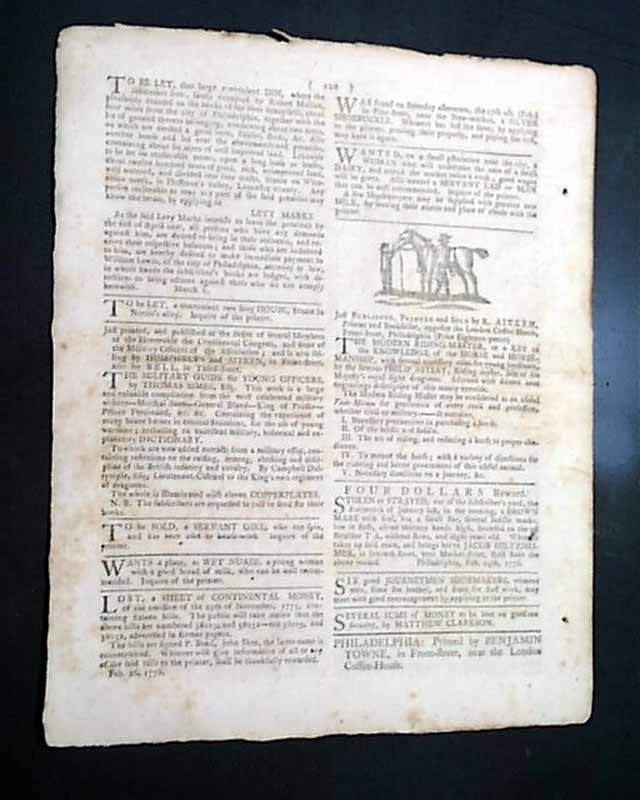
The back page is entirely taken up with ads including a nice illus. ad for a horse riding school.
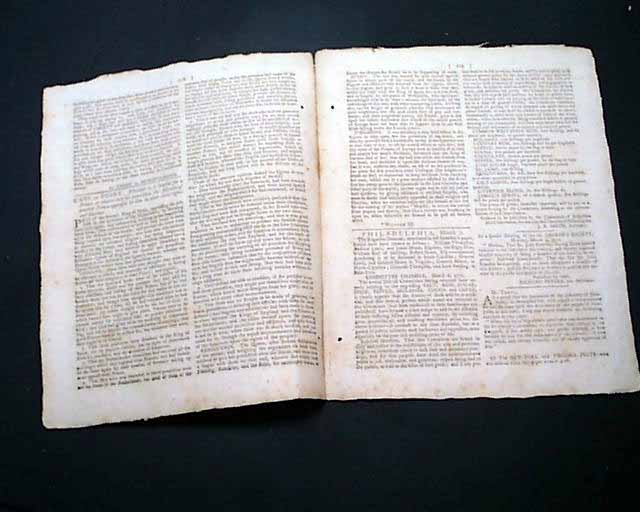
Four pages, 8 1/4 by 10 1/2 inches, wide, never-trimmed margins, great condition.
background: The New Jersey anecdote in this issue serves as a striking primary source for the "Great Awakening" of American political thought, illustrating how Thomas Paine’s Common Sense effectively bridged the gap between elite hesitation and popular fervor. By March 1776, a distinct rift had formed: while the New Jersey Assembly—fearful of treason and economic ruin—clung to the hope of reconciliation with the Crown, the "sentiments of the people" had been galvanized by Paine’s plain-language arguments against the "Royal Brute." The mention of this specific anecdote in the Post underscores the role of the press as a revolutionary tool, used here to shame cautious politicians by contrasting their "timid" official stances with the bold, grassroots momentum for total separation. This transition, captured in the very weeks before the Continental Congress began seriously debating the Declaration of Independence, proves that the revolution was won in the minds of the citizenry long before the final vote was cast in July.
* Thomas Paine's "Common Sense"
* American Revolutionary War
* Great year for collectors (1776)
The entire front page & a bit of page 2 are taken up with a letter calling for a convention of the Committee of Inspection in the city of Phila. It focuses on the dangers of monopolies & is signed: "An Enemy to Monopolizing".
Page 3 has a paragraph on the ranking of brigadier generals, and another page 3 item includes: "As a proof that the sentiments of the Assembly of New Jersey...with respect to the independence are not the same with the sentiments of the people of New Jersey at this time, I beg you would mention the following anecdote in your paper..." which can be seen in the photo. This gives evidence to the degree to which Common Sense changed the minds of so many towards independence from England.
The back page is entirely taken up with ads including a nice illus. ad for a horse riding school.
Four pages, 8 1/4 by 10 1/2 inches, wide, never-trimmed margins, great condition.
background: The New Jersey anecdote in this issue serves as a striking primary source for the "Great Awakening" of American political thought, illustrating how Thomas Paine’s Common Sense effectively bridged the gap between elite hesitation and popular fervor. By March 1776, a distinct rift had formed: while the New Jersey Assembly—fearful of treason and economic ruin—clung to the hope of reconciliation with the Crown, the "sentiments of the people" had been galvanized by Paine’s plain-language arguments against the "Royal Brute." The mention of this specific anecdote in the Post underscores the role of the press as a revolutionary tool, used here to shame cautious politicians by contrasting their "timid" official stances with the bold, grassroots momentum for total separation. This transition, captured in the very weeks before the Continental Congress began seriously debating the Declaration of Independence, proves that the revolution was won in the minds of the citizenry long before the final vote was cast in July.
Category: Revolutionary War


