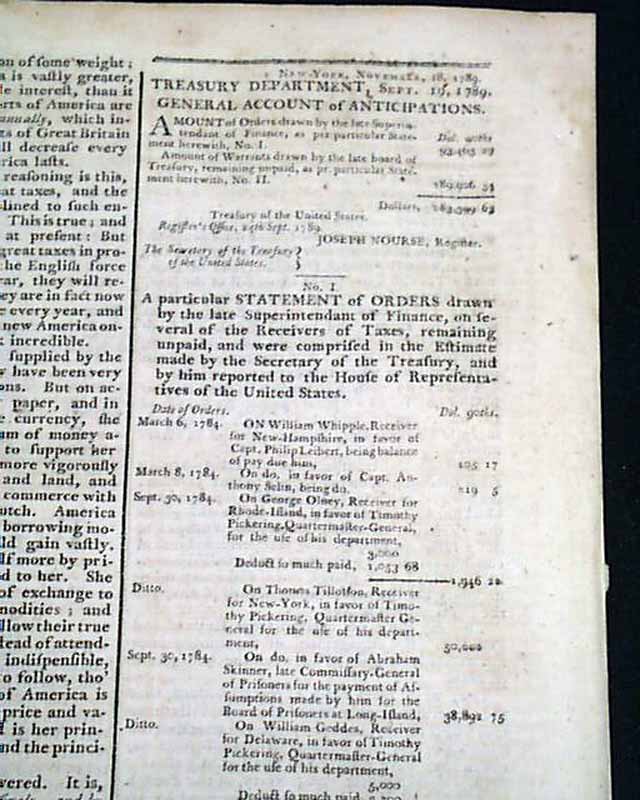
The President tours the Northeast...
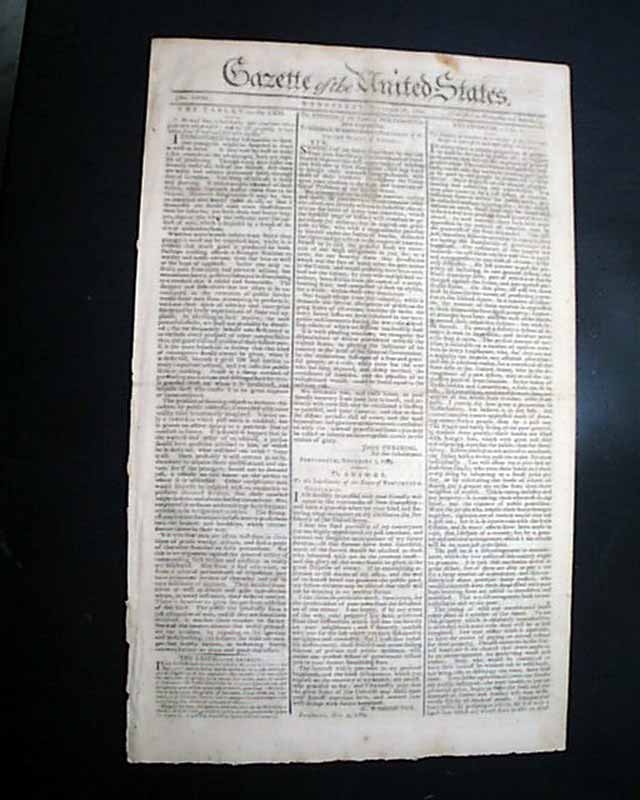
GAZETTE OF THE UNITED STATES, New York, Nov. 18, 1789
- President George Washington
- New England tour w/ many stops
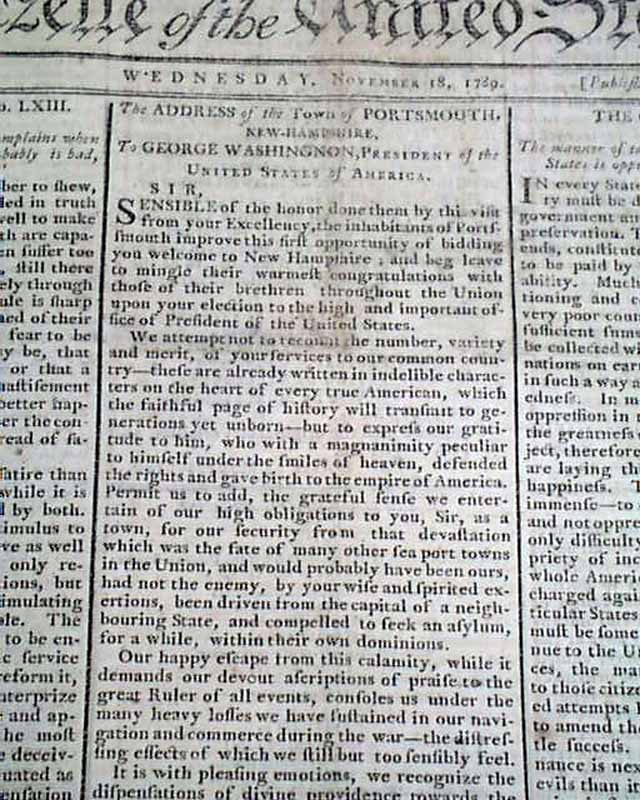
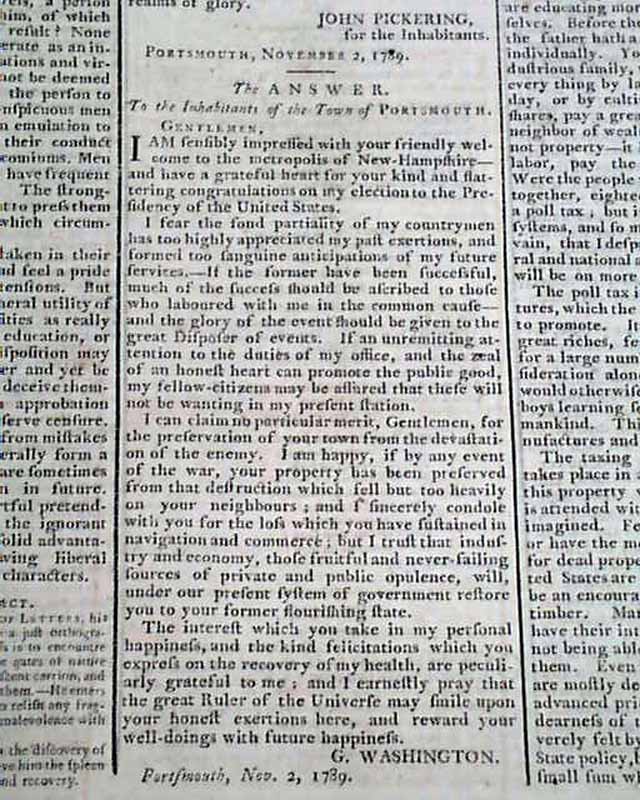
This issue has much coverage of the President's tour of the Northeast, including a front page address of the town of Portsmouth to the President, followed by: "The Answer" signed in type: G. Washington.
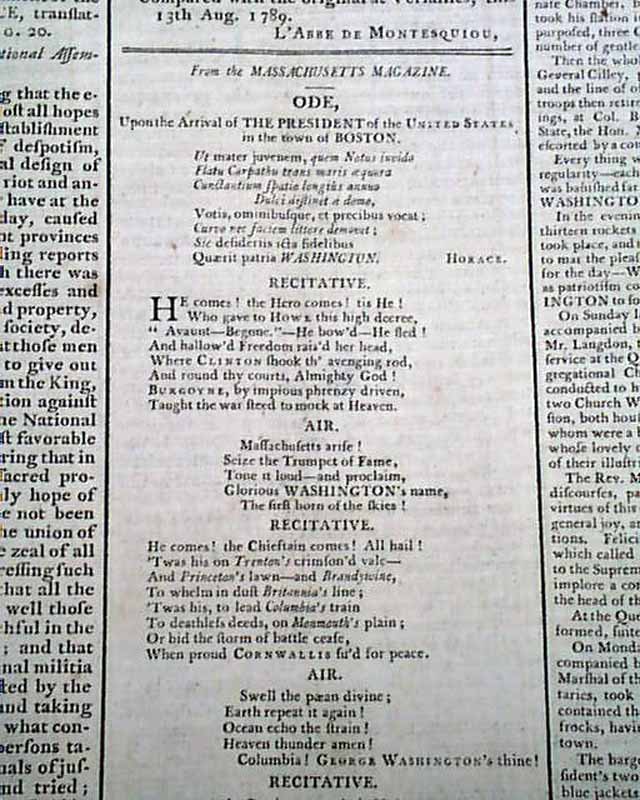
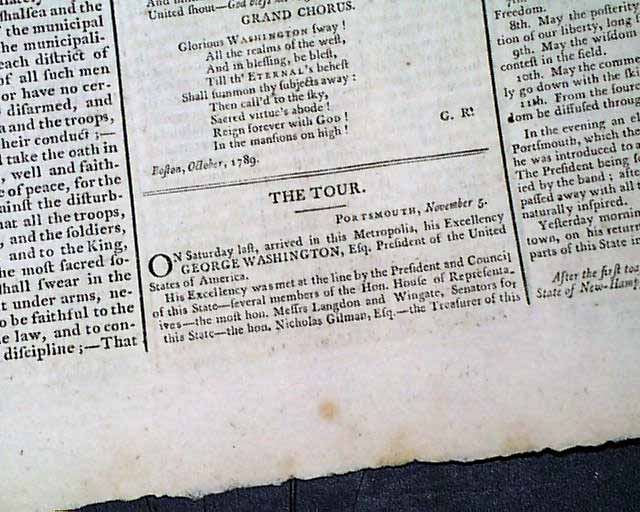
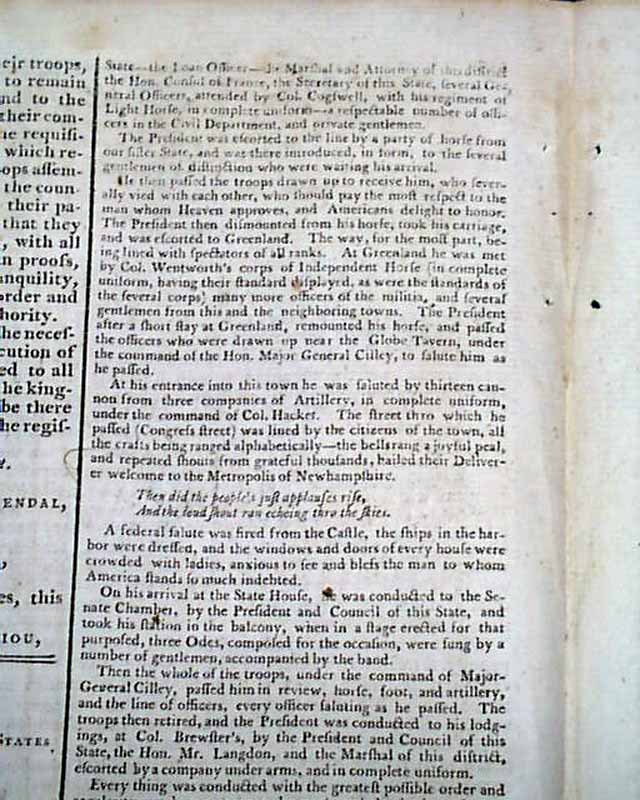
Page 2 includes an: "Ode, Upon the Arrival of The President of the United States in the town of Boston", followed by an article: "The Tour" with much great content and taking over one-third of the page. The coverage continues to page 3 as well.
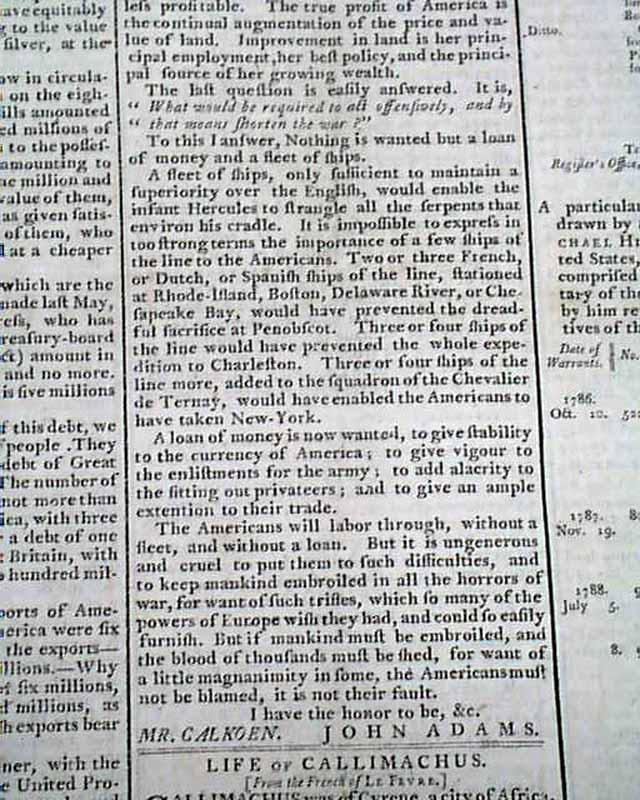
The back page includes a letter signed in type: John Adams, from when he was in Amsterdam during the Revolutionary War. Four pages, very nice condition.
background: The November 18, 1789, issue of the Gazette of the United States serves as a primary artifact of the "Federalist Project," capturing the delicate transition from a loose confederation to a centralized Republic. By featuring Washington’s Portsmouth address and the Boston "Ode," the paper functioned as a sophisticated propaganda tool for editor John Fenno and Treasury Secretary Alexander Hamilton, intentionally fostering a cult of personality around Washington to stabilize the fledgling government. The inclusion of John Adams’ Revolutionary-era correspondence from Amsterdam further reinforces the paper's role in establishing a national lineage, connecting the financial struggles of the war to the administrative legitimacy of the new capital in New York. Because this was the era before official government transcripts, these four pages represent the closest thing to an authorized "state of the union," documenting the precise moment when the American presidency evolved from a theoretical office into a visible, touring symbol of national authority.
This title is considered by many as the most significant newspaper of the 18th century, particularly during this, the formative year of the new federal government & when the federal capital was in New York, as this paper was the mouthpiece of all matters political. Most pronouncements from Congress & the President were printed first in this newspaper.
Other issues you may like
§ related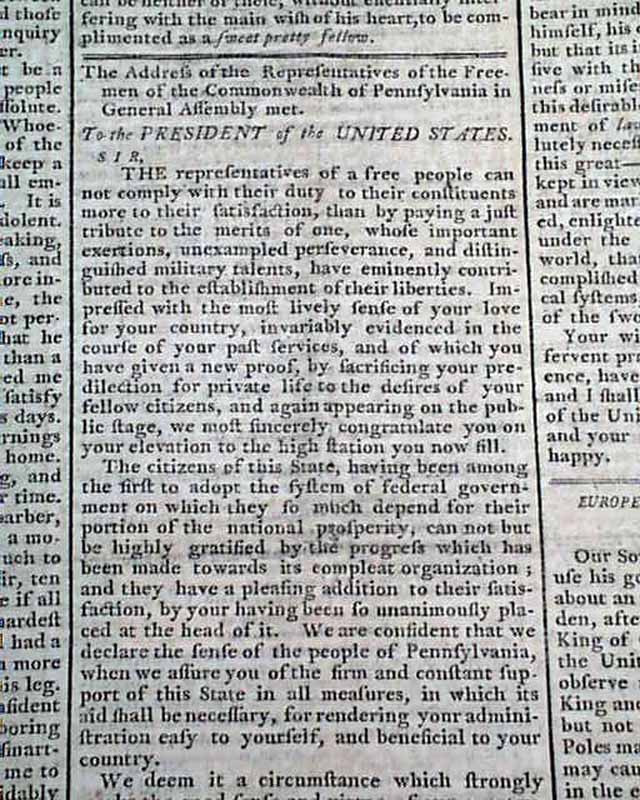
GAZETTE OF THE UNITED STATES, New York, Sept. 30, 1789
- President George Washington
- U.S. government in it's infancy
Certainly the most significant & historic
...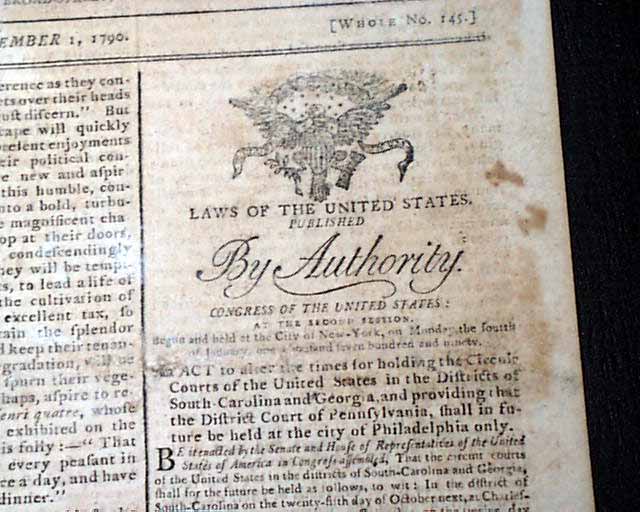
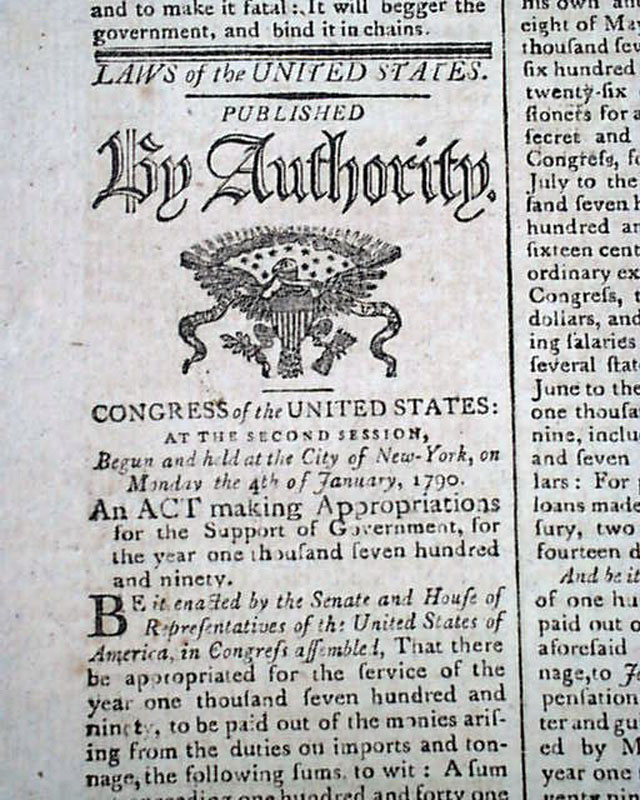
GAZETTE OF THE UNITED STATES, New York, Sept. 1, 1790 The top of the front page contains an Act of Congress, headed with a heraldic eagle & signed in type
...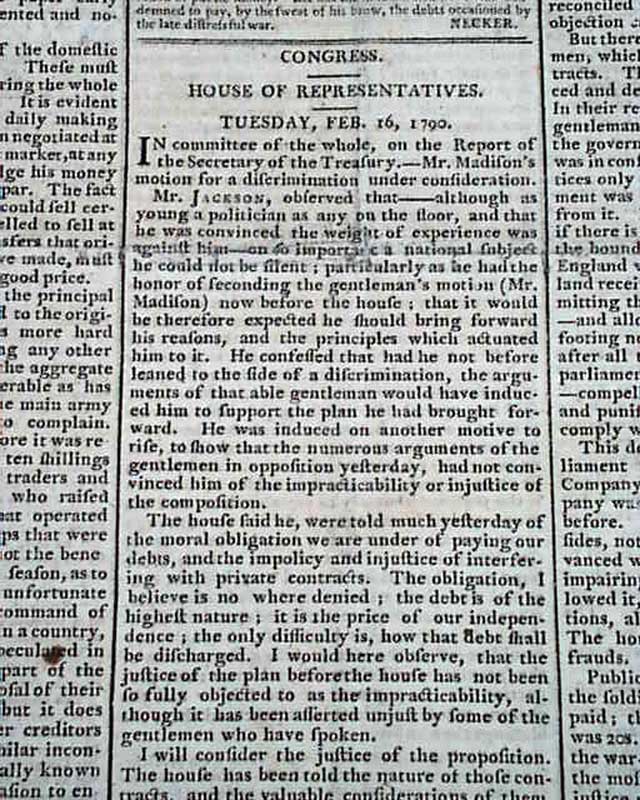
GAZETTE OF THE UNITED STATES, New York, Feb. 24, 1790
- President George Washington
- Benjamin Franklin
Half of the front page is taken up with reports from:
...
COLUMBIAN CENTINEL, Boston, July 3, 1790
- George Washington and John Adams
- Thomas Jefferson & Benjamin Franklin
Over a full column on page 2 is taken up with
...