Great on the Battle of Camden, South Carolina...
THE PENNSYLVANIA PACKET OR THE GENERAL ADVERTISER, Philadelphia, Dec. 19, 1780
- Battle of Camden, South Carolina
- Charles Cornwallis vs. Horatio Gates
- American Revolutionary War
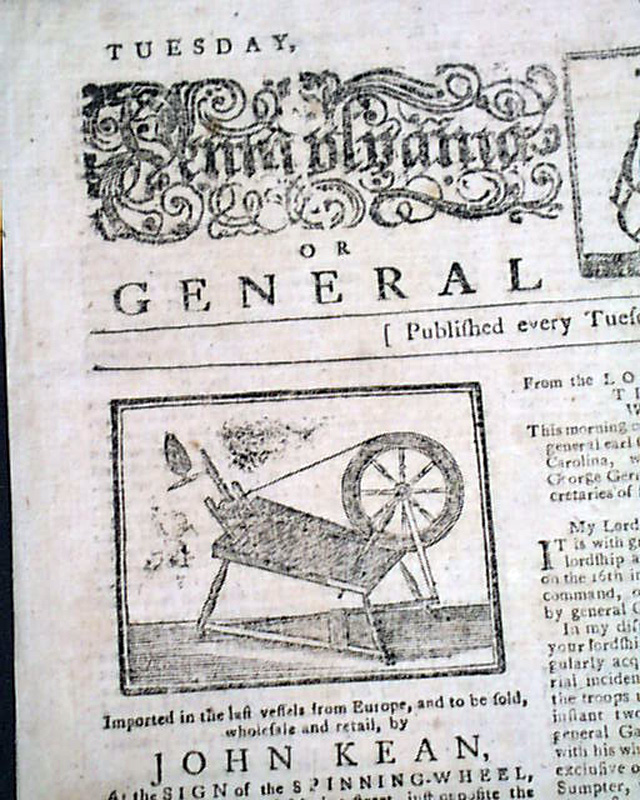
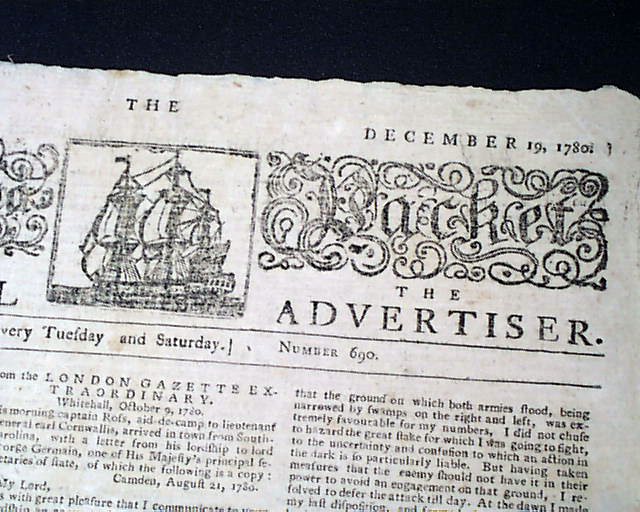
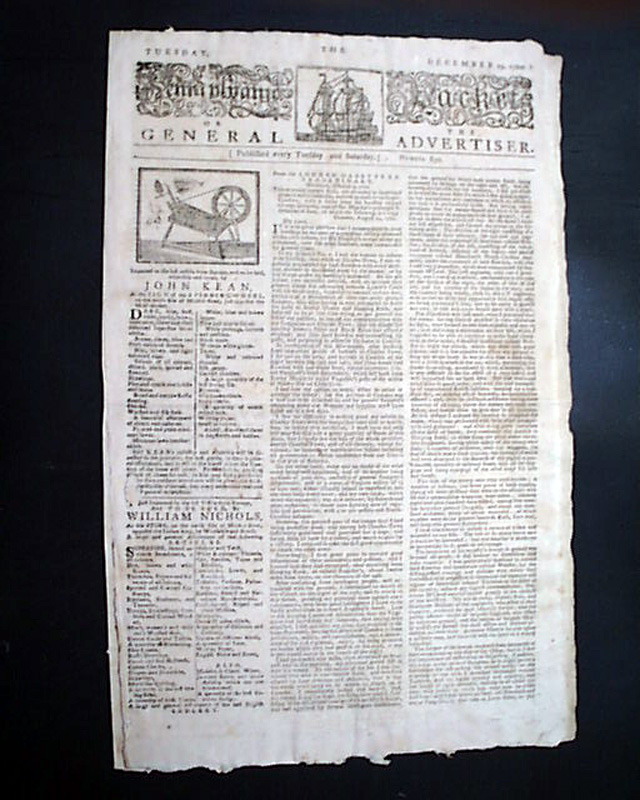
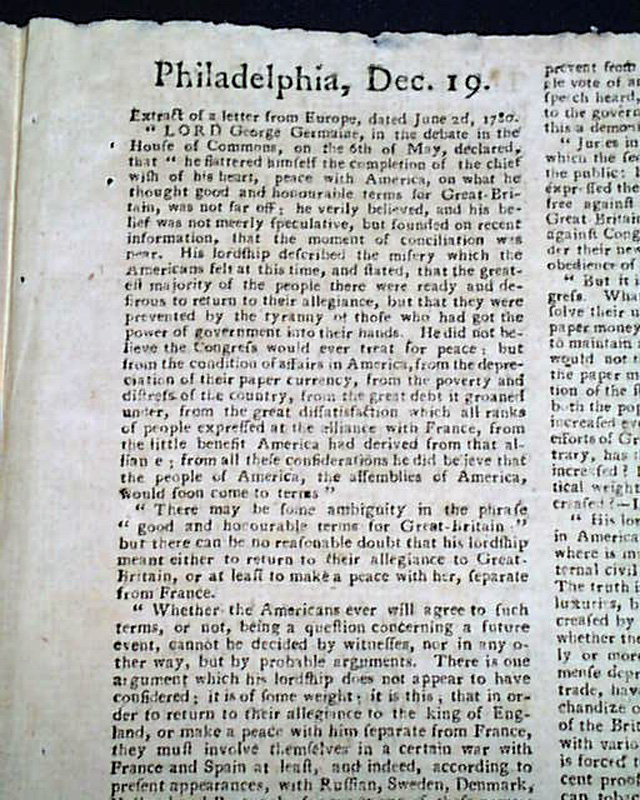
See the photos for the very handsome masthead which features ornate lettering and an engraving of a ship.
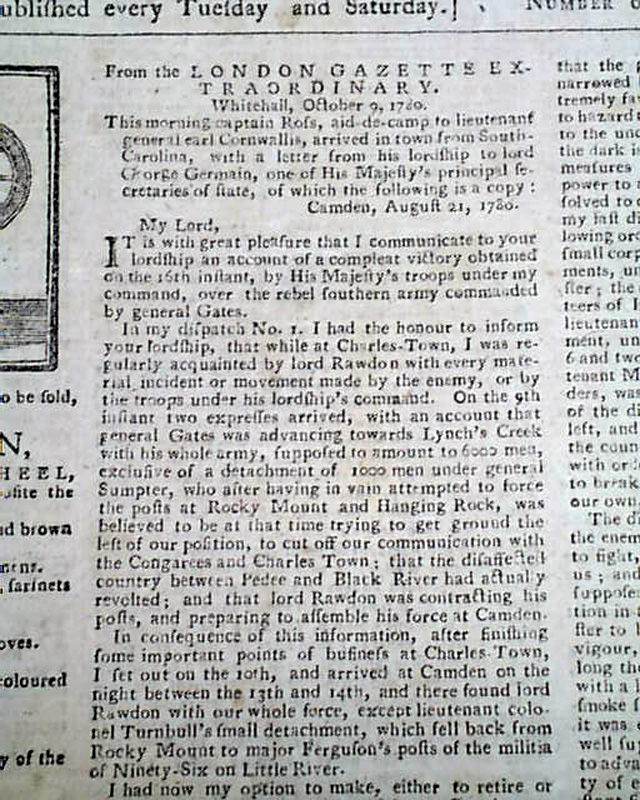
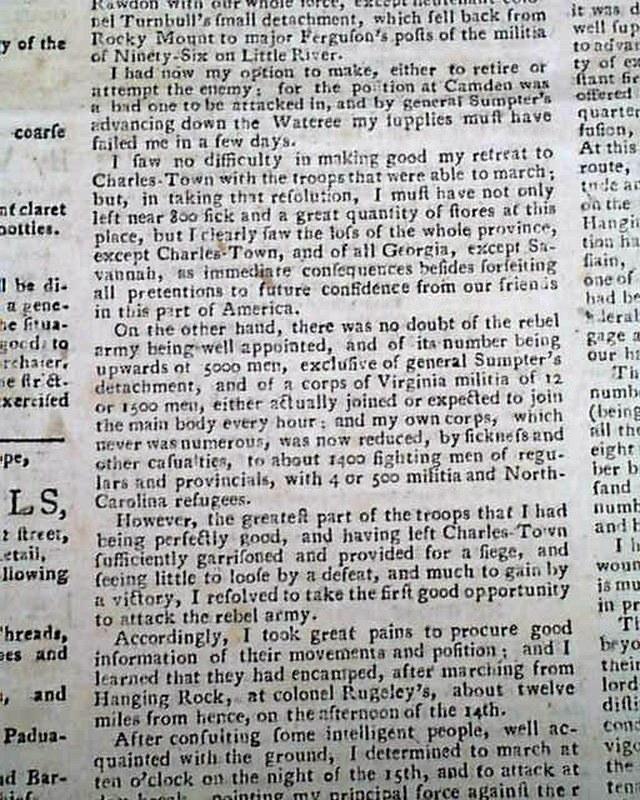
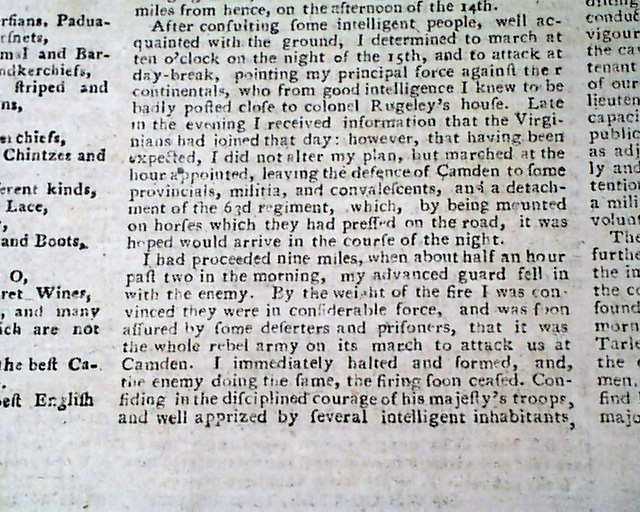
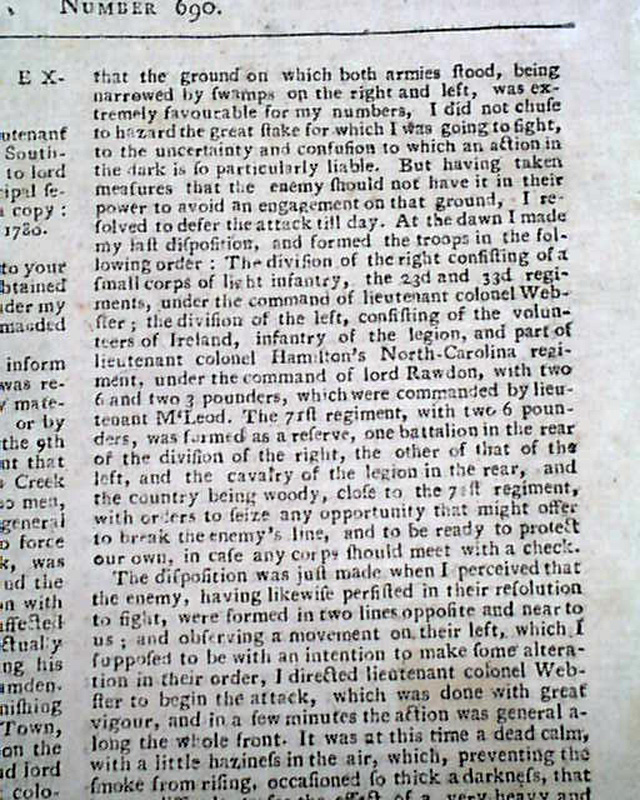
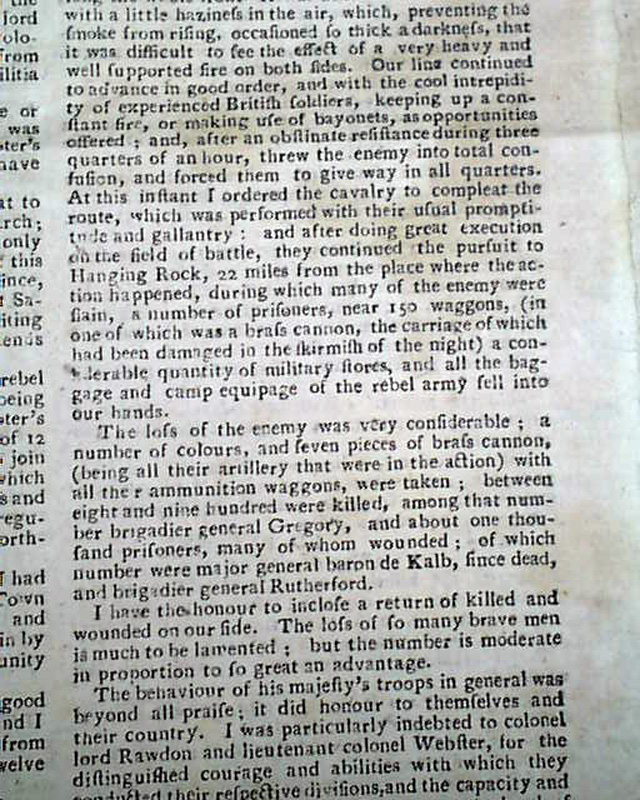
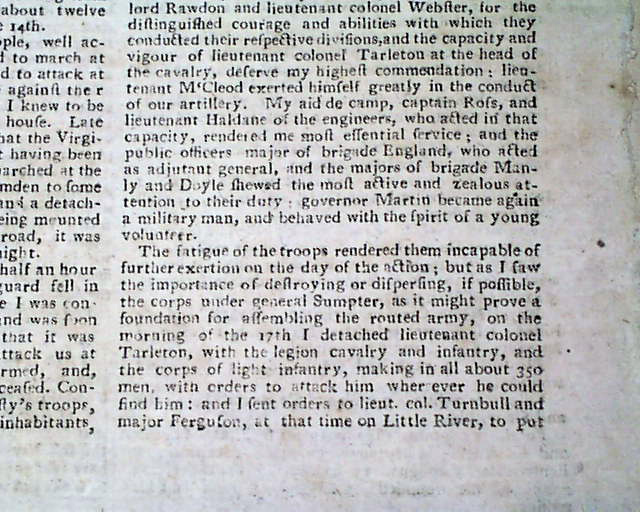
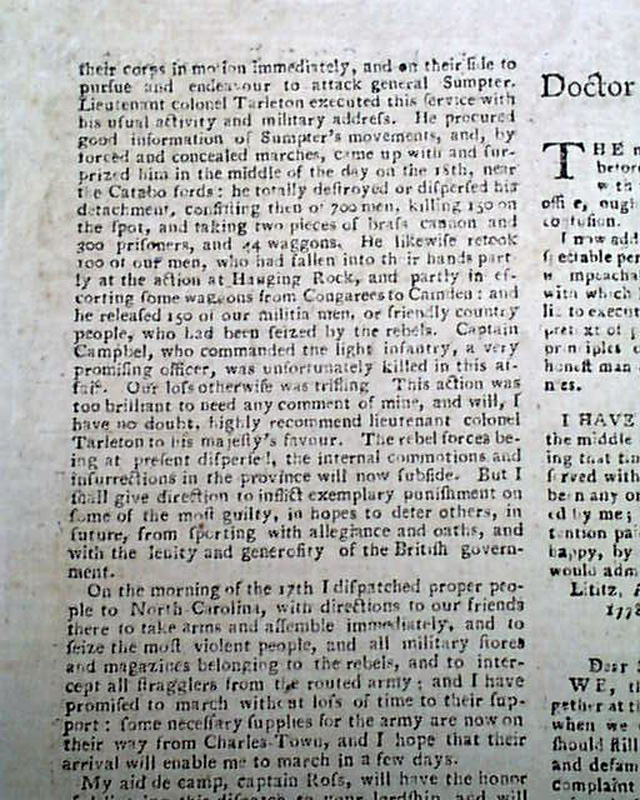
A great issue as two-thirds of the front page and one-third of page 2 are taken up with the details of the Battle of Camden, South Carolina. The report is taken from the "London Gazette Extraordinary".
The Battle of Camden was a major victory for the British in the Southern theater of the Revolutionary War. On August 16, 1780, British forces under Cornwallis routed the American forces of Horatio Gates five miles north of Camden, strengthening the British hold on the Carolinas after the capture of Charleston. The rout was a humiliating defeat for Gates, whose army had possessed a large numerical superiority over the British force. Following the battle, he never held a field command again.
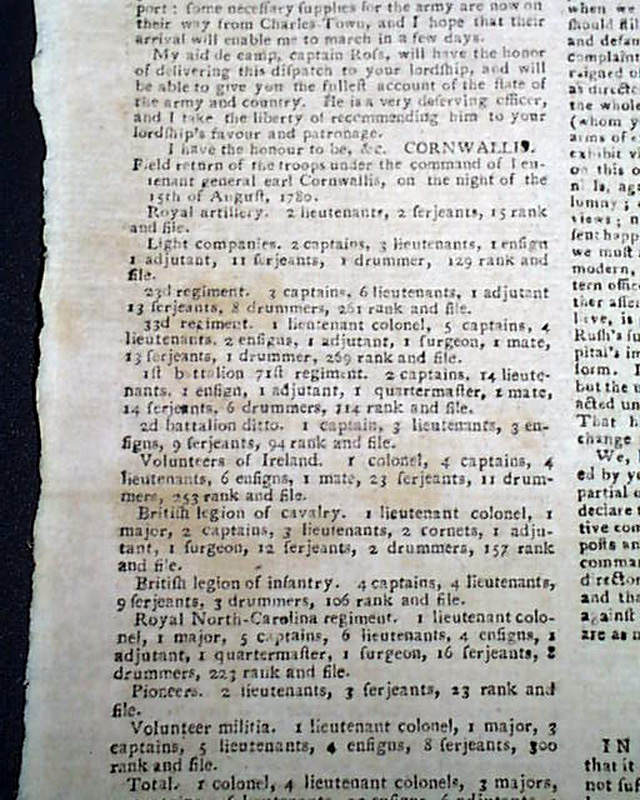
This is the report from Lord Cornwallis himself and is signed by him in type: Cornwallis. It is followed by a list of the killed, wounded and captures.
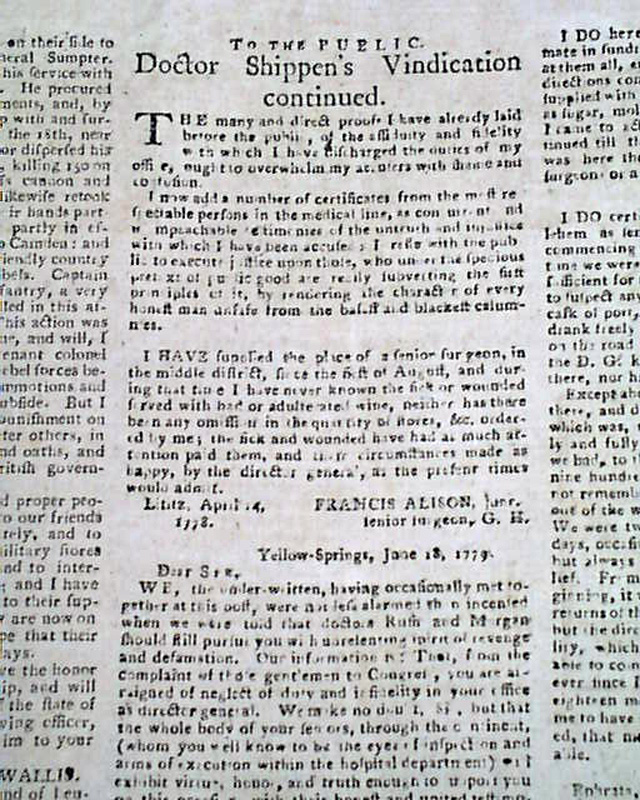
Over a full column on page 2 is taken up with: "Doctor Shippen's Vindication" concerning the handling of the military department of the Continental Army.
Most of page 3 is taken up with a lengthy letter concerning a report by Lord George Germaine to Parliament on the Revolutionary War and the hopes for a peace. A few bits include: "...some ambiguity in the phrase 'good and honourable terms for Great Britain' but there can be no reasonable doubt that his lordship meant either to return to their allegiance to Great Britain or at least to make a peace with her, separate from France. Whether the Americans ever will agree to such terms or not..." and: "...If the Americans are as miserable as his lordship represents them, will they not be likely to increase that misery tenfold..." and "...A general repugnance to the alliance with France is mentioned. A greater mistake was never made..." and much more.
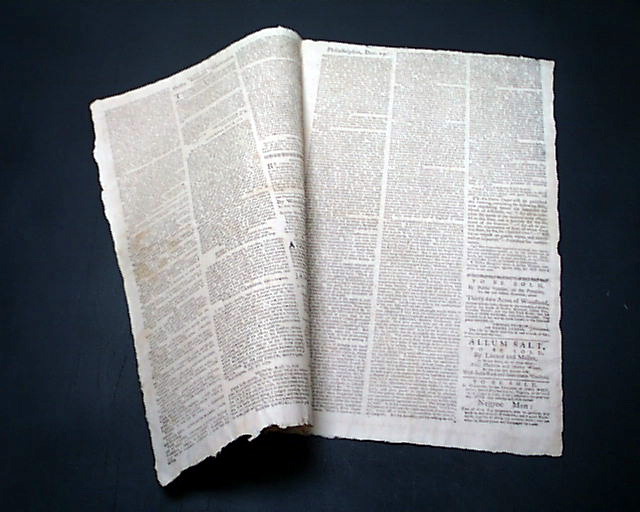
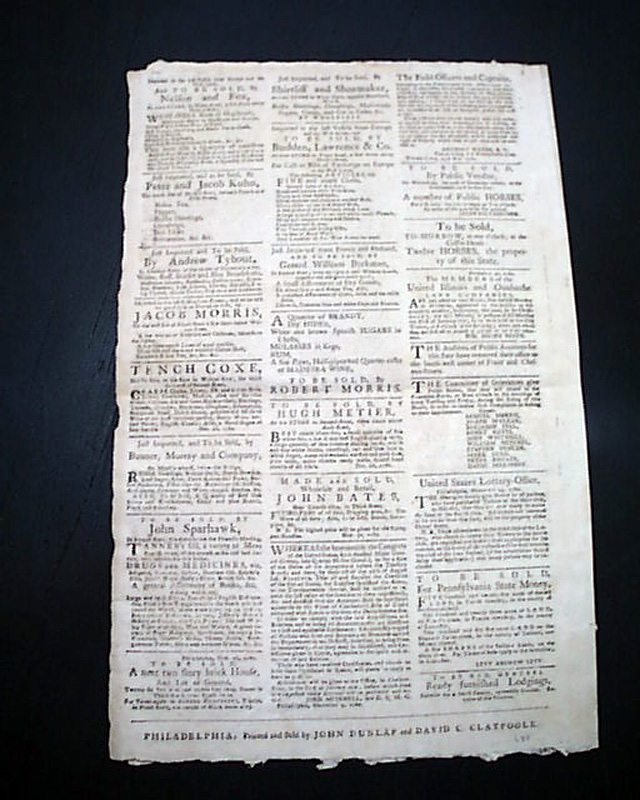
Four pages, untrimmed margins, very nice, clean condition.
Background: The Battle of Camden, fought on August 16, 1780, stands as one of the most catastrophic tactical failures for the United States during the Revolutionary War, effectively shattering the "Hero of Saratoga" reputation of General Horatio Gates and leaving the South in a state of crisis. Despite possessing a significant numerical advantage, Gates made the fatal error of placing his inexperienced, malnourished militia directly across from the elite British regulars under Lord Cornwallis; when the British launched a disciplined bayonet charge at dawn, the American left flank collapsed instantly and fled in a panicked rout. While the veteran Continentals under Baron de Kalb fought with legendary bravery until the Baron fell with eleven wounds, the rest of the army was decimated, losing nearly 2,000 men killed or captured along with their entire artillery train. The defeat was so total that Gates himself famously fled 180 miles to Charlotte in a matter of days, leading to his permanent removal from command and forcing the Continental Congress to appoint Nathanael Greene to pick up the pieces of a fractured Southern campaign.
Other issues you may like
§ related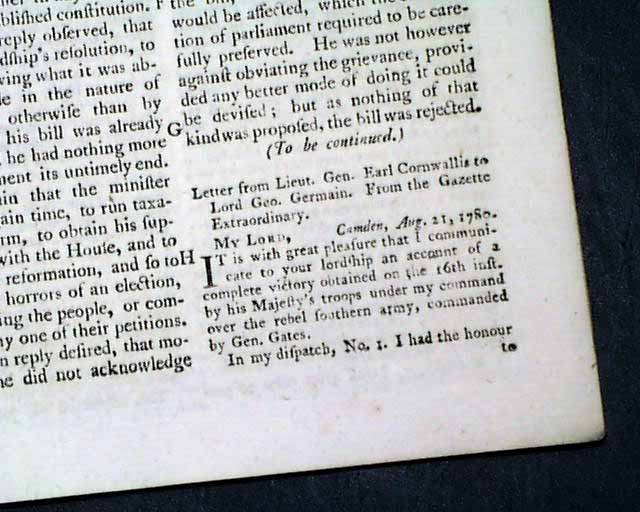
GENTLEMAN'S MAGAZINE, London, October, 1780
- Battle of Camden, South Carolina
- American Revolutionary War from the enemy
Inside has a lengthy & very detailed
...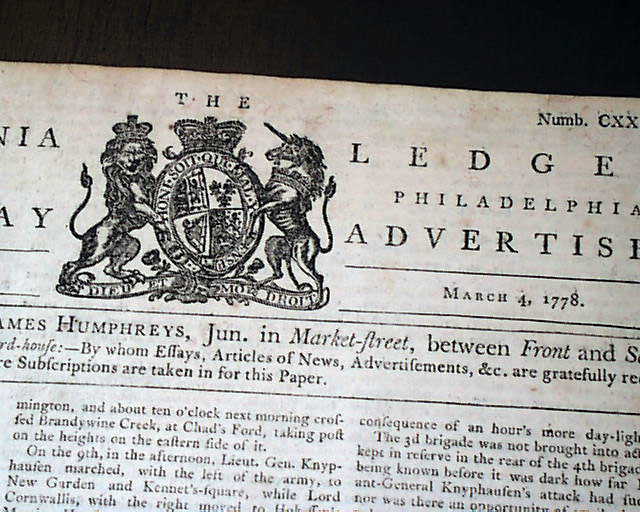
THE PENNSYLVANIA LEDGER OR THE PHILADELPHIA MARKET-DAY ADVERTISER, March 4, 1778
- Battle of Brandywine - Creek
- Chadds Ford Township, Pennsylvania
- American
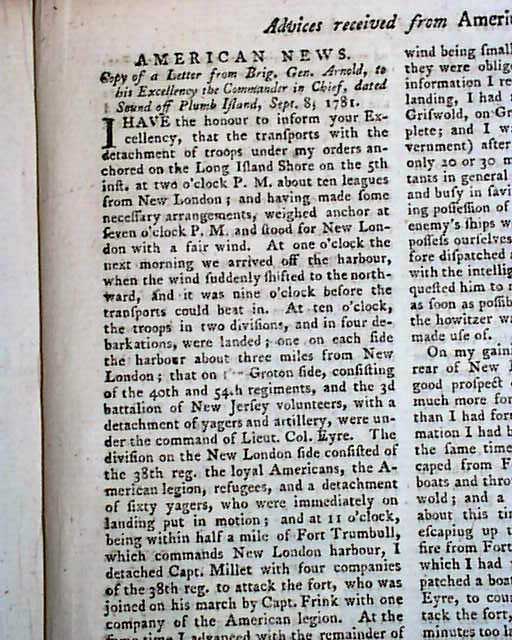
THE GENTLEMAN'S MAGAZINE, London, November, 1781 Near the back is a section headed: "American News" which has a "Copy of a Letter from Brig. Gen. Arnold to
...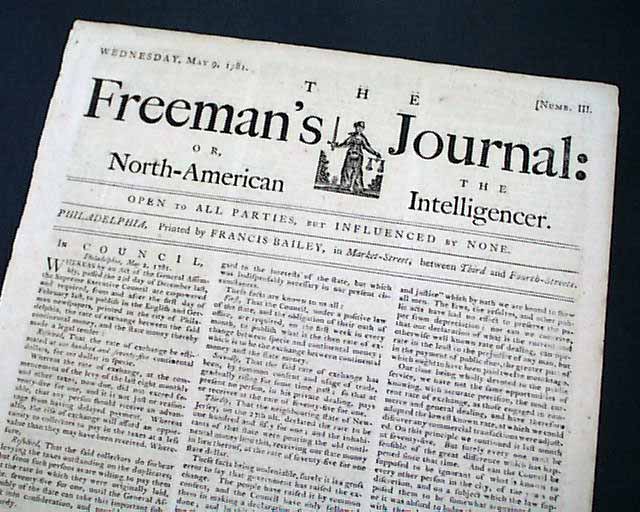
THE FREEMAN'S JOURNAL: of the NORTH AMERICAN INTELLIENCER, Philadelphia, May 9, 1781
- American Revolutionary War
- Battle of Guilford Court House
Page 3 has a
...