Small, broadside edition of the surrender of Japan, from a day before it happened...
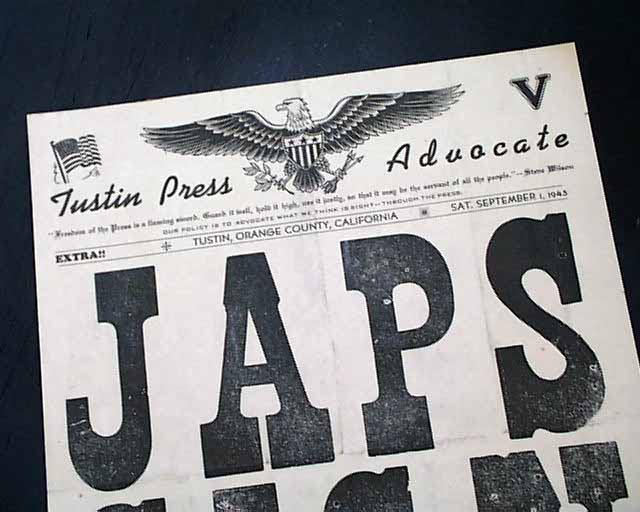
TUSTIN PRESS ADVOCATE, Orange County, California, Sat. Sept. 1, 1945
- Japanese officially surrenders onboard the USS Missouri
- World War II comes to an end - Tokyo Bay - Japan
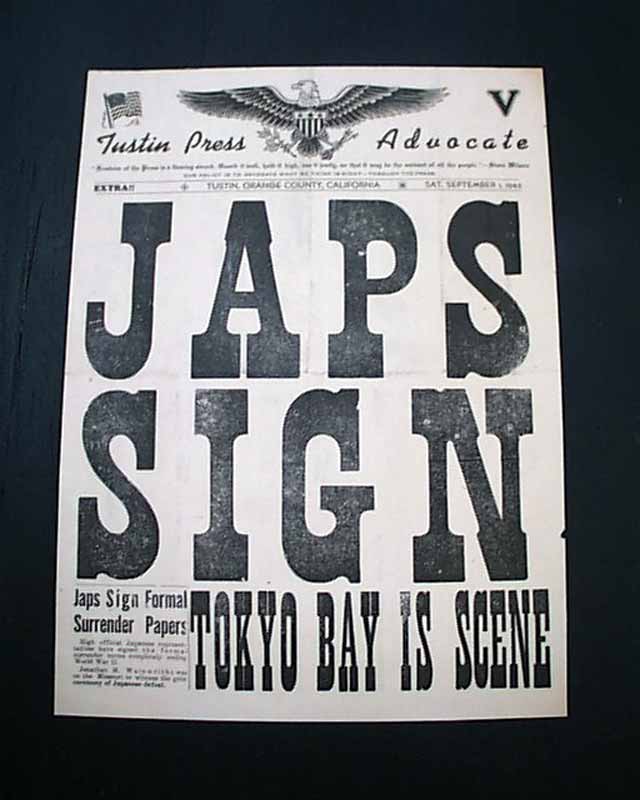
This is a small-size, broadside "Extra" edition announcing the formal end of the War in the Pacific with the Japanese signing surrender papers on the U.S.S. Missouri.
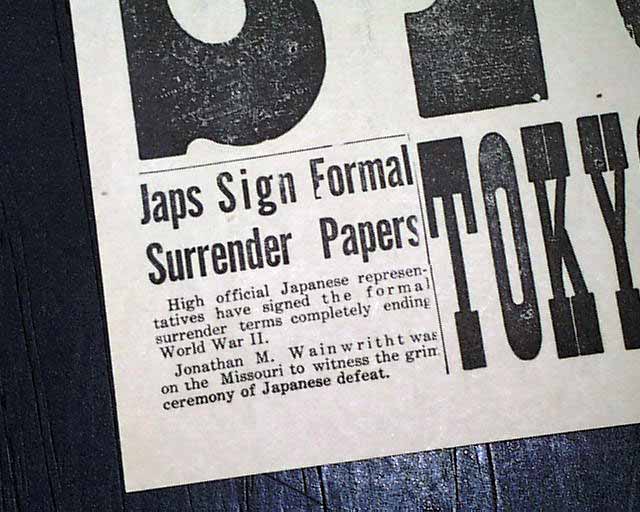
The only text is the report at the lower left headed: "Japs sign Formal Surrender Papers" and reading: "High official Japanese representatives have signed the formal surrender terms, completely ending World War II. Jonathan M. Wainwright was on the Missouri to witness the grim ceremony of Japanese defeat."
What is curious is the date. The surrender happened on September 2. But the ceremony was planned, so the brief report and the headlines could have been set in anticipation, wanting to "scoop" the other newspapers.
A single sheet issue, blank on the reverse, 8 3/4 by 12 inches, great condition.
Background: This rare and historically captivating single-sheet broadside "Extra" edition of the Tustin Press Advocate, dated Saturday, September 1, 1945, serves as an exceptionally scarce piece of World War II ephemera that captures the immediate reaction to the end of global conflict. printed with a blank reverse, the issue's primary focus is a concise, urgent report situated at the lower left titled "Japs sign Formal Surrender Papers," which documents the official conclusion of the War in the Pacific aboard the U.S.S. Missouri and specifically highlights the presence of newly liberated General Jonathan M. Wainwright witnessing the historic event. What makes this piece exceptionally intriguing to collectors and historians alike is its anomalous date of September 1—a full day before the formal signing ceremony in Tokyo Bay on September 2—which stems from the 17-hour time-zone difference across the International Date Line combined with the local newspaper's proactive strategy to pre-set type and instantly release a rush edition the moment wire confirmation arrived on Saturday afternoon in California. As a fragile, local "Extra" produced in limited numbers to scoop regional rivals with immediate breaking news, surviving copies of this brief publication are remarkably elusive today, standing as a compelling physical artifact of fast-paced mid-century journalism during one of modern history's most pivotal moments.
Item from last month's catalog - #369 - released for August, 2026
Other issues you may like
§ related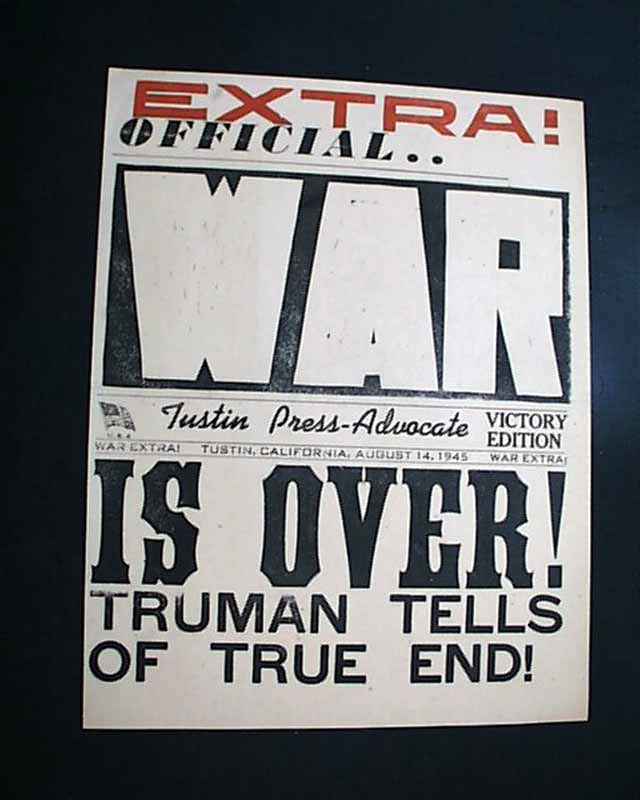
TUSTIN PRESS ADVOCATE, Tustin, California, Aug. 14, 1945
- World War II officially ends w/ Japan surrender
- Very rare "breaking news" broadside for display
This
...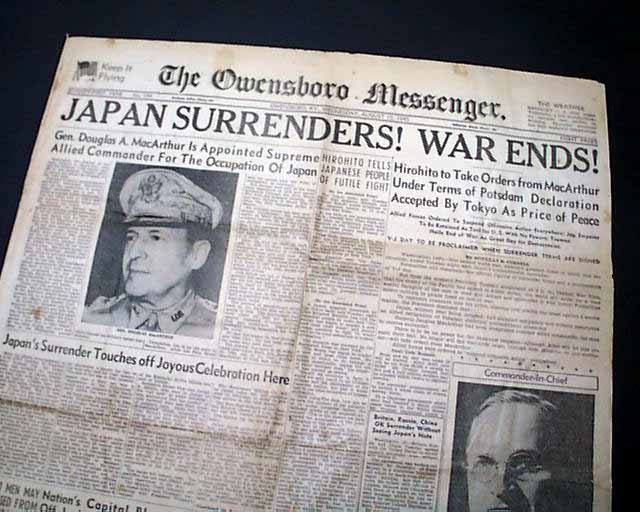
THE OWENSBORO MESSENGER, Kentucky, Aug. 15, 1945
- World War II ends
- Japanese surrenders
The banner headline announces: "JAPAN SURRENDERS ! WAR ENDS ! " with
...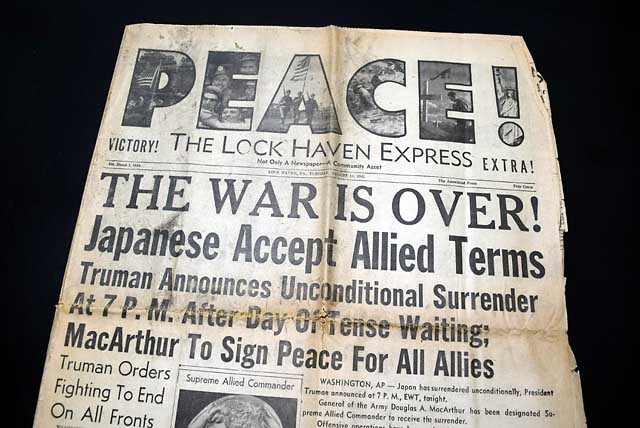
THE LOCK HAVEN EXPRESS, Penn., Aug. 14, 1945
- World War II ends
- Japanese surrenders
- Nice for display
A very dramatic & displayable "Extra" issue announcing the
...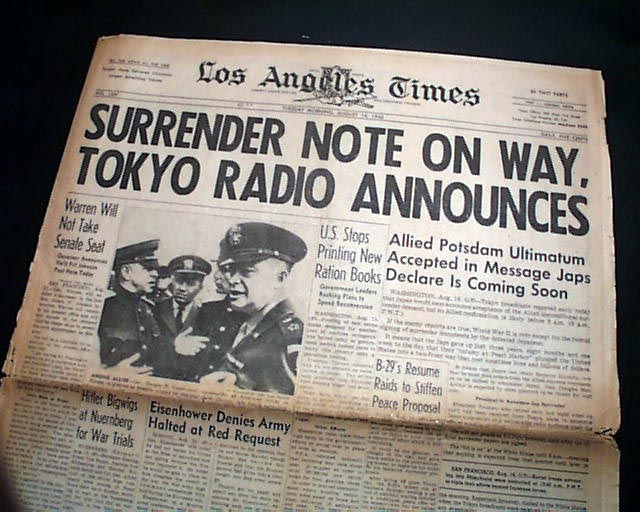
LOS ANGELES TIMES, August 14, 1945
- Japan Surrenders (day of)
- Great issue for display
- World War II over
The 2-line banner headline announces: "SURRENDER NOTE
...