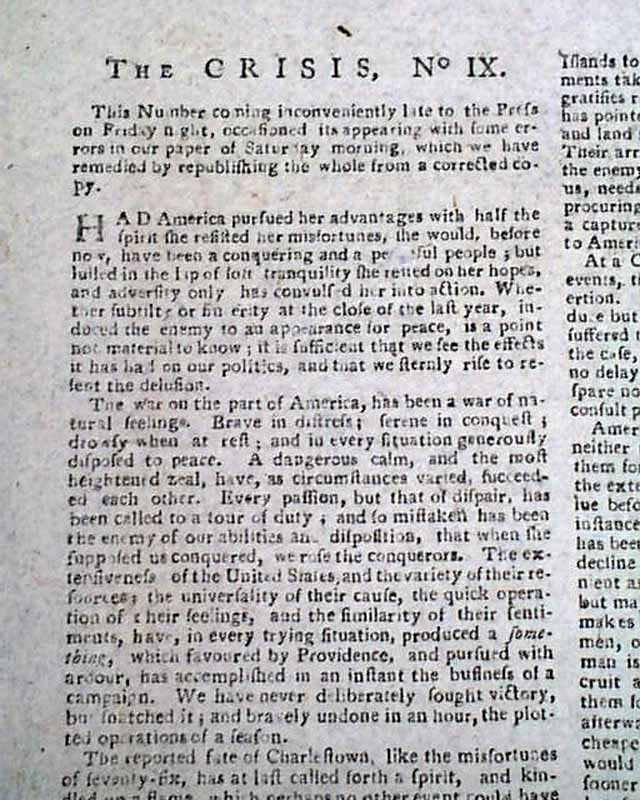
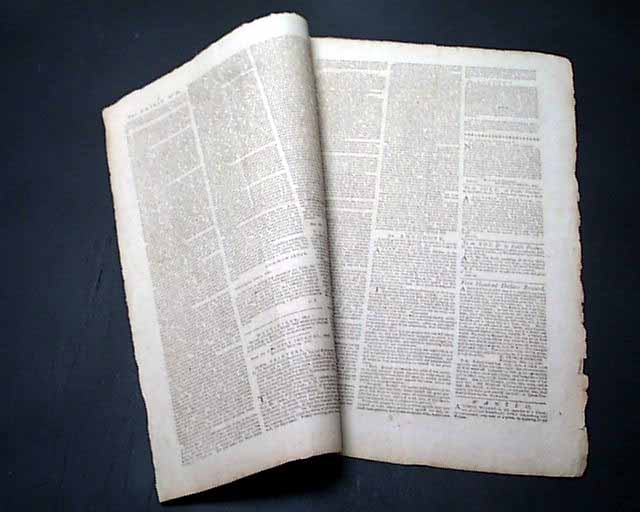
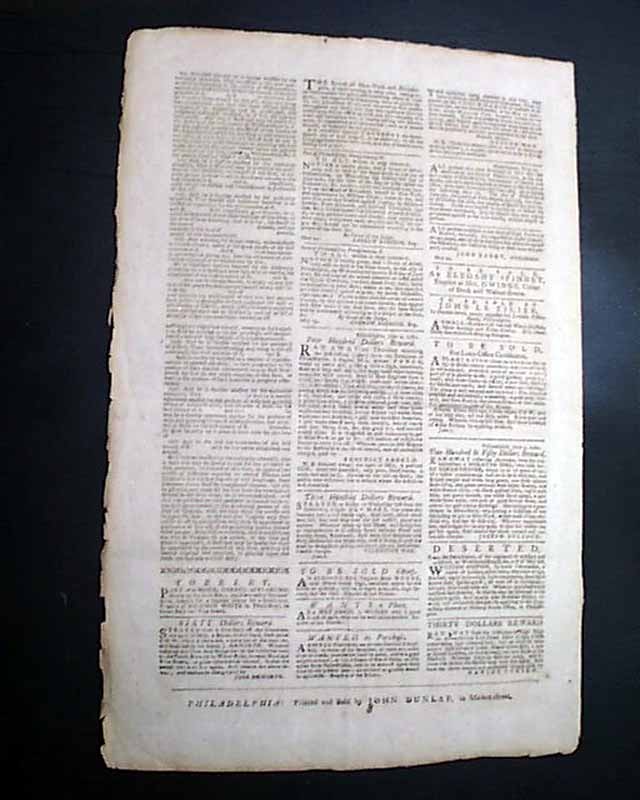
"The Crisis" essay #9 by Thomas Paine...
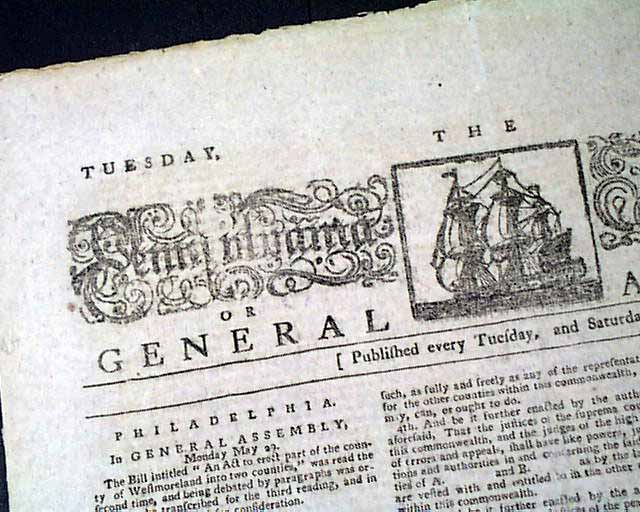
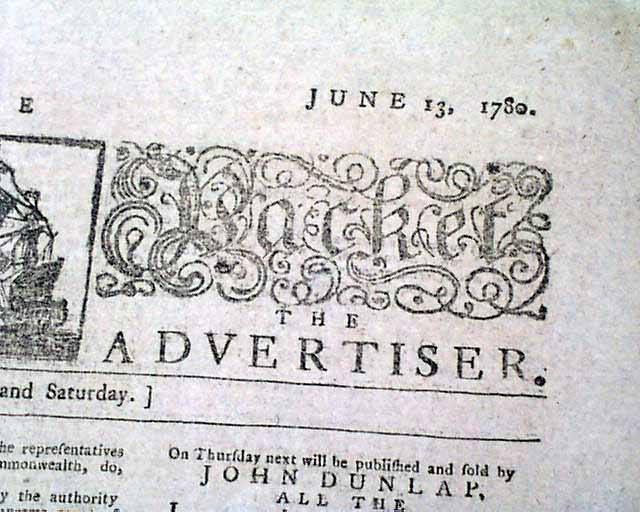
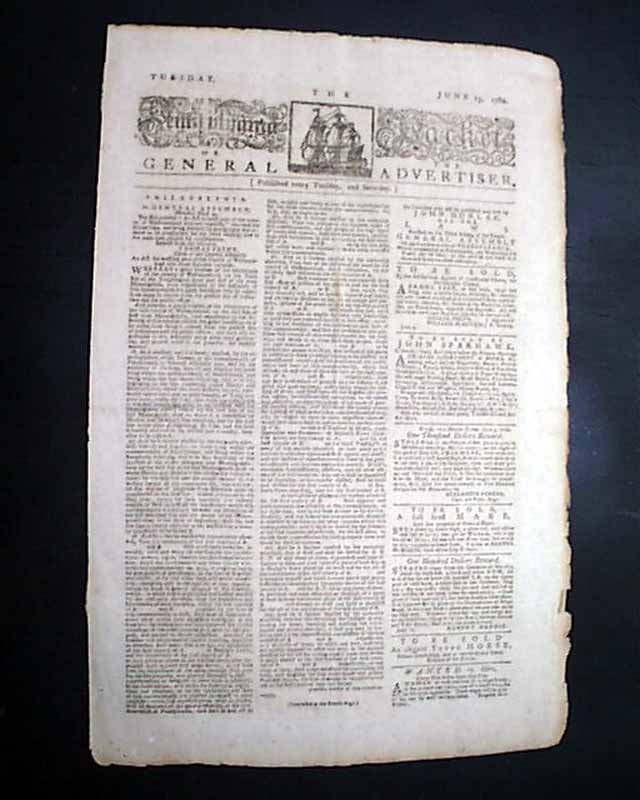
THE PENNSYLVANIA PACKET, Philadelphia, June 13, 1780
* The Crisis No. IX
* Thomas Paine
"The Crisis" is a collection of 13 essays written by Thomas Paine during the American Revolutionary War. In 1776 Paine wrote Common Sense, an extremely popular and successful pamphlet arguing for Independence from England. The essays collected here constitute Paine's ongoing support for an independent and self-governing America through the many severe crises of the Revolutionary War.
General Washington found the first essay so inspiring, he ordered that it be read to the troops at Valley Forge.
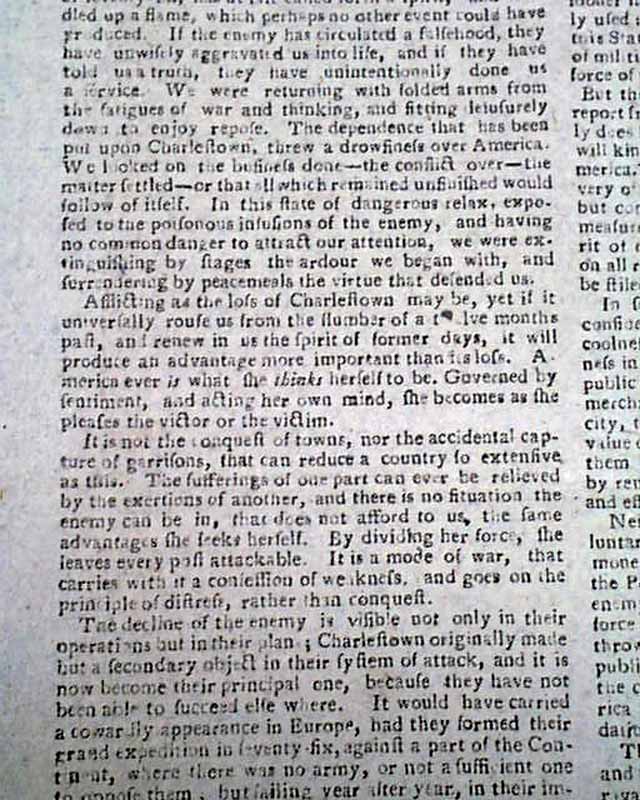
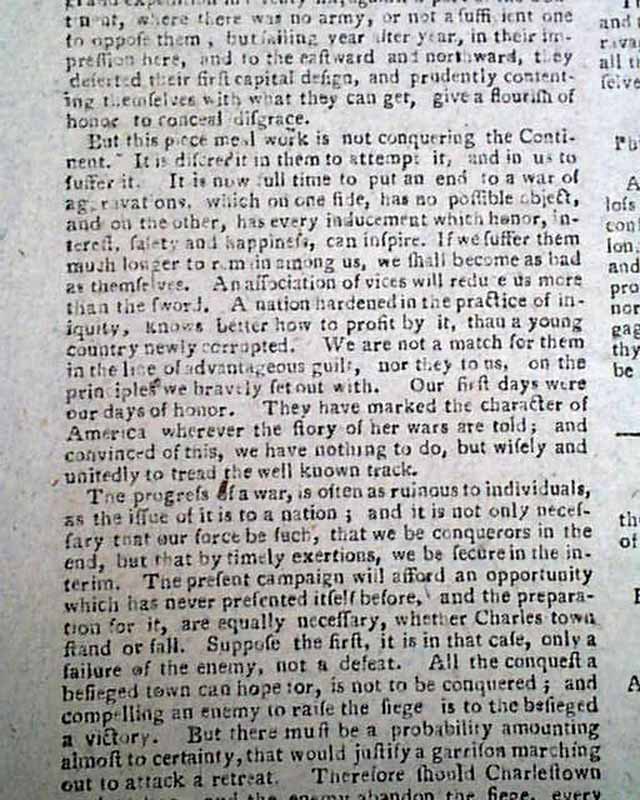
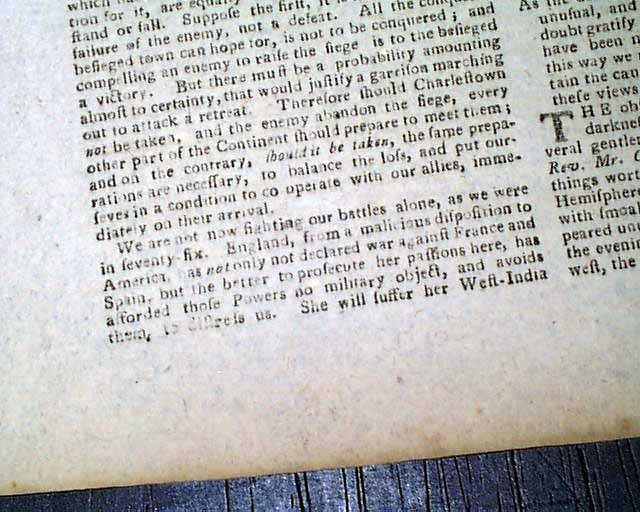
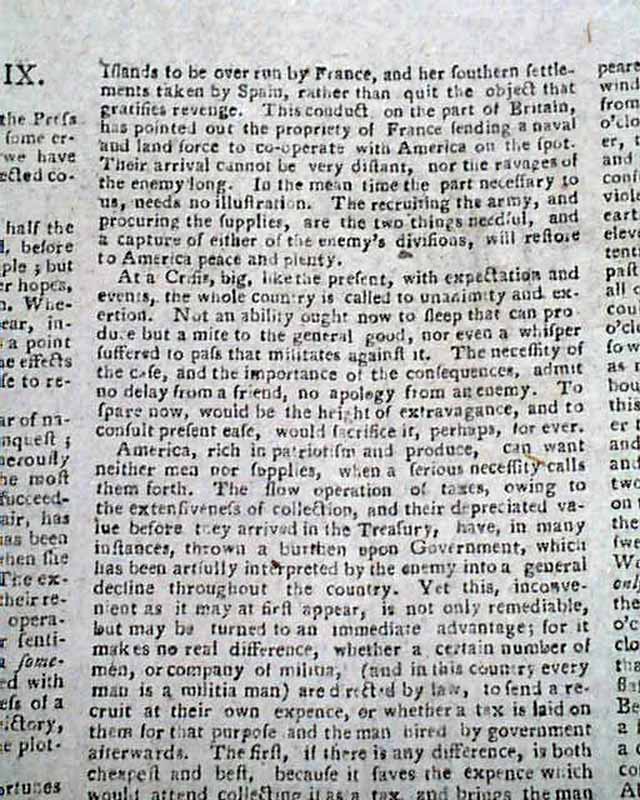
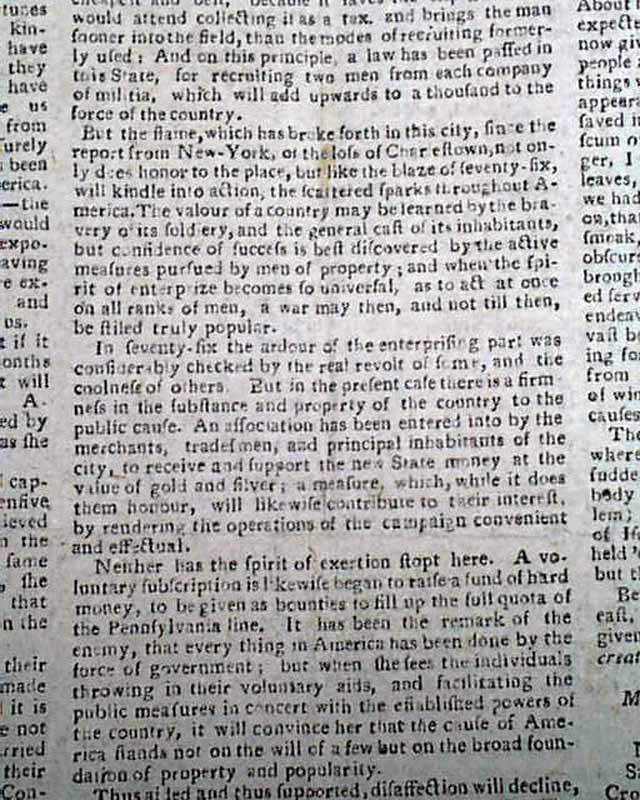
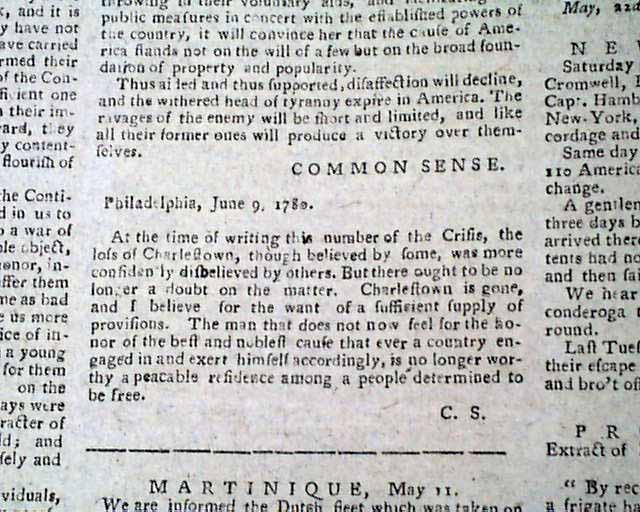
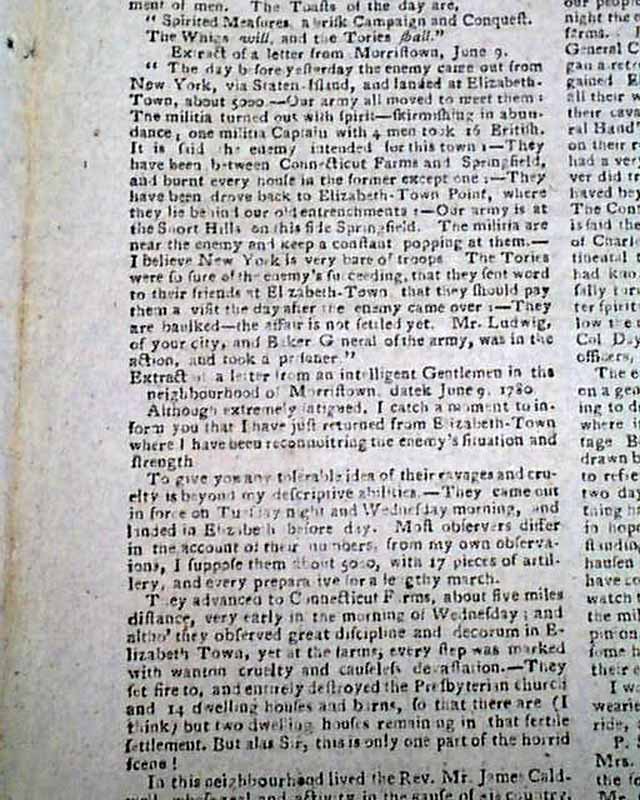
Over half of page 2 of this issue contains the complete text of "The Crisis, No. IX" of the series of 13 essays and is signed in type: Common Sense.
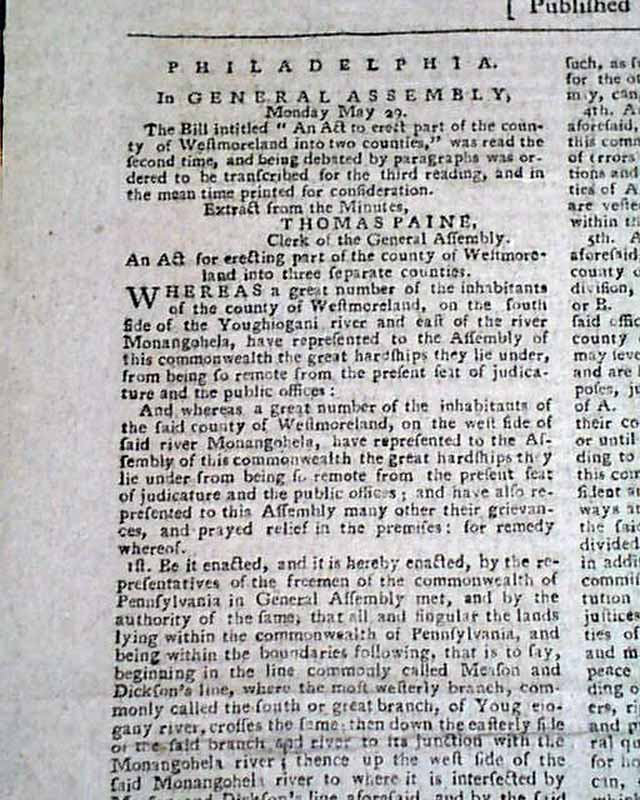
Coincidently the front page has a short document with a signature of "Thomas Paine, Clerk of the General Assembly" of Pennsylvania, a post he held for a period of time.
A rarity to find an American newspaper with a complete printing of a Crisis essay as they were often partitioned over several issues.
Four pages, very handsome masthead, never-trimmed margins, great condition.
Background: This extraordinary 1780 issue of The Pennsylvania Packet is a "holy grail" for collectors, capturing the raw, pulsing heartbeat of the American Revolution at its most desperate hour. While most colonial newspapers were forced to butcher Thomas Paine’s legendary "The Crisis" into fragments across several weeks, this rare survivor presents the complete, uncut text of Crisis No. IX—an urgent, defiant rallying cry published just as the catastrophic fall of Charleston threatened to break the American spirit. The historical synchronicity is staggering: the front page features Paine’s formal signature as Clerk of the General Assembly, while the interior reveals his iconic "Common Sense" persona grappling in real-time with the fog of war, including a poignant postscript added the moment he confirmed the American surrender. Preserved with pristine, never-trimmed margins and a strikingly handsome masthead, this isn't just a newspaper; it is a high-voltage connection to the very ink and adrenaline that fueled the birth of a nation.
Other issues you may like
§ related
* Thomas Paine's "American Crisis"
* Essay # 2 re. Revolutionary War
*...
* Very rare publication
* British pro-American
In our over 50 years of dealing in rare newspapers, we have only once had...
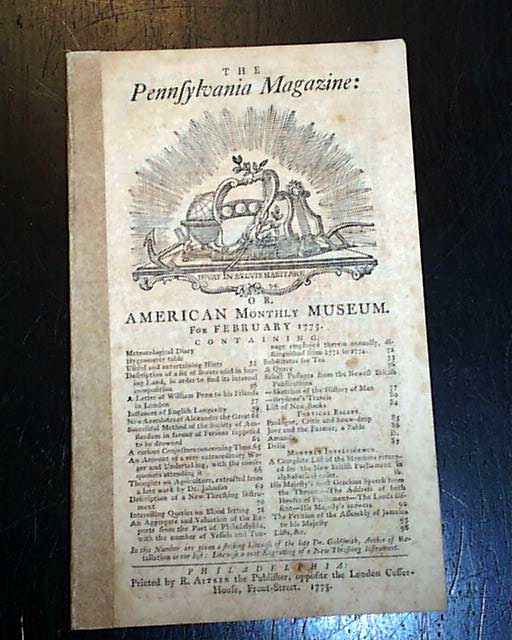
* Pre American Revolutionary War
* Thomas Paine - first time as editor
This is a very rare...
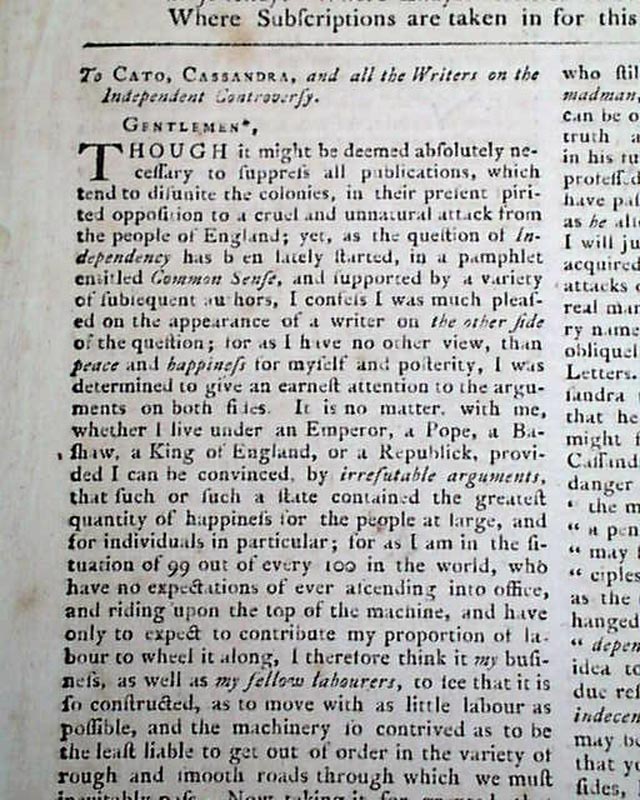
* Rare Revolutionary War era title
* Tory issue from Pennsylvania
* Great year to have (1776)
...