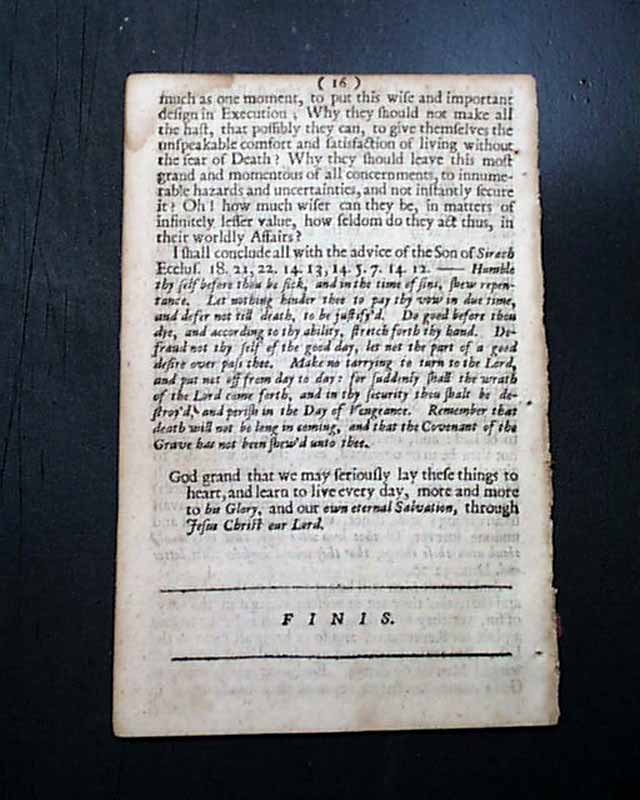
Pamphlet printed in 1707...
Item # 696605
·
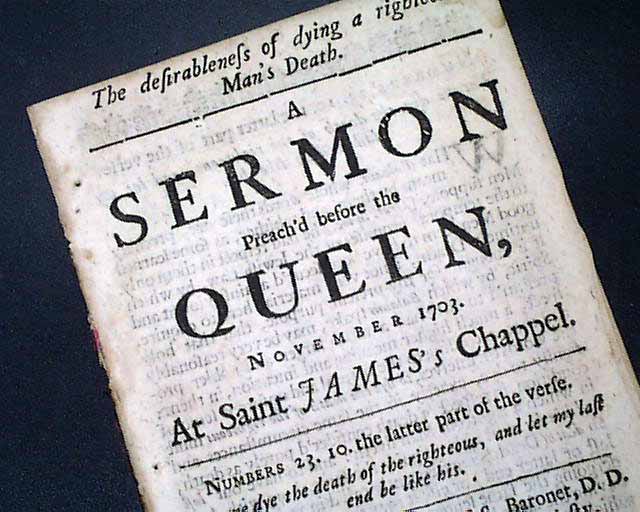
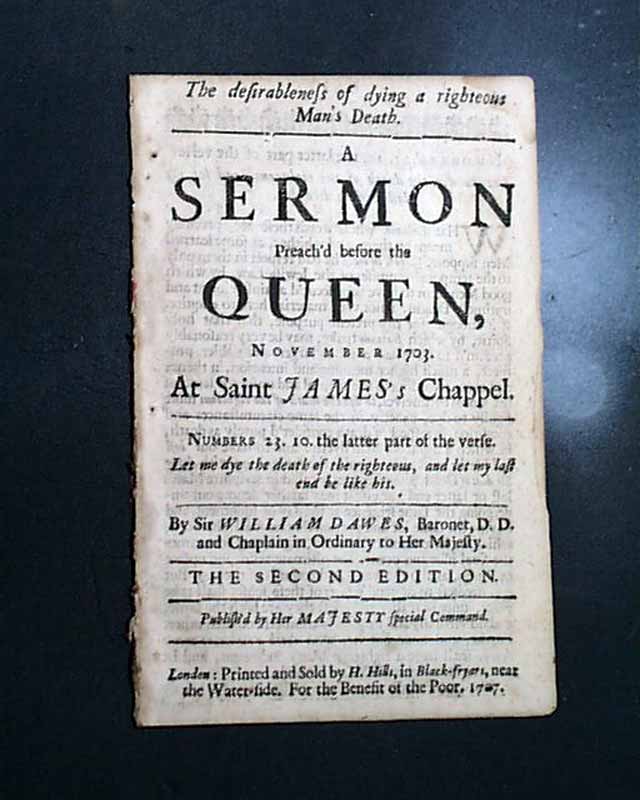
London pamphlet from 1707. The full title page notes in part: "A SERMON Preach'd before the QUEEN, November 1703. At Saint James's Chappel" with more, the second edition, London, 1707.
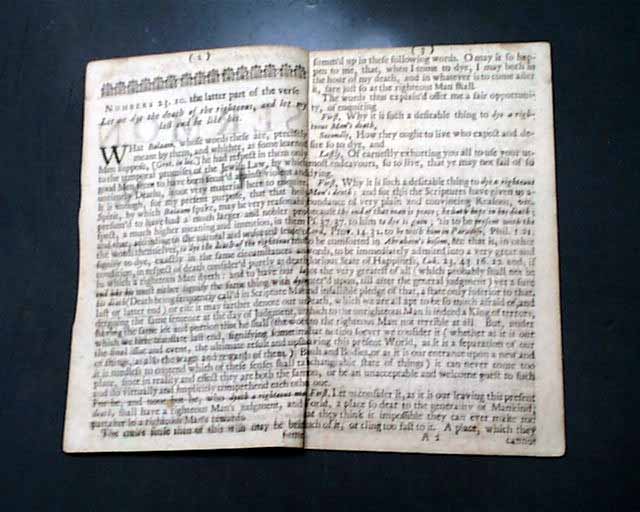
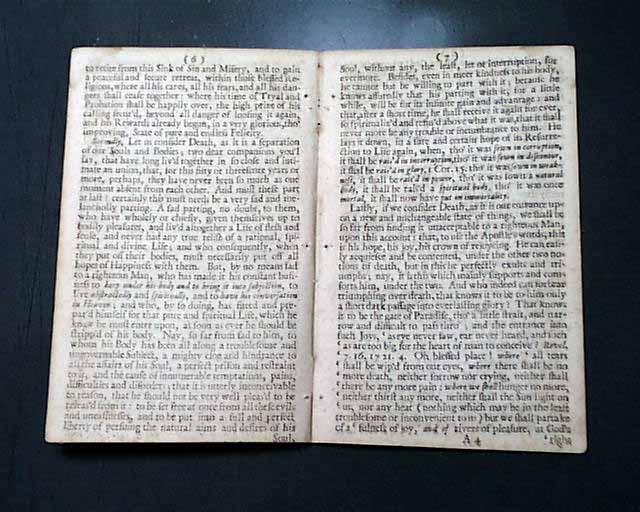
Complete in 16 numbered pages, 4 1/4 by 6 1/2 inches, very nice condition.
Background: This rare 1707 survivor is a direct link to the inner sanctum of the Stuart Court, capturing the exact words spoken to Queen Anne during a period of immense national transformation. Authored by the future Archbishop of York, Sir William Dawes—renowned for his "melodious" voice and favor with the Crown—this sermon represents more than just a religious text; it is a masterclass in 18th-century political piety and royal propaganda. Printed during the landmark year of the Acts of Union, which created Great Britain, this pristine 16-page pamphlet escaped the usual fate of heavy use and decay, remaining a sharp, tactile relic of the "Augustan Age." For a collector, it offers an intimate "memento mori" from the very chapel where the Queen herself sat, preserved in a remarkable state that bridges three centuries of British history.
Complete in 16 numbered pages, 4 1/4 by 6 1/2 inches, very nice condition.
Background: This rare 1707 survivor is a direct link to the inner sanctum of the Stuart Court, capturing the exact words spoken to Queen Anne during a period of immense national transformation. Authored by the future Archbishop of York, Sir William Dawes—renowned for his "melodious" voice and favor with the Crown—this sermon represents more than just a religious text; it is a masterclass in 18th-century political piety and royal propaganda. Printed during the landmark year of the Acts of Union, which created Great Britain, this pristine 16-page pamphlet escaped the usual fate of heavy use and decay, remaining a sharp, tactile relic of the "Augustan Age." For a collector, it offers an intimate "memento mori" from the very chapel where the Queen herself sat, preserved in a remarkable state that bridges three centuries of British history.
Category: Documents & Broadsides
Price
$45
100% Authentic: Original printing, never a reproduction.
Other issues you may like
§ related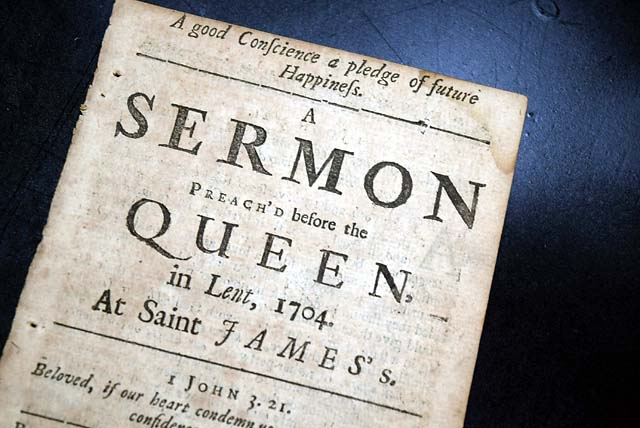
Pamphlet printed in 1707...
London pamphlet from 1707. The full title page notes in part: "A SERMON Preach'd before the QUEEN, in Lent, 1704. At Saint James's" with more, the second...
Jan 1707
$45
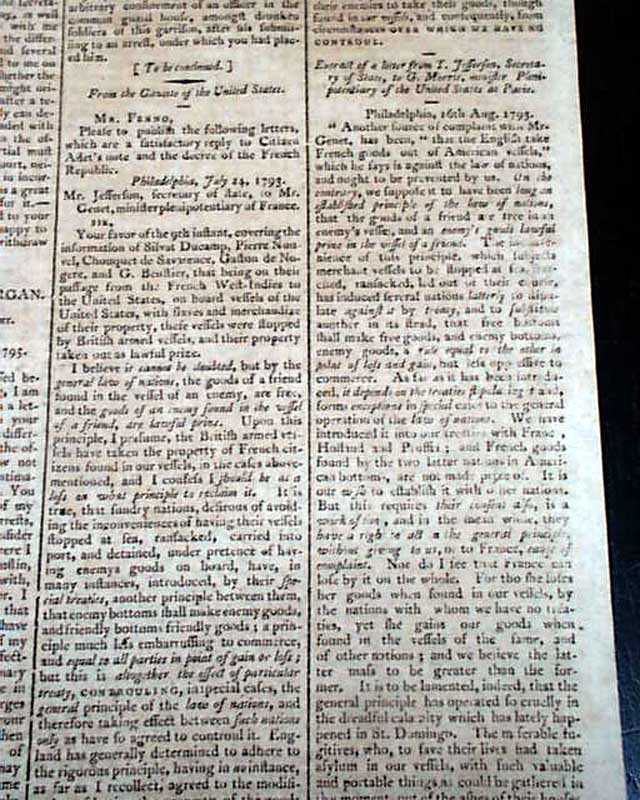
Pamphlet printed in 1706...
London pamphlet from 1706. The full title page notes in part: "A SERMON Preach'd at Bow-Church London, on Monday, December. 30, 1706 Before the Societies...
Jan 1706
$45
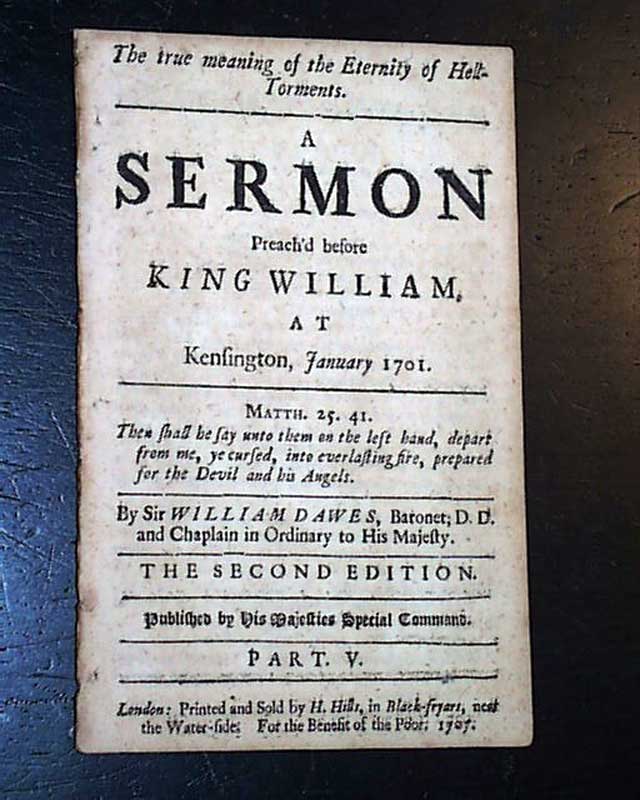
Pamphlet printed in 1707...
London pamphlet from 1707
* Sir William Dawes, 3rd Baronet
* King William III of England
The full title page notes in part: "A SERMON Preach'd before...
* Sir William Dawes, 3rd Baronet
* King William III of England
The full title page notes in part: "A SERMON Preach'd before...
Jan 1707
$46
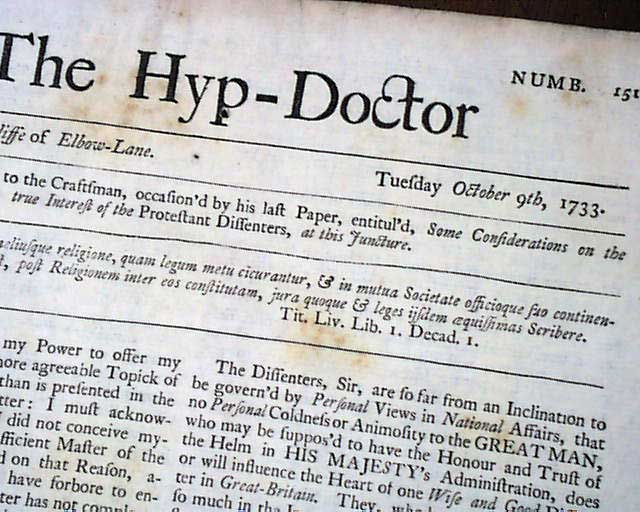
A rare title which rarely comes into hands of collectors...
THE HYP-DOCTOR, London, Oct. 9, 1733
* Very rare 18th century publication
The title is an archaic phrase for a "hodgepodge of nonsense". This curious...
* Very rare 18th century publication
The title is an archaic phrase for a "hodgepodge of nonsense". This curious...
May 1733
$78