

What will be necessary to find a successful peace in the French & Indian War...
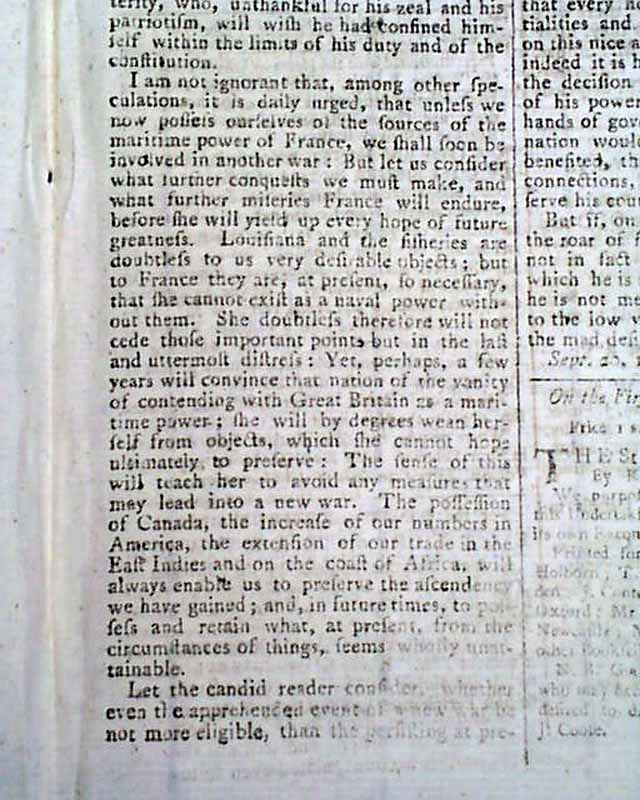
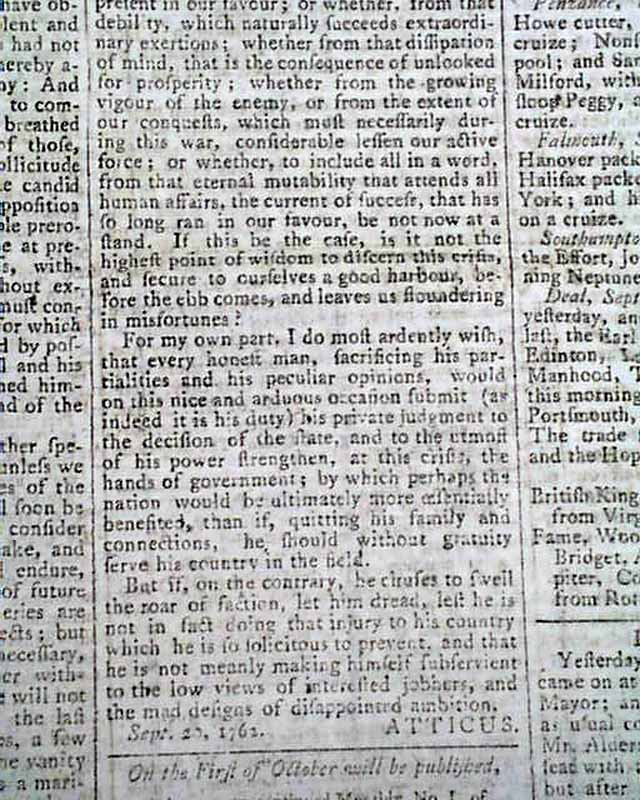
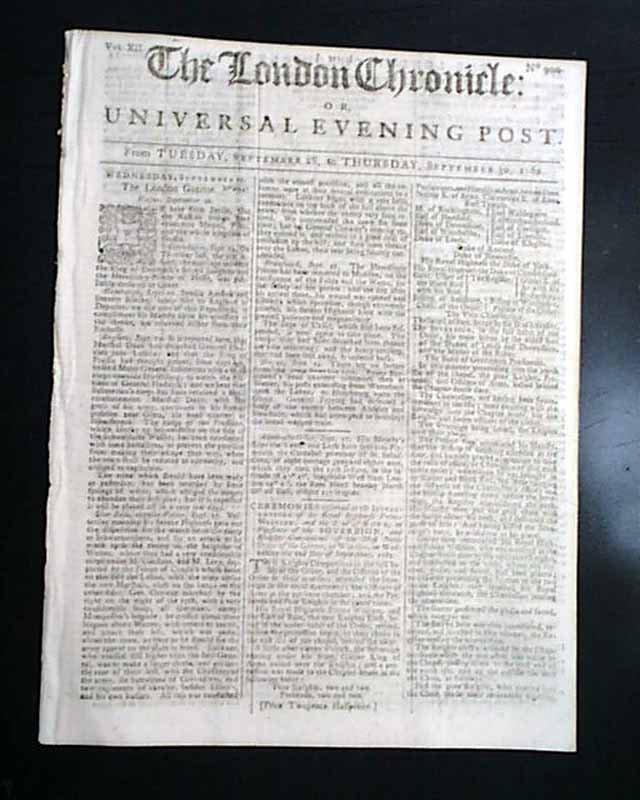
THE LONDON CHRONICLE, England, Sept. 30, 1762 Pages 4 and 5 contain a nearly 3 column letter concerning issues in finding an appropriate treaty to end the French & Indian War (Seven Years' War in Europe).
The letter begins: "Among those who clamor against the supposed terms of peace, there are many who are influenced by motives of private advantage..." and further on: "...it is daily urged, that unless we now possess ourselves of the sources of the maritime power of France, we shall soon be involved in another war: But let us consider what further conquests we must make, and what further miseries France will endure before she will yield up every hope of further greatness. Louisiana & the fisheries are doubtless to us very desirable objects..." and more.
Eight pages, 8 1/4 by 10 3/4 inches, nice condition.
Background: The historical significance of this September 1762 London Chronicle report lies in its documentation of the intense domestic pressure and strategic maneuvering that preceded the Treaty of Paris (1763), a document that fundamentally redrew the world map. At this juncture, Great Britain had emerged as the dominant global power, having dealt crushing blows to the French in North America, India, and the Caribbean. The letter’s debate over Louisiana and the fisheries highlights a critical crossroads: the British government, led by the Earl of Bute, faced a choice between total "maritime annihilation" of France—as demanded by war hawks like William Pitt—or a moderate peace designed to prevent a future war of revenge. By ultimately allowing France to retain fishing rights in the North Atlantic and return lucrative sugar islands like Guadeloupe, Britain sought a stable balance of power. However, as the letter's author feared, these concessions provided France the economic and naval "nursery" required to rebuild, eventually enabling their pivotal intervention in the American Revolution. Consequently, this newspaper captures the exact moment Britain's quest for total security in the New World sowed the seeds of future colonial rebellion and renewed European conflict.
Other issues you may like
§ related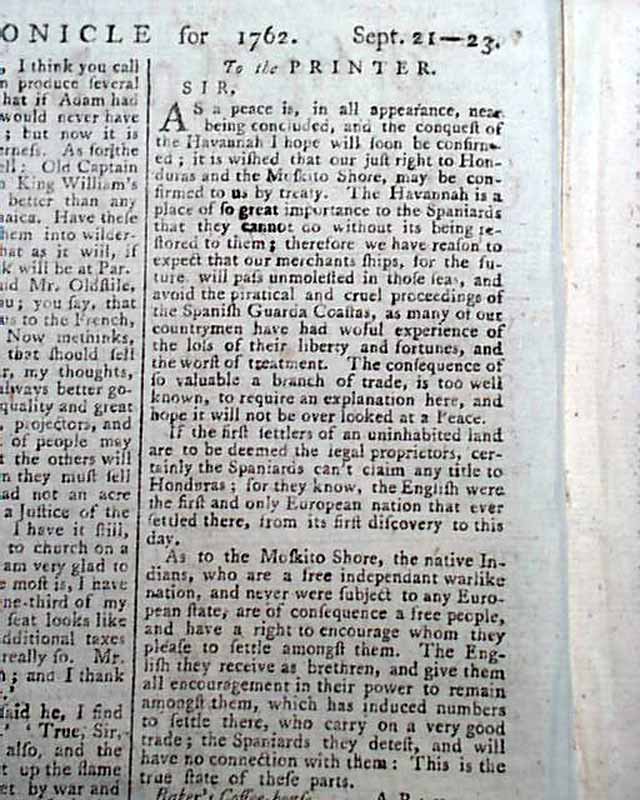
THE LONDON CHRONICLE, England, Sept. 23, 1762 Page 2 has a half-column letter alluding to peace arrangements to end the French & Indian War (Seven Years
...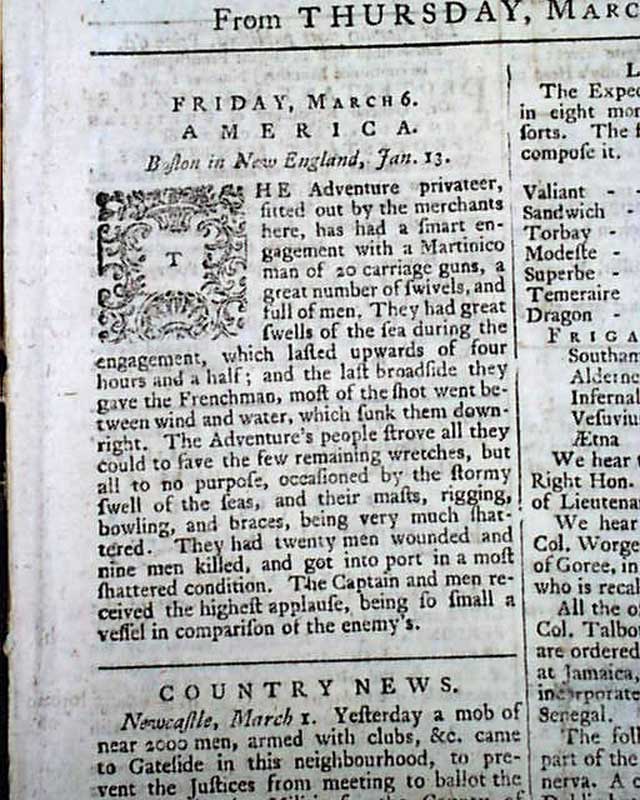
THE LONDON CHRONICLE, England, March 7, 1761 The front page begins with reports headed: "America" with a Boston dateline reporting on a naval battle
...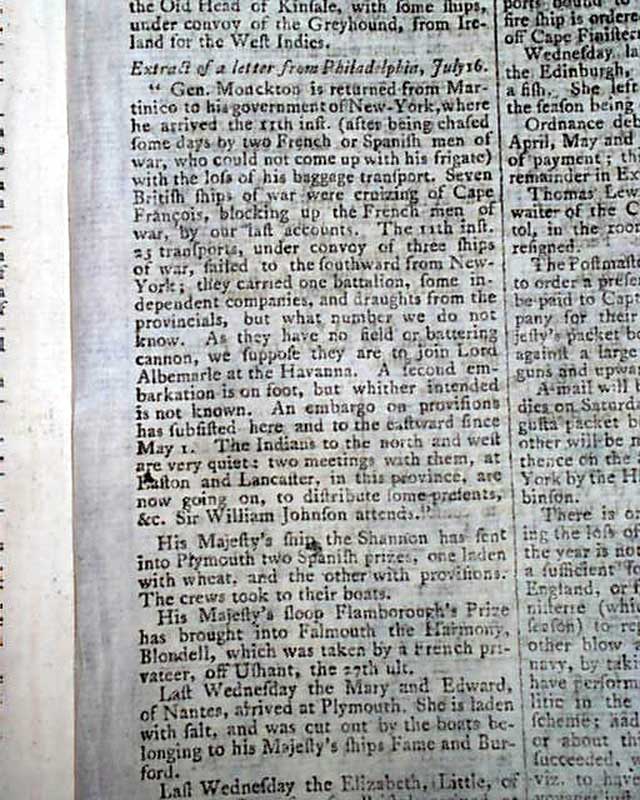
THE LONDON CHRONICLE, England, Aug. 3, 1762 Page 7 has an: "Extract of a Letter From Philadelphia", bits including: "Gen. Mockton is returned...to his
...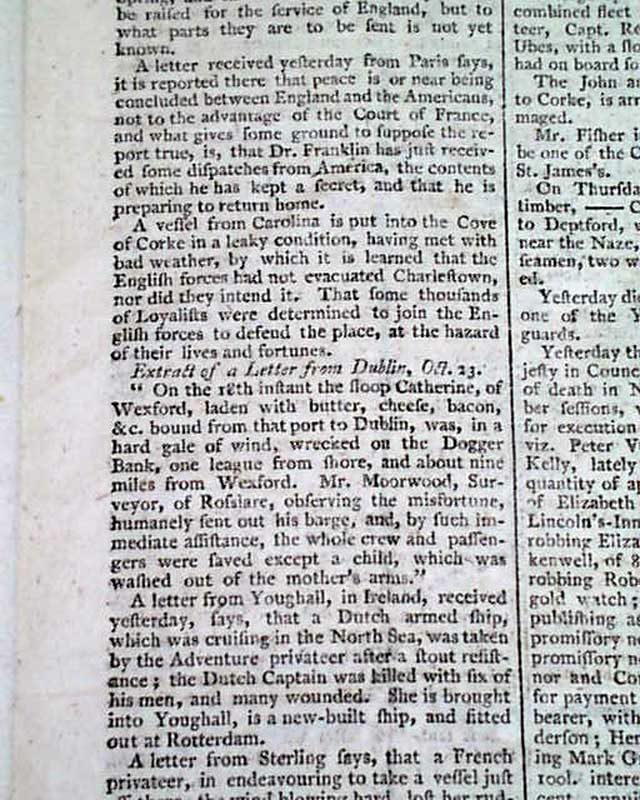
THE LONDON CHRONICLE, England, Oct. 10, 1782
- Revolutionary War ending events
- From the enemy - Loyalists
Page 5 has: "A letter received yesterday from Paris
...