Much on the Mexican War... On Dupont in San Diego & San Francisco...
DAILY NATIONAL INTELLIGENCER, Washington, D.C., April 24, 1847
- "Gunboat diplomacy"
- Mexican War
- San Diego, California
- Samuel Francis Du Pont
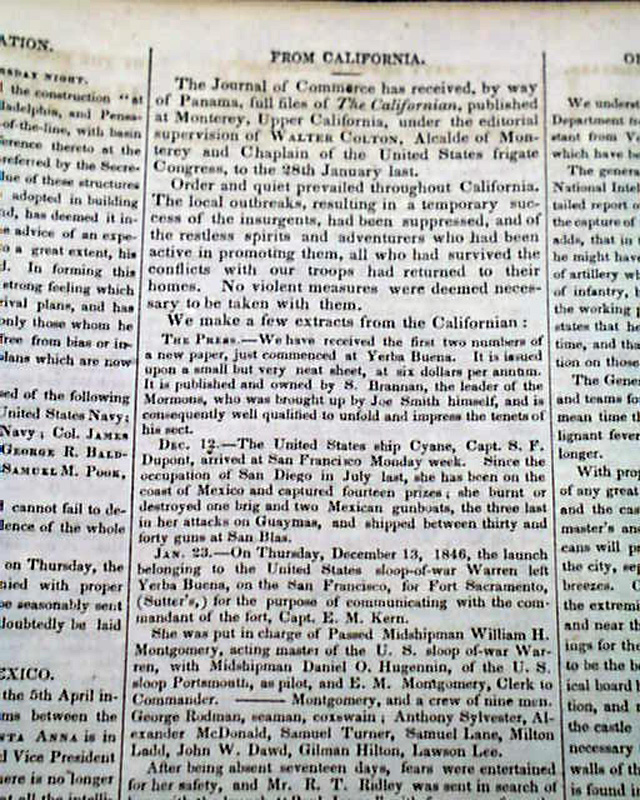
Perhaps the most interesting report is on page 3: "From California" who ch gives news by date, and includes a report that: "...The U.S. ship Crane, Capt. S. F. Dupont, arrived at San Francisco...Since the occupation of San Diego in July last, she has been on the coast of Mexico & captured 14 prizes...".
Dupont in San Diego was a very notable event, as on July 29 he flew the American flag over the fort there, capturing the city from the Mexicans. But there would be several more back-and-forth occupations by both the Americans & Mexicans since.
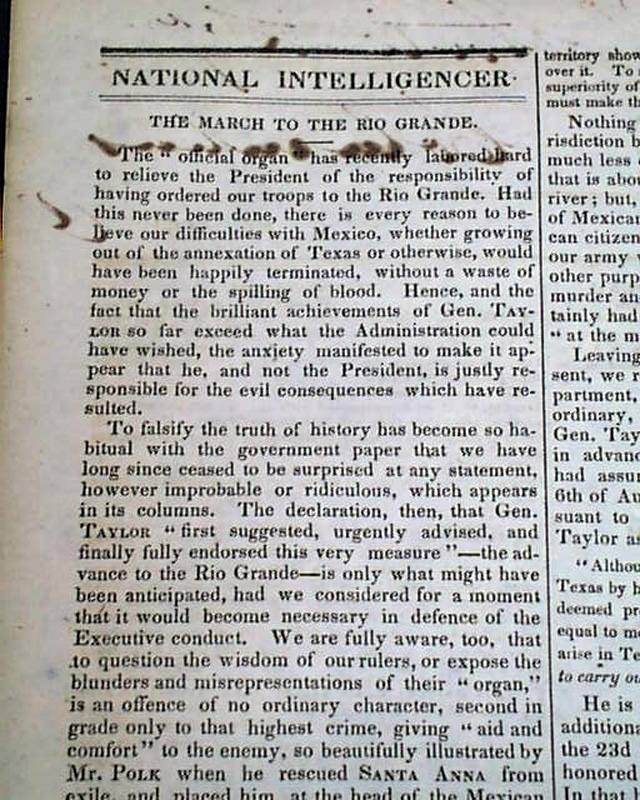
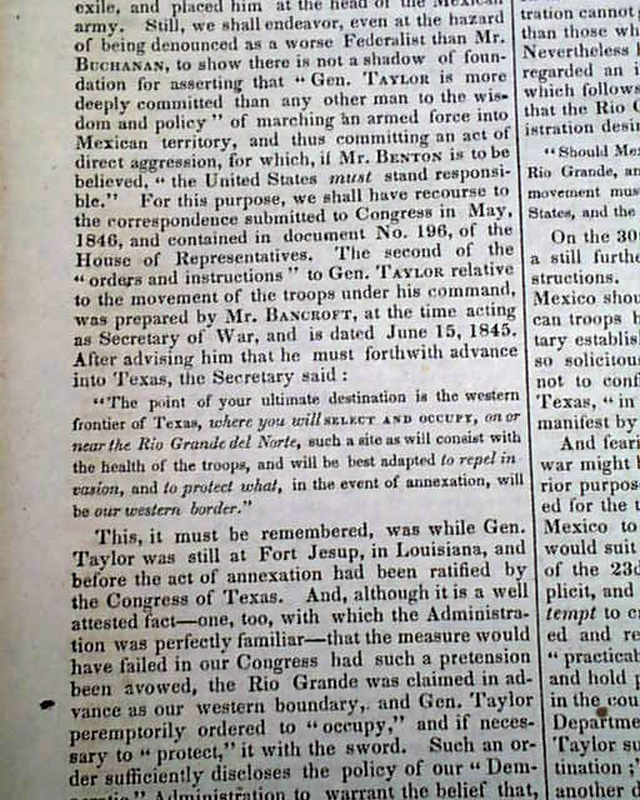
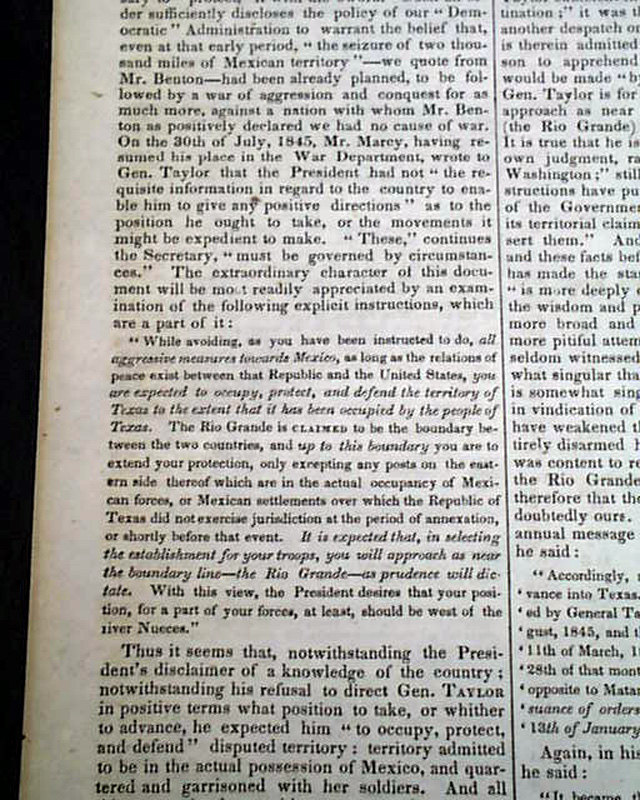
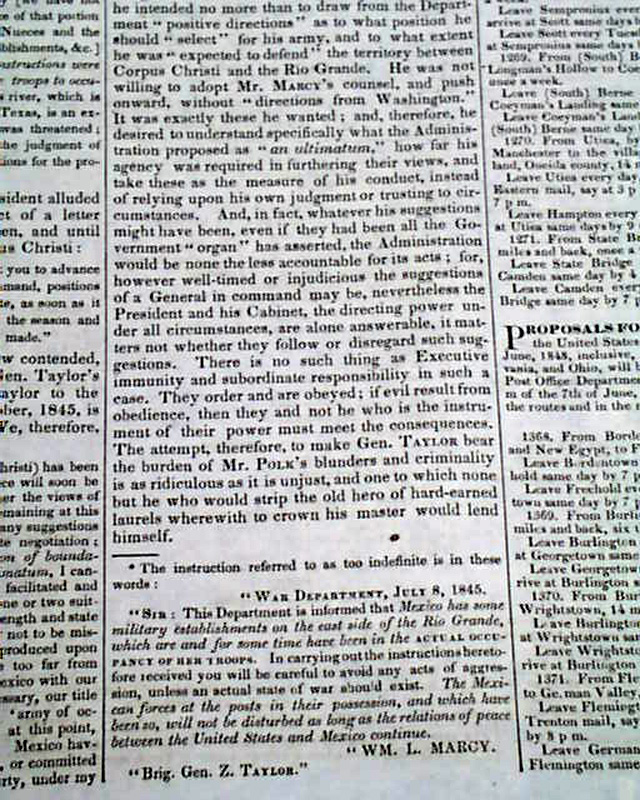
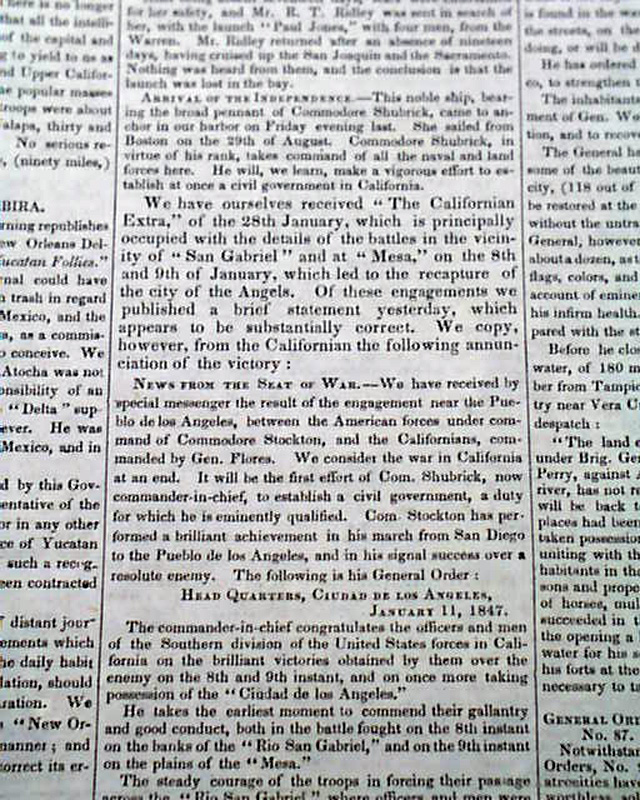
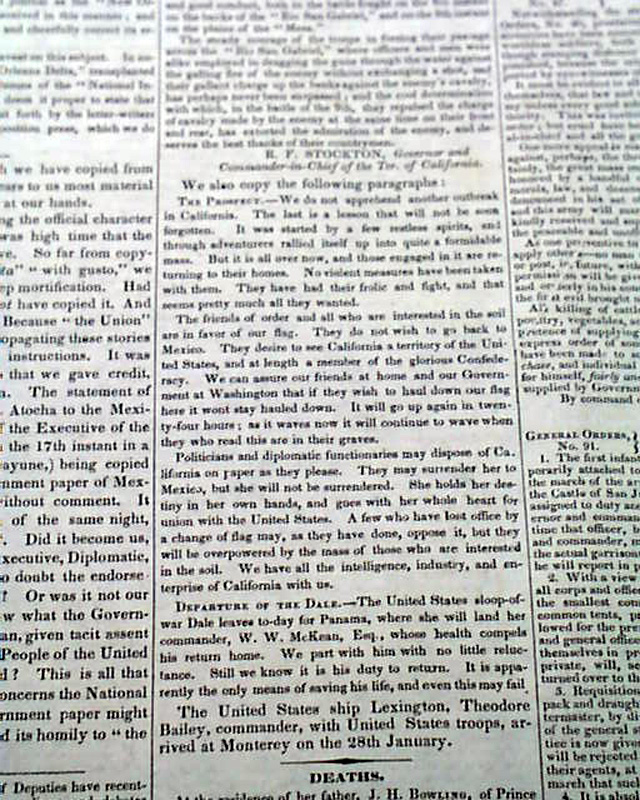
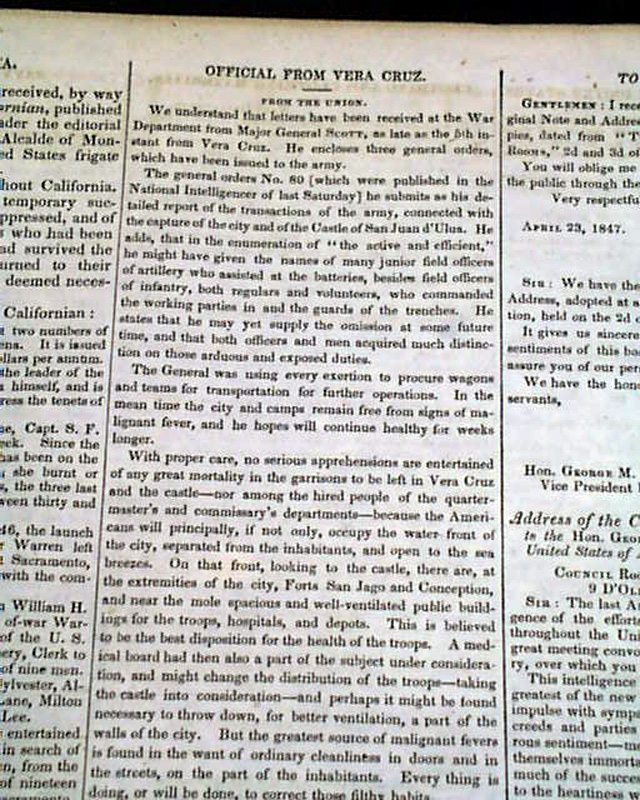
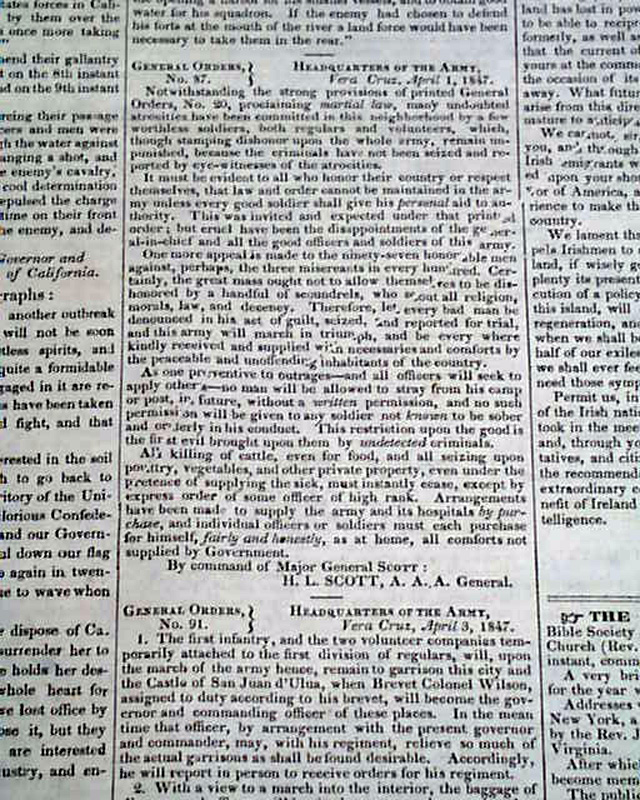
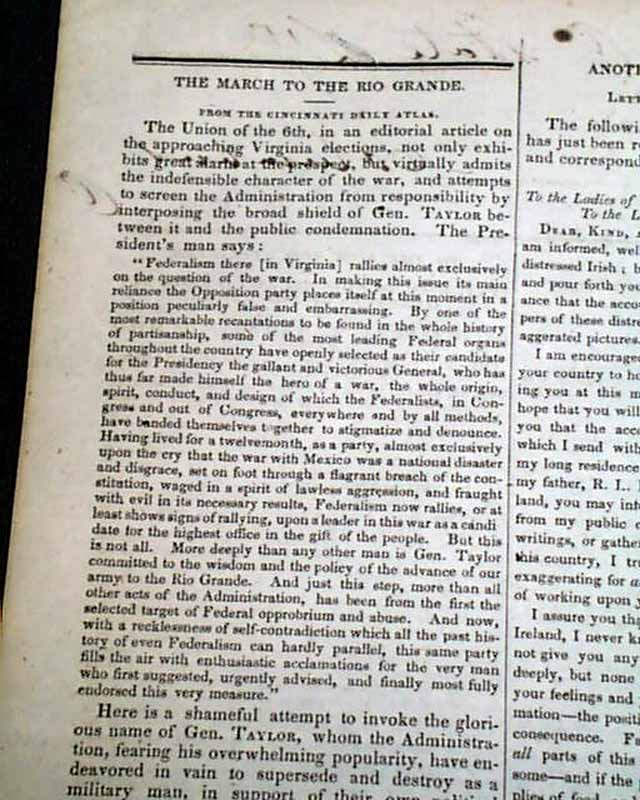
Other Mexican War items include: "Official From Vera Cruz", a letter from "Ciudad de Los Angeles" signed in type by: R. F. Stockton, Governor & Commander in Chief of the Territory of California; a "General Order" from the headquarters at Vera Cruz; and nearly 3 columns taken up with: "The March to the Rio Grande" which has great content on the Mexican War.
Four pages, very nice condition.
background: The capture of San Diego and the subsequent naval campaign by the USS Cyane represent a masterclass in 19th-century "gunboat diplomacy" and coastal warfare. After transporting John C. Frémont’s California Battalion to San Diego in July 1846 to secure the town, Commander Samuel Francis Du Pont took the Cyane into the Gulf of California, where he executed a relentless campaign against Mexican maritime assets. The "14 prizes" mentioned in your newspaper were just the beginning; within a single month of entering the Gulf, Du Pont's crew captured or destroyed a staggering 30 vessels, effectively clearing the region of any hostile Mexican presence. These operations included a daring raid at Guaymas, where Du Pont burned a small fleet under heavy fire, and the seizure of La Paz, the capital of Baja California. By the time this April 1847 report reached Washington, Du Pont had not only secured the Southern California coast but had also crippled Mexico’s ability to supply its western territories by sea, setting the stage for the final amphibious captures of major ports like Mazatlán later that year.
Other issues you may like
§ related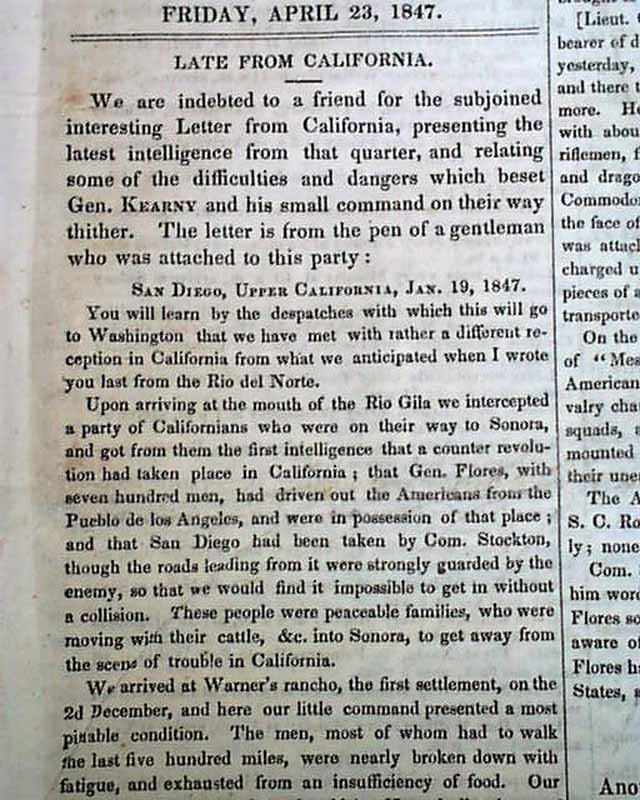
NATIONAL INTELLIGENCER, Washington, D.C., April 24, 1847 Much reporting on the Mexican War, plus the front page has: "Late From California" which is a
...
DAILY NATIONAL INTELLIGENCER, Washington, D. C., April 20, 1847
- Battle of Sacramento River
- Mexican War
Pages 2 and 3 have much reporting on the Mexican War
...
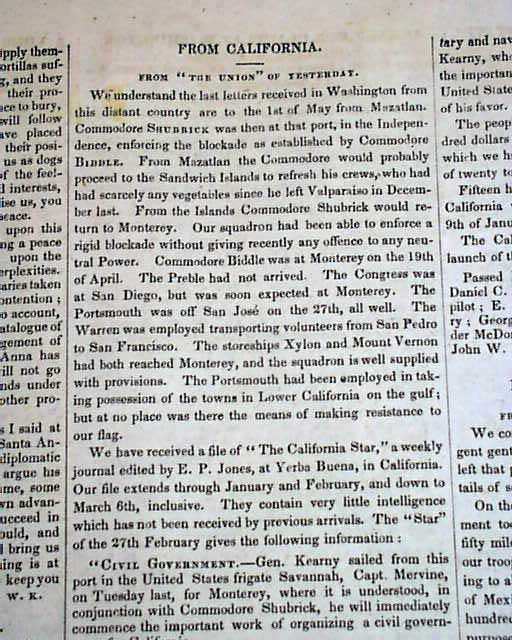
THE DAILY UNION, Washington, D.C., July 14, 1847 Page 3 has one-third of a column headed: "From California" with some events relating to the Mexican War
...
DAILY NATIONAL INTELLIGENCER, Washington, D.C., July 16, 1847 Page 3 has nearly two columns of reports from the Mexican War with a column headed:
...