Cornwallis surrenders at Yorktown...
THE GENTLEMAN'S MAGAZINE, London, December, 1781
- Charles Cornwallis, 1st Marquess Cornwallis
- Surrender at Yorktown VA Virginia
- Revolutionary War from the enemy
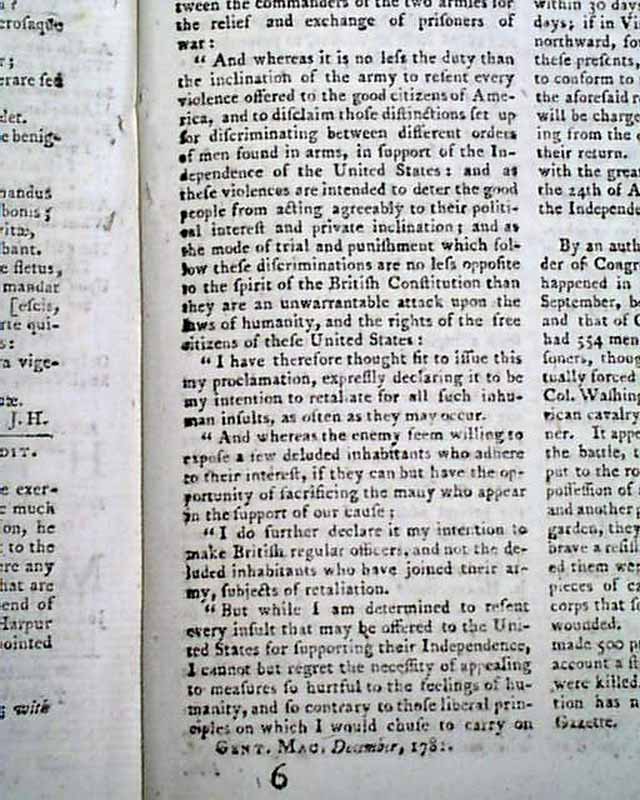
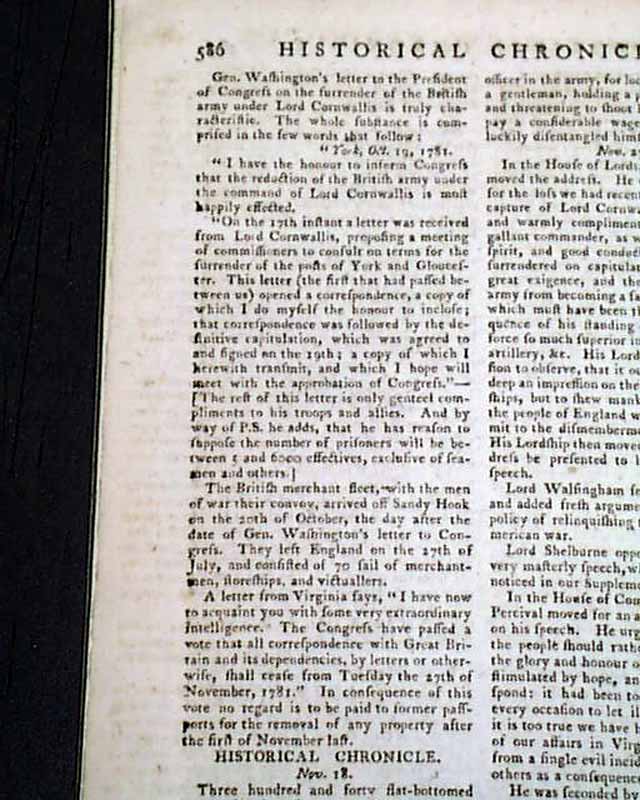
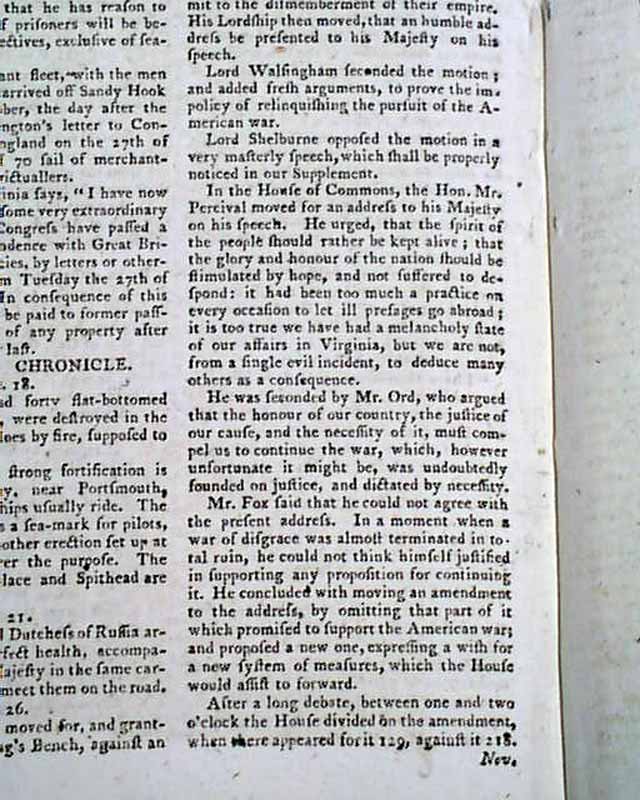
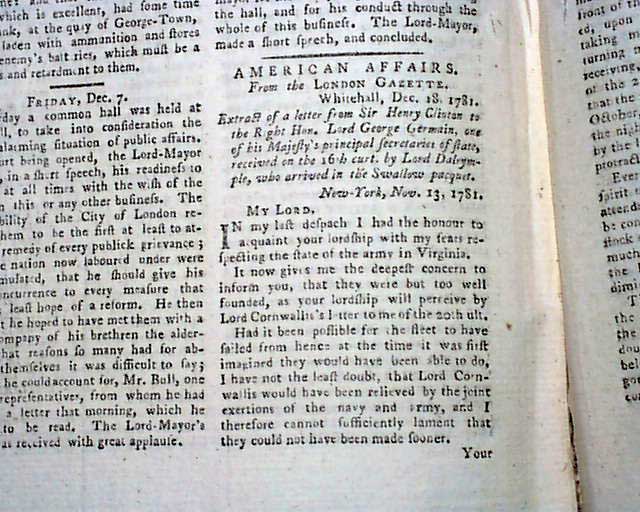
Certainly the most historic report in this issue--and perhaps in any issue from the Revolutionary War--is that near the back of the issue under the "Historical Chronicle". It begins with an editorial comment: "Gen. Washington's letter to the President of Congress on the surrender of the British army under Lord Cornwallis is truly characteristic. The whole substance is comprised in the few words that follow: " and what follows is the historic letter datelined "York, Oct. 19, 1781" which begins with the famous sentence: "I have the honour to inform Congress that the reduction of the British army under the command of Lord Cornwallis is most happily affected..." followed by further particulars on the event.
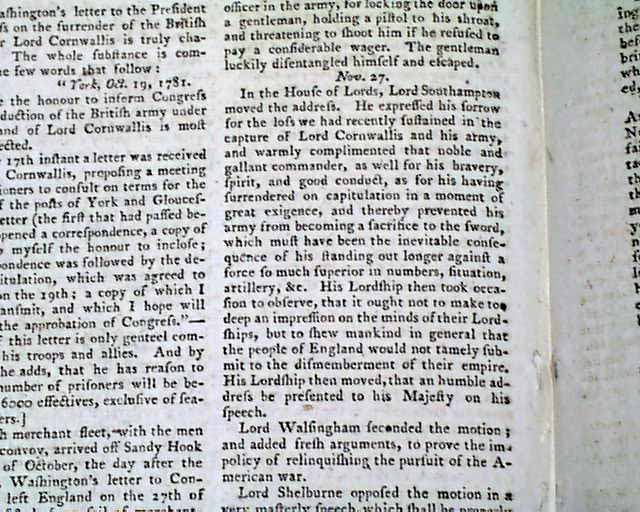
Shortly after this is a note from the House of Lords: "...expressed his sorrow for the loss we had recently sustained in the capture of Lord Cornwallis and his army & warmly complimented that noble & gallant commander as well for his bravery, spirit & good conduct as for his having surrendered on capitulation in a moment of great exigence & thereby prevented his army from becoming a sacrifice to the sword..." with a bit more.
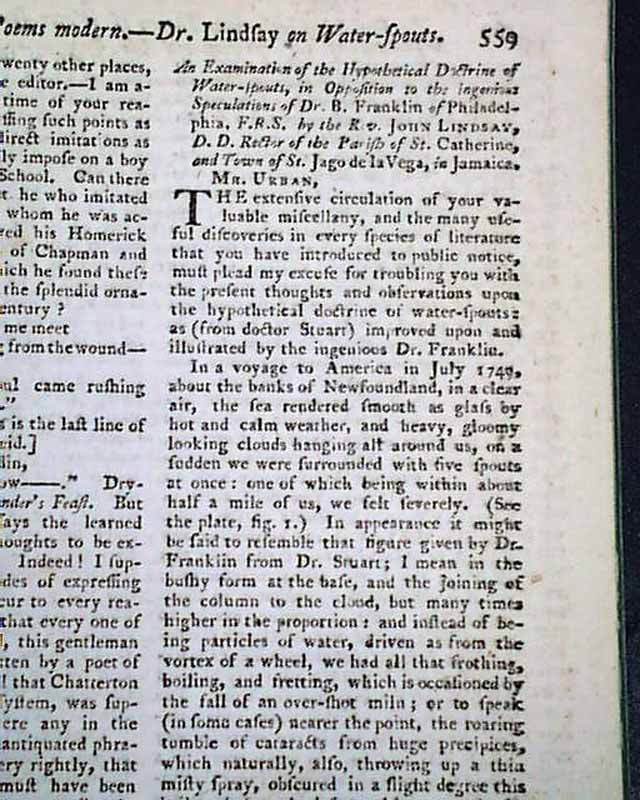
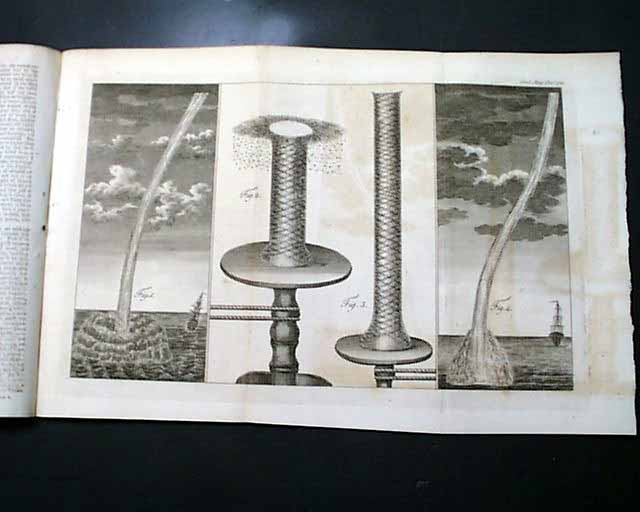
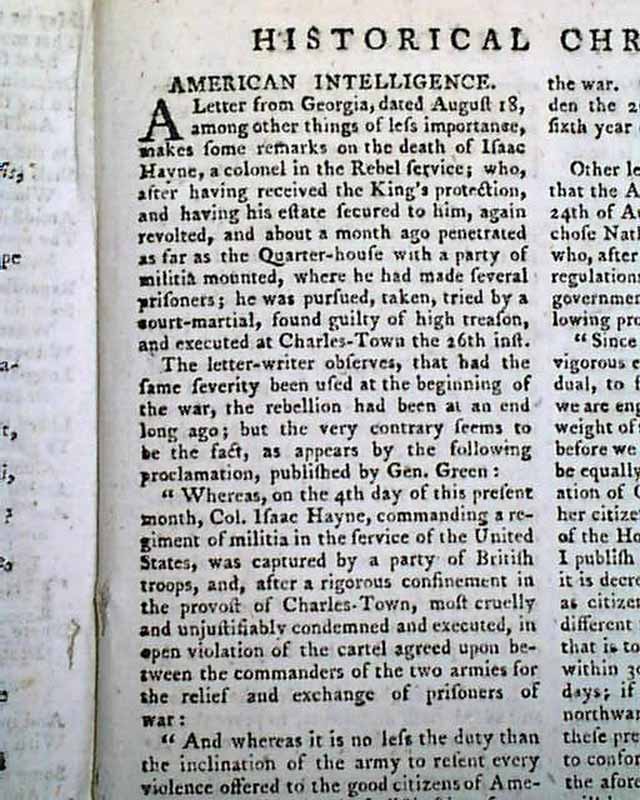
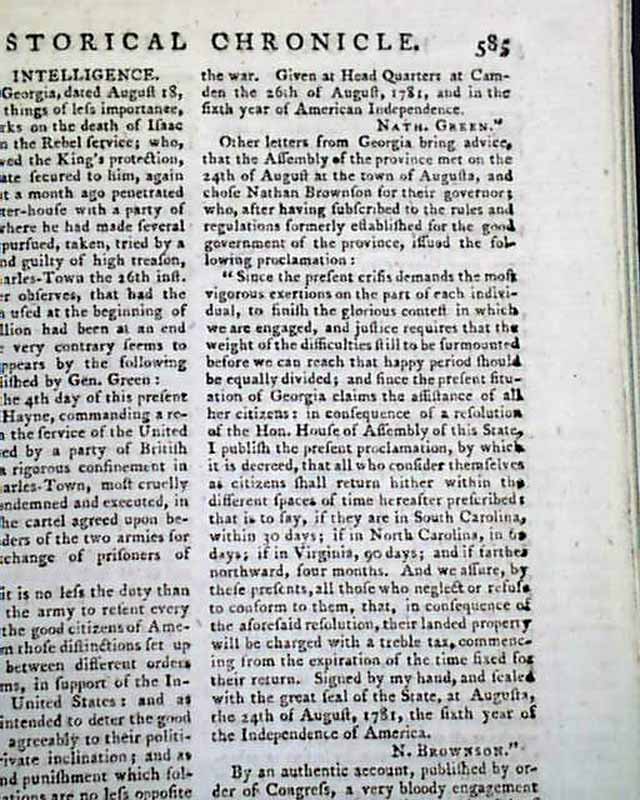
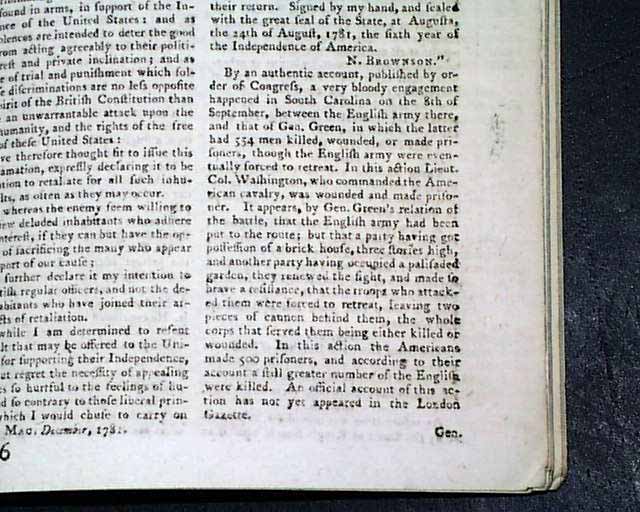
There is additional reporting on the Revolutionary War, particularly the events in Georgia & the Carolinas, including a letter signed by Nath. Greene, as well as an article on waterspouts with: "...the ingenious speculations of Dr. B. Franklin of Philadelphia..." on this topic.
Present is the foldout plate showing waterspouts, the only plate called for.
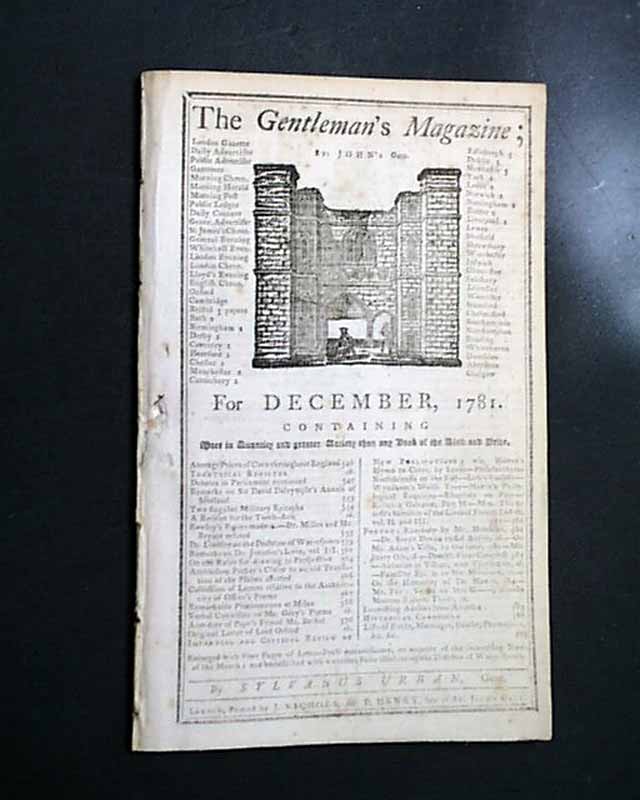
Complete in 52 pages, 5 by 8 1/4 inches, full title/contents page featuring an engraving of St. John's Gate, great condition.
Background: This specific December 1781 issue of The Gentleman's Magazine stands as a monumental historical artifact because it captures the psychological and political turning point of the American Revolutionary War from the perspective of the British press and Parliament. By publishing General George Washington’s direct, triumphant letter announcing the "reduction" (total capture) of Lord Cornwallis’s army at Yorktown on October 19, 1781, alongside the somber reactions from the House of Lords, the issue documents the exact moment the British establishment realized the American colonies were irrevocably lost. The inclusion of Major General Nathanael Greene's correspondence highlights the grueling Southern campaigns that exhausted British forces and forced them into the Yorktown trap, while the adjacent article featuring the meteorological theories of "Dr. B. Franklin" illustrates the striking paradox of the era—where British intellectual circles still deeply respected Franklin's scientific genius even as he orchestrated the dissolution of their empire. Accompanied by its rare, original foldout plate illustrating these scientific discussions, this 52-page chronicle uniquely juxtaposes the finality of military defeat with the ongoing transatlantic exchange of Enlightenment ideas, embodying the birth of a new nation and the shattering of an imperial superpower.
A very historic issue from the end of the Revolutionary War with a wide range of varied content. This was the first periodical to use the word "magazine" in its title, having begun in 1731 and lasting until 1907.
Other issues you may like
§ related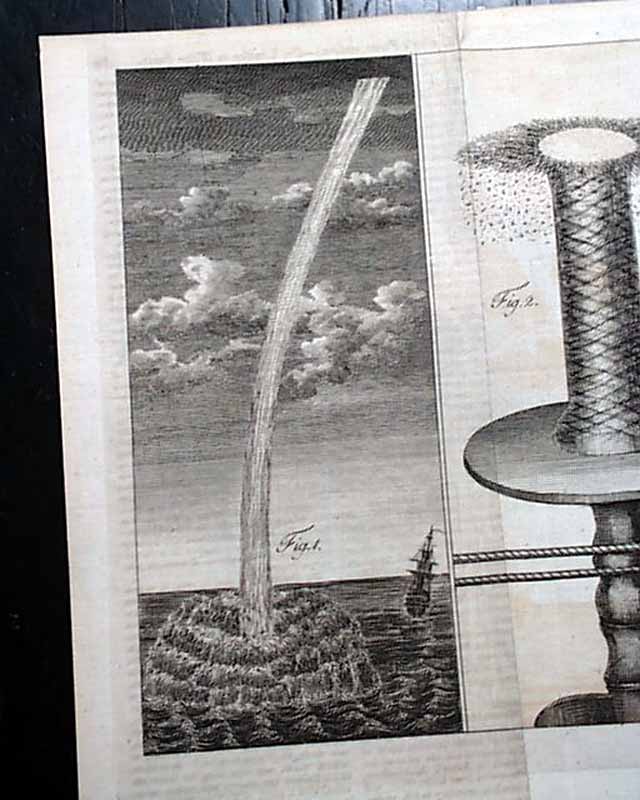
THE GENTLEMAN'S MAGAZINE, London, December, 1781
- Charles Cornwallis, 1st Marquess Cornwallis
- Surrender at Yorktown VA Virginia
- Revolutionary War from the
THE LONDON MAGAZINE, London, December and the Appendix issue for the year 1781
- Charles Cornwallis, 1st Marquess Cornwallis
- Surrender at Yorktown VA Virginia
- Re
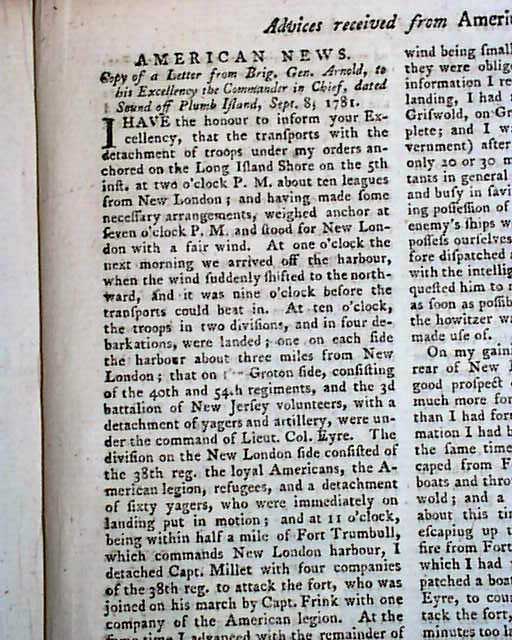
THE GENTLEMAN'S MAGAZINE, London, November, 1781 Near the back is a section headed: "American News" which has a "Copy of a Letter from Brig. Gen. Arnold to
...
THE LONDON CHRONICLE, England, Nov. 27, 1781
- Cornwallis surrenders at Yorktown
- Revolutionary War ending
- Historic item - 1st report
This is one of the more
...