

Ben Franklin on the proposed Constitution...
Item # 668666Sorry, but this item is no longer available. Please be in touch at info@rarenewspapers.com if you would like to be placed on a want list or are interested in a potential alternate issue.
GENTLEMAN'S MAGAZINE, London, February, 1789
* Benjamin Franklin & the American people
* Thoughts about the United States Constitution
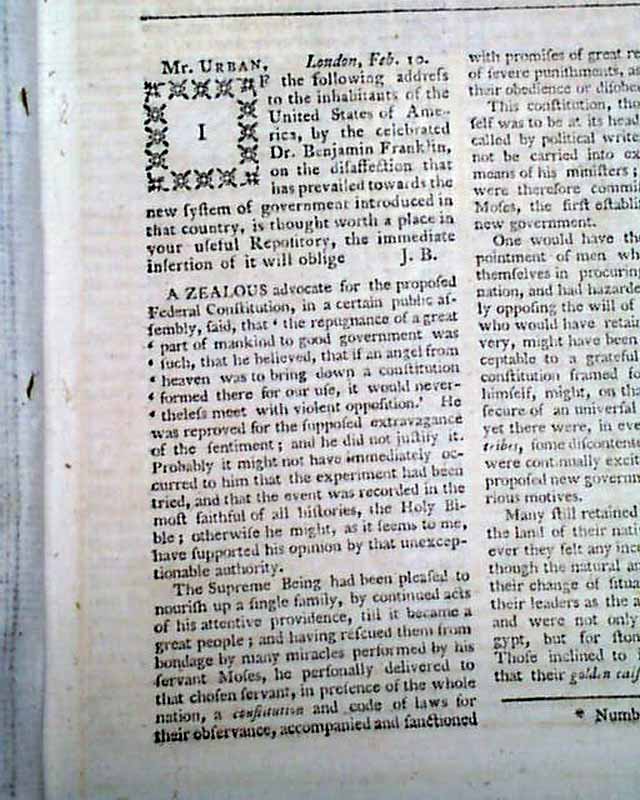
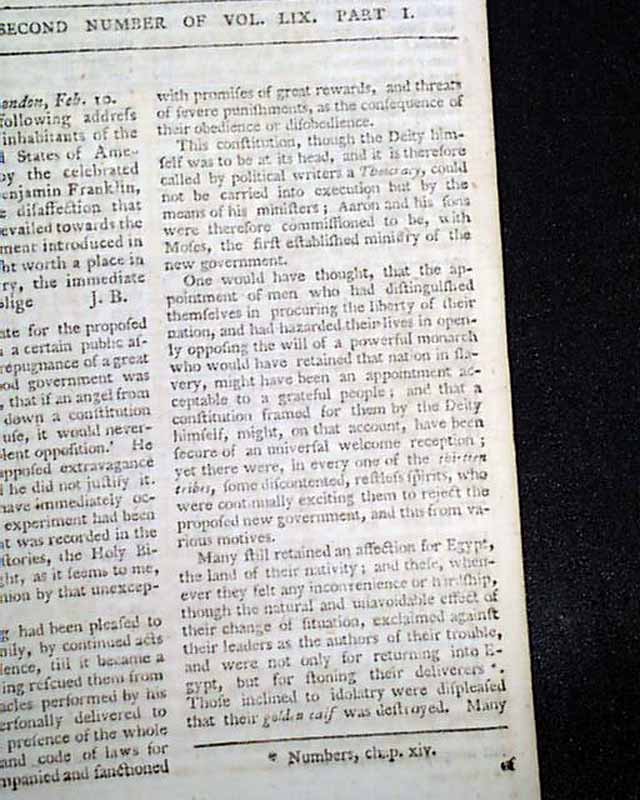
Pages 1, 2 and a bit of page 3 are taken up with a fascinating: "...address to the inhabitants of the United States of America, by the celebrated Dr. Benjamin Franklin, on the disaffection that has prevailed towards the new system of government introduced in that country...".
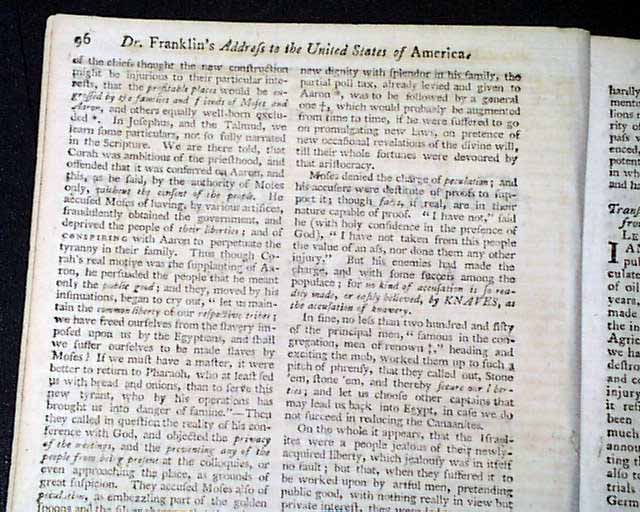
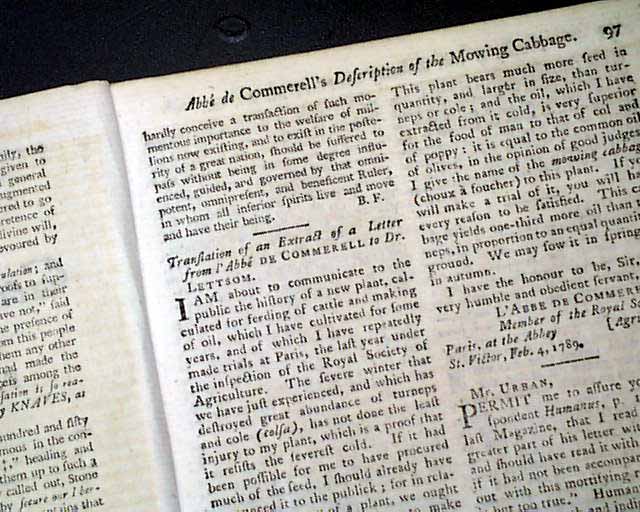
This is an interesting letter of defense of the new Constitution in the process of being ratified by the various states, and he does so by intertwining the events of the Jewish people from the book of Exodus during their enslavement in Egypt. Franklin concludes his letter with: "...I conclude, I beg I may not be understood to infer that our General Convention was divinely inspired when it formed the new federal constitution...I have so much faith in the general government of the world by Providence, that I can hardly conceive a transaction of such momentous importance to the welfare of million now existing...should be suffered to pass without being in some degree influenced, guided & governed by that omnipotent, omnipresent, and beneficent Ruler in whom all inferior spirits live and move and have their being." This letter is signed by him in type with his initials: "B.F."
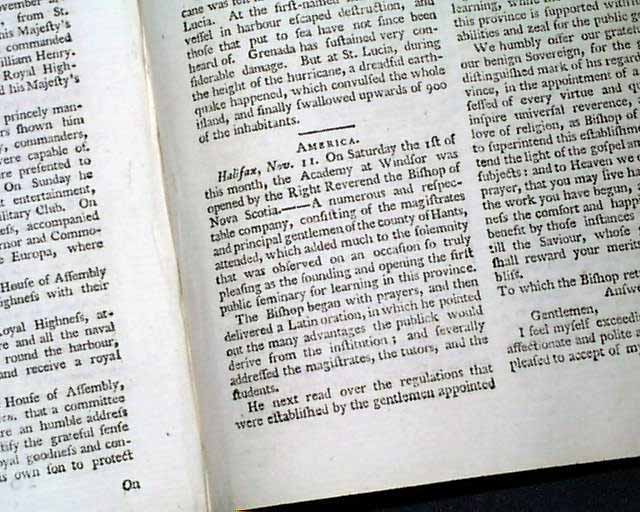
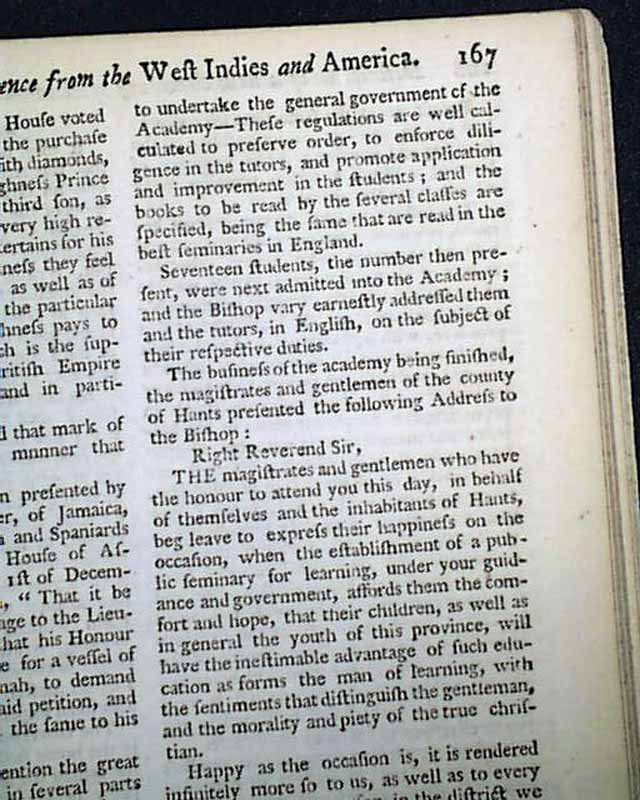
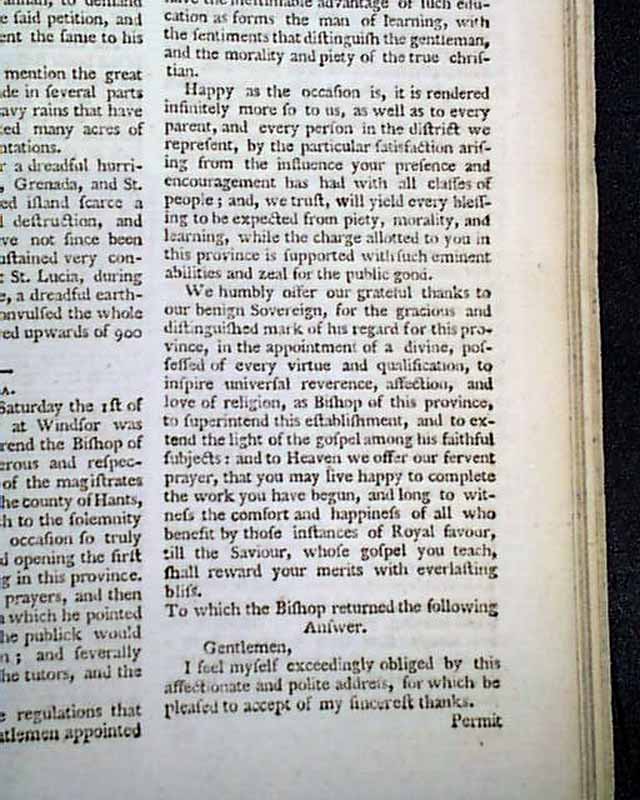
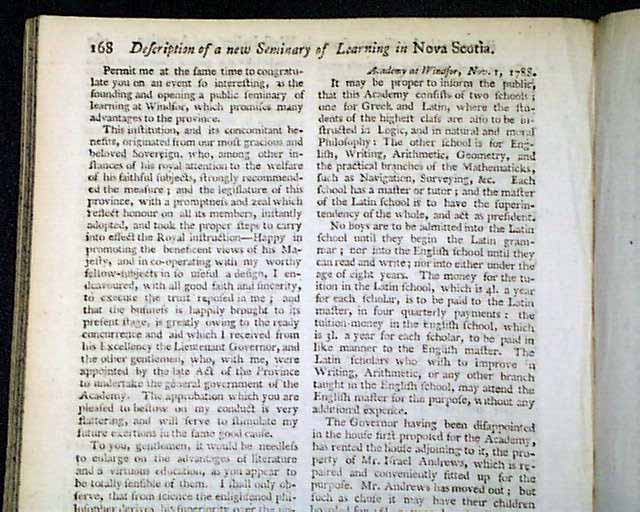
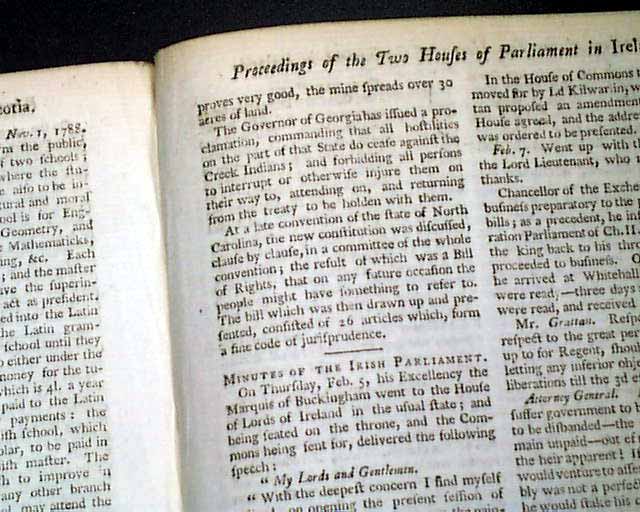
Near the back is "Remarkable Intelligence from the West Indies and America" which includes a report from Halifax, Nova Scotia, concerning the oping of the new academy: "Description of a New Seminary of learning in Nova Scotia" with much detail. Also a report that Georgia has proclaimed the end of hostilities against the Creek Indians, and that the convention of North Carolina gave much discussion to the proposed Constitution.
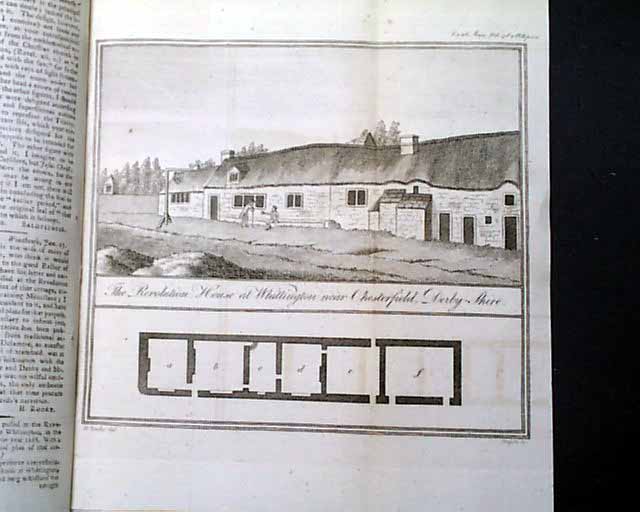
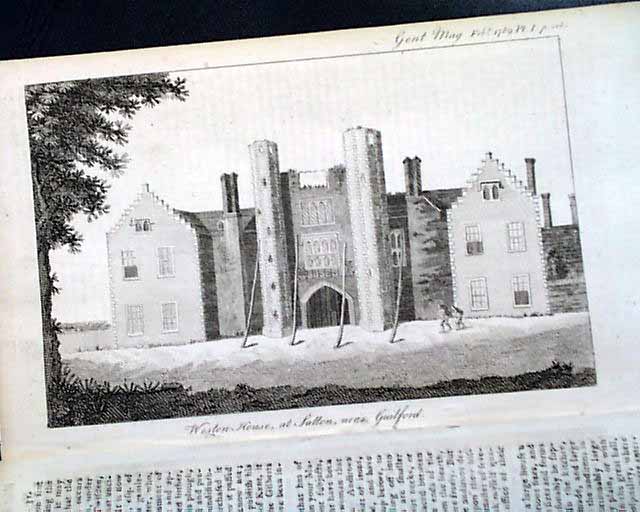
Included are both plates called for, one a foldout.
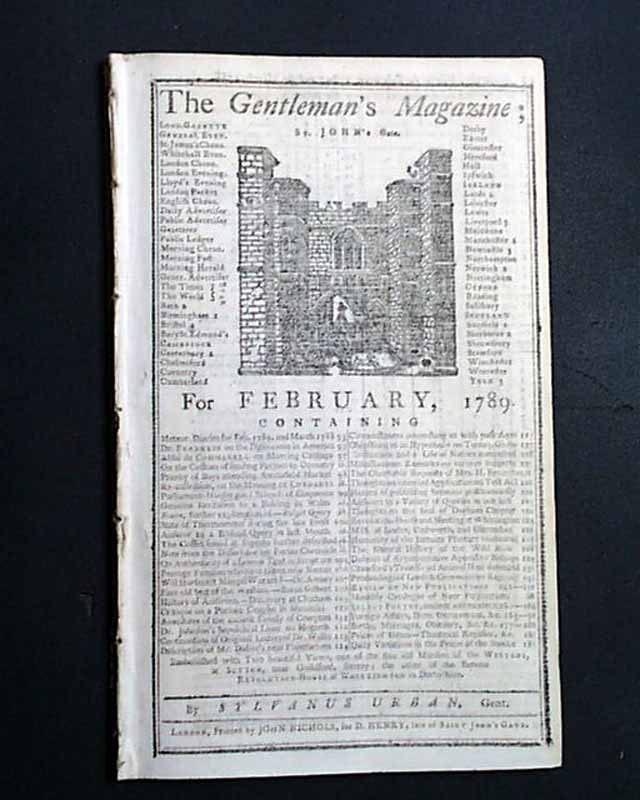
Complete in 96 pages, 5 by 8 1/4 inches, full title/contents page featuring an engraving of St. John's Gate, great condition.
Background: The February 1789 issue of The Gentleman’s Magazine (London) is notable for publishing a transatlantic political commentary attributed to Benjamin Franklin addressing American unease over the newly adopted U.S. Constitution, at a moment when the federal government was just coming into operation. Written in Franklin’s characteristically measured and pragmatic tone, the piece speaks to what he termed the “disaffection” or lingering suspicion among portions of the American public toward the new system of government, arguing that imperfections were inevitable but preferable to the instability of the Articles of Confederation. The article reflects Franklin’s long-held belief that compromise and gradual adjustment were essential to republican success, echoing sentiments he expressed at the close of the Constitutional Convention in 1787. Its appearance in a leading British periodical underscores the intense interest in Britain regarding the American experiment in self-government and presents Franklin as a transatlantic moral authority explaining and defending the Constitution not only to Americans, but to a European audience watching closely to see whether the republic would endure.
A very nice magazine from the "mother country" not long after the end of the Revolutionary War. This was the first periodical to use the word "magazine" in its title, having begun in 1731 and lasting until 1907.
* Benjamin Franklin & the American people
* Thoughts about the United States Constitution
Pages 1, 2 and a bit of page 3 are taken up with a fascinating: "...address to the inhabitants of the United States of America, by the celebrated Dr. Benjamin Franklin, on the disaffection that has prevailed towards the new system of government introduced in that country...".
This is an interesting letter of defense of the new Constitution in the process of being ratified by the various states, and he does so by intertwining the events of the Jewish people from the book of Exodus during their enslavement in Egypt. Franklin concludes his letter with: "...I conclude, I beg I may not be understood to infer that our General Convention was divinely inspired when it formed the new federal constitution...I have so much faith in the general government of the world by Providence, that I can hardly conceive a transaction of such momentous importance to the welfare of million now existing...should be suffered to pass without being in some degree influenced, guided & governed by that omnipotent, omnipresent, and beneficent Ruler in whom all inferior spirits live and move and have their being." This letter is signed by him in type with his initials: "B.F."
Near the back is "Remarkable Intelligence from the West Indies and America" which includes a report from Halifax, Nova Scotia, concerning the oping of the new academy: "Description of a New Seminary of learning in Nova Scotia" with much detail. Also a report that Georgia has proclaimed the end of hostilities against the Creek Indians, and that the convention of North Carolina gave much discussion to the proposed Constitution.
Included are both plates called for, one a foldout.
Complete in 96 pages, 5 by 8 1/4 inches, full title/contents page featuring an engraving of St. John's Gate, great condition.
Background: The February 1789 issue of The Gentleman’s Magazine (London) is notable for publishing a transatlantic political commentary attributed to Benjamin Franklin addressing American unease over the newly adopted U.S. Constitution, at a moment when the federal government was just coming into operation. Written in Franklin’s characteristically measured and pragmatic tone, the piece speaks to what he termed the “disaffection” or lingering suspicion among portions of the American public toward the new system of government, arguing that imperfections were inevitable but preferable to the instability of the Articles of Confederation. The article reflects Franklin’s long-held belief that compromise and gradual adjustment were essential to republican success, echoing sentiments he expressed at the close of the Constitutional Convention in 1787. Its appearance in a leading British periodical underscores the intense interest in Britain regarding the American experiment in self-government and presents Franklin as a transatlantic moral authority explaining and defending the Constitution not only to Americans, but to a European audience watching closely to see whether the republic would endure.
A very nice magazine from the "mother country" not long after the end of the Revolutionary War. This was the first periodical to use the word "magazine" in its title, having begun in 1731 and lasting until 1907.
Category: The 1600's and 1700's


