

Congratulating Thomas Jefferson...
Item # 667661Sorry, but this item is no longer available. Please be in touch at info@rarenewspapers.com if you would like to be placed on a want list or are interested in a potential alternate issue.
June 29, 1801
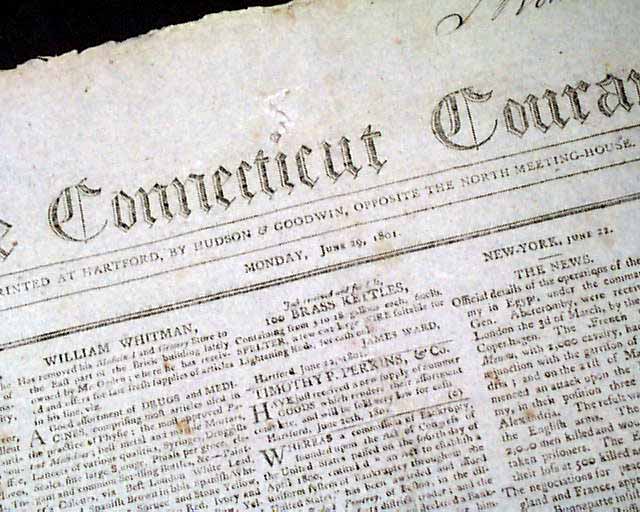
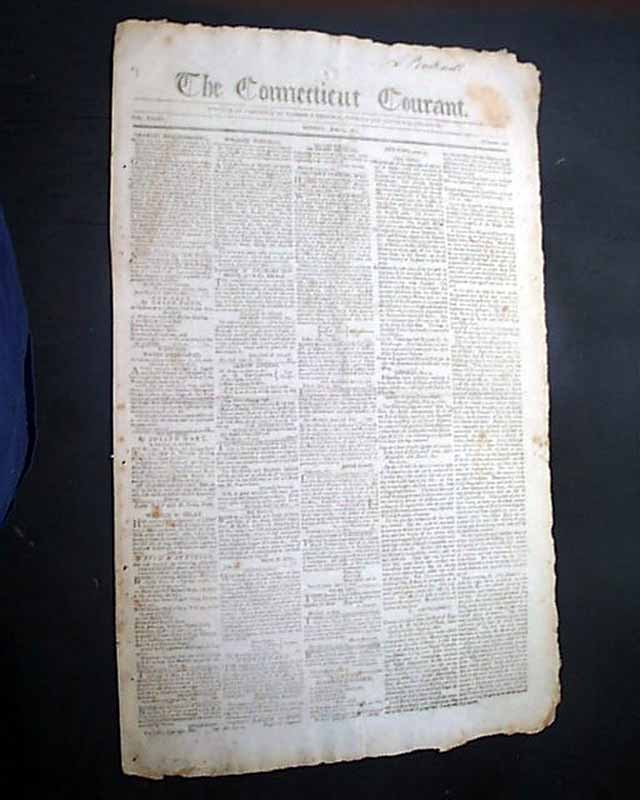
THE CONNECTICUT COURANT, Hartford, June 29, 1801
* President Thomas Jefferson
* Re. presidential Inauguration
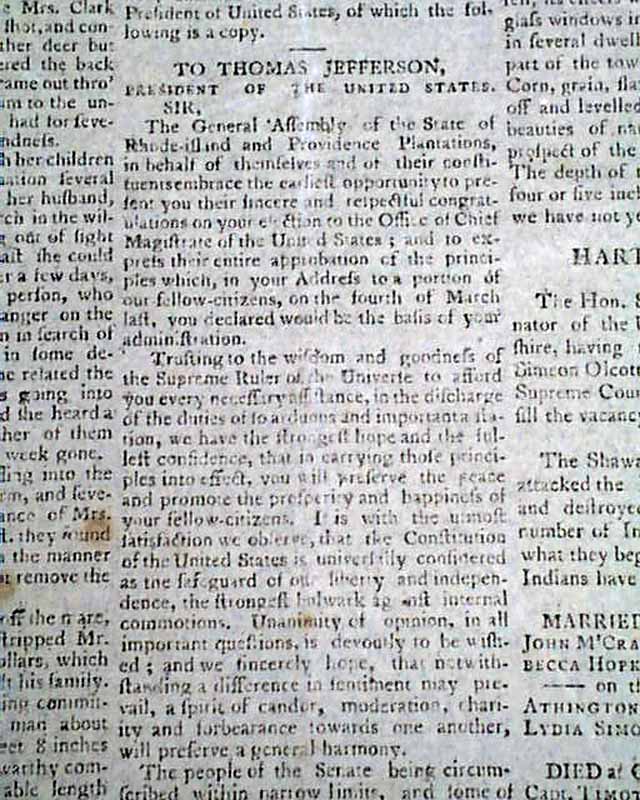
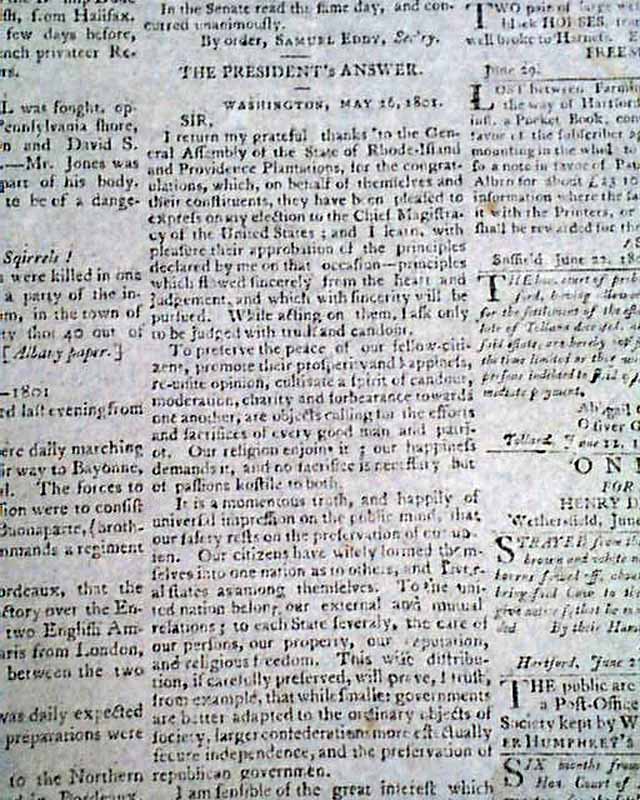
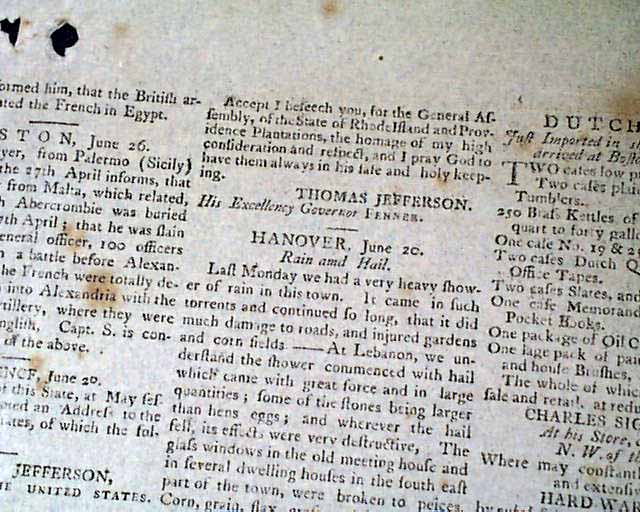
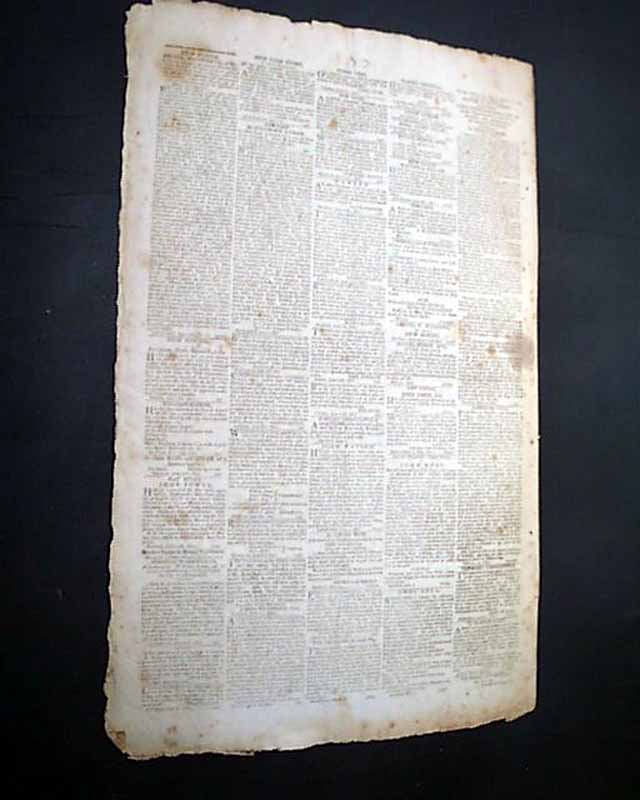
Page 3 has an address: "To Thomas Jefferson, President..." from the Assembly of Rhode Island, congratulating him on being inaugurated President. This is followed by: "The President's Answer" signed in type: Thomas Jefferson.
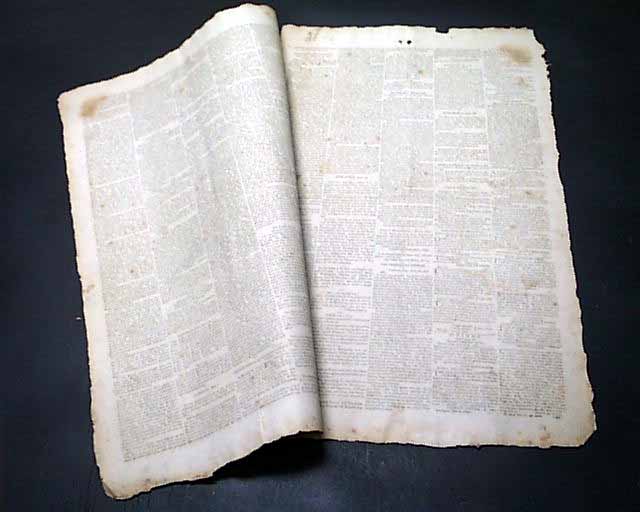
Four pages, never bound nor trimmed, nice condition.
Background: The publication of Jefferson's "Answer" to the Rhode Island Assembly in June 1801 represents a critical period of reconciliation following the bitter "Revolution of 1800," an election so polarizing it nearly sparked a constitutional crisis. As the first President to take power from an opposing party, Jefferson used these formal exchanges—circulated through influential Federalist organs like The Connecticut Courant—to articulate his vision of a minimalist federal government and to de-escalate partisan tensions. By defining the federal role as strictly managing "external and mutual relations" while leaving the protection of "persons, property, and religious freedom" to the states, Jefferson was not merely responding to a congratulatory note; he was laying the groundwork for the Democratic-Republican political dominance that would last for the next two decades. Furthermore, his specific reassurance to Rhode Island that commerce was the "handmaid of agriculture" was a strategic olive branch to the New England merchant class, who feared his agrarian platform would dismantle the young nation’s maritime economy. This document serves as a primary record of the fragile, yet successful, transition to a two-party system in the American experiment.
* President Thomas Jefferson
* Re. presidential Inauguration
Page 3 has an address: "To Thomas Jefferson, President..." from the Assembly of Rhode Island, congratulating him on being inaugurated President. This is followed by: "The President's Answer" signed in type: Thomas Jefferson.
Four pages, never bound nor trimmed, nice condition.
Background: The publication of Jefferson's "Answer" to the Rhode Island Assembly in June 1801 represents a critical period of reconciliation following the bitter "Revolution of 1800," an election so polarizing it nearly sparked a constitutional crisis. As the first President to take power from an opposing party, Jefferson used these formal exchanges—circulated through influential Federalist organs like The Connecticut Courant—to articulate his vision of a minimalist federal government and to de-escalate partisan tensions. By defining the federal role as strictly managing "external and mutual relations" while leaving the protection of "persons, property, and religious freedom" to the states, Jefferson was not merely responding to a congratulatory note; he was laying the groundwork for the Democratic-Republican political dominance that would last for the next two decades. Furthermore, his specific reassurance to Rhode Island that commerce was the "handmaid of agriculture" was a strategic olive branch to the New England merchant class, who feared his agrarian platform would dismantle the young nation’s maritime economy. This document serves as a primary record of the fragile, yet successful, transition to a two-party system in the American experiment.
Category: Pre-Civil War


