

Famous frontier scouts appearing on stage...
Item # 631941
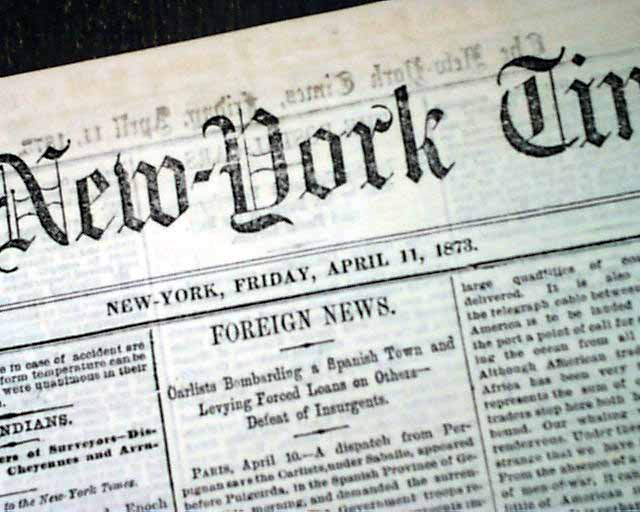
April 11, 1873
NEW YORK TIMES, April 11, 1873
* Buffalo Bill - William F. Cody
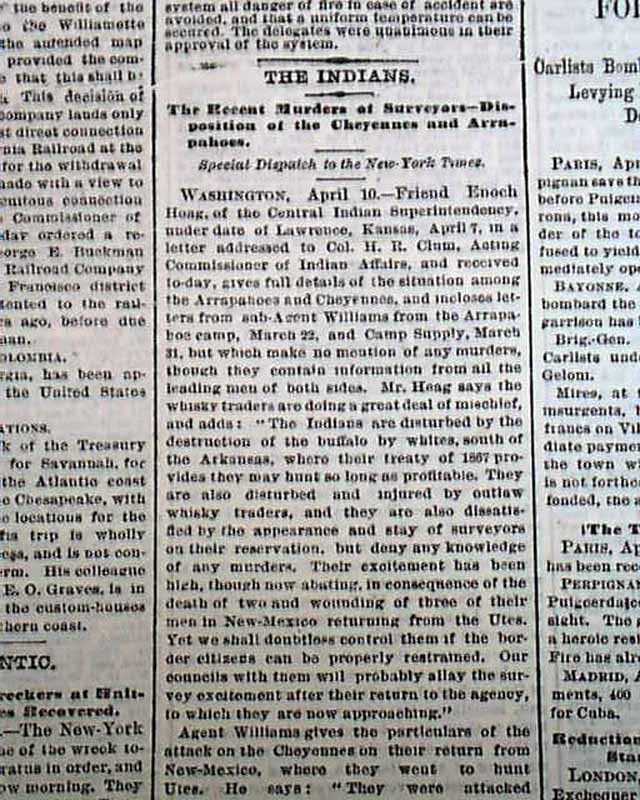
The front page has several reports under: "The Indians" including "the Recent Murders of Surveyors--Disposition of the Cheyennes & Arrapahoes" "Preparing to Fight in the Lava Beds" "Indian War-Makers busy--Alarming Stores from the Frontier" "The Murdered Surveyors--Recovery of the Bodies" "Apache Raids in Mexico".
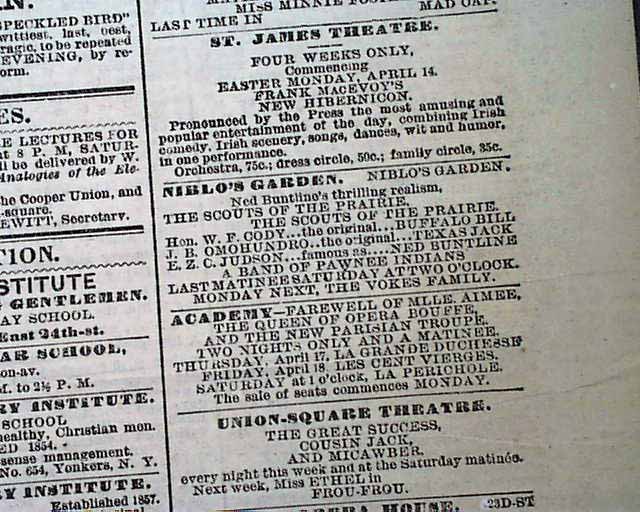
Page 7 has an interesting advertisement for "Niblo's Garden" at which are appearing: "Hon. W. F. Cody...the original Buffalo Bill" and "J. B. Omohundro...the original...Texas Jack" as well as Ned Buntline & others (see).
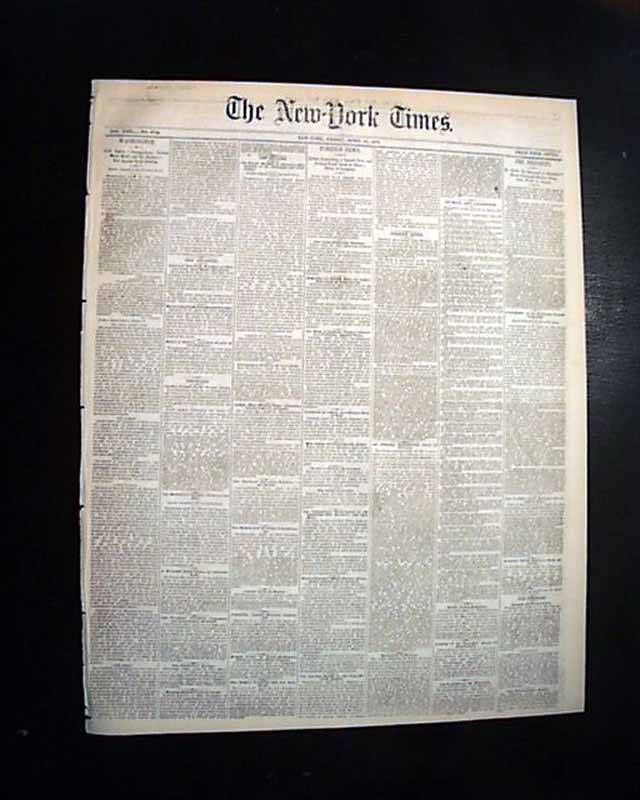
Eight pages, great condition, slightly irregular at the spine.
Background: The April 11, 1873, issue of the New York Times serves as a poignant historical microcosm, capturing the simultaneous violent decline of the American frontier and its immediate transformation into a commercial myth. The front-page reports on the Modoc War’s "Lava Beds" and the "Murdered Surveyors" illustrate the brutal reality of Westward Expansion, where the federal government and railroad interests forcibly displaced Indigenous populations, leading to the final, desperate armed resistances of the Indian Wars. Yet, the advertisement on page 7 for Ned Buntline’s The Scouts of the Plains at Niblo’s Garden reveals that this trauma was already being packaged as "Show Business" for urban Easterners. By featuring genuine frontier figures like Buffalo Bill Cody and Texas Jack Omohundro—who were essentially playing themselves while the conflicts they represented were still active—this date marks the birth of the "Wild West" archetype. It highlights a unique American paradox: the nation was consuming a romanticized, theatrical version of frontier heroics at the exact moment the real-world actors and victims of that history were still bleeding on the battlefield.
* Buffalo Bill - William F. Cody
The front page has several reports under: "The Indians" including "the Recent Murders of Surveyors--Disposition of the Cheyennes & Arrapahoes" "Preparing to Fight in the Lava Beds" "Indian War-Makers busy--Alarming Stores from the Frontier" "The Murdered Surveyors--Recovery of the Bodies" "Apache Raids in Mexico".
Page 7 has an interesting advertisement for "Niblo's Garden" at which are appearing: "Hon. W. F. Cody...the original Buffalo Bill" and "J. B. Omohundro...the original...Texas Jack" as well as Ned Buntline & others (see).
Eight pages, great condition, slightly irregular at the spine.
Background: The April 11, 1873, issue of the New York Times serves as a poignant historical microcosm, capturing the simultaneous violent decline of the American frontier and its immediate transformation into a commercial myth. The front-page reports on the Modoc War’s "Lava Beds" and the "Murdered Surveyors" illustrate the brutal reality of Westward Expansion, where the federal government and railroad interests forcibly displaced Indigenous populations, leading to the final, desperate armed resistances of the Indian Wars. Yet, the advertisement on page 7 for Ned Buntline’s The Scouts of the Plains at Niblo’s Garden reveals that this trauma was already being packaged as "Show Business" for urban Easterners. By featuring genuine frontier figures like Buffalo Bill Cody and Texas Jack Omohundro—who were essentially playing themselves while the conflicts they represented were still active—this date marks the birth of the "Wild West" archetype. It highlights a unique American paradox: the nation was consuming a romanticized, theatrical version of frontier heroics at the exact moment the real-world actors and victims of that history were still bleeding on the battlefield.
Category: Post-Civil War


