1921 Rialto Theatre fire in New Haven....
THE NEW YORK TIMES, November 28, 1921
- Rialto Theater fire disaster
- New Haven CT Connecticut
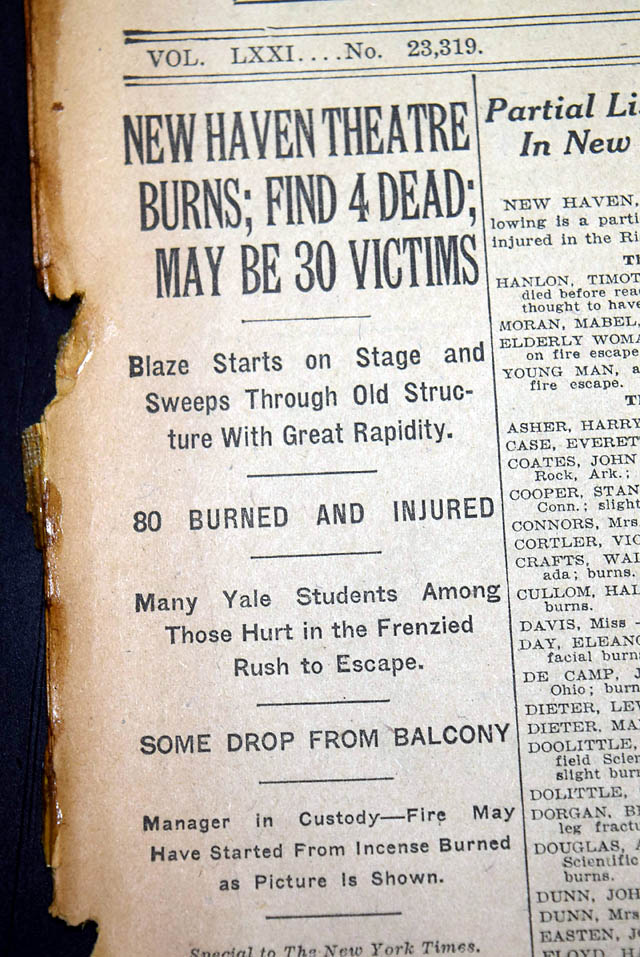
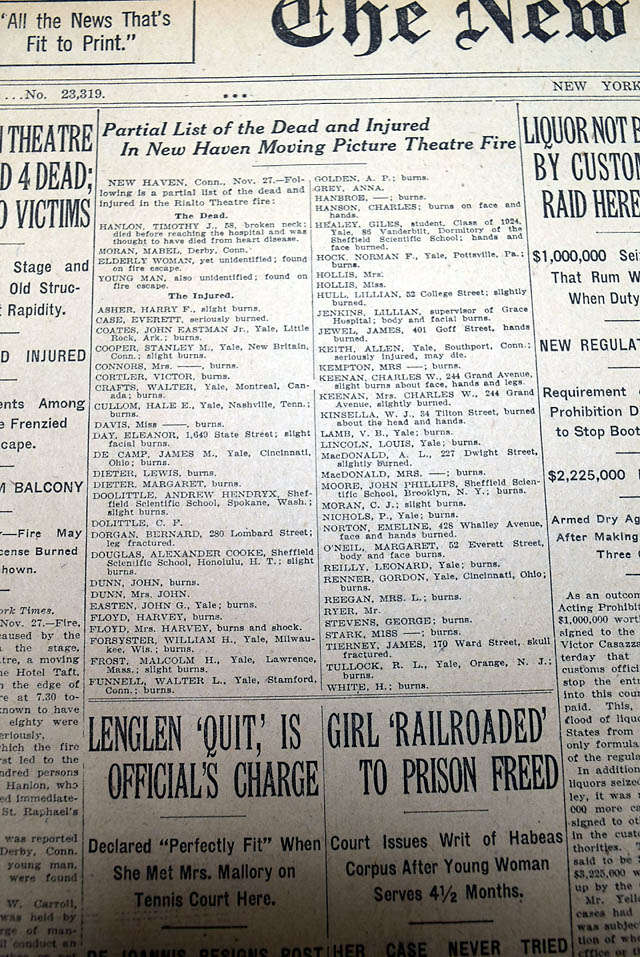
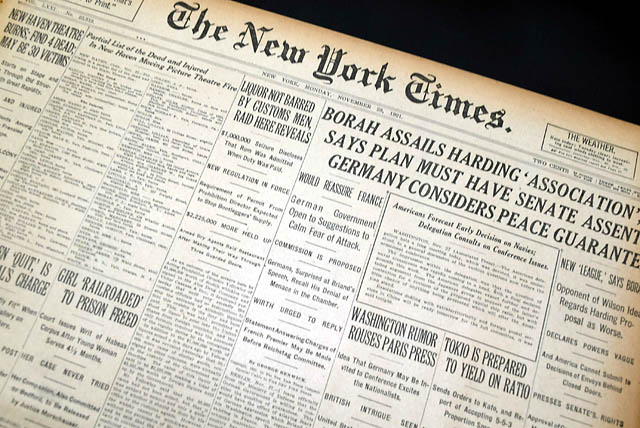
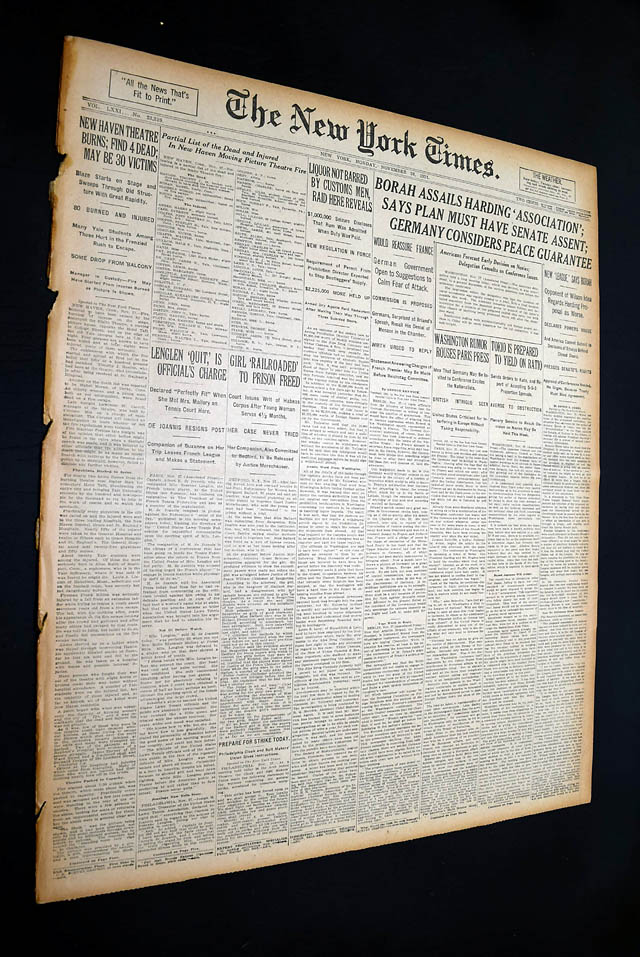
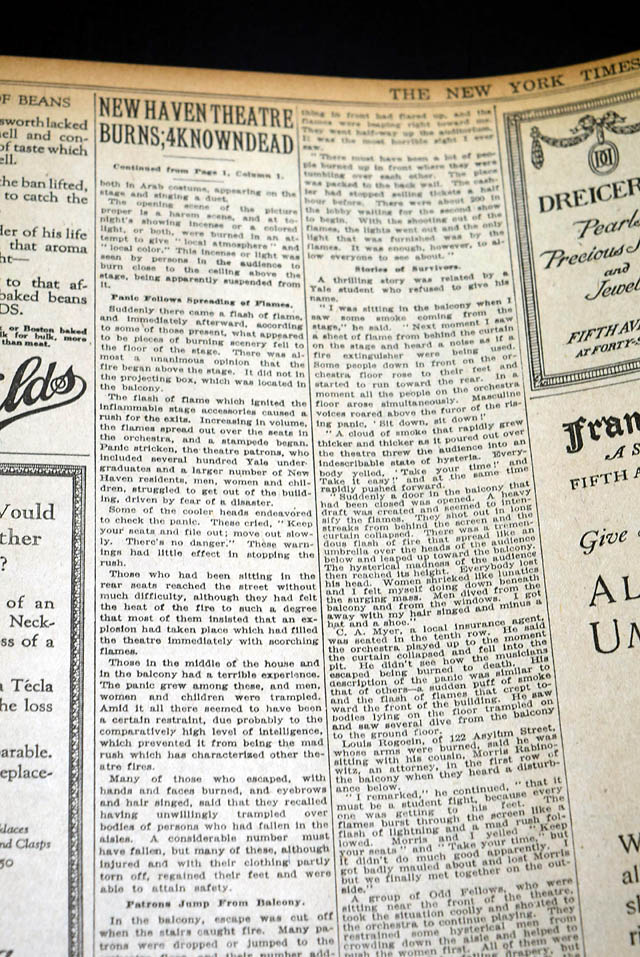
The top of the front page has one column headings that include: "NEW HAVEN THEATRE BURNS; FIND 4 DEAD; MAY BE 30 VICTIMS" "Blaze Starts on Stage and Sweeps Through Old Structure With Great Rapidity" "80 Burned And Injured" and more (see images)
Complete with 28 pages, light toning at the margins, irregular along the spine, generally in good condition..
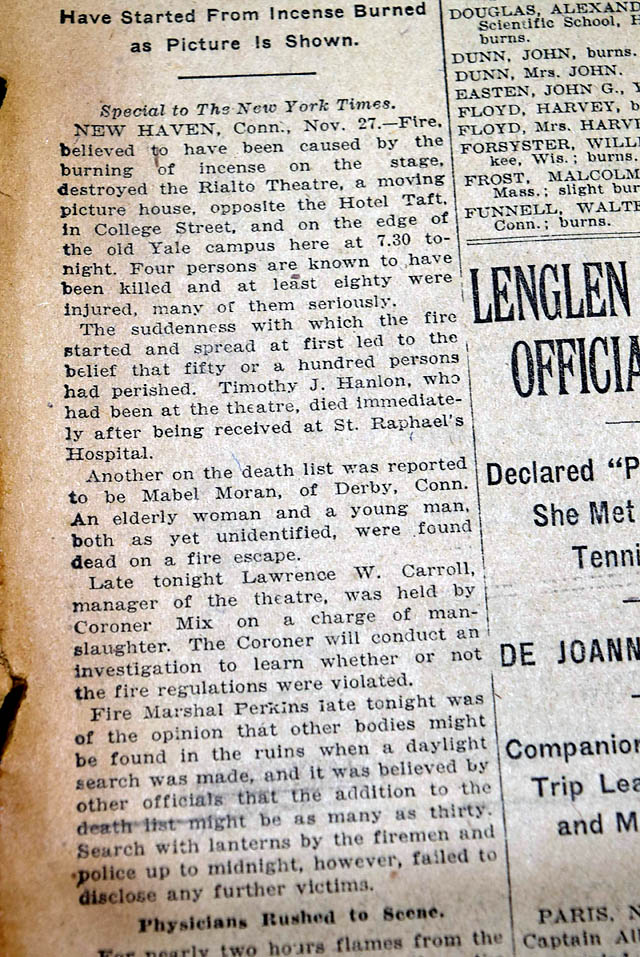
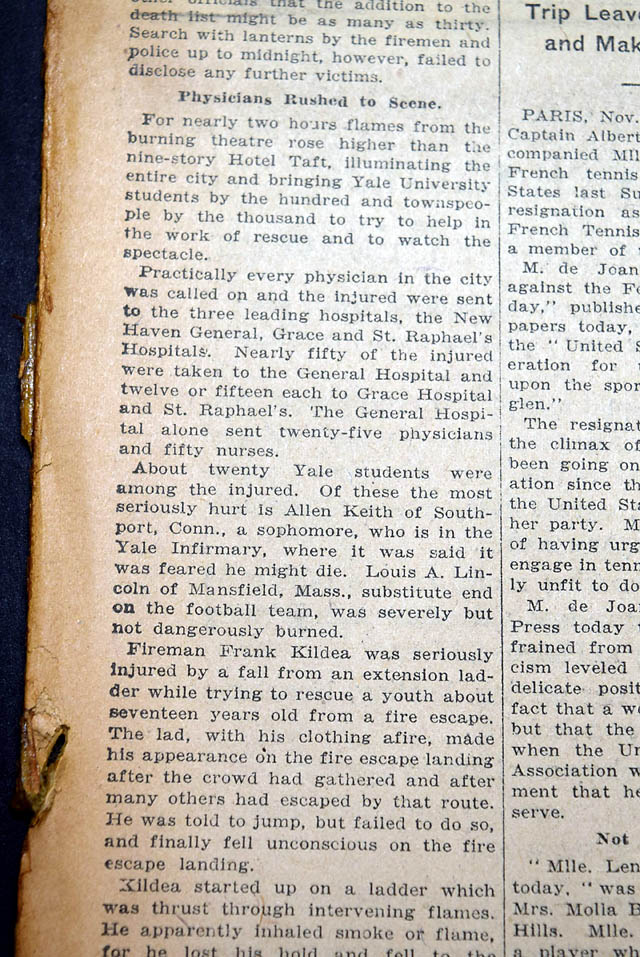
Background: On November 27, 1921, a devastating fire swept through the Rialto Theatre in downtown New Haven, Connecticut, during a crowded evening screening of Rudolph Valentino’s silent film The Sheik, killing nine people and injuring between 80 and 125 others. The blaze began around 7:30 p.m. when burning incense used during a live stage prologue ignited flammable cheesecloth draperies and the movie screen, rapidly engulfing the auditorium—which lacked a fireproof asbestos curtain—after a draft from an open balcony door sent flames flashing across the ceiling and collapsed the roof. Because management had illegally sold 1,072 tickets for an 800-seat converted church, blocked aisles and jammed exits turned the evacuation into a deadly stampede alongside severe burns and smoke inhalation. The tragedy held major significance for public safety and theater regulation: New Haven Coroner Eli Mix’s exhaustive 18,000-word inquest condemned theater management and lax police oversight for overcrowding and fire-code violations, prompting criminal arrests, an immediate Connecticut State Police inspection crackdown that shut down or cited unsafe movie houses across the state, and stricter enforcement of building, capacity, and fireproofing laws before the site was eventually rebuilt as the Roger Sherman Theatre in 1926.
Other issues you may like
§ related
THE NEW YORK TIMES, June 6, 1929
- Fay's Bowery Theatre fire disaster
- Lower East Side of Manhattan
The top of page 3 has a one column heading: "DRAMA OF FIRE
...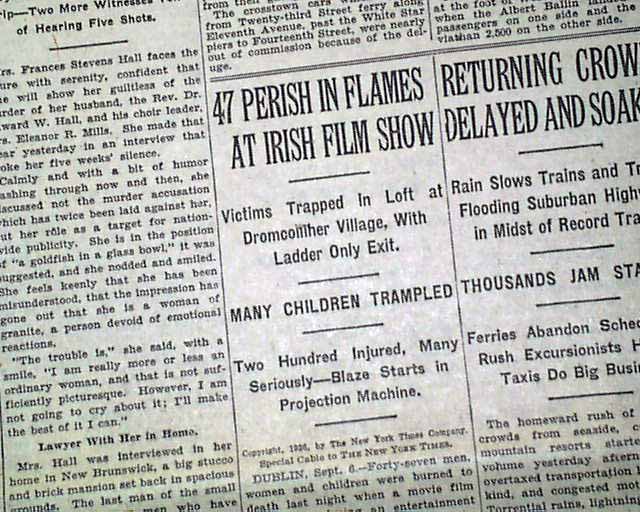
THE NEW YORK TIMES, September 7, 1926
- Dromcollogher, Limerick County, Ireland fire
The front page has a one column heading: "47 PERISH IN FLAMES AT IRISH
...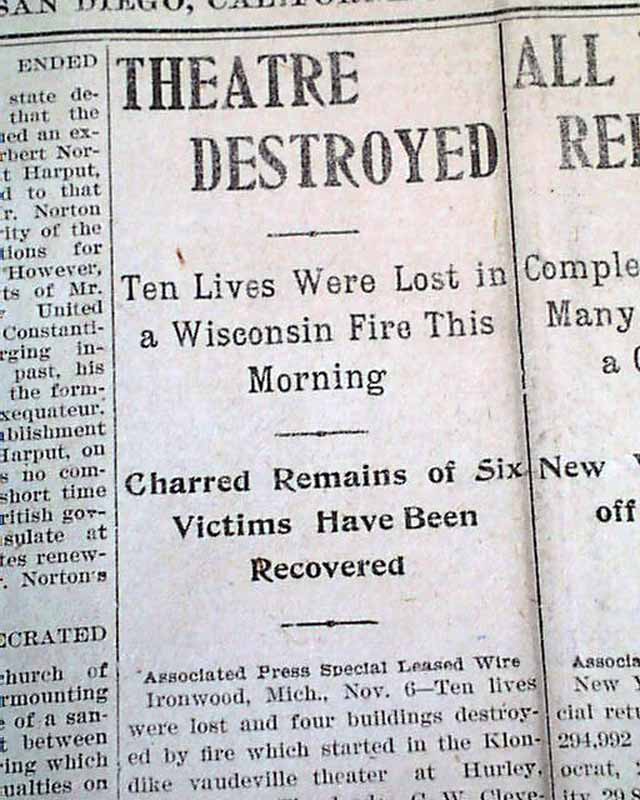
THE EVENING TRIBUNE, San Diego, Nov. 6, 1901
- Hurley, Iron County, Wisconsin
- Klondike Theater fire disaster
The top of the front page has a one column
...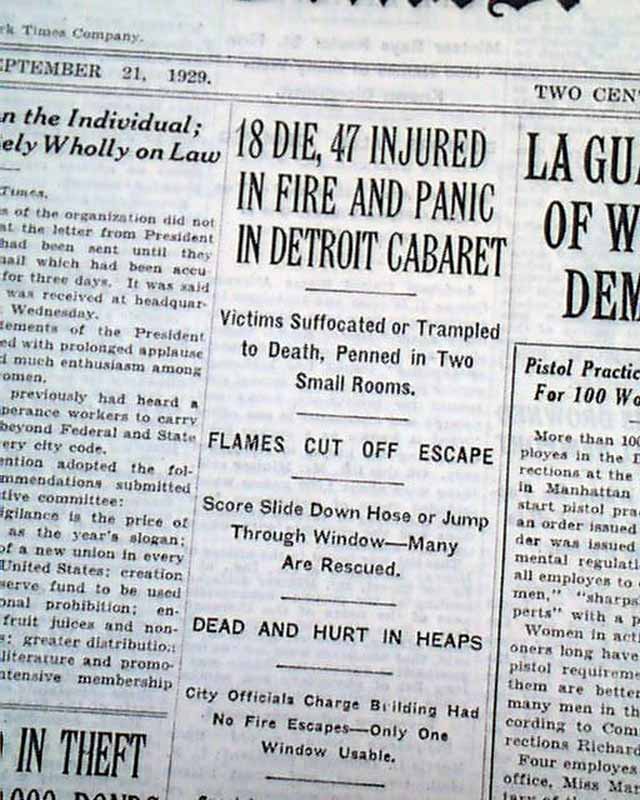
THE NEW YORK TIMES, September 21, 1929
- The Study club fire
- Detroit, Michigan disaster
- Illegal prohibition era nightclub
The top of the front page has a one
...