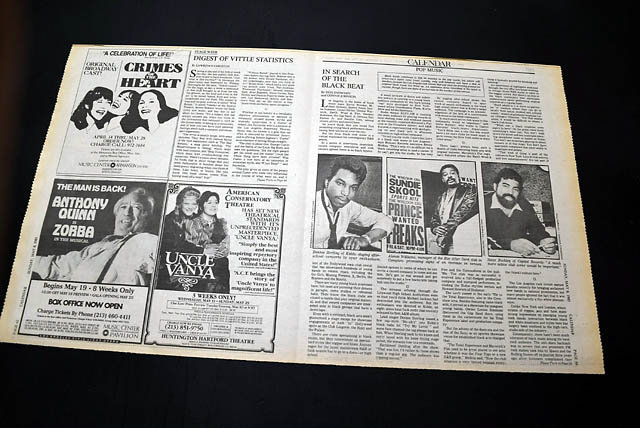
1983 "Little Shop of Horrors" advertisement...
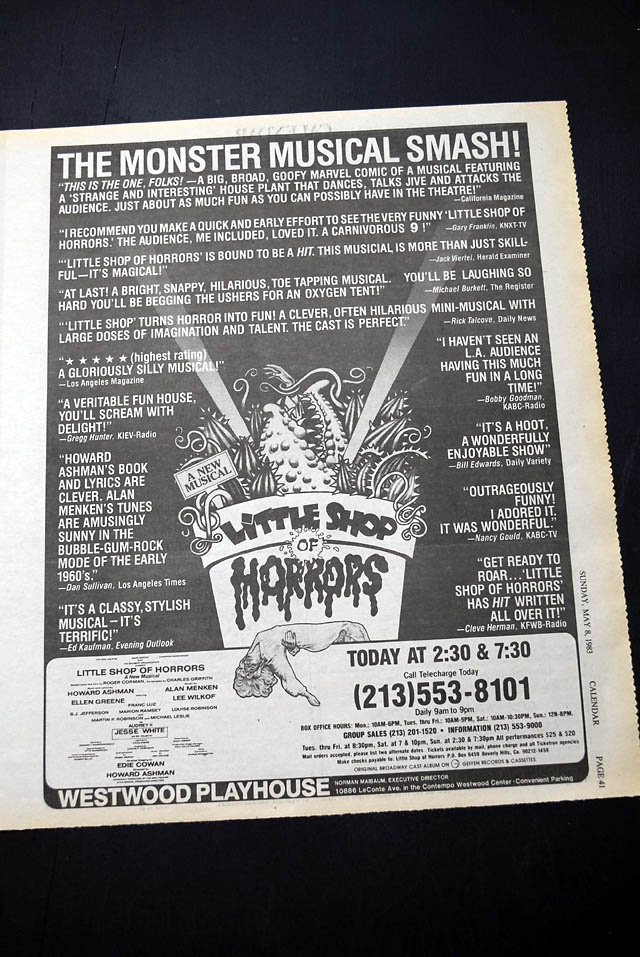
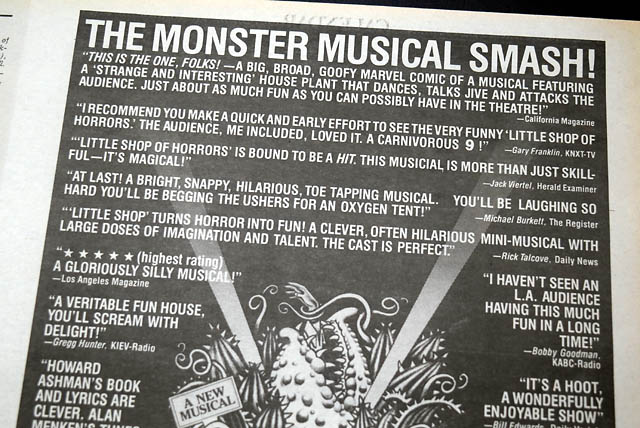
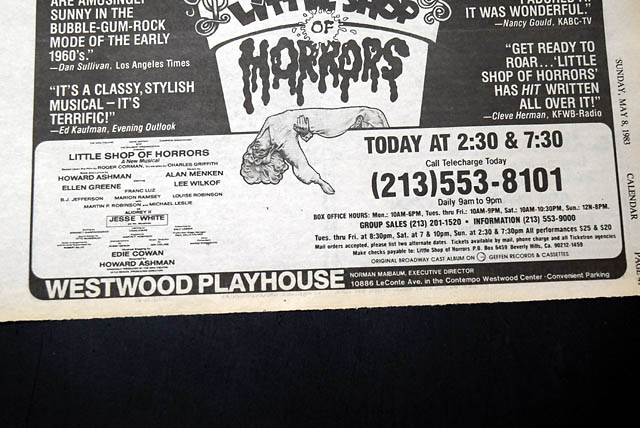
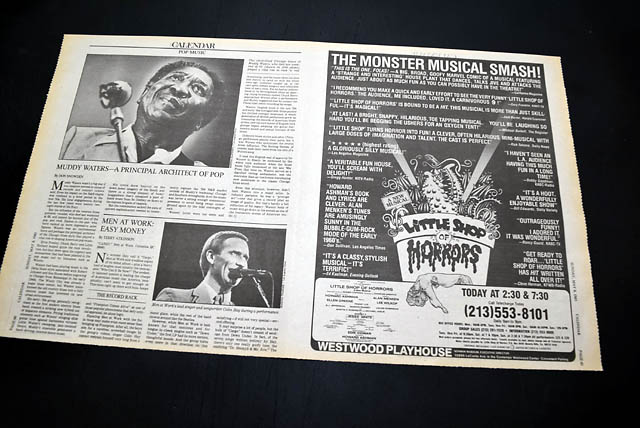
LOS ANGELES TIMES, May 8, 1983 (an original vintage newspaper leaf from the Calendar section) This offering consists of four complete pages (two double-sided sheets on one single leaf) featuring a collectible print advertisement for a upcoming live performance of "LITTLE SHOP OF HORRORS" at the Westwood Playhouse on one of the four pages.
In addition to the feature concert ad, which captures the era's unique promotional graphic design and typography, the surrounding pages provide a fascinating cultural snapshot of late 20th-century entertainment. Printed on authentic aged newsprint with genuine vintage toning, this original leaf is not a modern reprint, making it an ideal candidate for custom framing, local history display, or inclusion in a dedicated rock or pop culture memorabilia collection.
Experience music history in the making with authentic, original newspaper advertisements capturing the opening-night premieres of legendary live concert performances, sourced straight from the entertainment capital of the world.
Background: The May 1983 West Coast premiere of Little Shop of Horrors at the Westwood Playhouse (now the Geffen Playhouse) served as a vital bridge between the musical's off-Broadway origins and its global pop-culture footprint. Coming directly on the heels of the show's explosive run at New York's Orpheum Theatre, director Howard Ashman and composer Alan Menken brought their original lead stars—Ellen Greene as Audrey and Lee Wilkof as Seymour—to Los Angeles, anchoring the production with the exact comedic timing, emotional vulnerability, and iconic vocal styles that defined the piece. The run quickly transformed into a Hollywood celebrity hotspot—highlighted by a famous backstage visit from Michael Jackson posing in the jaws of Audrey II—proving that the sci-fi rock-musical spoof possessed immense mainstream commercial appeal beyond theater diehards. Ultimately, the overwhelming critical and box-office success of this Westwood sit-down engagement demonstrated the show's national viability, cementing its status as a theatrical phenomenon and establishing the foundation for its eventual 1986 film adaptation directed by Frank Oz.
Other issues you may like
§ related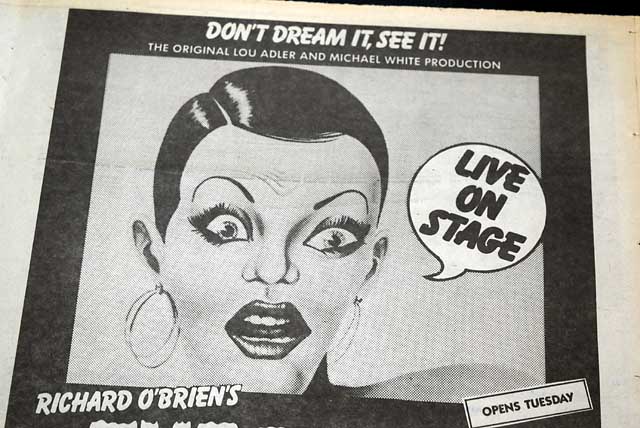
LOS ANGELES TIMES, Feb. 22, 1981 (an original vintage newspaper leaf from the Calendar section) This offering consists of four complete pages (two
...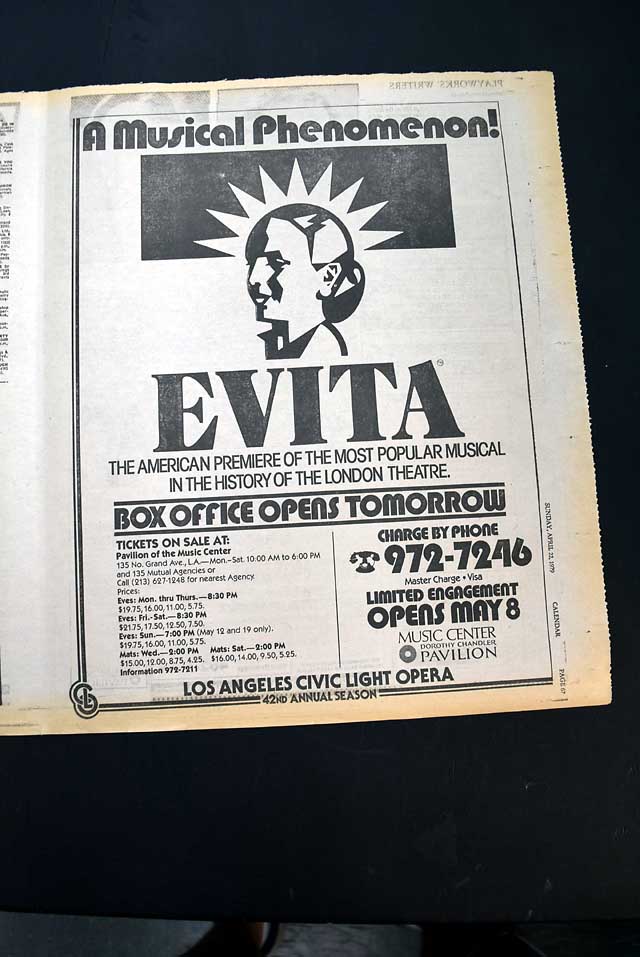
LOS ANGELES TIMES, April 22, 1979 (an original vintage newspaper leaf from the Calendar section) This offering consists of four complete pages (two
...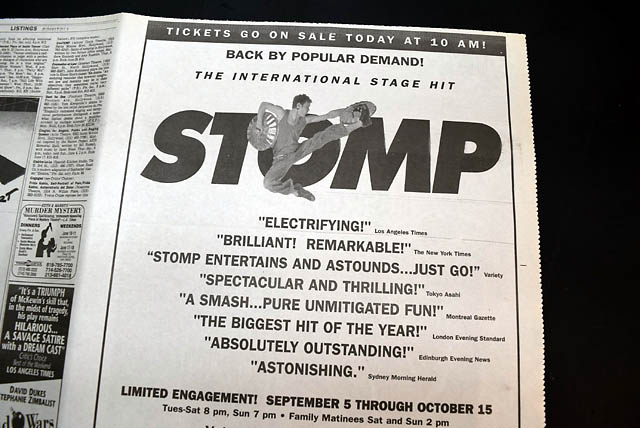
LOS ANGELES TIMES, May 21, 1995 (an original vintage newspaper leaf from the Calendar section) This offering consists of four complete pages (two
...
LOS ANGELES TIMES, Friday, June 9, 1978
- Best "Grease" advertisement
- Pre Opening Day movie premiere
- 7 days prior to it's opening
- Musical romantic film comedy
A
...