1994 "Madonna" editorial about her future...
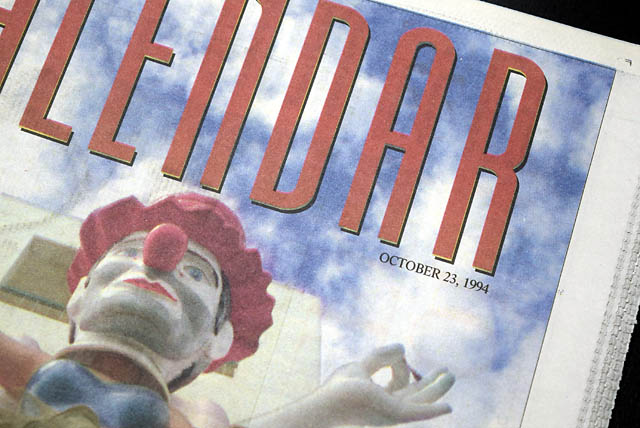
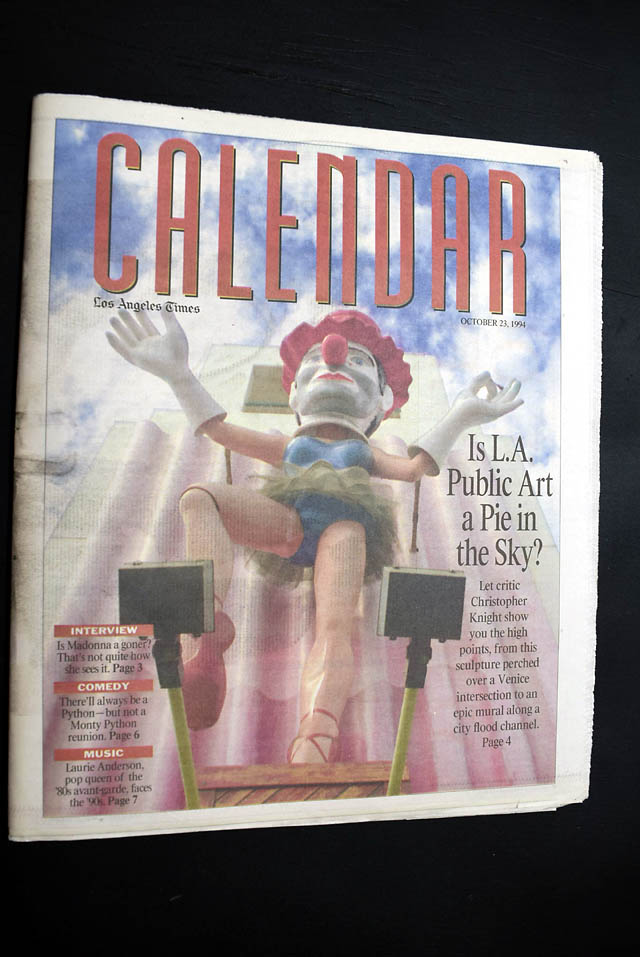
Sunday CALENDAR SECTION only of the Los Angeles Times, Oct. 23, 1994
- MADONNA editorial in social media
- Singer - songwriter - actress & more
- "Queen of Pop" solo career future ?
Often revered as the undisputed "bible" of Hollywood, the Sunday Calendar section occupied a rare space in journalism where a single publication could simultaneously dictate global entertainment trends and govern the inner workings of show business. Today, physical copies are an absolute rarity, largely because they were printed on standard, ephemeral newsprint designed to be devoured and promptly discarded at the end of the week.
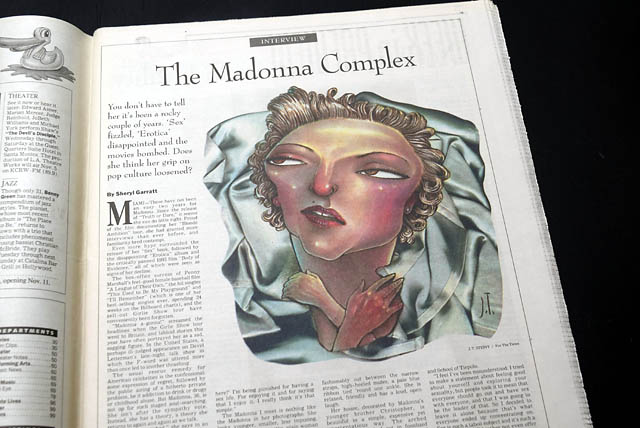
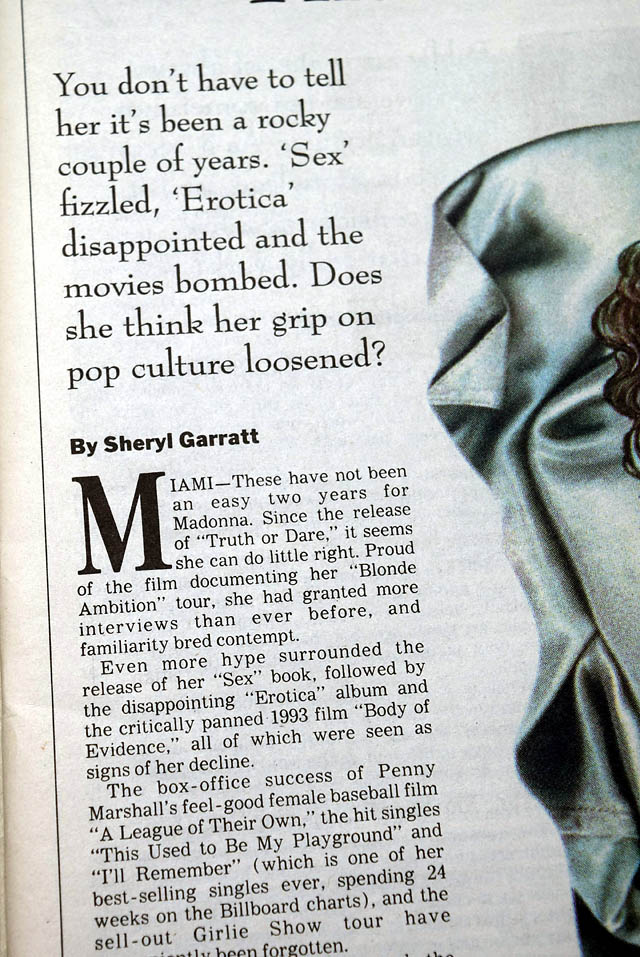
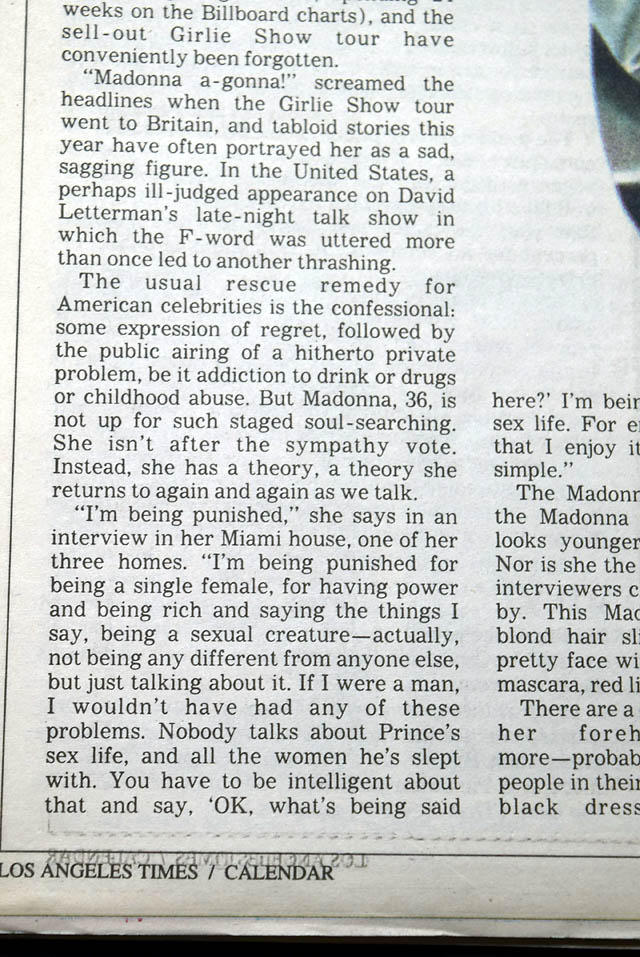
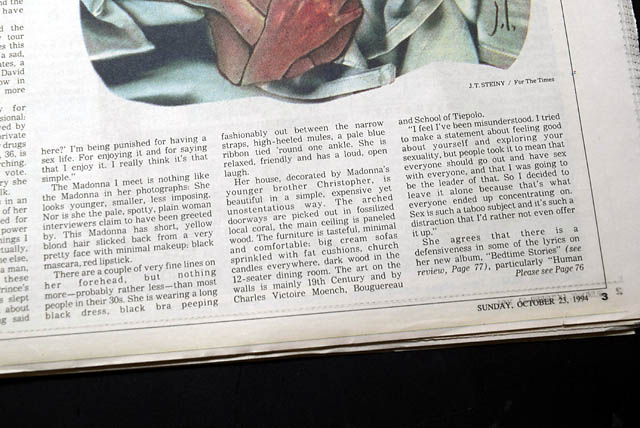
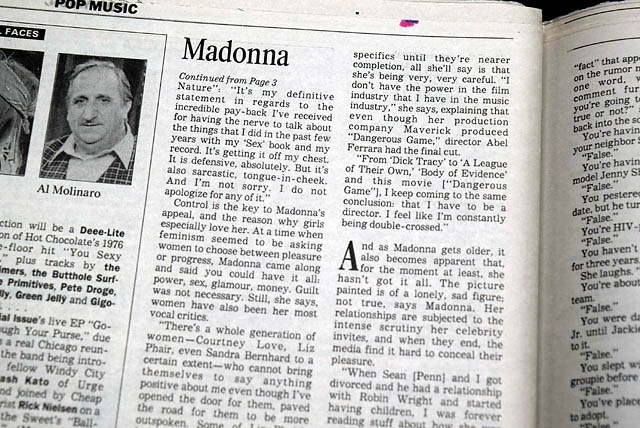
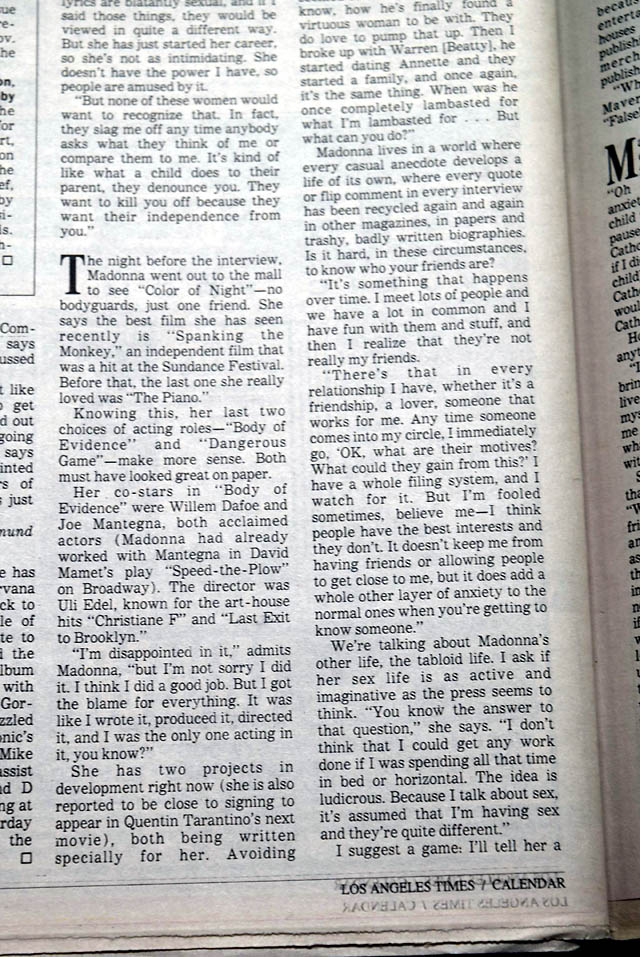
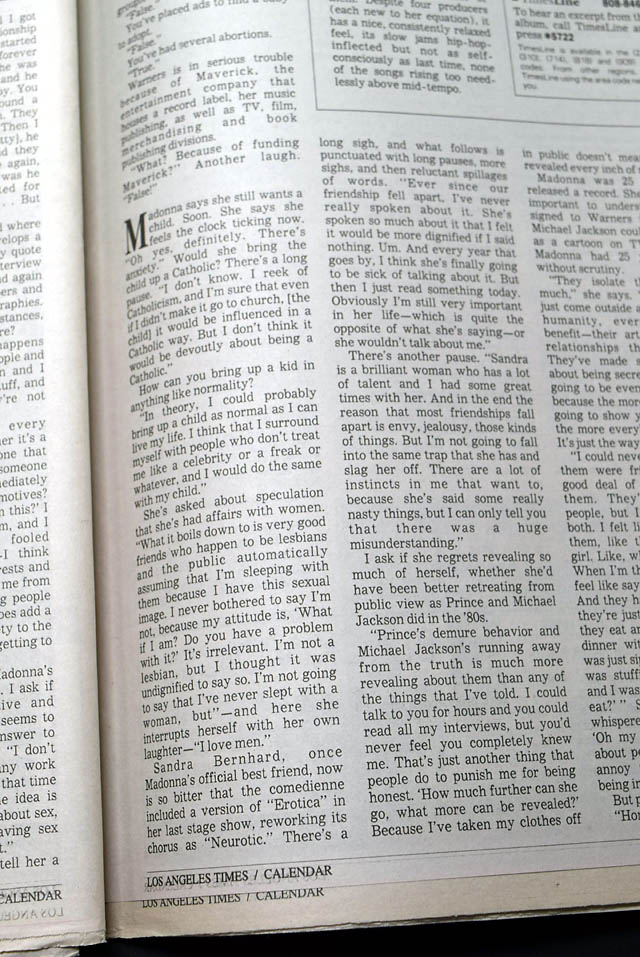
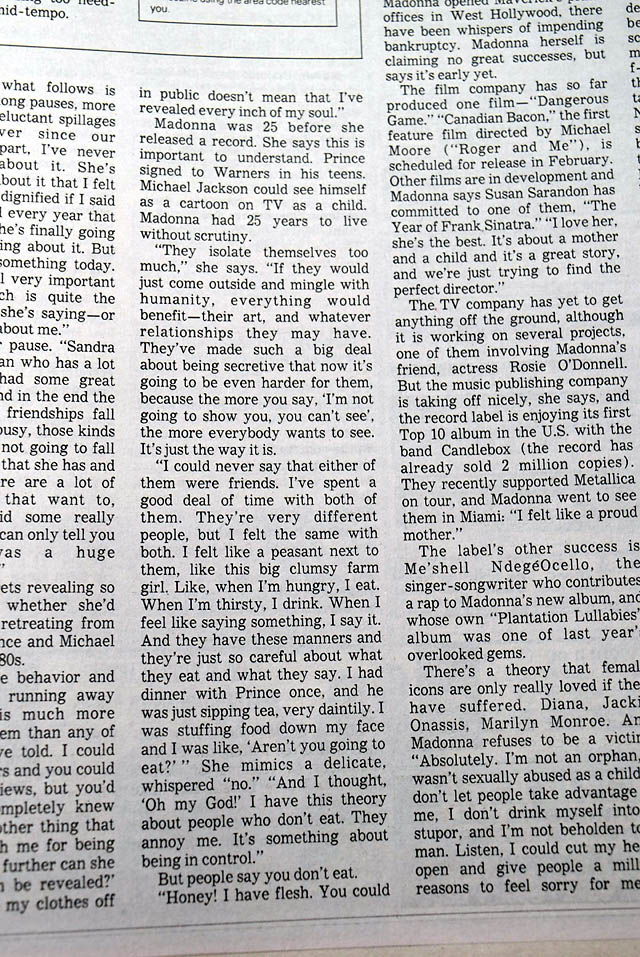
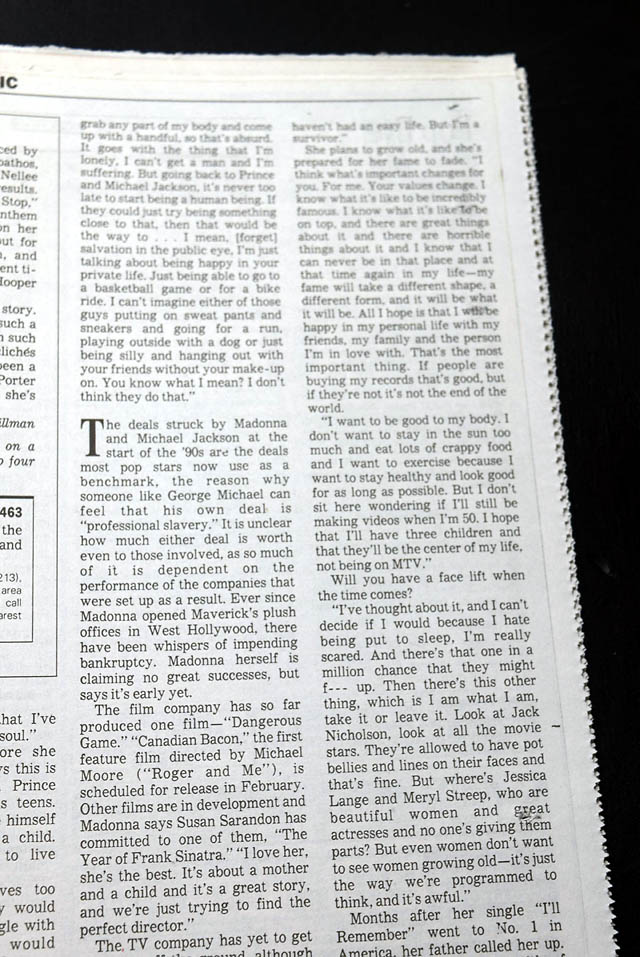
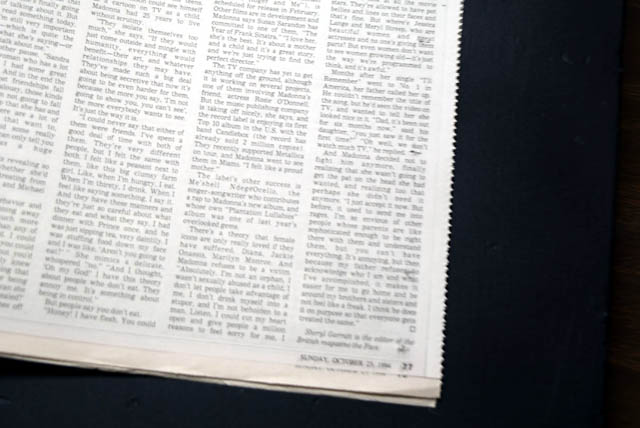
Starting on page 3 is a piece by Sheryl Garratt on Madonna headed: "The Madonna Complex" which is about her future after recent disappointments with a caricature of her.
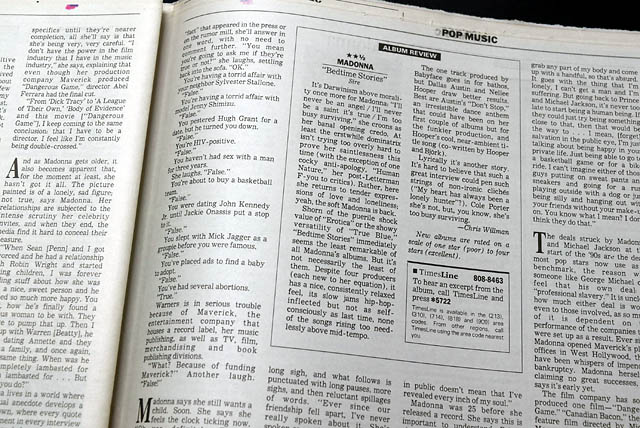
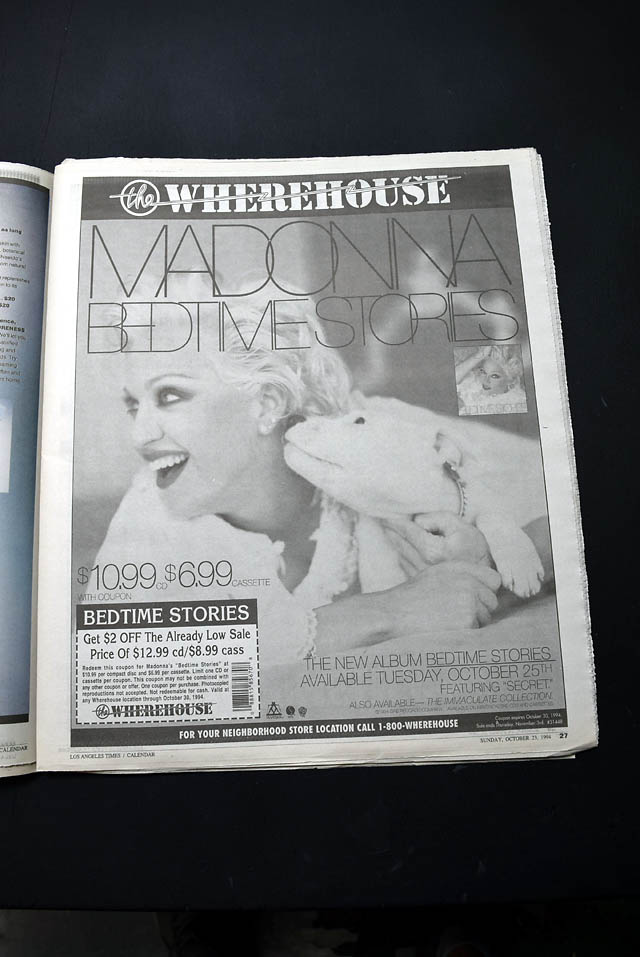
Also a page 27 has a advertisement for her new album recently released titled "Bedtime Stories" (see images)
Provenance note: This issue comes from The Los Angeles Times own archives, part of their in-house collection used to create their digital archive. Rare as such.
I suspect this to be an extremely rare item because their was really no reason to save it at the time.
Complete with all 100 pages, tabloid size in very nice condition.
Background: Published on October 23, 1994, in the Calendar section of the Los Angeles Times, Sheryl Garratt’s profile "The Madonna Complex" captures a pivotal turning point in pop culture history—the immediate aftermath of Madonna's most polarizing era and the prelude to her mid-1990s reinvention with Bedtime Stories. Coming off the intense media backlash surrounding her explicit 1992 book Sex, the underperforming Erotica album, and a string of cinematic failures like Body of Evidence, the article confronts Madonna directly about whether her grip on the zeitgeist had loosened. The significance of the piece lies in Madonna’s candid defense of her agency and artistic vision; by asserting that provocative art is meant to challenge societal beliefs and arguing that controlling her own image and sexual fantasies aligns directly with feminist equality, she reframed her controversial choices not as desperate stunts, but as deliberate exercises in female power. Furthermore, her distinction between physical exposure and emotional privacy—noting that taking her clothes off did not mean revealing her soul—highlighted the sharp boundary she maintained between her public persona and private identity, reinforcing how her calculated media mastery and resilience laid the groundwork for her long-term career longevity when many critics had prematurely written her off.
Other issues you may like
§ related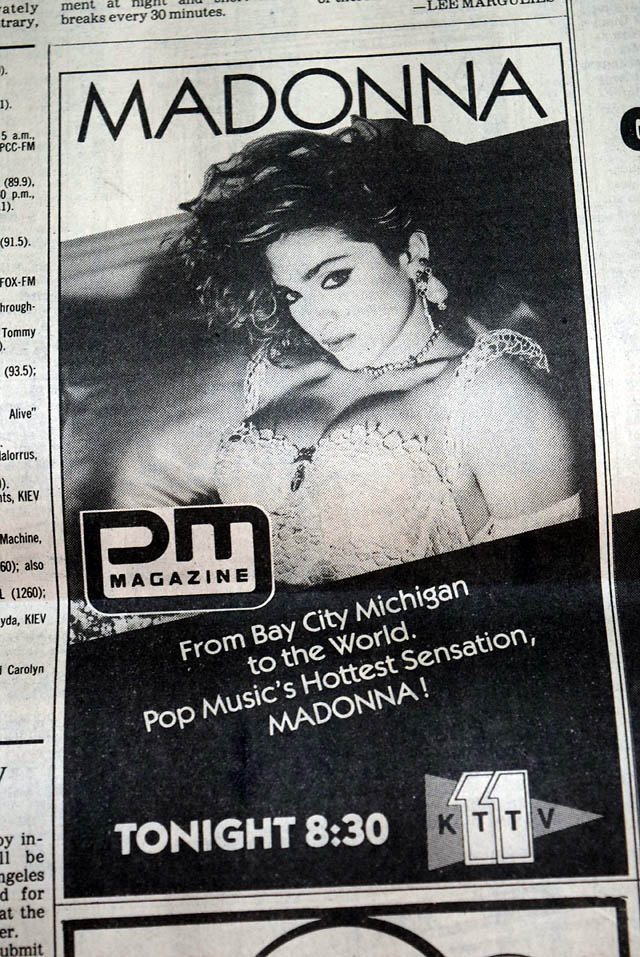
LOS ANGELES TIMES (calendar section only), May 16, 1985
- Madonna "Queen of Pop" - Virgin Tour
- Singer - songwriter - actress & more
Page 10 has a 7 x 4 inch
...
LOS ANGELS TIMES (Calendar section only), August 11, 1985
- Madonna lookalike fools fans on Sunset Strip
- Singer - songwriter - actress & more
- "Queen of Pop"
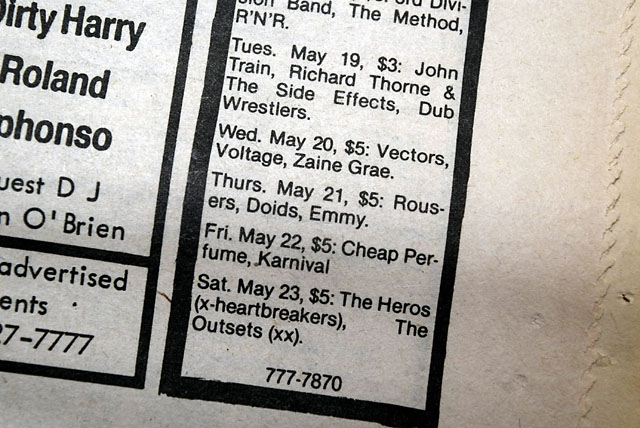
THE VILLAGE VOICE (weekly), Greenwich Village, New York City, May 12 & 19 , 1981
- The week Madonna Louise Ciccone became "MADONNA"
- Extremely early Madonna

Sunday edition CALENDAR SECTION only of the Los Angeles Times, Dec.16, 1990
- Sinead O'Connor - Irish singer, songwriter & activist
- Cartoonish caricature with