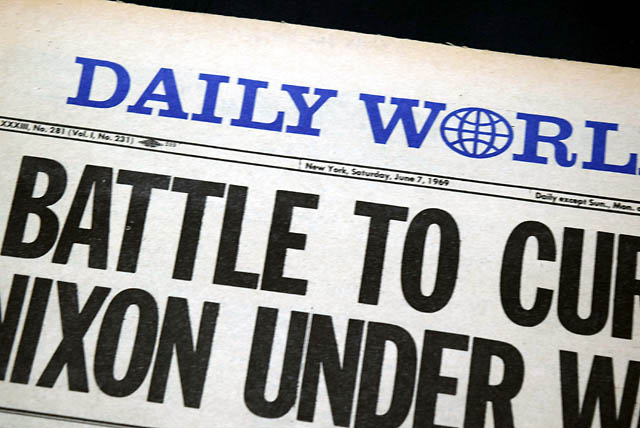
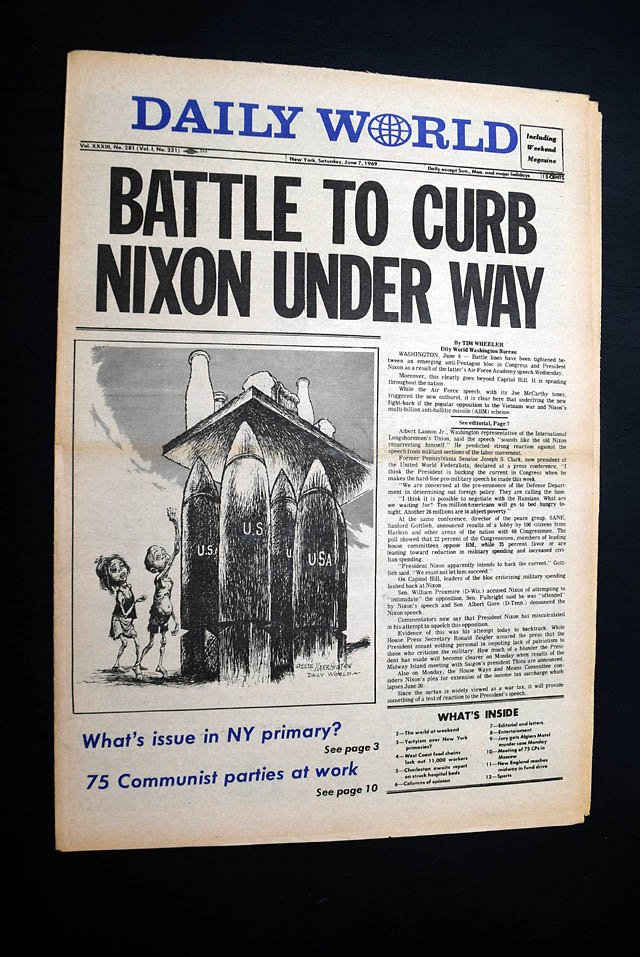
1969 South Vietnam governmemt barbarities...
DAILY WORLD, New York, June 7, 1969
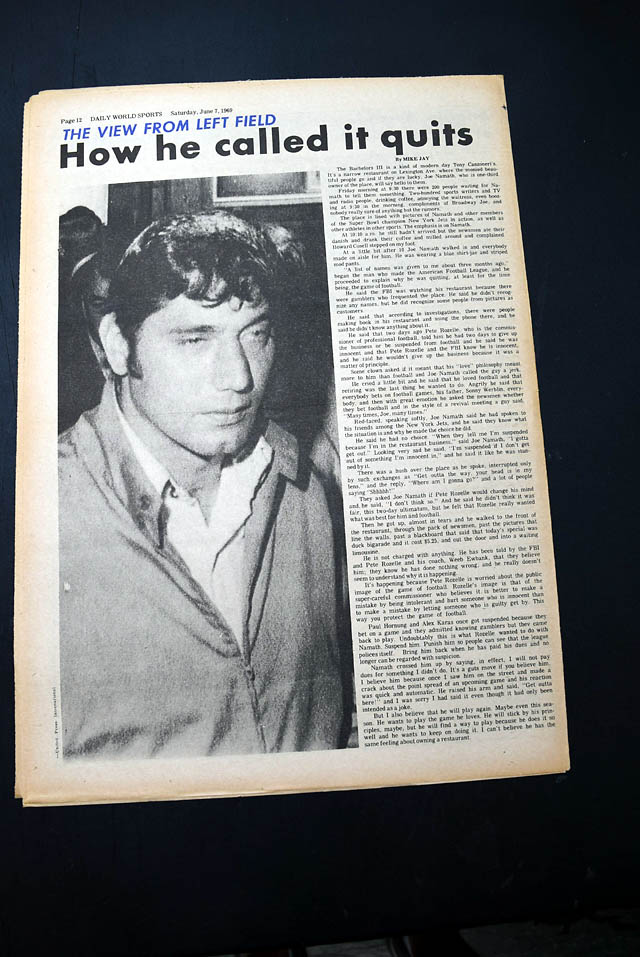
- New York Jets quarterback Joe Namath
- Quits after Pete Rozelle says get rid of nightclub stake
This publication, The World, represents the official voice and ideological "mouthpiece" of the Communist Party USA (CPUSA) during one of the most volatile periods of the Cold War.
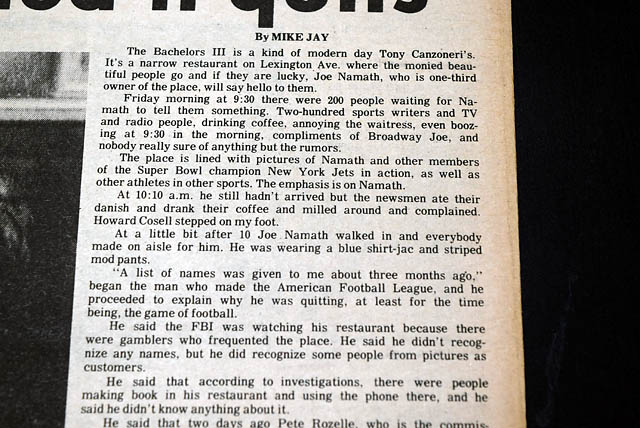
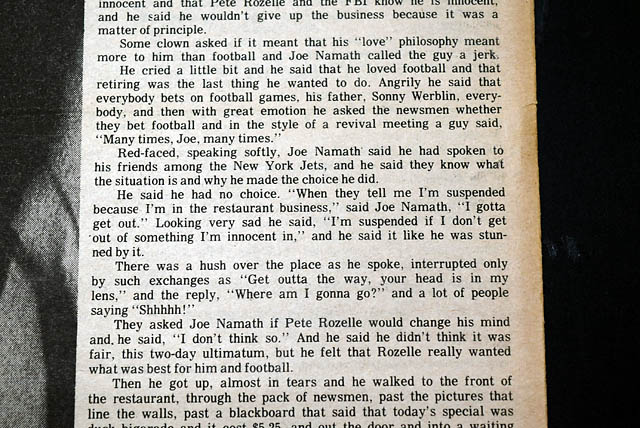
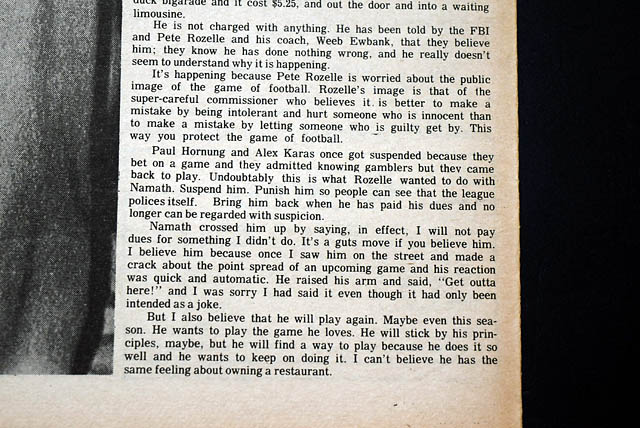
The back page has a large photo of Joe Namath with heading: "How he called it quits" (see images)
This publication was largely distributed by hand at political rallies and anti-war demonstrations rather than sold at mainstream newsstands. Consequently, most copies were treated as ephemeral flyers and discarded, while the remaining pool of survivors was severely limited because the political stigma of the late Cold War deterred ordinary citizens from intentionally archiving communist literature in their homes.
Complete with 12 pages, very nice condition.
Background: This June 9, 1969 piece by Mike Jay, titled "How he called it quits," holds notable historical and collector value as an immediate, firsthand journalistic account capturing one of the most explosive controversies in American sports history: Joe Namath’s tearful, shocking announcement that he was retiring from professional football at the height of his career. Coming less than five months after Namath led the New York Jets to an iconic upset in Super Bowl III, the article documents the high-stakes ultimatum issued by NFL Commissioner Pete Rozelle requiring Namath to sell his financial stake in his popular Manhattan nightclub, Bachelors III, over alleged connections to sports gambling figures. The piece stands out for its exceptional extreme rarity; published on the exact date of the press conference (or immediately following it in regional newspapers and wire dispatches), original physical copies of this specific coverage are virtually impossible to locate outside of archived microfilms or specialized vintage sports memorabilia collections. Beyond its scarcity, its primary significance lies in preserving the raw cultural momentum of 1969, detailing Namath's defiance against the league establishment in a defining moment of athlete counterculture and player autonomy right before he ultimately reconsidered and rejoined the NFL later that summer.
Other issues you may like
§ related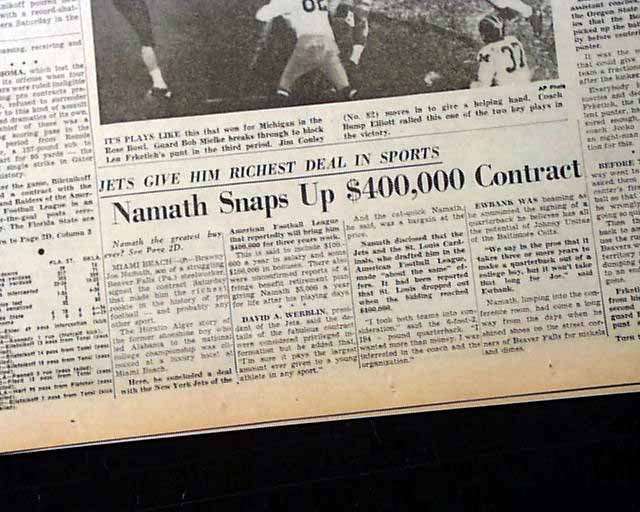
DETROIT FREE PRESS, January 3, 1965
- Joe Namath signs contract
- Alabama Crimson Tide
- New York Jets (NFL)
At the bottom of the front page of the sport's section
...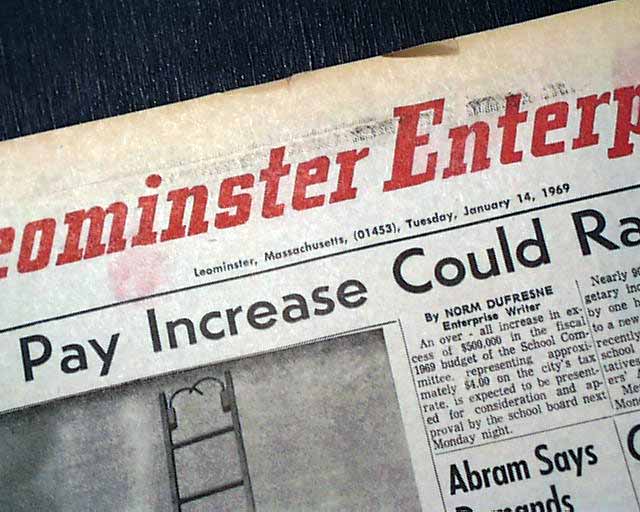
LEOMINSTER ENTERPRISE, Massachusetts, January 14, 1969
- Super Bowl NFL football New York Jets vs. Baltimore Colts
- Quarterback Joe Namath
- Most famous upset in

THE SPRINGFIELD UNION, Springfield, Massachusetts, September 25, 1972
- Joe Namath - 6 touchdown passes
- New York Jets vs. Baltimore Colts
- Johnny Unitas
The
...
THE NEW YORK TIMES, December 13, 1951
- Joe DiMaggio Yankee Clipper retires
- New York Yankees
- In a NYC paper
This 68 page newspaper has two column headlines on
...