1930 anti-prohibition moverment... gangster era...
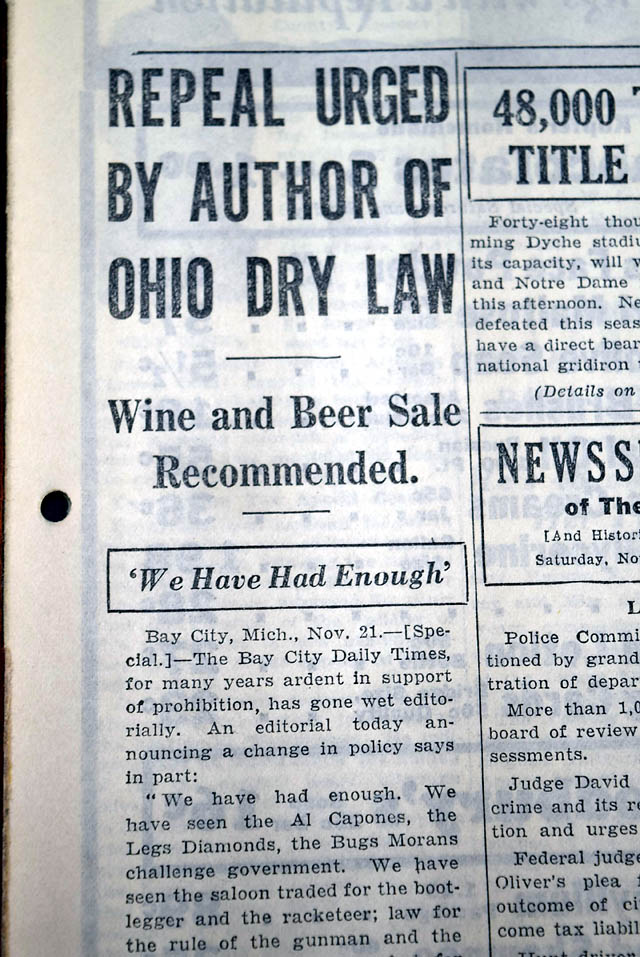
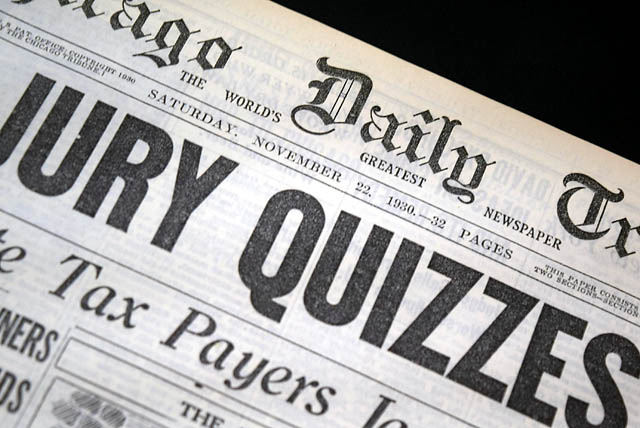
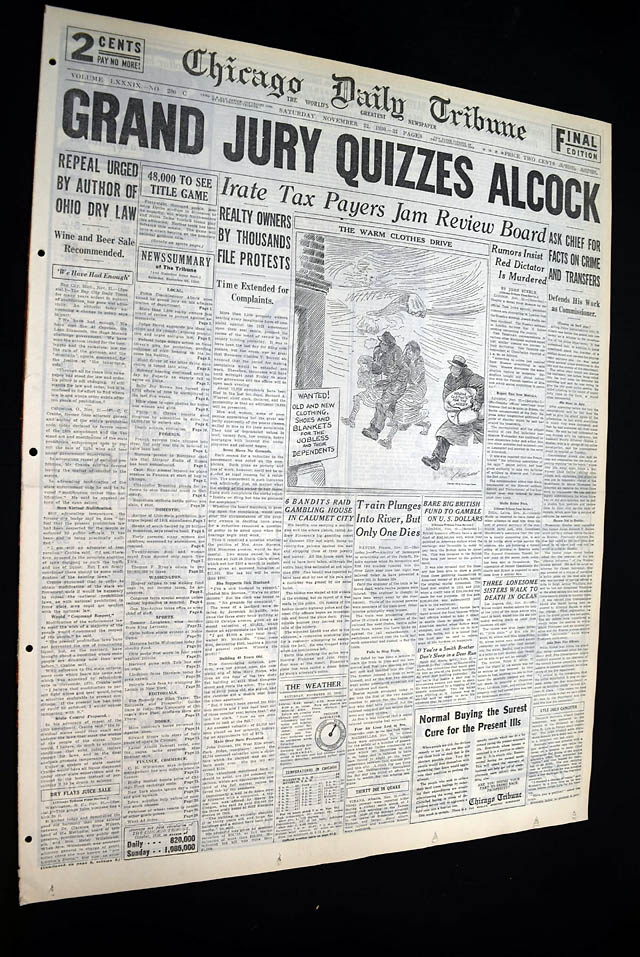
CHICAGO DAILY TRIBUNE, Nov. 22, 1930
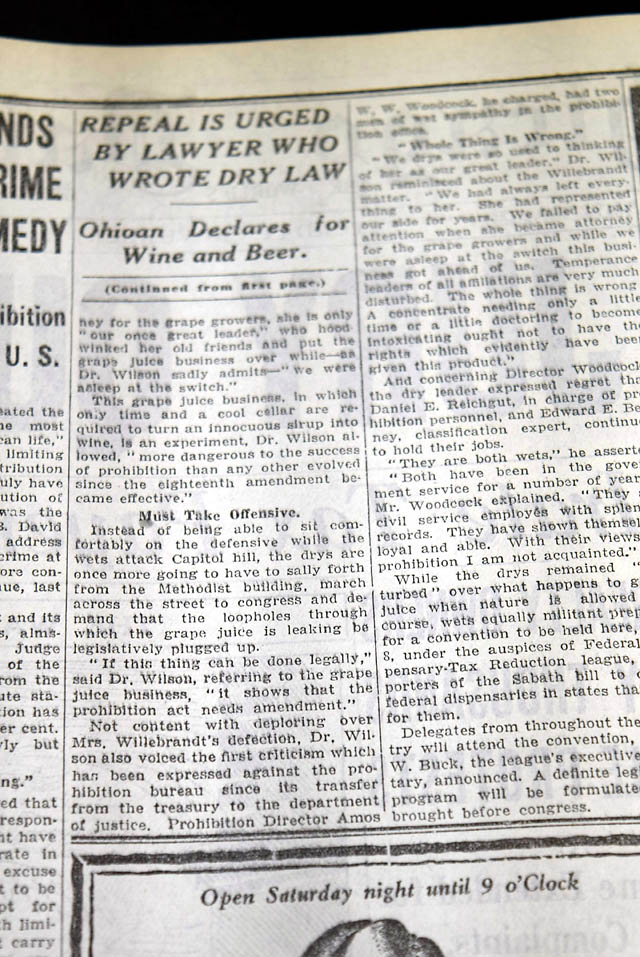
- Anti-prohibition movement
- Wets gain majority in MI & OH
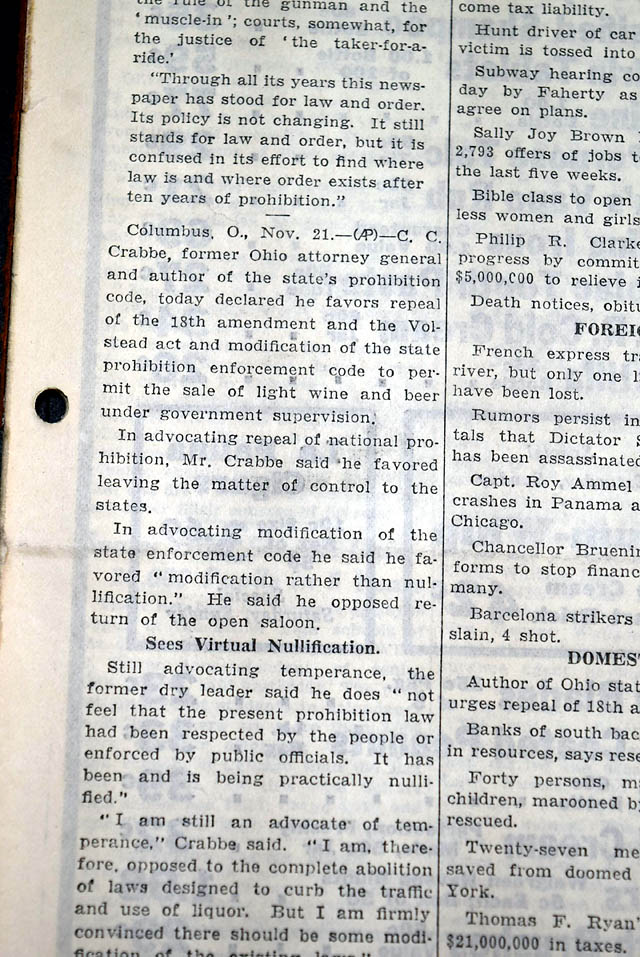
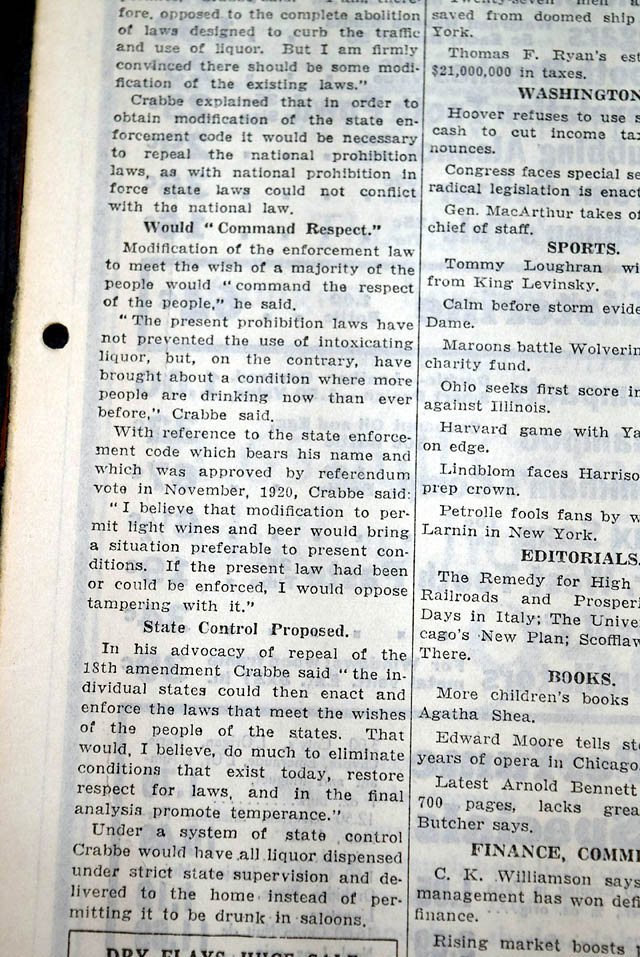
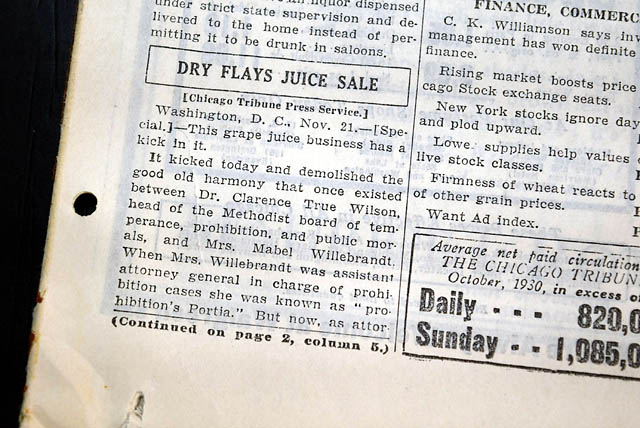
The front page has a one column heading: "REPEAL URGED BY AUTHOR OF OHIO DRY LAW" with subheads. (see images)
When it comes to gangsters, organized crime, and the nefarious activities born out of the Prohibition and Great Depression eras, no city is more in the forefront of our minds than Chicago - and what better newspaper can be found than the Chicago Tribune, self-proclaimed to be "The World's Greatest Newspaper"
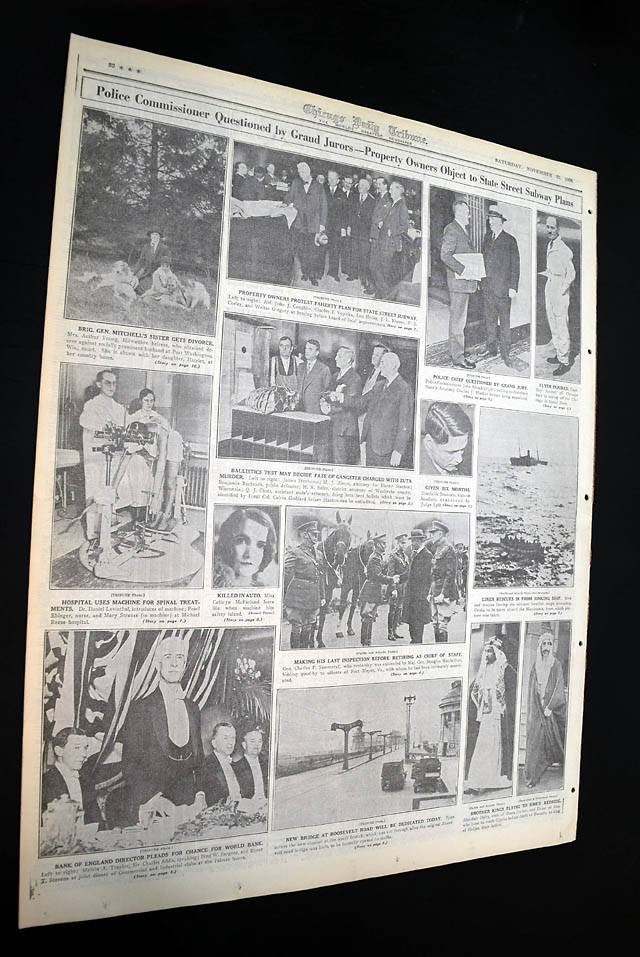
Complete with all 32 pages, rag edition in very nice condition. A few small binding holes along the spine.
Background: On November 21, 1930, anti-Prohibition sentiment reached a crucial turning point, distinguished by a rare convergence of local regional enforcement and national political organizing across the Midwest. What makes this exact date and regional pairing notable is the sharp contrast in anti-Prohibition efforts between Bay City, Michigan, and Columbus, Ohio. In Bay City—a critical rum-running hub situated along Saginaw Bay—resistance manifested through intense underground smuggling networks and community pushback against high-profile federal raids along Michigan's border, generating severe political pressure in the state that would soon become the first to ratify the 21st Amendment. Simultaneously, in Columbus, Ohio, anti-Prohibition strategists and "Wet" organizations, such as the Association Against the Prohibition Amendment, mobilized directly on the doorstep of the Anti-Saloon League's national headquarters in nearby Westerville, capitalizing on historic November 1930 mid-term election gains to coordinate nationwide legislative repeal. Together, these events on November 21, 1930, capture an extraordinarily rare historical snapshot: the simultaneous breakdown of Prohibition enforcement on the ground in industrial border towns like Bay City and the deliberate dismantling of the policy at the political epicenter in Columbus.
Other issues you may like
§ related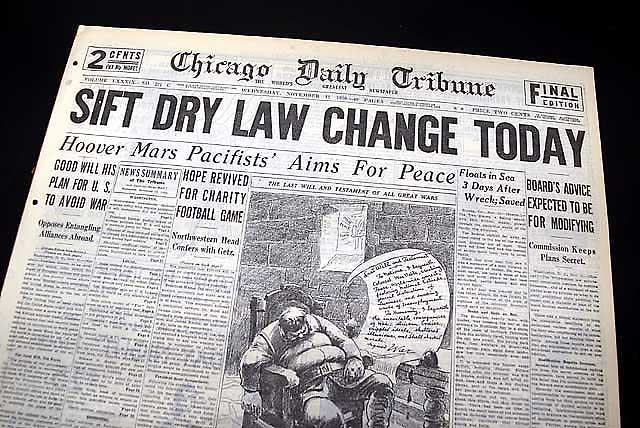
CHICAGO DAILY TRIBUNE, Nov. 12, 1930
- Prohibition is a failure ?
- re. Eighteenth Amendment
- Nice headline for display
The front page has a banner headline: "SIFT
...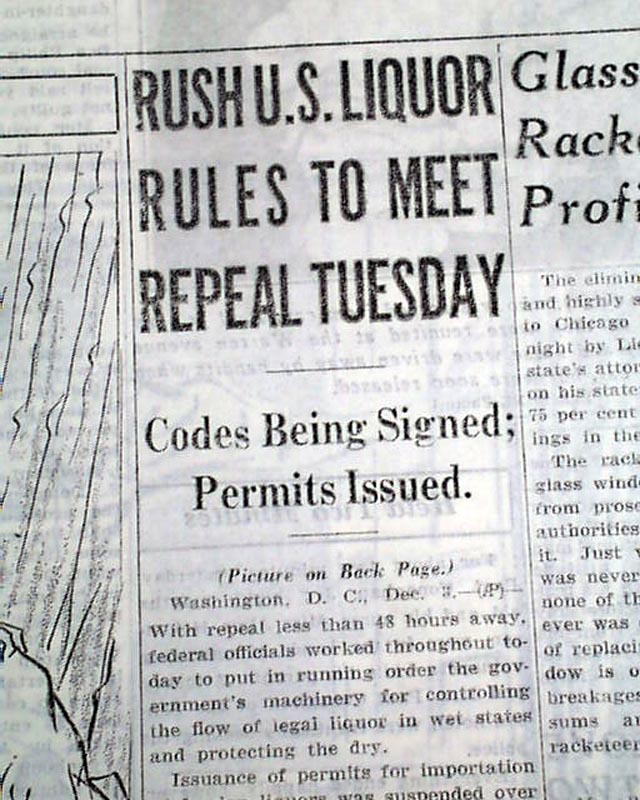
CHICAGO DAILY TRIBUNE, Dec. 4, 1933
- U.S. prohibition ending (eve)
- Liquor and beer returning
The front page has a one column heading: "RUSH U.S. LIQUOR RULES
...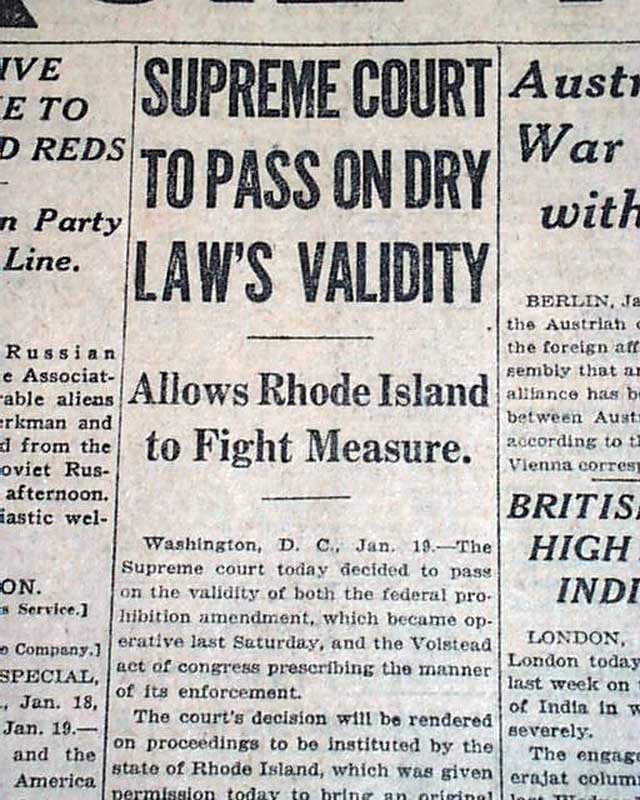
THE CHICAGO DAILY TRIBUNE, January 20, 1920.
- U.S. prohibition at the beginning
- No more beer or liquor - temperance
- From the city where crime would arise
- Prohibi
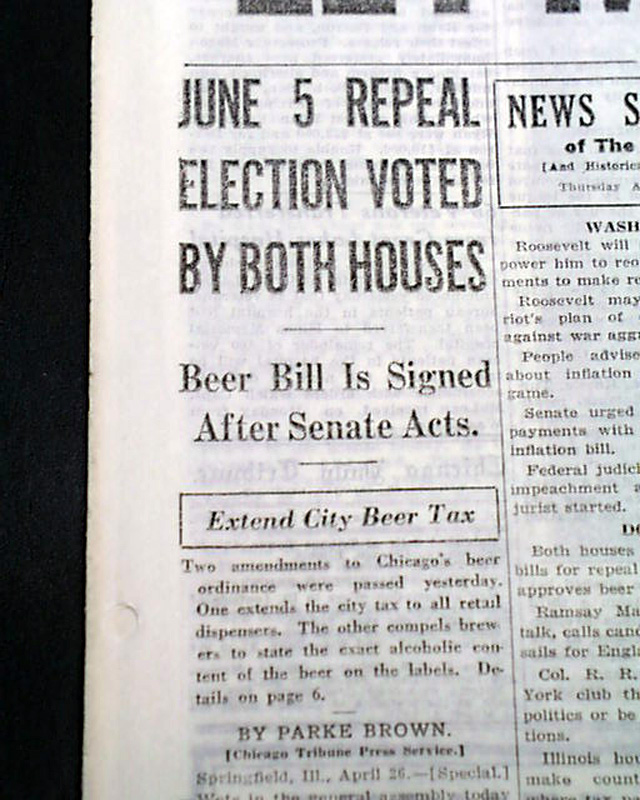
CHICAGO DAILY TRIBUNE, April 27, 1933
- United States prohibition ending
- State of Illinois acts to allow sale of alcohol
- Beer and Liquor returns to the gangland