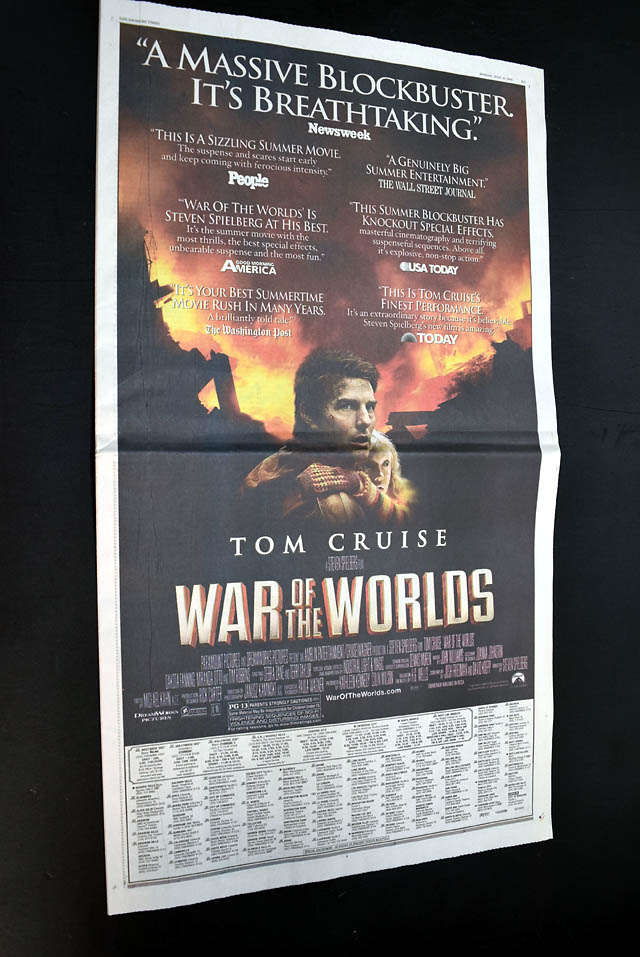
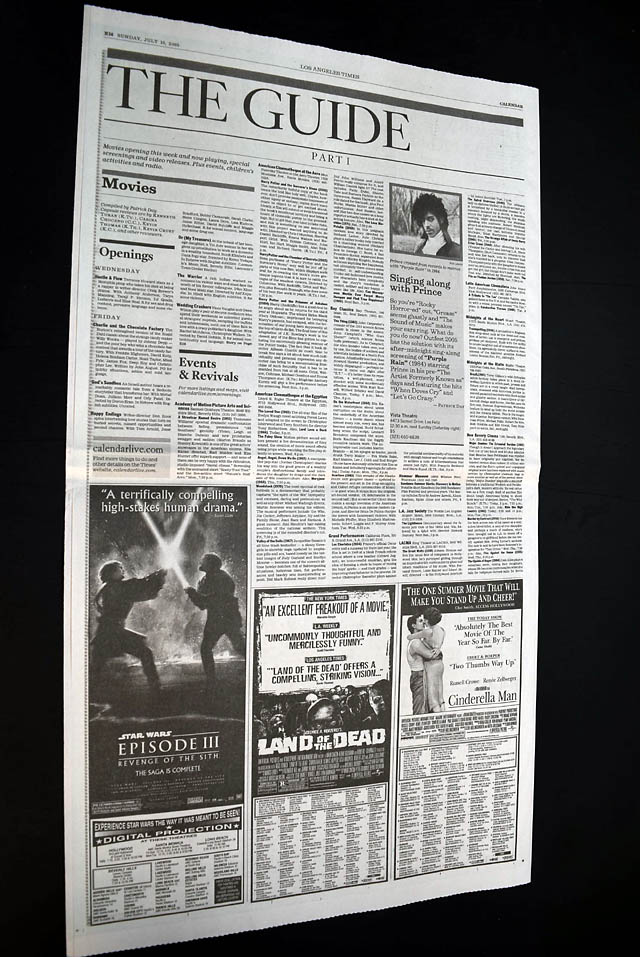
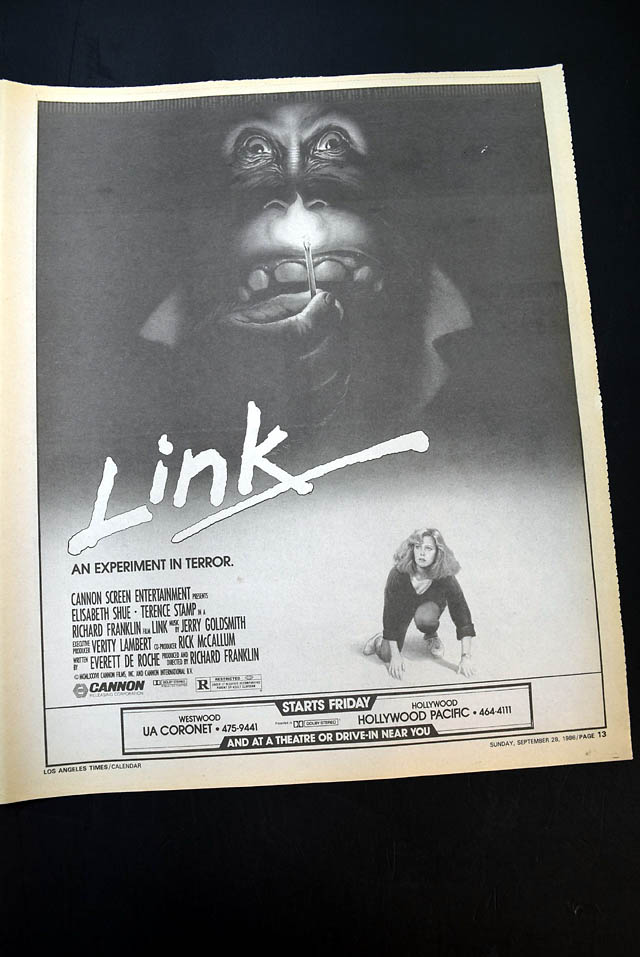
2005 2nd week premiere of "War of the Worlds" film advertisement...
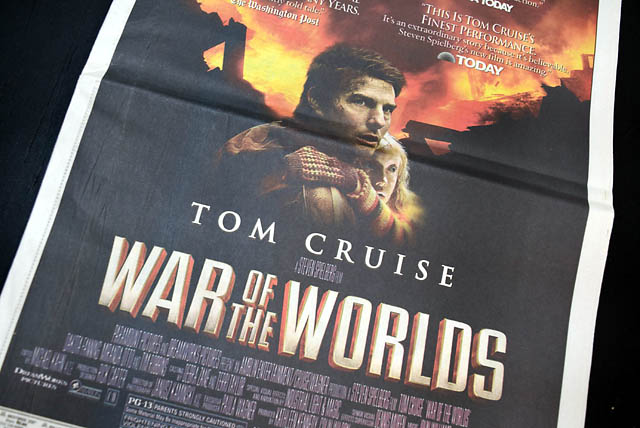
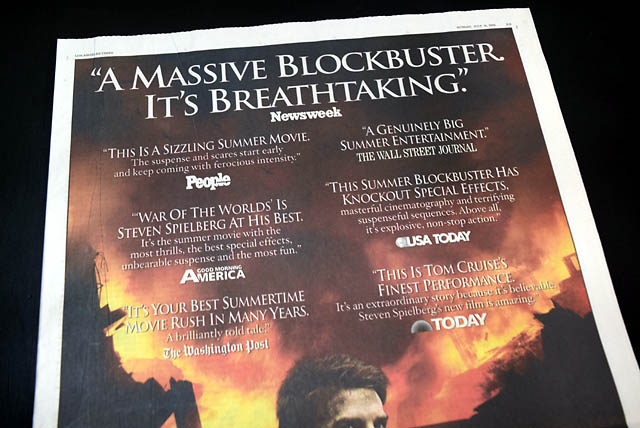
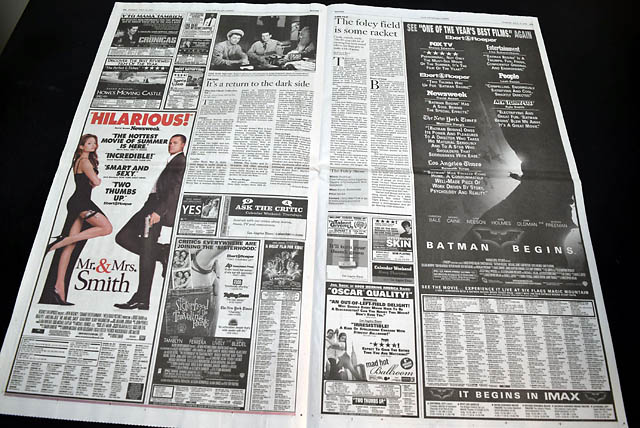
LOS ANGELES TIMES, July 10, 2005 (an original vintage newspaper leaf from the Calendar section) This offering consists of four complete pages (two double-sided sheets on one single leaf), serving as a rare piece of cinematic ephemera, highlighted by an original vintage poster-sized print advertisement announcing the 2nd week premiere of "WAR OF THE WORLDS" starring Tom Cruise on one of the pages. (see images).
In addition to the featured movie ad, which captures the era's distinct theatrical promotional graphics and classic key art, the surrounding pages provide a fascinating snapshot of late 20th-century entertainment and pop culture. Printed on authentic newsprint with genuine vintage toning, this original leaf is not a modern reprint, making it an ideal piece for custom framing, film history display, or inclusion in a dedicated cinema memorabilia collection.
Own a rare slice of cinema history straight from the home of the entertainment industry
Background: Steven Spielberg’s 2005 adaptation of War of the Worlds stands out as a dark, visceral departure from classic alien invasion tropes, distinguished by its grounding in raw, visceral post-9/11 visual motifs—such as clothes falling like ash, civilian terror, and missing-persons flyers—and its focus on an ordinary, flawed father (Tom Cruise) rather than high-ranking military strategists. A notable aspect of the film’s development is the high volume of finished or costly material that was drastically altered or cut late in production; for instance, Stan Winston Studio spent three months constructing silicone pods harboring practical baby-alien puppets that were meant to grow inside the reddish bio-matter, only for Spielberg to order every pod manually excised from the set just days before shooting. Additionally, a fully realized, heavily budgeted VFX sequence nicknamed "Camelot"—where the main characters hide behind an SUV while witnessing a battalion of Tripods pulling civilians directly out of residential buildings—was cut entirely from the theatrical release for pacing and remains completely unreleased on physical media despite being fully completed. Combined with the film's iconic sound design—most notably the low, terrifying mechanical horn blast meant to recreate H.G. Wells' "ululation" war cry—these elements make the production a rare blend of blockbuster scale, uncompromised horror, and unseen lore.
Other issues you may like
§ related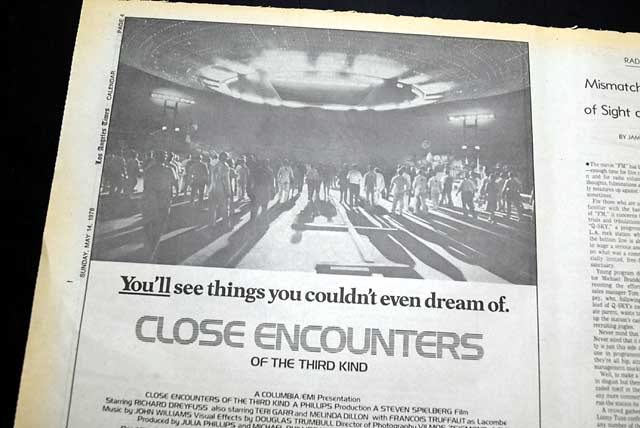
LOS ANGELES TIMES, May 14, 1978 (an original vintage newspaper leaf from the Calendar section) This offering consists of four complete pages (two
...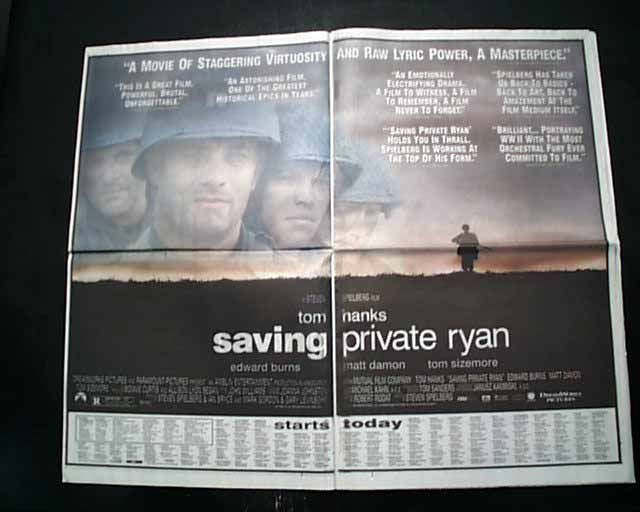
LOS ANGELES TIMES, July 24, 1998
- Best "Saving Private Ryan" advertisement
- World War II D-Day invasion - Tom Hanks
- Grand opening day premiere review
A terrific
...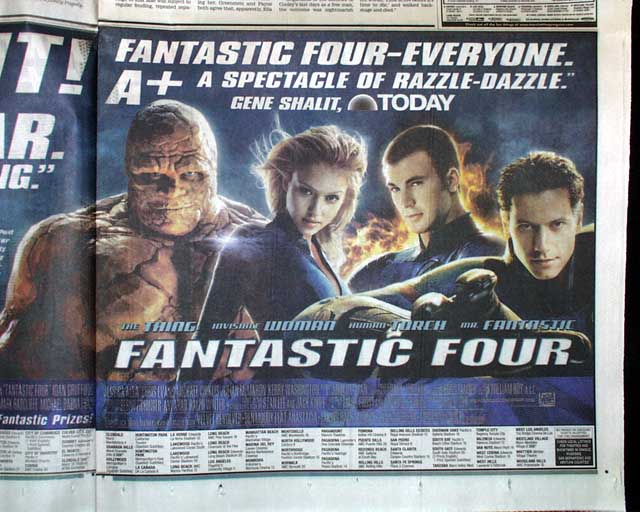
LOS ANGELES TIMES, July 9, 2005 (Calendar Section)
- Premier of Marvel's "Fantastic Four"
- Premier of "Dark Water"
- Pre-release of "The Island"
- Recent release of
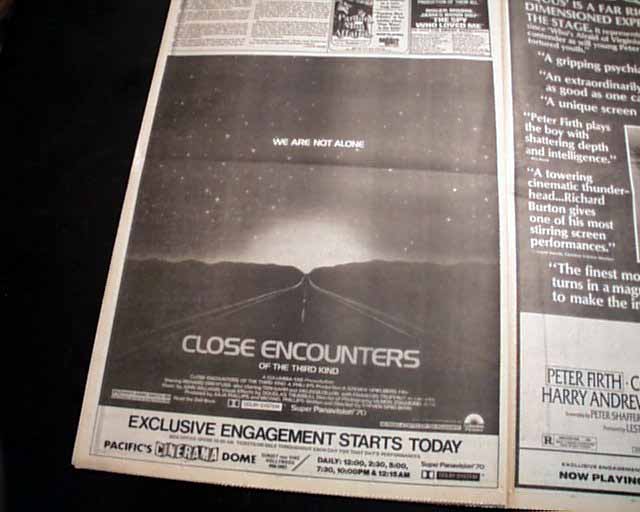
LOS ANGELES TIMES, November 18, 1977
- Best "Close Encounters of the Third Kind" advertisement
- Grand Opening Day movie premiere review
- Science fiction film -