




Paralysis stops Lou Gehrig... he announces his affliction...
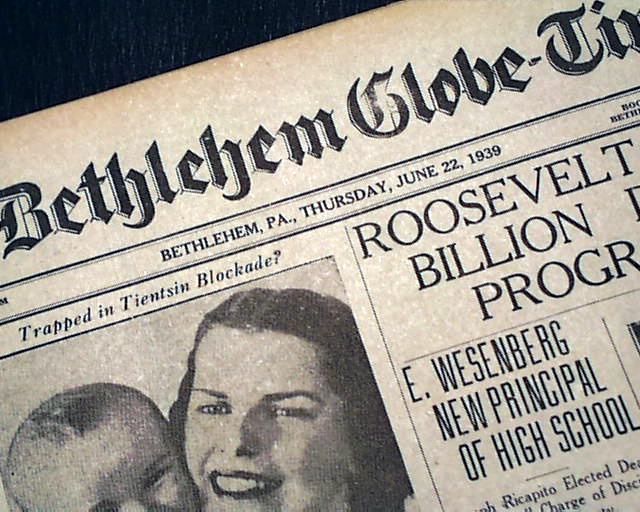
THE BETHLEHEM GLOBE TIMES, Pennsylvania, June 22, 1939
- Lou Gehrig ends baseball career
- Infantile Paralysis - New York Yankees
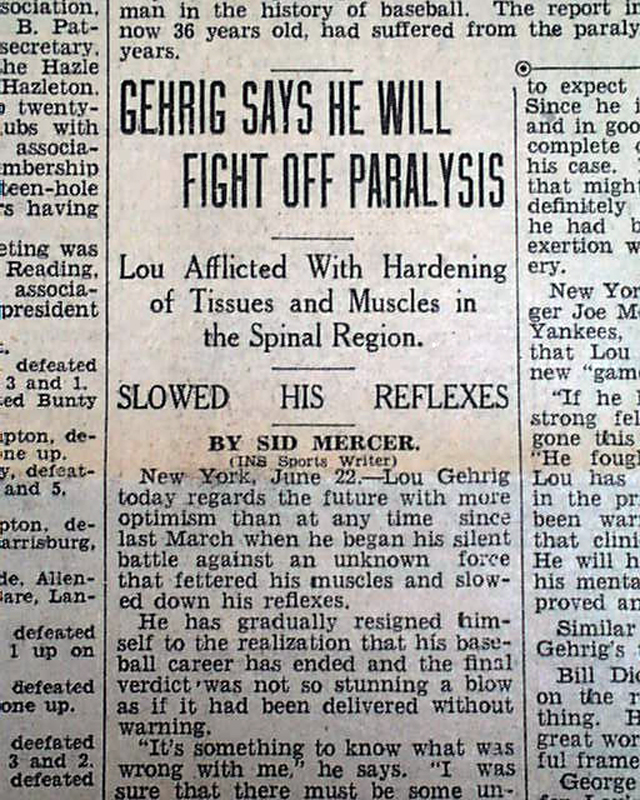
The sports page has a significant report in the world of baseball history with one column heads noting: "Gehrig Says He Will Fight Off Paralysis" "Lou Afflicted With Hardening of Tissues and Muscles in the Spinal Region" "Slowed His Reflexes".
The text includes: "...He has gradually resigned himself to the realization that his baseball career has ended...'Going to the Mayo Clinic was the best move I ever made..." with much more, including comments from fellow players and others.
Included is the report is a nice photo of Lou Gehrig headed: "Paralysis Stops Lou Gehrig". His affliction was actually ALS (amyotrophic lateral sclerosis), now more commonly referred to as "Lou Gehrig's Disease".
Complete in 22 pages, small margin tears, good condition.
Background: This June 22, 1939 issue of The Bethlehem Globe-Times carries profound historical significance as an authentic primary document capturing the immediate, heartbroken reaction of the nation to Lou Gehrig’s career-ending diagnosis. Published just three days after Gehrig received his official diagnosis of Amyotrophic Lateral Sclerosis (ALS) at the Mayo Clinic on his 36th birthday, and just one day after the New York Yankees officially announced his retirement, the report documents a dramatic turning point in American sports history. The era's coverage—describing his affliction in layman's terms as a "hardening of tissues and muscles" that "slowed his reflexes"—highlights the public's early, limited understanding of the rare neuromuscular condition that would forever bear his name as "Lou Gehrig's Disease." By capturing Gehrig's quiet grace, his gratitude toward the Mayo Clinic, and his resolute intent to "fight off paralysis," alongside poignant tributes from fellow players, this issue preserves the exact transitional moment when the "Iron Horse" shifted from an active diamond hero into a national symbol of courage and stoic bravery—foreshadowing his immortal "Luckiest Man on the Face of the Earth" farewell address at Yankee Stadium just twelve days later.
Other issues you may like
§ related
NEW YORK TIMES, June 23, 1939
- Lou Gehrig's baseball career ends
- Infantile Paralysis diagnosis
- Best publication to be had ?
Page 24 has various baseball
...
NEW YORK TIMES, June 22, 1939
- Lou Gehrig ends baseball career
- Infantile Paralysis - New York Yankees
- Best title to be had ? (rare as such)
A six column
...
ST. LOUIS POST-DISPATCH, June 22, 1939
- Lou Gehrig ends baseball career
- Infantile Paralysis - New York Yankees
Two of the sports pages within have articles
...
SAN FRANCISCO CHRONICLE, California, June 23, 1939
- Lou Gehrig's baseball career ending
- Infantile Paralysis diagnosis
Page 21 has various baseball reports but
...