Death of Charles Babbage, the "father of he computer"...
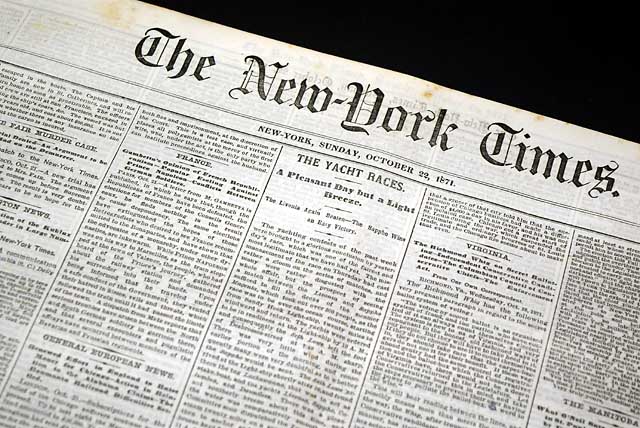
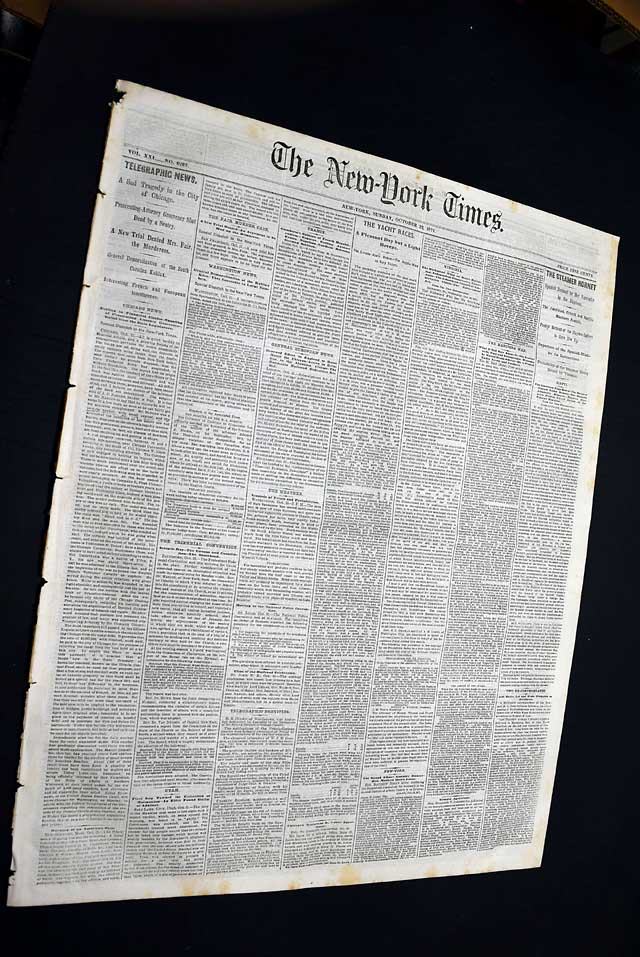
NEW YORK TIMES, Oct. 22, 1871
- Death of Charles Babbage - English polymath
- "The father of the Computer" inventor
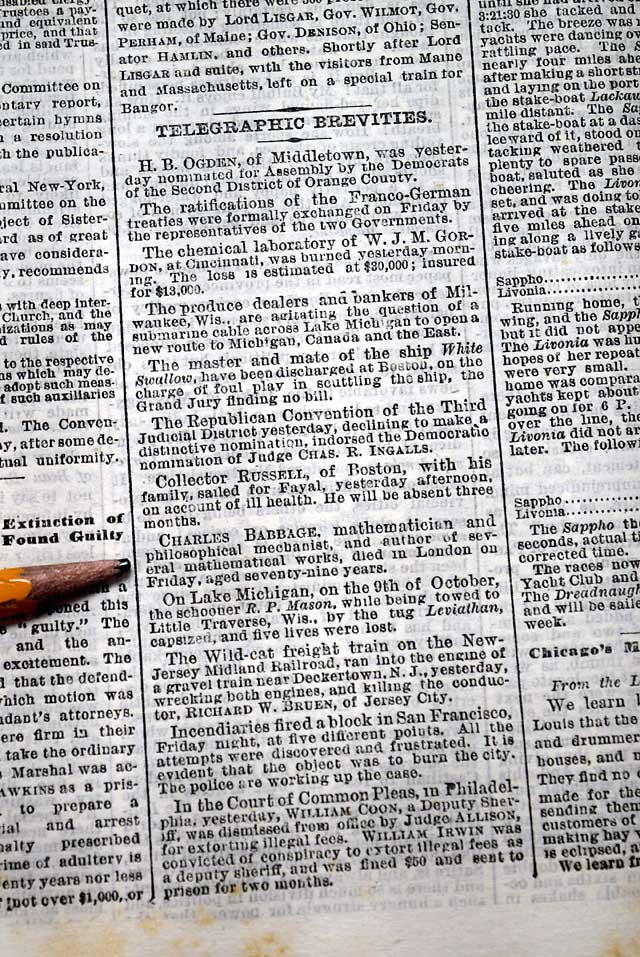
Among the many front page reports is a very small, inconspicuous, and seemingly innocuous report of the death of a man named Charles Babbage. But there is much significance to this man.
Charles Babbage was an English mathematician, inventor, and mechanical engineer whose designs anticipated the fundamental principles of the modern computer nearly a century before electronic computing became possible.
Babbage’s greatest historical importance rests on his Analytical Engine, conceived in the 1830s. It was designed as a general-purpose programmable calculating machine. It incorporated concepts remarkably similar to those of modern computers: a “store” corresponding to memory, a “mill” resembling a central processor, punched cards for instructions and data, and the ability to perform sequences of operations and conditional calculations. His collaborator Ada Lovelace recognized that such a machine might manipulate not merely numbers but other kinds of information, and her published notes included what is often regarded as the first computer program. Babbage is widely called the “father of the computer”: his machines were mechanical and largely unrealized in his lifetime, but the architecture he envisioned foreshadowed the programmable computers that transformed the world in the twentieth century.
Collectors take a fascination in small reports concerning people of events that take on much significance in later years. Here is a great example.
Complete with 8 pages, nice condition.
Other issues you may like
§ related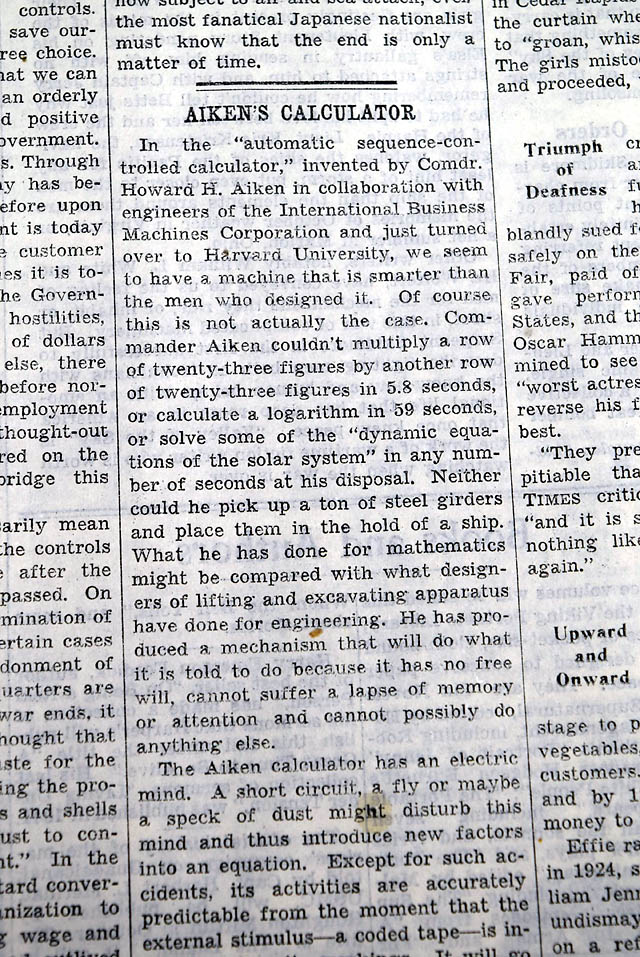
THE NEW YORK TIMES, August 8, 1944
- Harvard Mark I introduced for 1st time
- 1st universal calculator - IBM digital computer
- Howard H. Aiken - pioneer in
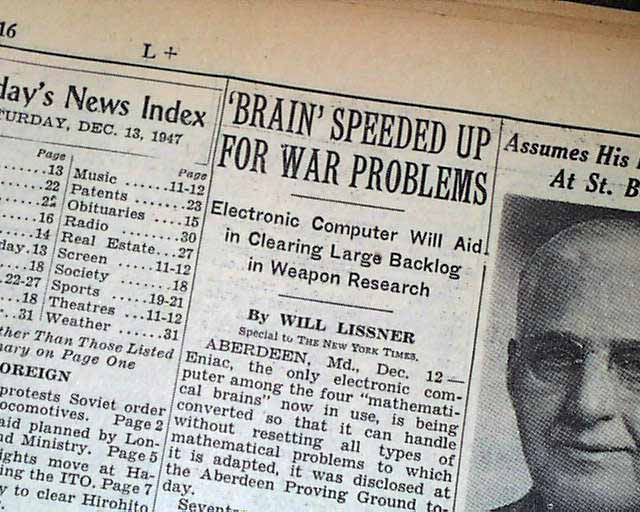
THE NEW YORK TIMES, December 13, 1947
- Eniac 1 invention (early computer)
- 1st electronic computer
- Aberdeen Proving Ground
This 32 page newspaper has one column
...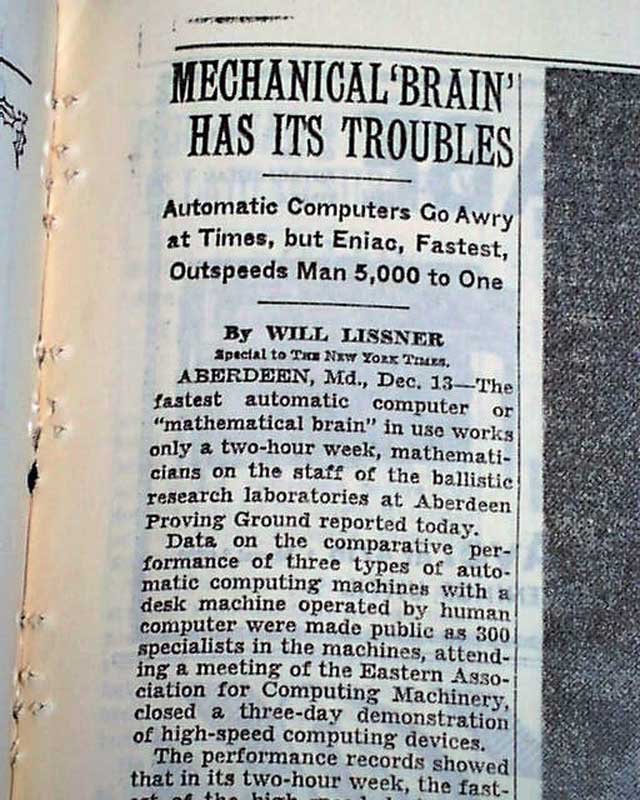
THE NEW YORK TIMES, December 14, 1947
- Eniac 1 invention (early computer)
- 1st electronic computer
- Aberdeen Proving Ground
The top of page 49 has a one column
...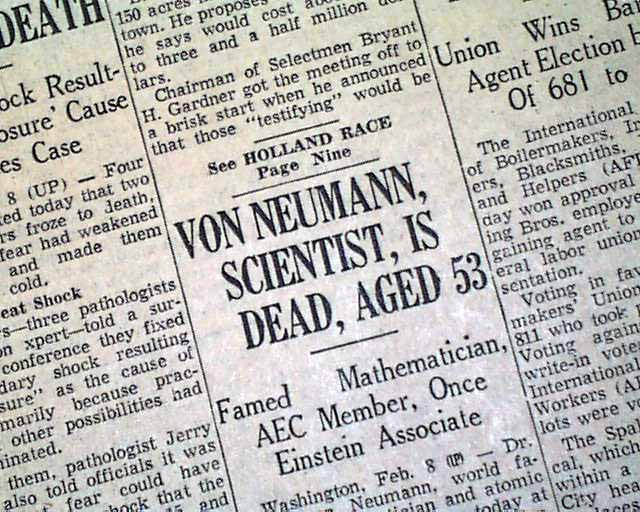
THE SPRINGFIELD UNION, Massachusetts, February 9, 1957
- John Von Neumann death
- Famous mathematician
- Father of the computer (1 of them)
This 34 page newspaper
...