1956 civil rights movement...
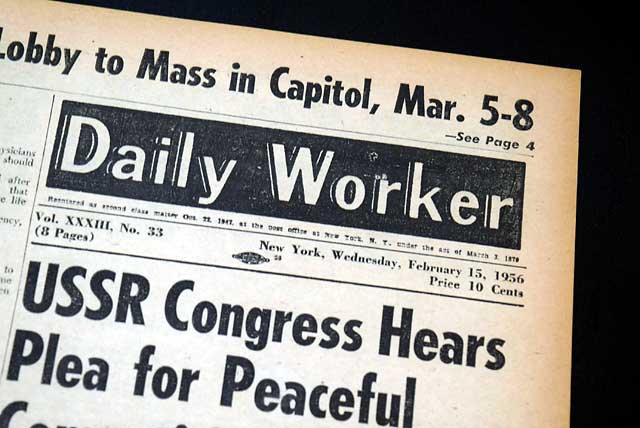
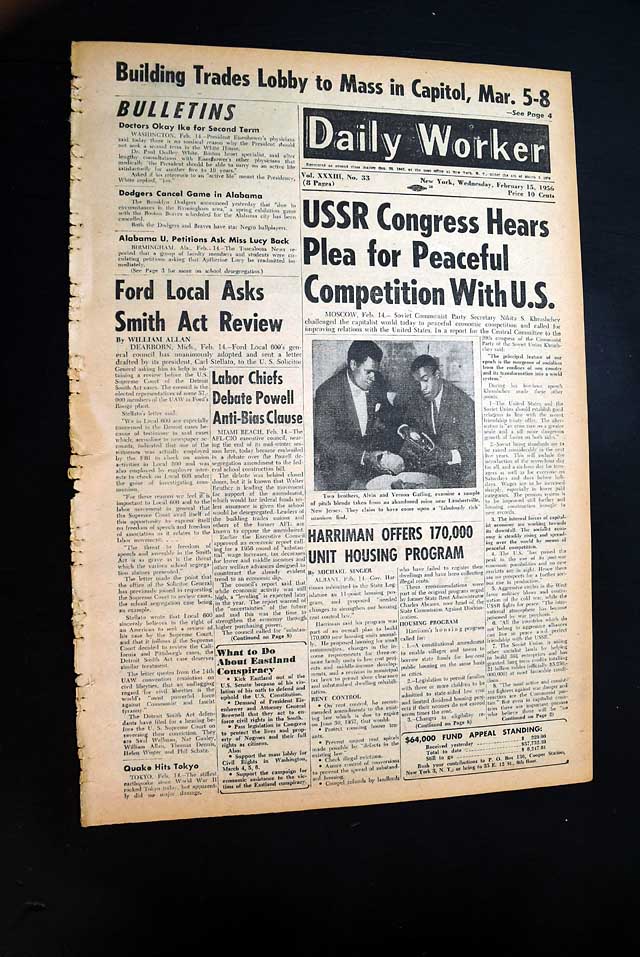
DAILY WORKER, New York, Feb. 15, 1956
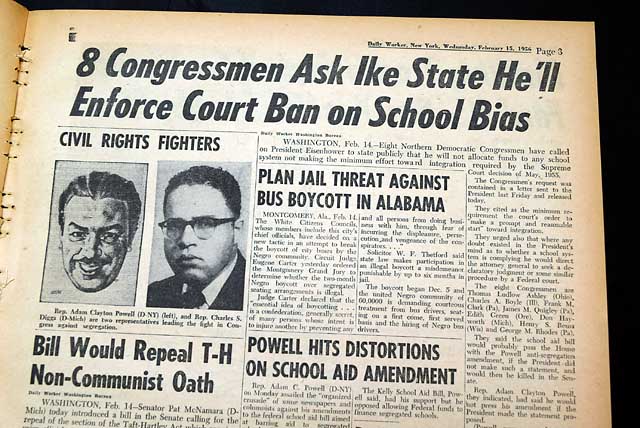
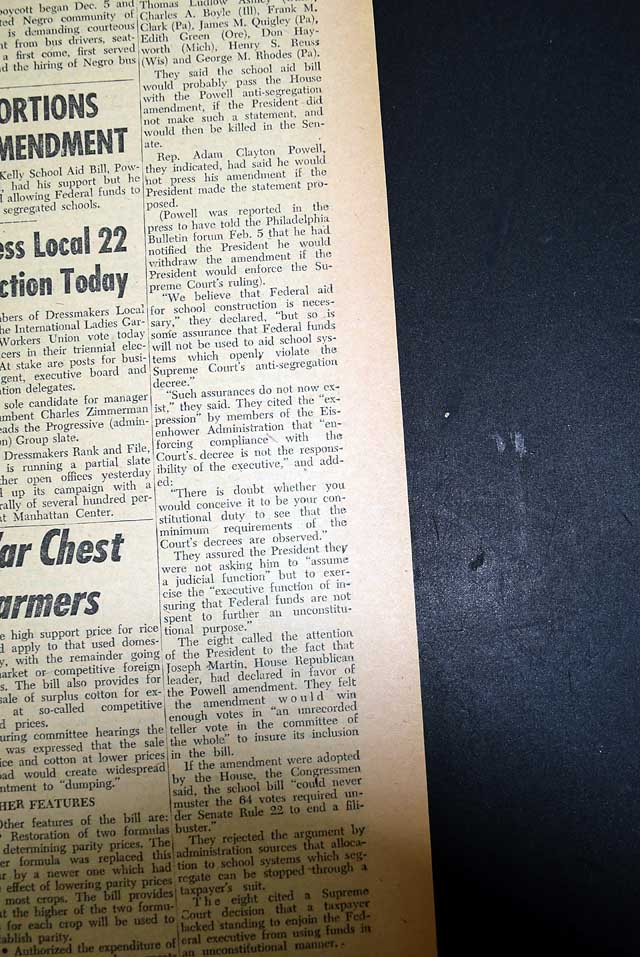
- Civil Rights Movement - school segregation
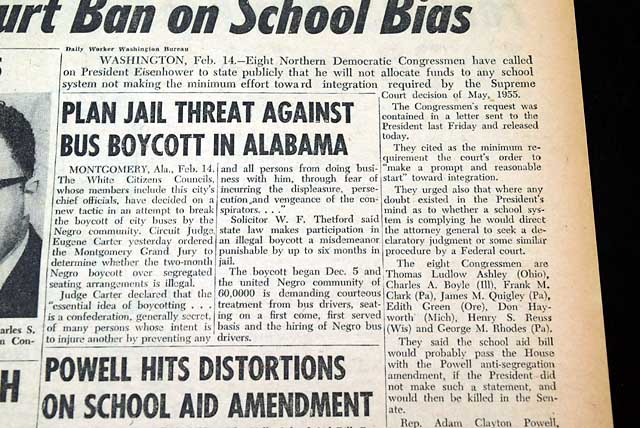
- Montgomery, Alabama bus boycott
This publication, The Worker, represents the official voice and ideological "mouthpiece" of the Communist Party USA (CPUSA) during one of the most volatile periods of the Cold War.
The top of page 3 has a banner heading: "8 Congressmen Ask Ike State He'll Enforce Court Ban on School Bias" Also a two column heading: "Plan Jail Threat Against Bus Boycott In Alabama" (see images)
Original physical issues of The Worker from the 1950s are exceptionally rare today becuse the political climate of the McCarthy era compelled many subscribers to destroy their copies to avoid FBI surveillance and the professional ruin associated with possessing "subversive" communist literature.
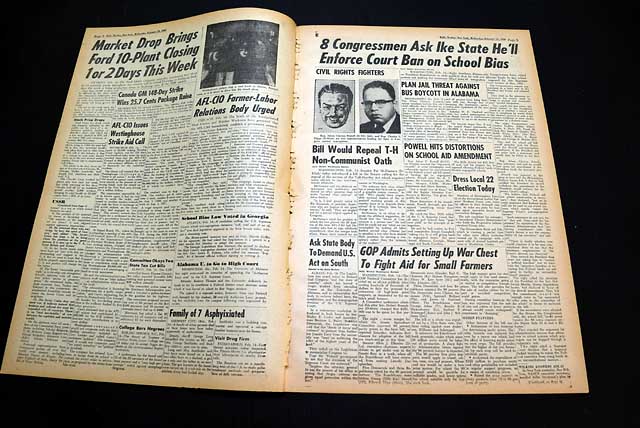
Complete with 8 pages, some spine wear, otherwise in nice condition.
Background: Mid-February 1956 stands out as an extraordinarily rare historical nexus where two distinct frontlines of the Civil Rights Movement violently converged in Alabama, capturing global media attention and testing the limits of nonviolent resistance. Just as the 381-day Montgomery Bus Boycott reached a critical flashpoint—with city officials retaliating against the boycott's alternative carpool network by indicting Dr. Martin Luther King Jr. and over 80 movement leaders under an obscure 1921 anti-conspiracy statute—a simultaneous integration crisis erupted in Tuscaloosa. On February 3, 1956, Autherine Lucy made history as the first Black student admitted to the all-white University of Alabama, only to be met by a mob of over a thousand white rioters who hurled rocks and egged her car in what became the most violent post-Brown v. Board of Education anti-integration demonstration in American history. What makes this mid-February moment so notable is the state’s dual-front crackdown: while the University’s Board of Trustees capitulated to racial violence by expelling Lucy under the guise of "safety" in mid-February, Montgomery officials simultaneously attempted to criminalize mass nonviolent protest through the courts. This rare, synchronous explosion of white institutional resistance across higher education and public transit inadvertently backfired, propelling Dr. King to international prominence, accelerating federal civil rights lawsuits, and permanently cementing Alabama as the central battleground for American desegregation.
Other issues you may like
§ related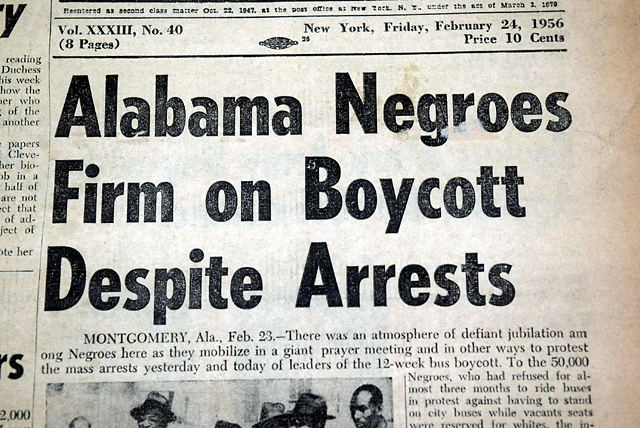
DAILY WORKER, New York, Feb. 22, 1956
- Montgomery, Alabama bus boycott
- Negroes hold meeting to continue
- Ralph Abernathy & other key figures
This publication,
...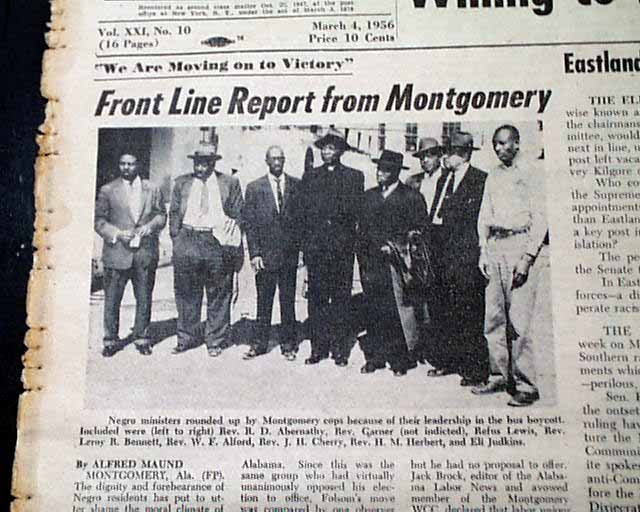
THE WORKER, New York, March 4, 1956
- Montgomery, Alabama bus boycott
- Civil Rights movement leaders arrested
- Martin Luther King Jr. - African Americans
This
...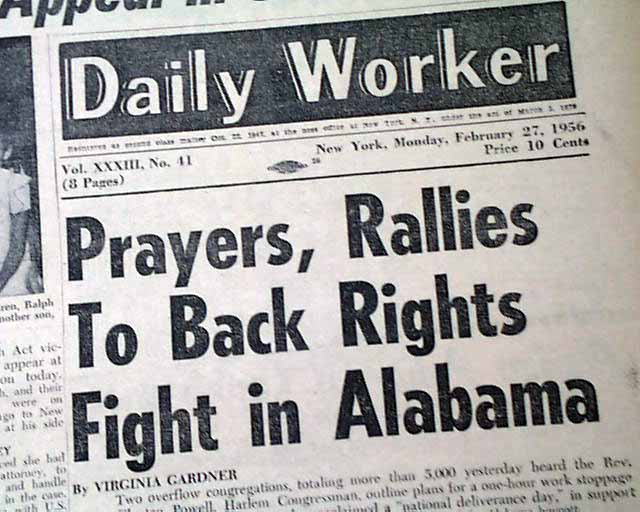
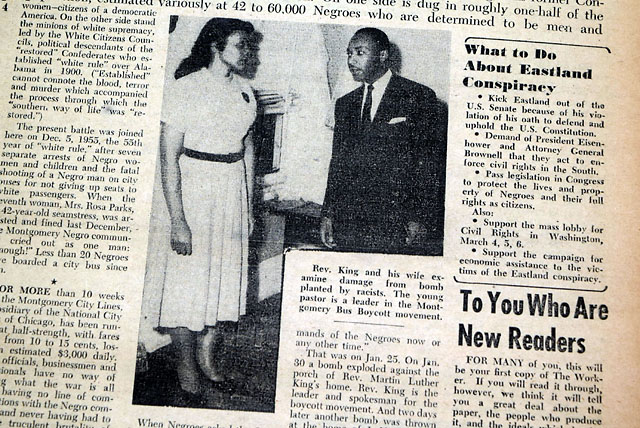
DAILY WORKER, New York, Feb. 27, 1956
- Montgomery, Alabama bus boycott
- Civil Rights movement leaders arrested
- Reverend Adam Clayton Powell speaks out
This
...
DAILY WORKER, New York, Feb. 19, 1956
- During Montgomery, Alabama bus boycott
- Rare "Negro Freedom Edition" with MLK
This publication, The Worker, represents
...