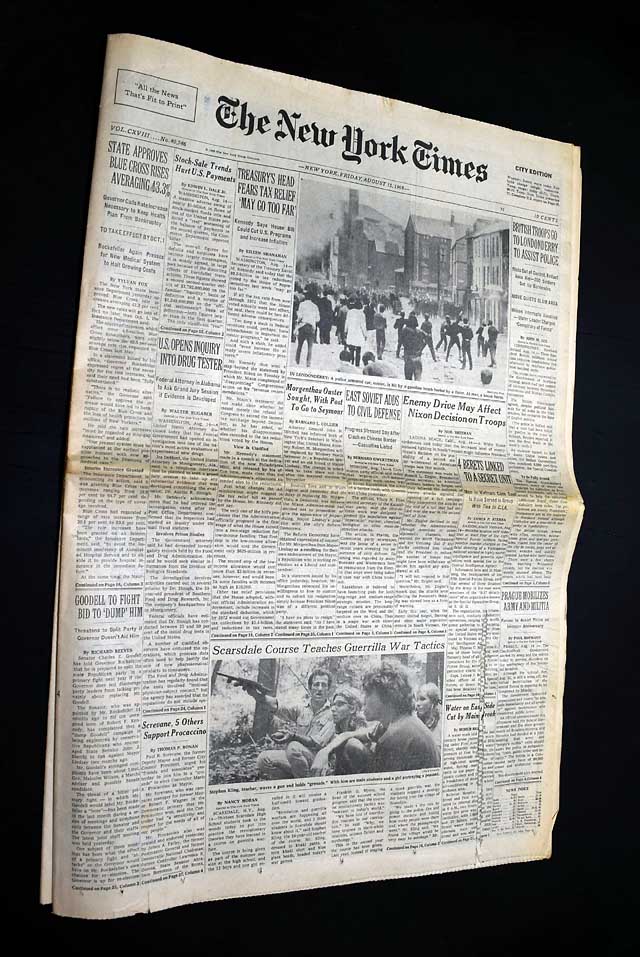
A defining moment of the hippie generation...
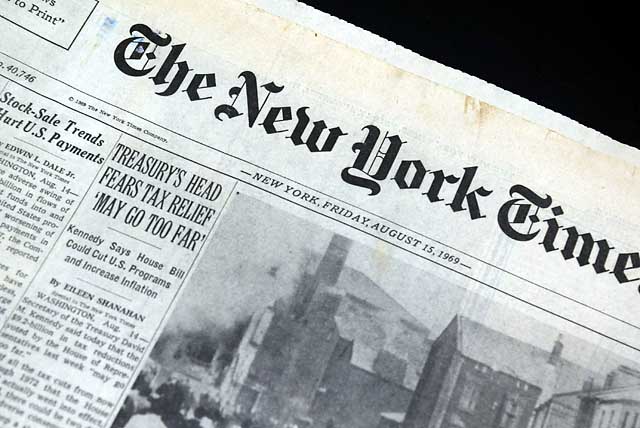
THE NEW YORK TIMES, August 15, 1969
- Woodstock music festival
- Arriving at Bethel, New York
- Prime of the hippie generation
- Sex, Drugs and rock & roll
If there were a collection of newspapers which defined the counterculture movement of the 1960's, this issue must be among them. The Woodstock Music Festival, late summer of 1969, brought the turbulent decade of the '60's to a close. Rolling Stone magazine listed it as one of the 50 moments that changed the history of rock & roll. The festival still stands for many as a example of America’s 1960's youth counterculture at its best.
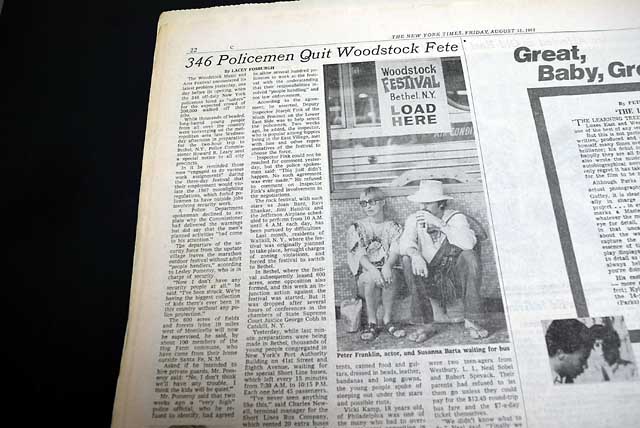
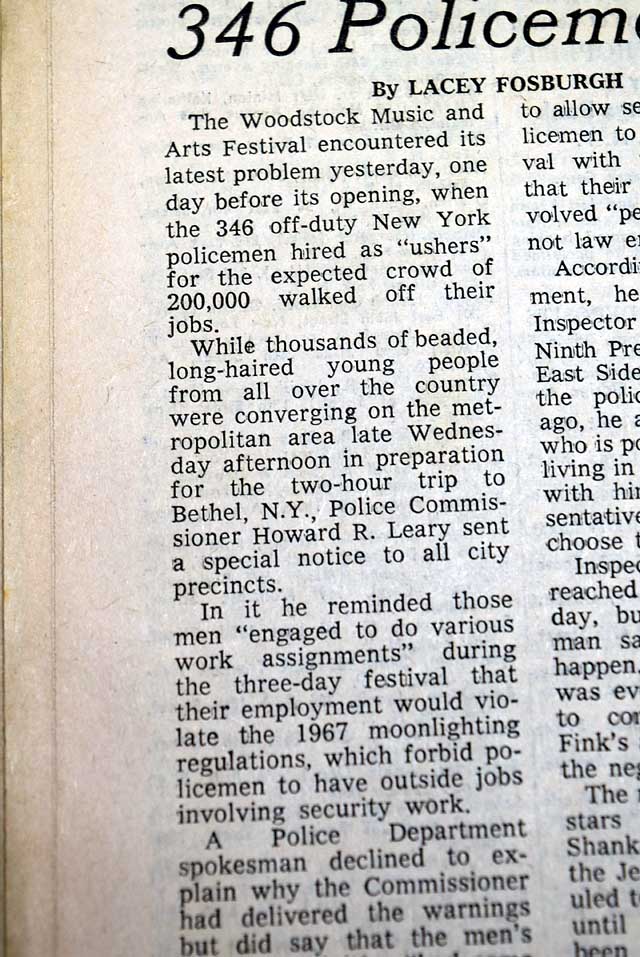
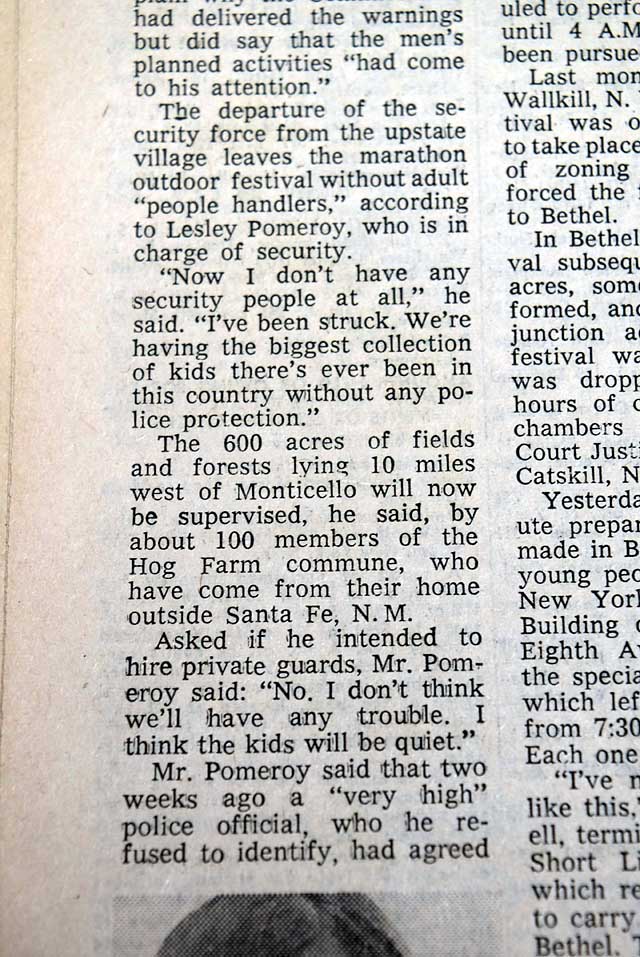
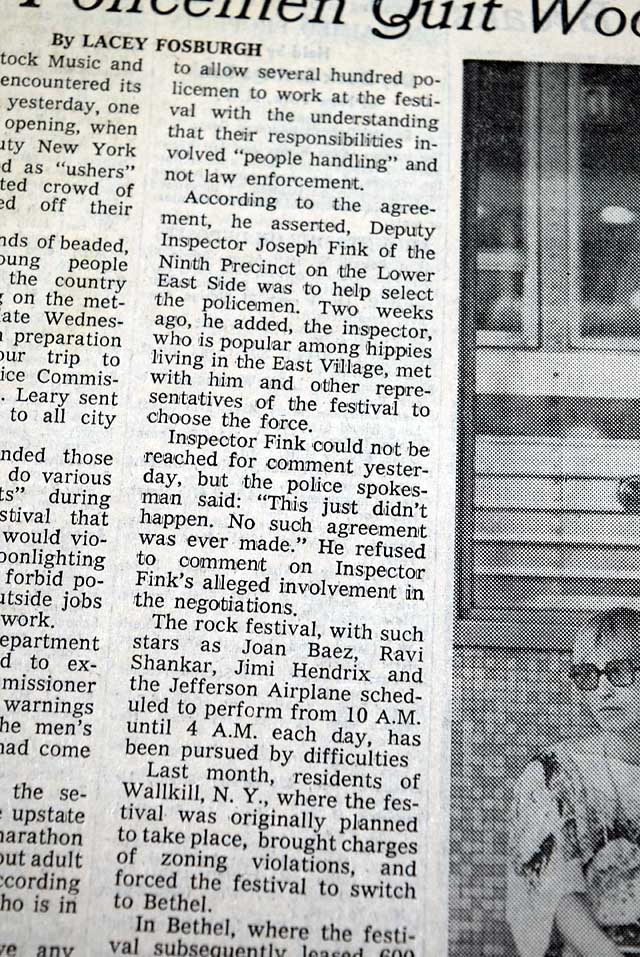
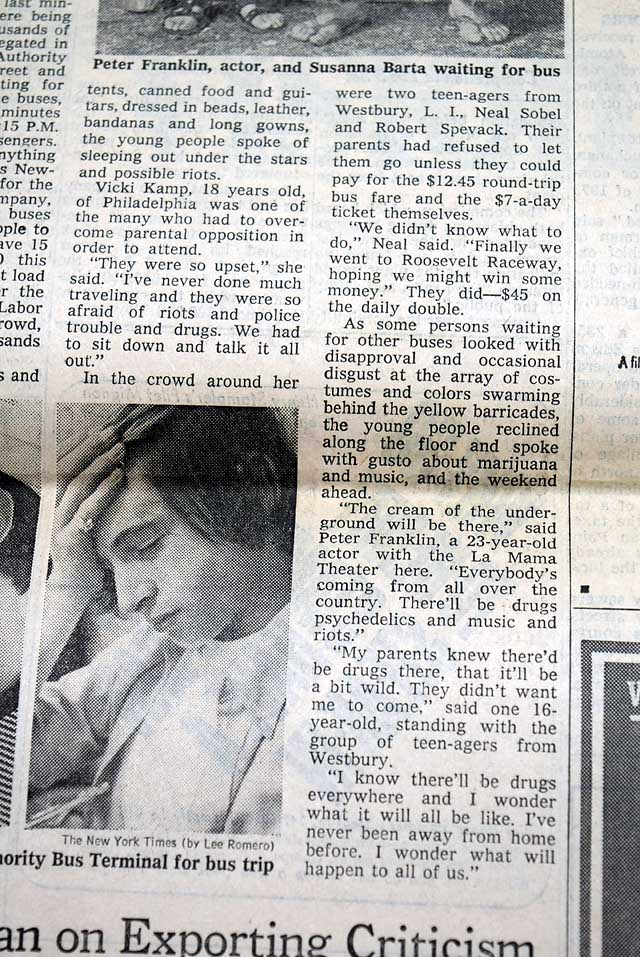
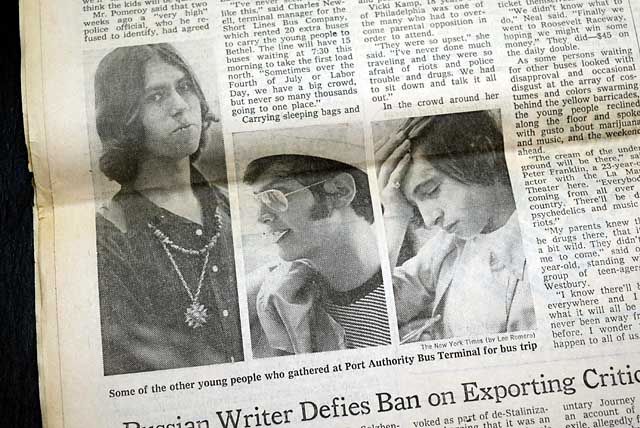
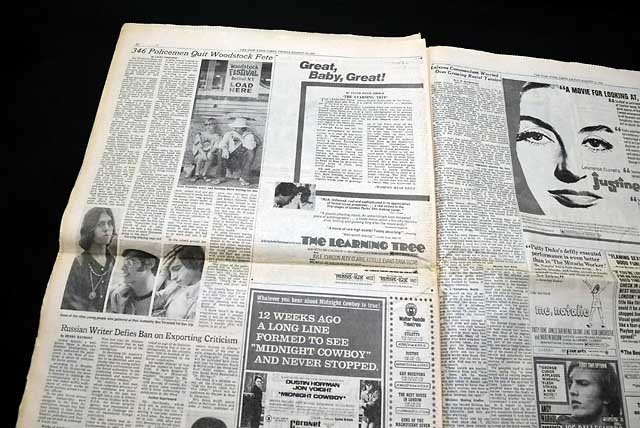
The top of page 22 has a four column heading: "346 Policemen Quit Woodstock Fete" with a few related photos. (see images)
Issues reporting the Woodstock festival were rarely saved as it was not seen as "historic" at the time so few such issues exist.
Complete with all 60 pages, archival mending on pages 2 & 4 (unrelated) to repair a few tears, otherwise in very nice condition.
Background: The August 15, 1969, issue of The New York Times serves as a historical document capturing the exact moment the Woodstock Music & Art Fair evolved from a promoted concert into an unprecedented cultural event. Anchoring the coverage, the article titled "346 Policemen Quit Woodstock Fete" details the last-minute security crisis triggered when off-duty New York City police officers pulled out under pressure from NYPD Commissioner Howard Leary, who strictly forbade moonlighting—leaving festival organizers scramble-prepared for hundreds of thousands of incoming fans. Accompanied by photos showing early arrivals, massive traffic jams in Sullivan County, and young people setting up makeshift campsites, the coverage captures a volatile mix of administrative panic and youth counterculture optimism on the festival's very first day. Beyond the Woodstock story, this specific issue offers a snapshot of late-1960s world affairs, featuring front-page reporting on the intensifying Vietnam War, tensions following the Apollo 11 moon landing weeks prior, and ongoing socio-political unrest, framing the music festival as an oasis of youth culture against the backdrop of a deeply divided nation.
Other issues you may like
§ related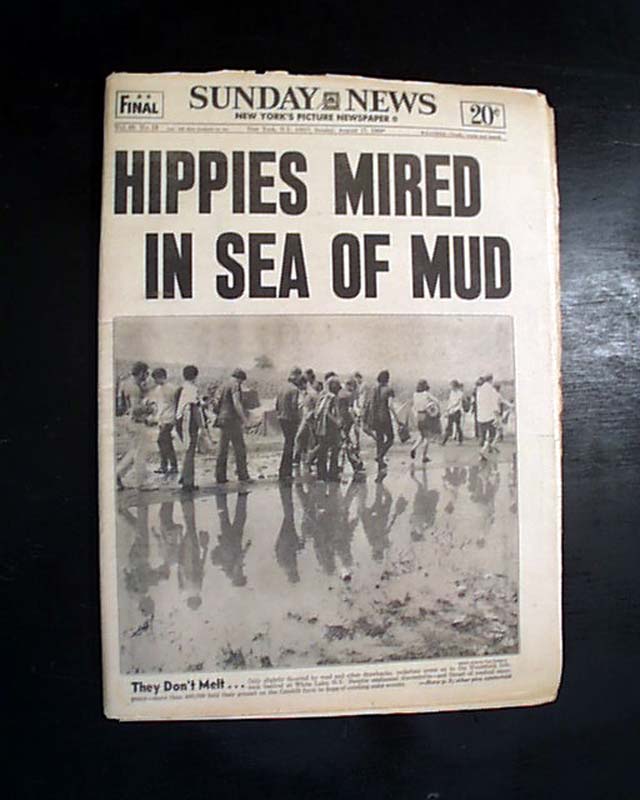
SUNDAY NEWS, New York City, August 17, 1969 If there were a collection of newspapers that defined the counterculture movement of the 1960's, this issue
...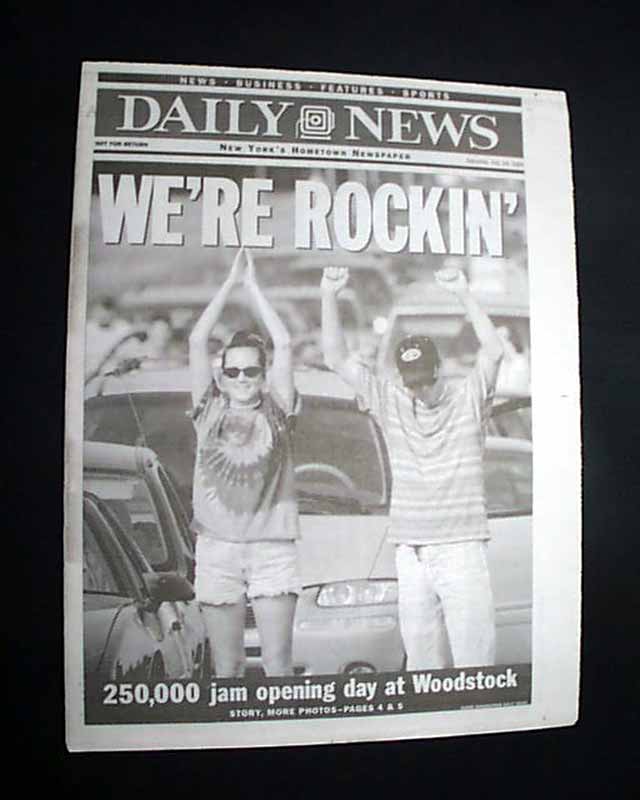
DAILY NEWS, New York City, July 24, 1999
- Woodstock '99 music festival in Rome, New York
The front page has a headline: "WE'RE ROCKIN'" with "250,000 jam
...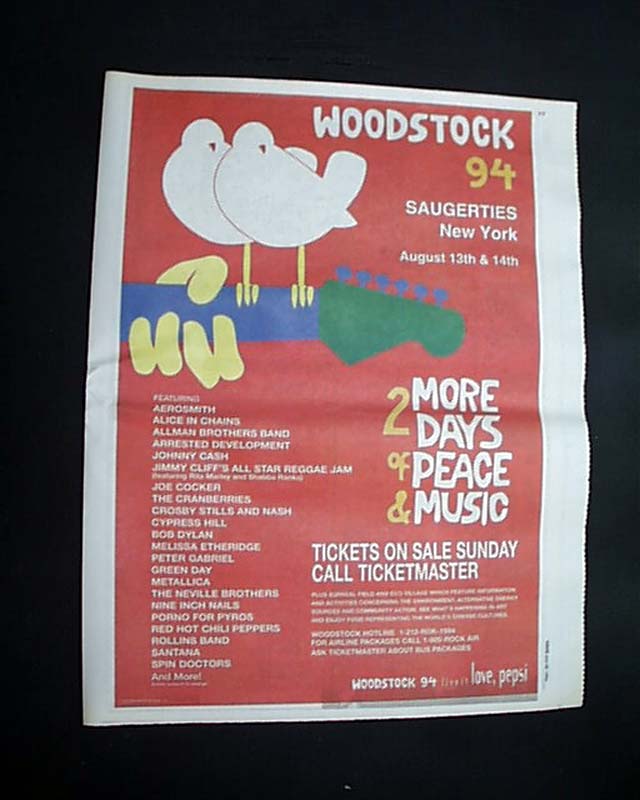
Pages taken away from the THE VILLAGE VOICE (weekly), Greenwich Village, New York, June 28, 1994
- WOODSTOCK '94 music festival advertisement
- Green Day -
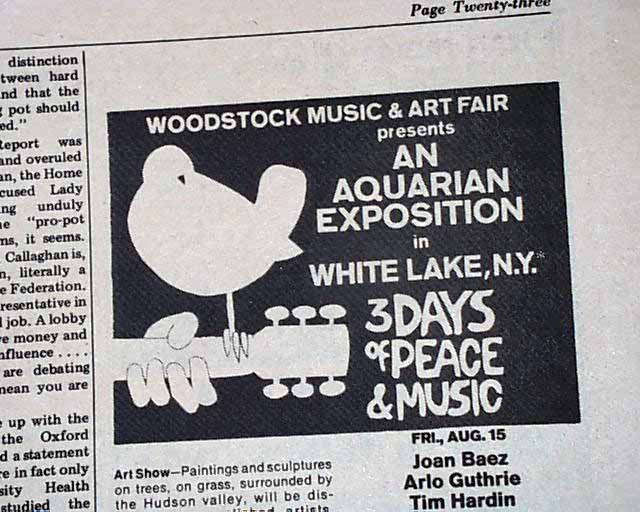
THE VILLAGE VOICE (weekly), Greenwich Village, New York, August 7, 1969
- Woodstock music festival on Max Yasgur's farm
- Original advertisements from a