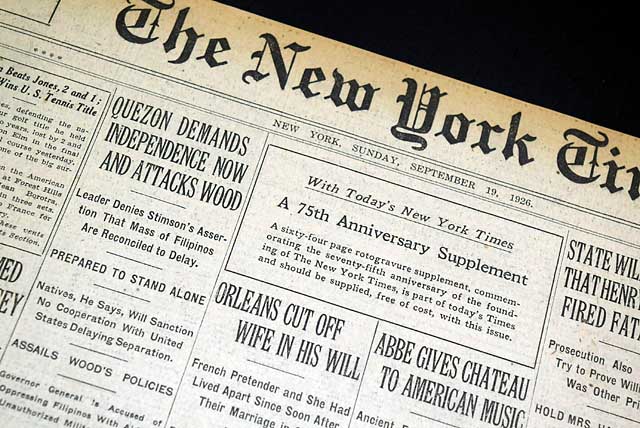
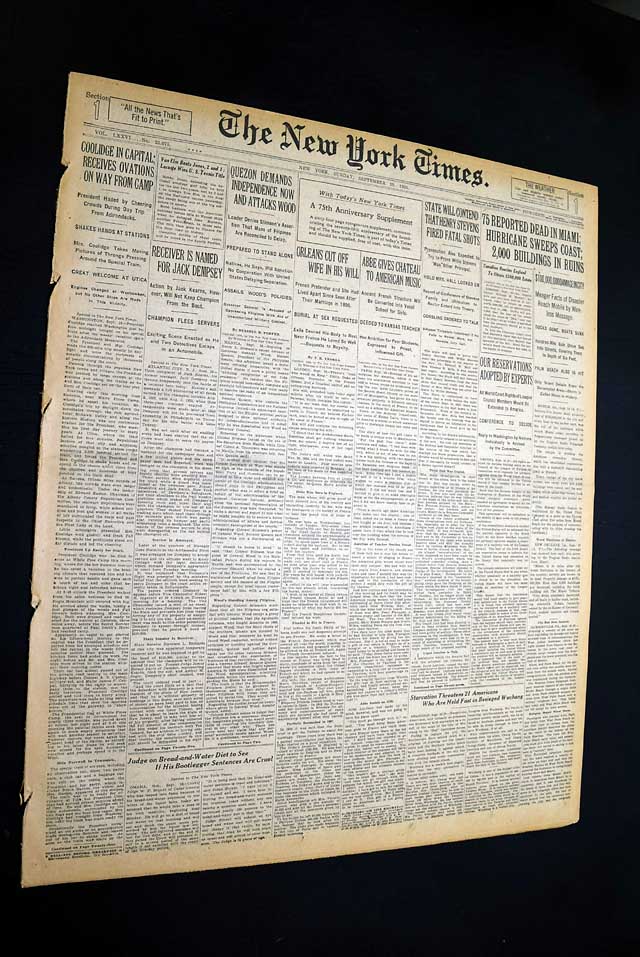
1926 Great Miami, Florida hurricane...
THE NEW YORK TIMES, September 19, 1926
- Miami, Florida hurricane disaster (early reporting)
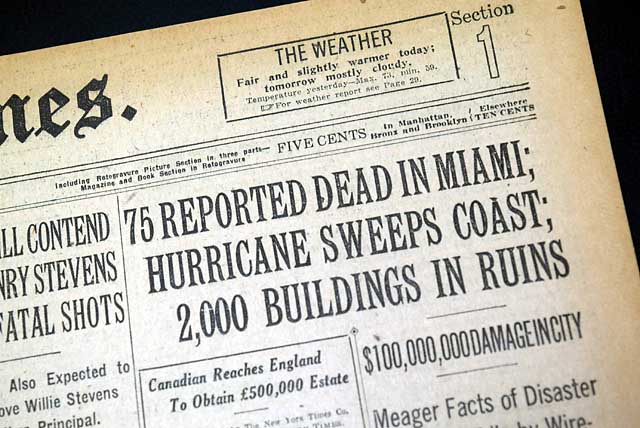
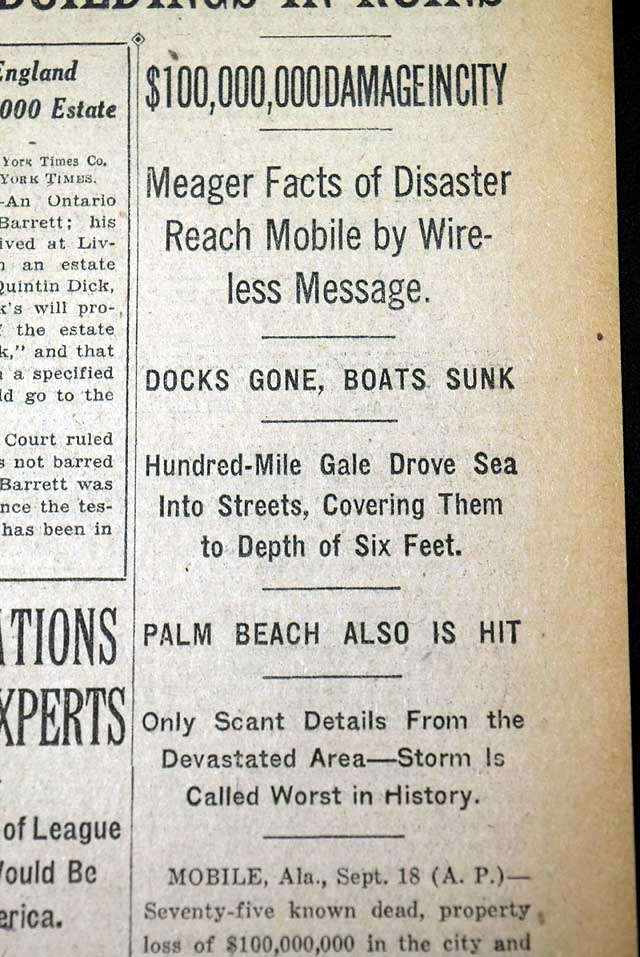
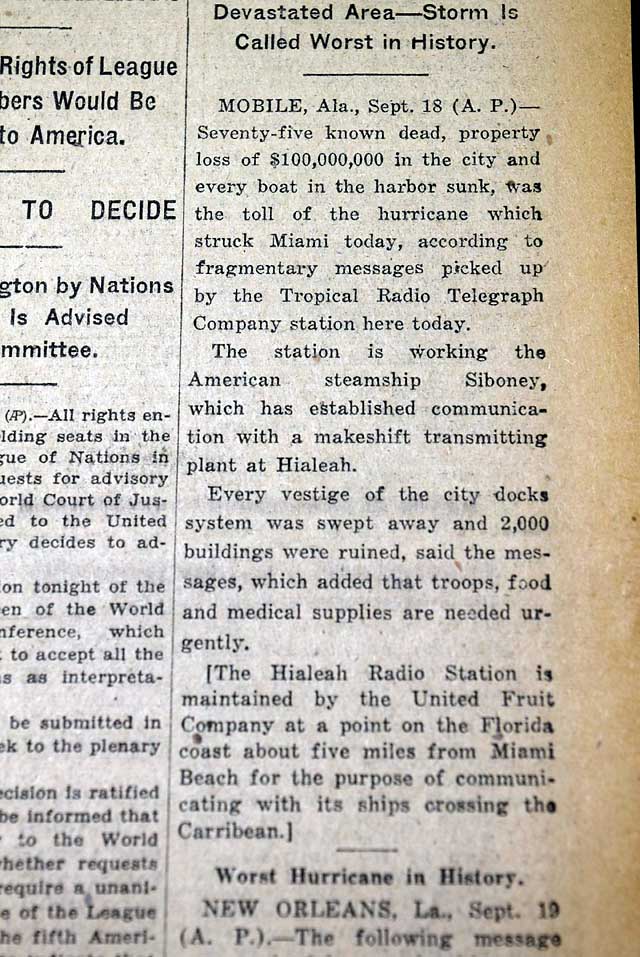
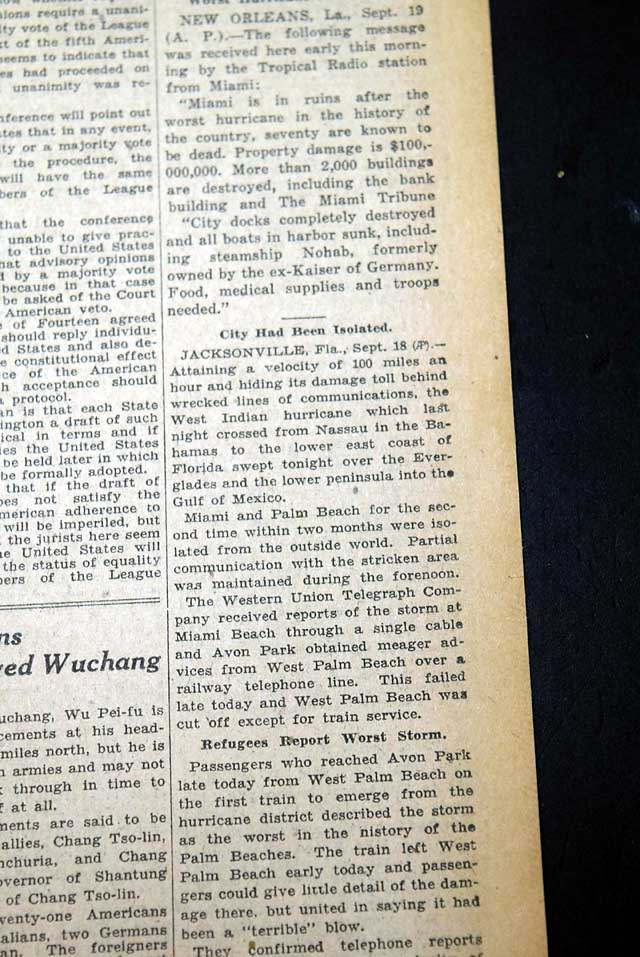
The top of the front page has a two column headline: "75 REPORTED DEAD IN MIAMI; HURRICANE SWEEPS COAST; 2,000 BUILDINGS IN RUINS" with subheads. (see images)
Complete with all 30 pages, light toning at the margins, a little irregular along the spine, generally nice.
Background: The 1926 Great Miami Hurricane was a monumental historical threshold for South Florida, striking on September 18, 1926, as a brutal Category 4 storm with 150 mph sustained winds and a devastating 10- to 15-foot storm surge that abruptly ended the 1920s Florida land boom and plunged the region into an early Great Depression. Its significance lies not only in the catastrophic immediate loss—causing between 372 and 500+ deaths after the passing eye of the storm lured unsuspecting residents outside before the reverse eyewall hit, alongside massive Lake Okeechobee flooding in Moore Haven—but also in its immense financial and structural legacy. Generating an estimated $105 million in 1926 damage, modern normalization models evaluate it as the costliest hurricane in U.S. history at over $200 billion in potential present-day loss, fundamentally transforming regional infrastructure by exposing substandard construction, introducing the nation's strictest building codes, and spurring the engineering of the Herbert Hoover Dike.
Other issues you may like
§ related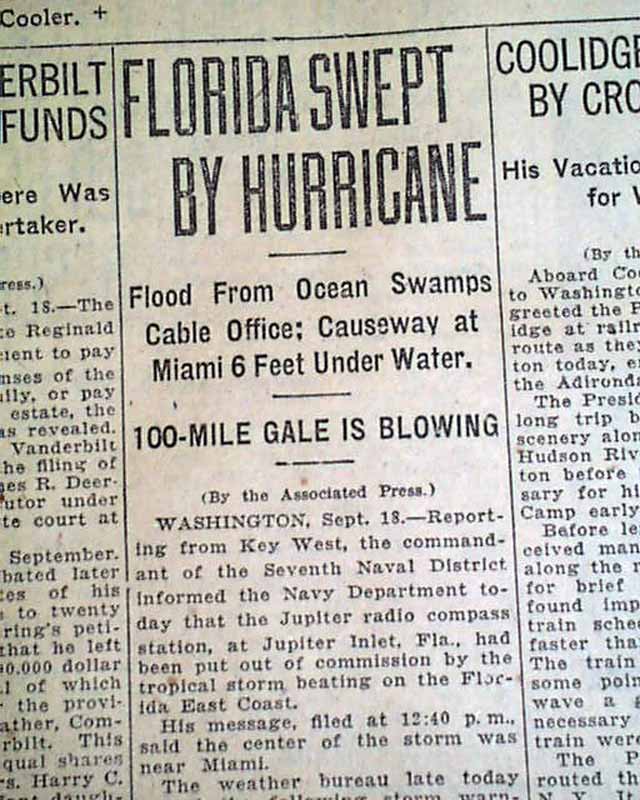
THE WORLD, New York City, September 20, 1926
- Miami, Florida hurricane disaster
The front page has a one column heading: "FLORIDA SWEPT BY HURRICANE" with
...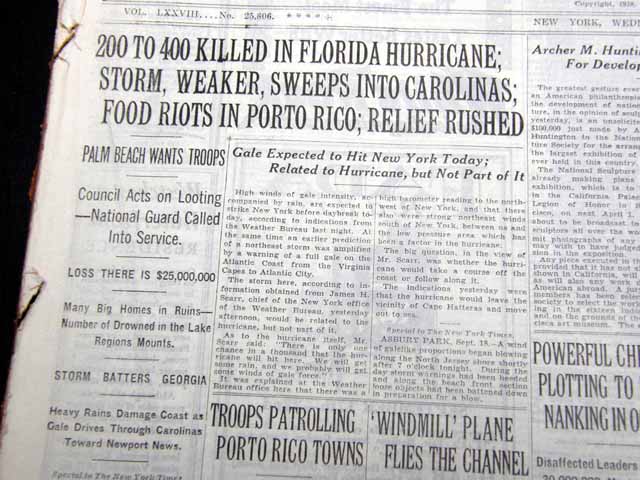
THE NEW YORK TIMES, September 19, 1928
- Okeechobee hurricane
- Palm Beach, Florida
The top of the front page has a three column headline: "200 TO 400 KILLED IN
...
CHICAGO DAILY TRIBUNE, Oct. 26, 1921
- Tampa Bay, Florida storm
- Major hurricane disaster
On October 25, 1921 Tampa Bay suffered the most destructive hurricane
...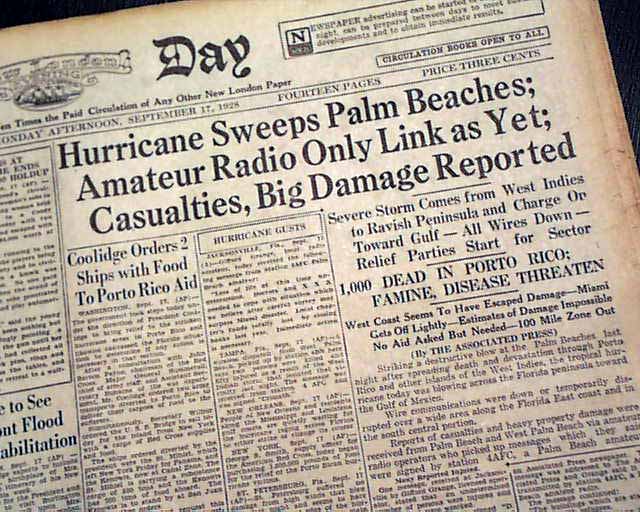
THE DAY, New London, Connecticut, September 17, 1928 This 14 page newspaper has a four column headline on the front page: "Hurricane Sweeps Palm Beaches;
...