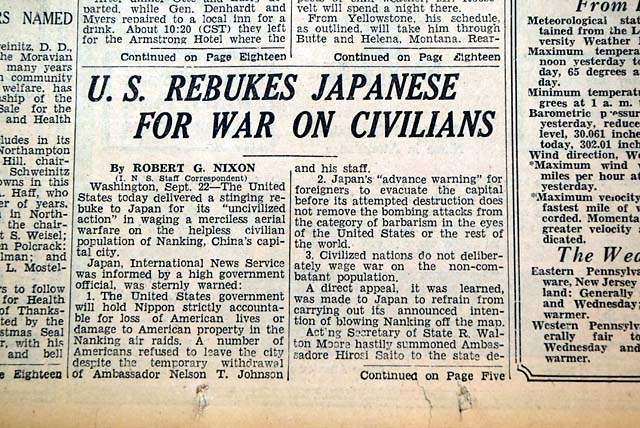
Japanese aerial bombing of Canton & Nanjing (Nanking), China
Item # 727945
·
Sorry, but this item is no longer available. Please be in touch at info@rarenewspapers.com if you would like to be placed on a want list or are interested in a potential alternate issue.
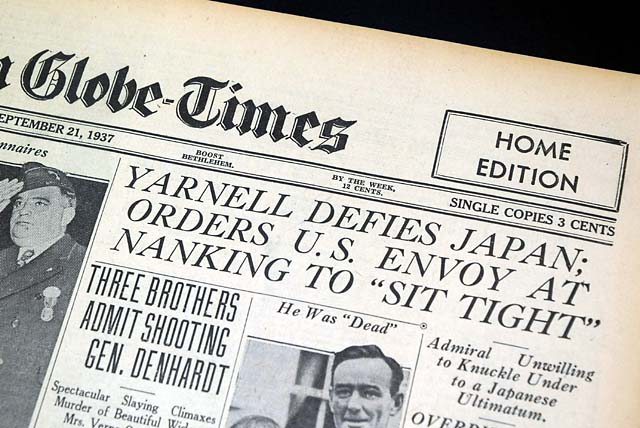
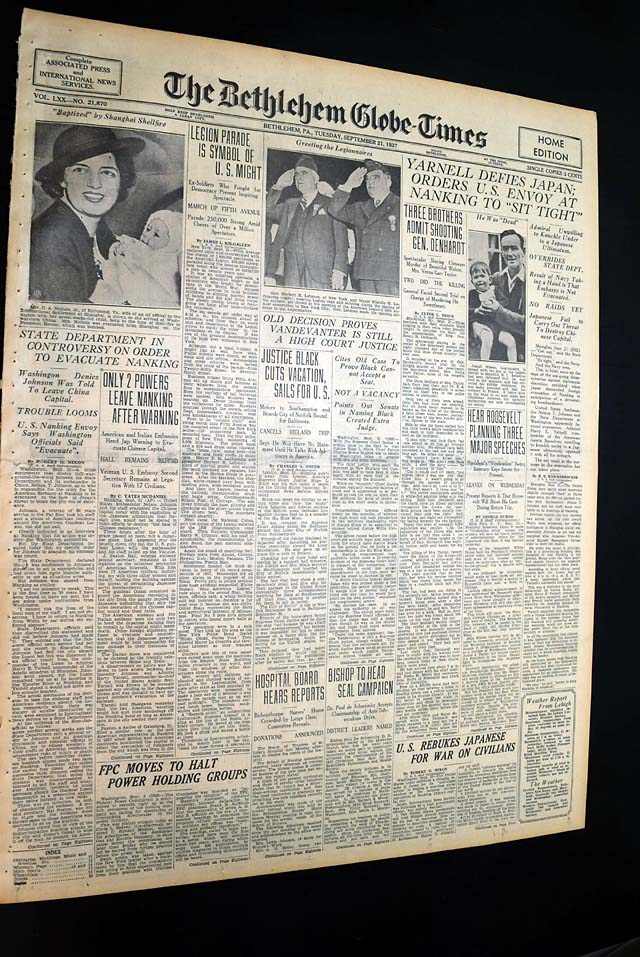
THE BETHLEHEM GLOBE-TIMES, Penn., Sept. 21, 1937.
* Nanjing - Canton & Nanking air raid bombing
* Japanese airplane raiders - pre massacre
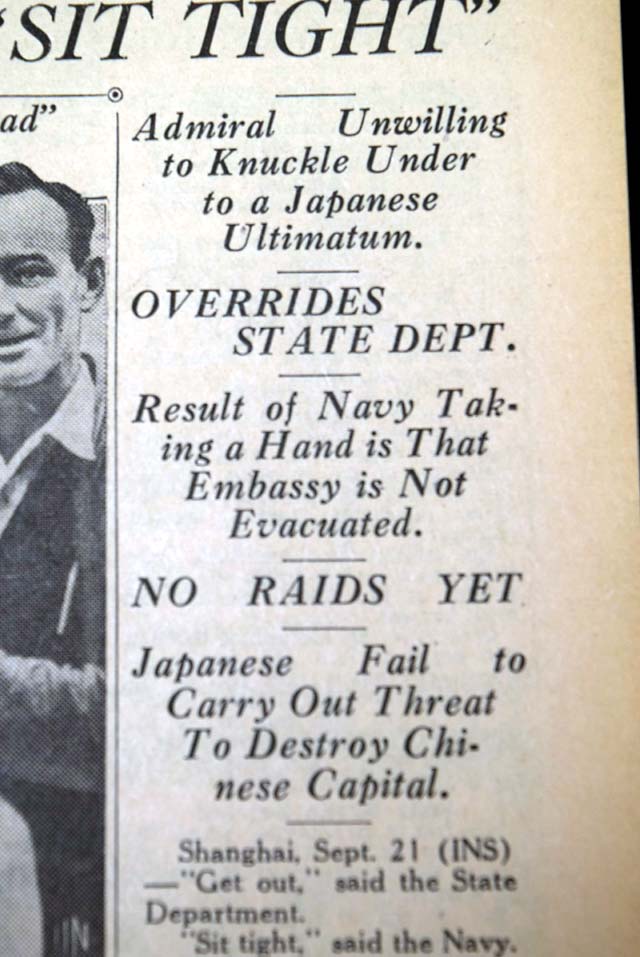
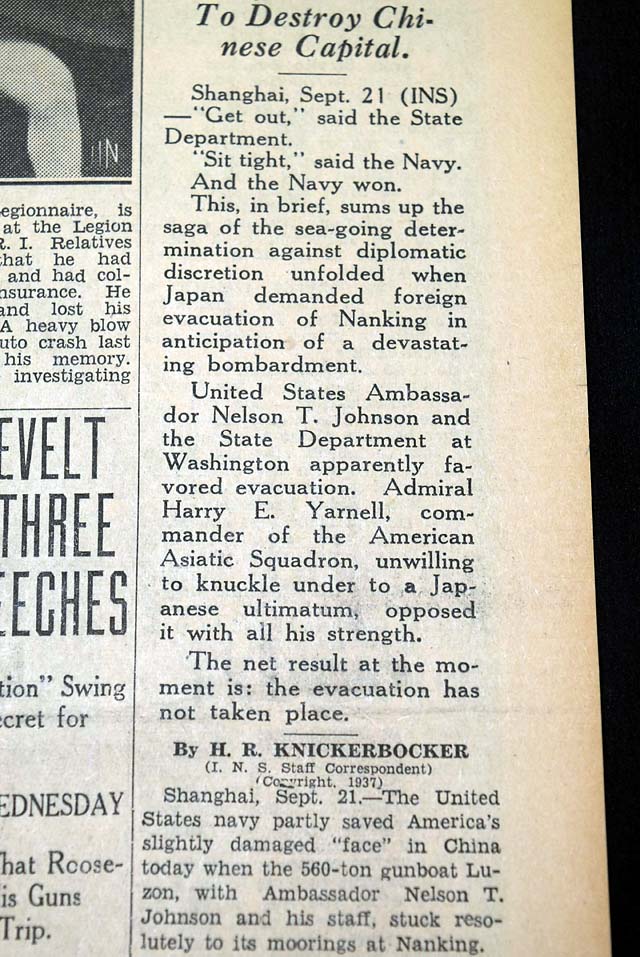
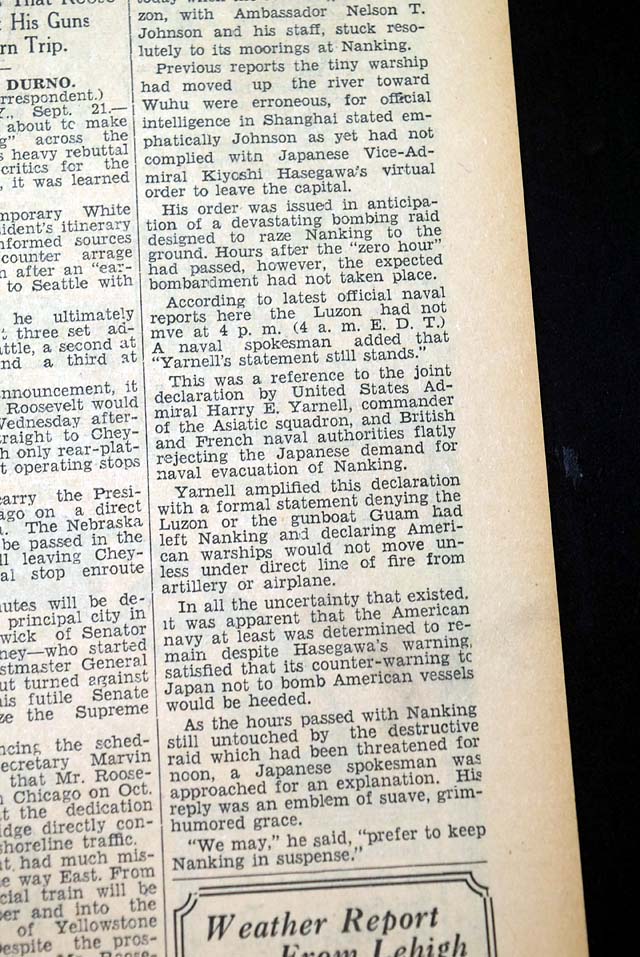
The top of the front page has a three column headline: "YARNELL DEFIES JAPAN; ORDERS U.S.ENVOY AT NANKING TO 'SIT TIGHT'" with subheads. (see images)
Complete with all 20 pages, a little spine wear, nice condition.
Background: The September 21, 1937 headlines capture a pivotal turning point where the regional conflict of the Second Sino-Japanese War began colliding with global diplomacy, foreshadowing the grand alliances of World War II. Admiral Yarnell’s directive for the U.S. envoy to "sit tight" in Nanking was a profound act of American defiance against Japanese hegemony, signaling that the United States would not be easily intimidated or bullied out of its strategic and economic interests in Asia. This stance was particularly bold given the contemporary backdrop of American isolationism and the domestic pressure to avoid foreign entanglements at all costs. Simultaneously, the devastating air raids on Nanking and Canton documented in the issue marked a horrifying evolution in modern warfare—the systematic use of aerial terror bombing against civilian populations and vital infrastructure to force a capitulation. Occurring just three months before the fall of the capital and the subsequent Nanjing Massacre, these events crystallized Japan's aggressive expansionist policy, hardened American public and political resolve against Tokyo, and set both nations on an unavoidable, decade-long collision course toward Pearl Harbor.
* Nanjing - Canton & Nanking air raid bombing
* Japanese airplane raiders - pre massacre
The top of the front page has a three column headline: "YARNELL DEFIES JAPAN; ORDERS U.S.ENVOY AT NANKING TO 'SIT TIGHT'" with subheads. (see images)
Complete with all 20 pages, a little spine wear, nice condition.
Background: The September 21, 1937 headlines capture a pivotal turning point where the regional conflict of the Second Sino-Japanese War began colliding with global diplomacy, foreshadowing the grand alliances of World War II. Admiral Yarnell’s directive for the U.S. envoy to "sit tight" in Nanking was a profound act of American defiance against Japanese hegemony, signaling that the United States would not be easily intimidated or bullied out of its strategic and economic interests in Asia. This stance was particularly bold given the contemporary backdrop of American isolationism and the domestic pressure to avoid foreign entanglements at all costs. Simultaneously, the devastating air raids on Nanking and Canton documented in the issue marked a horrifying evolution in modern warfare—the systematic use of aerial terror bombing against civilian populations and vital infrastructure to force a capitulation. Occurring just three months before the fall of the capital and the subsequent Nanjing Massacre, these events crystallized Japan's aggressive expansionist policy, hardened American public and political resolve against Tokyo, and set both nations on an unavoidable, decade-long collision course toward Pearl Harbor.
Category: The 20th Century
No Longer Available
100% Authentic: Original printing, never a reproduction.
Other issues you may like
§ related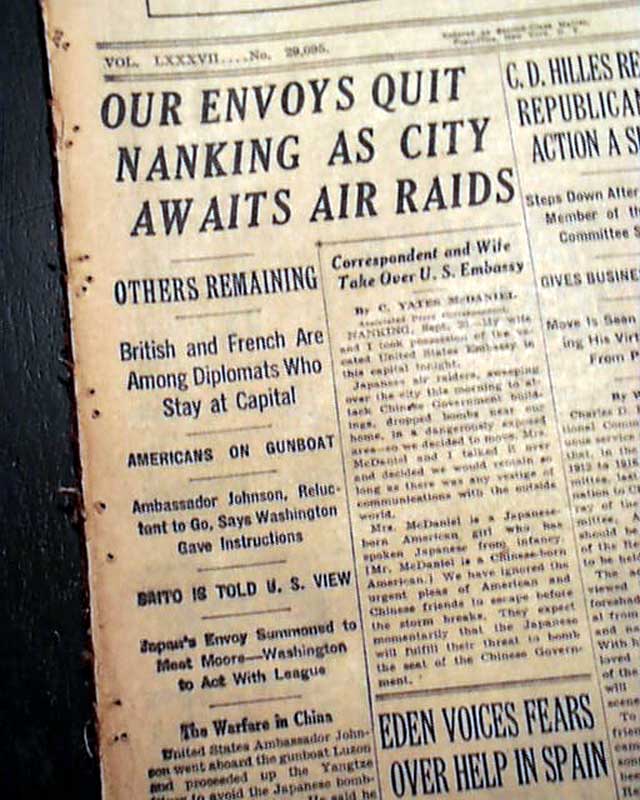
Japanese aerial bombing of Canton & Nanjing (Nanking), China
THE NEW YORK TIMES, Sept. 21, 1937.
* Nanjing - Canton & Nanking air raid bombing
* Japanese airplane raiders - pre massacre
The top of the
...* Nanjing - Canton & Nanking air raid bombing
* Japanese airplane raiders - pre massacre
The top of the
Sep 1937
$48
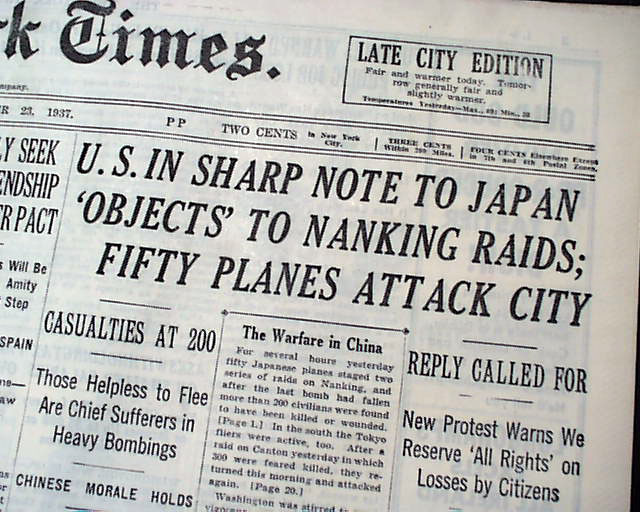
Japanese aerial bombing of Canton & Nanjing (Nanking), China
THE NEW YORK TIMES, Sept. 23, 1937.
* Nanjing - Canton & Nanking air raid bombing
* Japanese airplane raiders - pre massacre
The top of the
...* Nanjing - Canton & Nanking air raid bombing
* Japanese airplane raiders - pre massacre
The top of the
Sep 1937
$68
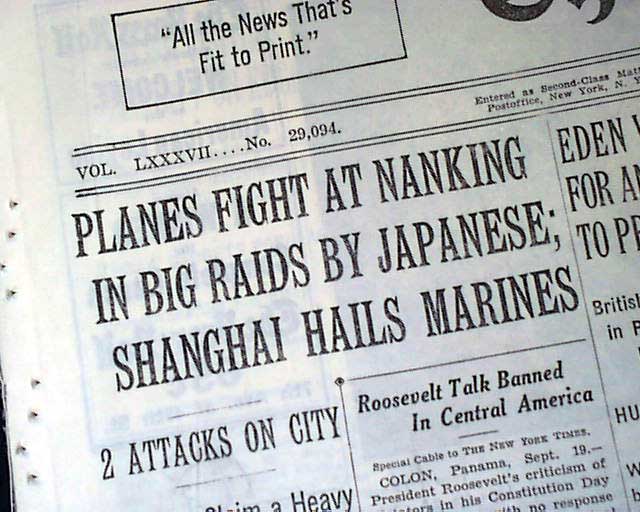
Japanese aerial bombing of Nanjing (Nanking), China...
THE NEW YORK TIMES, Sept. 20, 1937.
* Nanjing - Nanking air raid bombing
* Japanese airplane raiders - pre massacre
The top of the front page
...* Nanjing - Nanking air raid bombing
* Japanese airplane raiders - pre massacre
The top of the front page
Sep 1937
$88
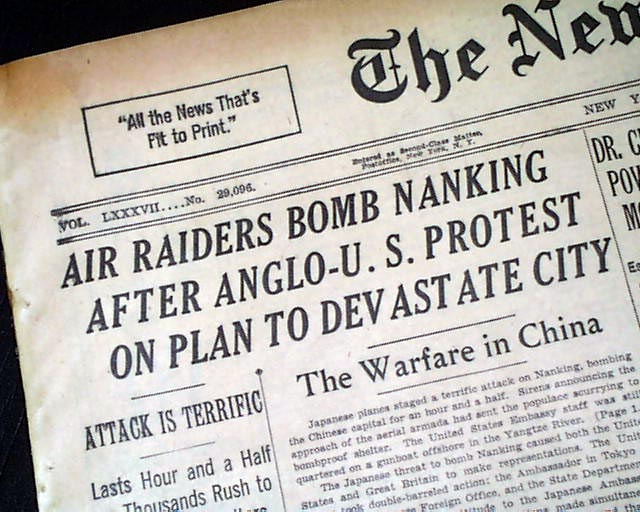
1937 Japanese aerial bombing of Nanjing (Nanking), China
THE NEW YORK TIMES, Sept. 22, 1937.
* Nanjing - Nanking air raid bombing
* Japanese airplane raiders - pre massacre
The top of the front page
...* Nanjing - Nanking air raid bombing
* Japanese airplane raiders - pre massacre
The top of the front page
Sep 1937
$72